US Congress Moves to Strengthen Accountability and Sanctions Through Landmark Sudan Peace Legislation
The United States Congress is currently deliberating two pivotal pieces of legislation aimed at addressing the protracted and devastating conflict in Sudan: the Preventing External Aggression and Conflict Escalation (PEACE) in Sudan Act of 2026 in the Senate and the US Engagement in Sudanese Peace Act in the House of Representatives. These legislative efforts represent a significant escalation in the American diplomatic and economic response to a crisis that has displaced millions and triggered one of the world’s most acute humanitarian emergencies. While the bills introduce a range of positive initiatives, including the formalization of sanctions and the appointment of high-level diplomatic envoys, international human rights organizations and policy experts are calling for even more robust accountability measures to address the systemic atrocities committed by the warring factions.
Legislative Framework: The Senate and House Initiatives
The dual-track legislative approach reflects a bipartisan consensus in Washington that the current international strategy has failed to deter the Sudanese Armed Forces (SAF), led by General Abdel Fattah al-Burhan, and the paramilitary Rapid Support Forces (RSF), commanded by Mohamed Hamdan "Hemedti" Dagalo.
The Senate’s "PEACE in Sudan Act of 2026" focuses heavily on the geopolitical dimensions of the conflict. It seeks to bolster the United States’ ability to identify and penalize foreign actors who are exacerbating the violence through the provision of arms and logistical support. Central to this bill is the reinforcement of the role of the Special Envoy for Sudan. This position, which has faced periods of vacancy or limited authority, would be empowered under the Act to lead a unified US strategy for peace, humanitarian access, and democratic transition.
In the House of Representatives, the "US Engagement in Sudanese Peace Act" takes a more operational stance. A key provision of the House legislation authorizes the US government to provide financial and logistical support for a United Nations (UN), African Union (AU), or multinational protection force. This aligns with long-standing calls from human rights advocates for a civilian protection mission to be deployed in conflict hotspots, particularly in Darfur and Khartoum, where civilians have borne the brunt of the fighting.
Chronology of the Sudanese Crisis (2023–2026)
To understand the urgency of these bills, it is necessary to examine the timeline of the conflict, which began as a power struggle between two rival generals and evolved into a nationwide catastrophe.
- April 15, 2023: Fighting erupts in Khartoum between the SAF and RSF following disagreements over the integration of the RSF into the regular army. The violence quickly spreads to Darfur and Kordofan.
- May 2023: The "Jeddah Declaration" is signed, facilitated by the US and Saudi Arabia. While intended to protect civilians and facilitate humanitarian aid, the agreement is repeatedly violated by both parties.
- Late 2023: The RSF gains significant territory in West Darfur. Reports emerge of targeted killings of the Masalit people, which international observers describe as ethnic cleansing.
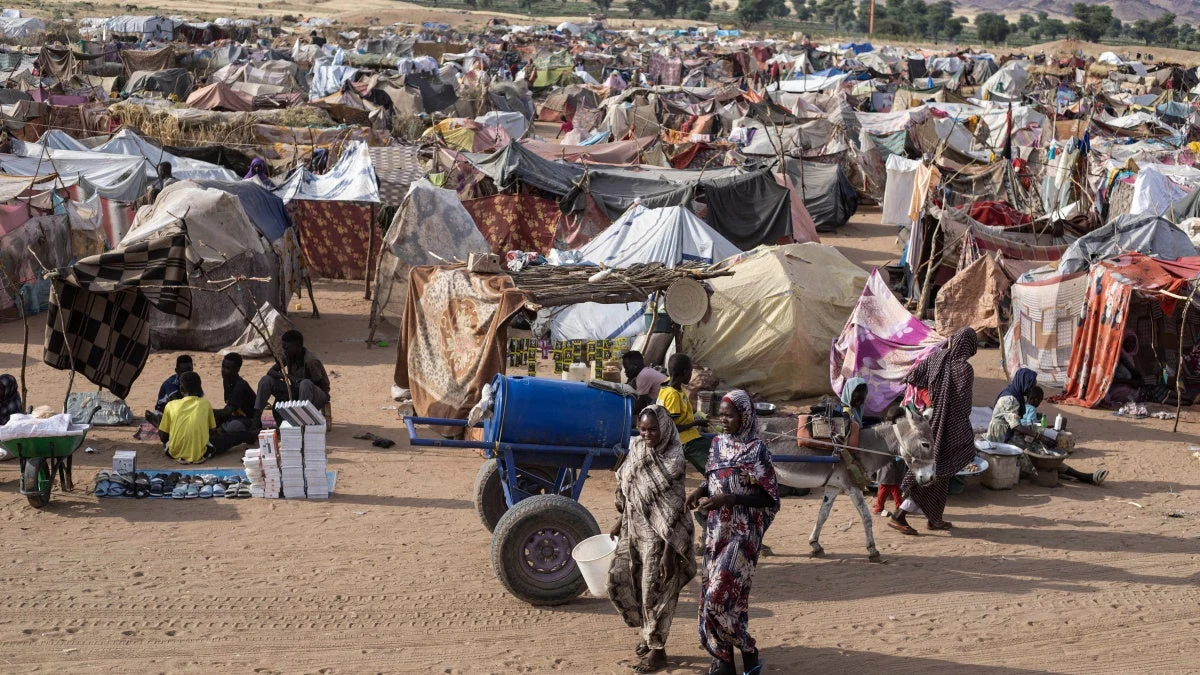
- 2024: The conflict settles into a war of attrition. The RSF maintains control over much of Khartoum and Darfur, while the SAF holds the east and the Red Sea coast. Famine is declared in several displacement camps, including the Zamzam camp near El Fasher.
- 2025: Human Rights Watch and other monitoring groups document the "Downfall of El Fasher," noting widespread sexual violence and the use of heavy weaponry in densely populated civilian areas.
- Early 2026: As the conflict enters its third year, the US Congress introduces the PEACE Act and the US Engagement in Sudanese Peace Act to move beyond rhetoric and toward tangible enforcement.
Documented Abuses and the Humanitarian Toll
The push for legislation is grounded in a grim reality of documented human rights violations. Human Rights Watch (HRW) has extensively investigated the conduct of both the RSF and SAF, concluding that both parties have committed war crimes.
The RSF has been particularly scrutinized for its operations in West Darfur. Evidence suggests a systematic campaign of ethnic cleansing against non-Arab communities. In El Fasher, the capital of North Darfur, the RSF’s siege led to thousands of civilian deaths and the destruction of critical infrastructure, including hospitals and water plants. Furthermore, widespread and systematic sexual violence has been reported in RSF-controlled areas of Khartoum and Darfur, used as a tool of war to terrorize and displace populations.
The SAF, while claiming to represent the state, has also been implicated in severe abuses. Human Rights Watch has documented numerous instances of SAF airstrikes hitting residential neighborhoods, markets, and schools. These strikes often appear indiscriminate, failing to distinguish between military targets and civilians. Additionally, the SAF has been accused of obstructing humanitarian aid, using bureaucratic hurdles and physical blockades to prevent food and medicine from reaching regions held by the RSF.
Data from the Integrated Food Security Phase Classification (IPC) suggests that over 25 million people in Sudan are facing acute hunger, with hundreds of thousands at risk of starvation-induced death by the end of 2026 if the current trajectory continues.
The Role of Foreign Interference and Mercenary Networks
One of the most contentious aspects of the Sudan conflict is the involvement of external powers. Both the Senate and House bills require the US government to identify foreign governments that are violating the UN arms embargo.
Recent investigations have highlighted the role of the United Arab Emirates (UAE) in supporting the RSF. While the UAE has officially denied providing military aid, investigative reports have pointed to cargo flights and logistics hubs in neighboring countries like Chad and Libya that facilitate the flow of equipment to the RSF.
Furthermore, a 2026 Human Rights Watch report titled "From Bogota to El Fasher" revealed a sophisticated mercenary pipeline. The report found that a UAE-based company facilitated the hiring of Colombian private military contractors. These fighters reportedly received training at UAE military bases before being deployed to Sudan to bolster RSF operations.
The House bill addresses this directly by proposing a ban on the sale of major defense equipment to any government found to be supplying weapons to either the RSF or the SAF. This "carrot and stick" approach is designed to pressure regional powers to prioritize stability over their specific geopolitical interests in Sudan.
Official Responses and Diplomatic Stance
The Biden administration has expressed support for the spirit of the legislation, though it has emphasized the need for "national security waivers" to maintain diplomatic flexibility. The Treasury Department has already implemented several rounds of sanctions targeting RSF-affiliated businesses and SAF military leaders, but critics argue these measures are insufficient because they do not target the primary revenue streams—such as gold smuggling and foreign banking networks—that sustain the war effort.
In a statement following the introduction of the House bill, proponents argued that the US must lead by example. "We cannot stand by while Sudan is torn apart by two generals who prioritize their own power over the lives of millions," one congressional aide noted. "This legislation provides the tools to hold them, and their foreign enablers, accountable."
International bodies, including the African Union, have welcomed the renewed US interest but have cautioned that any multinational force must have a clear mandate and the support of local Sudanese civil society to avoid being seen as an external intervention.
Analysis of Implications and Necessary Enhancements
The proposed legislation marks a shift in US foreign policy from "facilitated dialogue" to "active pressure." However, policy analysts suggest that for these bills to be truly effective, they must go further in the realm of international justice.
The current versions of the bills focus heavily on sanctions and diplomatic appointments. To ensure long-term peace, Congress should direct the administration to support ongoing investigations by the International Criminal Court (ICC) and other international bodies. This includes providing resources for the collection and preservation of digital and physical evidence of war crimes. Without a credible threat of prosecution, the warring parties have little incentive to cease hostilities.
Furthermore, the "national security waiver" in the House bill remains a point of concern for human rights advocates. They argue that such waivers have historically allowed the US to overlook the transgressions of strategic partners, such as the UAE, in favor of broader regional security goals. For the legislation to be impactful, the criteria for these waivers must be strictly defined and subject to rigorous congressional oversight.
Conclusion
The introduction of the PEACE in Sudan Act and the US Engagement in Sudanese Peace Act represents a critical turning point in the international community’s response to the Sudanese civil war. By targeting foreign interference, authorizing support for civilian protection missions, and mandating a more aggressive diplomatic strategy, the US Congress is laying the groundwork for a more robust intervention.
However, the success of these measures will depend on their implementation and the willingness of the US government to prioritize human rights over short-term geopolitical alliances. As the conflict enters a more dangerous phase characterized by famine and ethnic cleansing, the need for a comprehensive approach to accountability has never been more urgent. By refining these bills to include stronger support for international justice and more stringent checks on foreign arms flows, the United States can play a vital role in ending the suffering of the Sudanese people and fostering a path toward a stable, civilian-led democracy.

Related Posts
Human Rights Watch Calls for Investigation into Death of Detainee Following Removal from Najaf Hospital by Iraqi Drug Police
Human Rights Watch Urges UN Security Council to Extend Lebanon Peacekeeping Mission Amid Escalating Conflict and Humanitarian Crisis