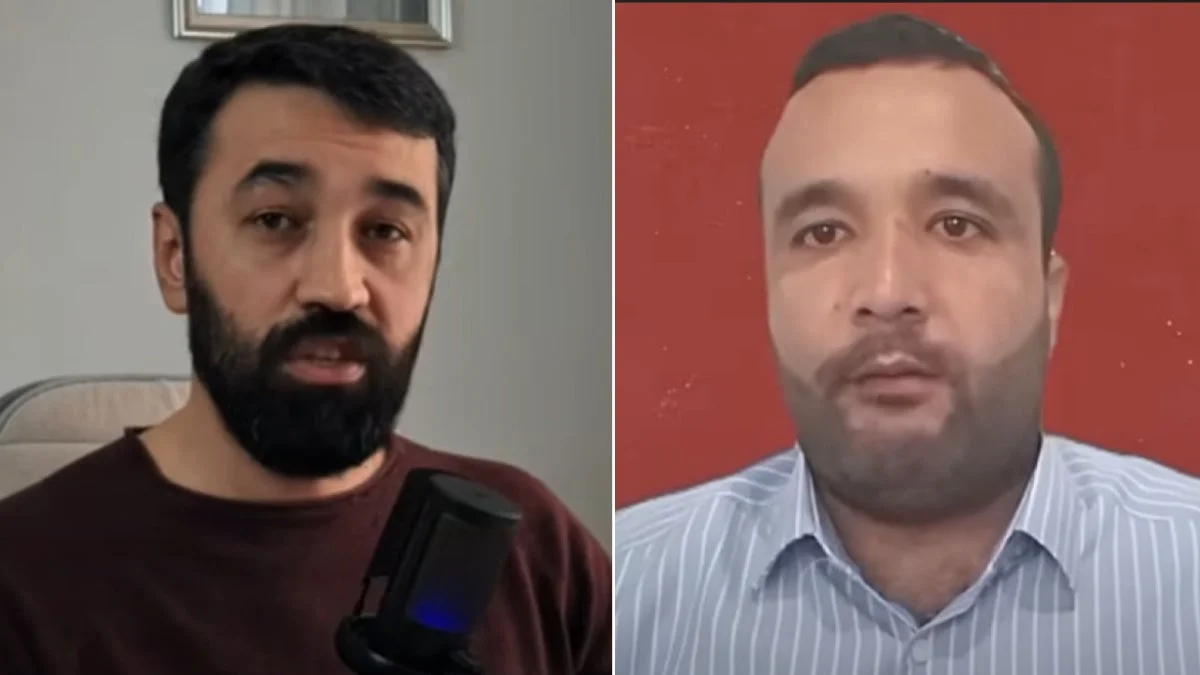
A Year of Silence: The Unexplained Disappearance of Turkmen Activists Alisher Sakhatov and Abdulla Orusov in Türkiye
The passage of one full year since the disappearance of Alisher Sakhatov and Abdulla Orusov in Türkiye has left a vacuum of accountability and a growing sense of dread among the international human rights community and the Turkmen diaspora. On July 24, the calendar marked a grim anniversary for the families of these two prominent activists and bloggers, who vanished under mysterious circumstances shortly after a Turkish court had intervened to protect them from deportation. Their case has become a focal point for concerns regarding the safety of political dissidents in exile and the extent of "transnational repression" exercised by the government of Turkmenistan. As investigations by Turkish authorities remain inconclusive, the fate of Sakhatov and Orusov remains unknown, raising the specter of unlawful rendition, arbitrary detention, and the potential for state-sanctioned torture within the borders of one of the world’s most reclusive nations.
Profiles of Dissent: The Lives and Work of Sakhatov and Orusov
Alisher Sakhatov and Abdulla Orusov were not merely residents of Türkiye; they were vital links between the silenced population inside Turkmenistan and the outside world. Having moved to Türkiye in 2018, they utilized digital platforms to bypass the draconian censorship of the Turkmen state. Their content focused on the systemic issues plaguing their homeland, including widespread government corruption, the predatory behavior of the Turkmen security services, and the severe restrictions on the freedom of movement that prevent citizens from seeking better lives abroad.
One of their most significant areas of focus was the plight of Turkmen labor migrants. Turkmenistan is known for its "passport denial" policy, where the government frequently refuses to renew travel documents for citizens living abroad through its consulates, forcing them to return to Ashgabat where they face immediate interrogation or travel bans. Sakhatov and Orusov documented these hardships, providing a voice for the hundreds of thousands of Turkmens living in Türkiye who exist in a state of legal limbo. By speaking openly about these abuses, the two men became high-profile targets for the Turkmen Ministry of National Security (MNB), which has a long history of monitoring and harassing dissidents beyond its borders.
A Chronology of Disappearance
The events leading to the disappearance of Sakhatov and Orusov suggest a coordinated effort to silence their activism. The timeline began to accelerate in early 2025, reflecting a broader shift in regional security dynamics.
In April 2025, Turkish law enforcement detained both Sakhatov and Orusov. The official justification for their detention was based on "vague national security claims," a categorization often used in administrative detention cases involving foreign nationals. Following their arrest, Turkish authorities issued a formal deportation order, which would have seen the men handed directly over to Turkmen officials at the airport in Ashgabat.
Recognizing the immediate danger of torture and extrajudicial punishment, legal representatives for the activists appealed to the Turkish Constitutional Court. In a move that initially offered hope to human rights defenders, the court granted a temporary stay of execution on the deportation order. This suspension was intended to provide the court time to assess the credible risks of persecution and human rights violations the men would face in Turkmenistan.
However, the legal victory was short-lived. Within two weeks of the Constitutional Court’s suspension of the deportation order, both Sakhatov and Orusov went missing. They were not in official state custody at the time of their disappearance, yet the circumstances—occurring so closely after their legal reprieve—have led observers to suspect that they may have been the victims of an extrajudicial "snatch-and-grab" operation or an unlawful transfer facilitated by security elements.
The Context of Transnational Repression
The disappearance of these activists must be viewed within the broader context of Turkmenistan’s repressive domestic and foreign policy. Under the leadership of President Serdar Berdimuhamedov and his father, Gurbanguly Berdimuhamedov (who holds the title of "National Leader"), Turkmenistan remains a totalitarian state with no independent media, no political opposition, and a pervasive surveillance apparatus.
Transnational repression—where a state reaches across national borders to silence, intimidate, or abduct its critics—has become a hallmark of the Turkmen regime. In recent years, the relationship between Ashgabat and Ankara has shifted significantly. For decades, Türkiye was a sanctuary for Turkmen citizens due to visa-free travel and cultural ties. However, in September 2022, at the explicit request of the Turkmen government, Türkiye reintroduced visa requirements for Turkmen citizens. This policy change was widely interpreted as a move to help the Turkmen authorities track and control the movement of its population and to curb the activities of the growing protest movement in the diaspora.
Human rights organizations have documented numerous instances where Turkmen activists in Türkiye have been harassed by individuals believed to be working for the Turkmen security services. The case of Sakhatov and Orusov represents the most extreme end of this spectrum: the total "disappearance" of individuals who were under the protection of the Turkish legal system.
Legal Obligations and the Principle of Non-Refoulement
The disappearance of Sakhatov and Orusov raises critical questions regarding Türkiye’s adherence to international law. As a signatory to the 1951 Refugee Convention and the United Nations Convention against Torture, Türkiye is bound by the principle of non-refoulement. This legal doctrine prohibits states from returning individuals to a country where there are substantial grounds for believing they would be in danger of being subjected to torture or other serious human rights violations.
While the Turkish Constitutional Court acted in accordance with these principles by suspending the deportation order, the subsequent failure of the state to protect these individuals from disappearance suggests a breakdown in the rule of law or a lack of oversight regarding foreign intelligence operations on Turkish soil.
Legal experts argue that if the men were indeed transferred to Turkmenistan outside of formal legal channels, it would constitute a grave violation of Turkish sovereignty and international human rights standards. The lack of transparency from the Turkish Ministry of Interior and the Ministry of Justice regarding the progress of the investigation into their whereabouts has only fueled these concerns.
The Humanitarian Toll: Families in Limbo
Behind the political and legal complexities of the case lies a profound human tragedy. The families of Sakhatov and Orusov have spent the last twelve months in a state of "unbearable uncertainty," a condition that international law often classifies as a form of cruel and inhuman treatment.
Without confirmation of whether the men are alive, dead, or held in a secret prison, their families are unable to find closure or seek justice. In Turkmenistan, the practice of "enforced disappearance" is a common tool of state terror. The "Prove They Are Alive!" international campaign has documented over 160 cases of individuals who have vanished into the Turkmen prison system, some for more than two decades, without any contact with their families or legal counsel. There is a deep-seated fear that Sakhatov and Orusov have been added to this list of the "disappeared," held in isolated facilities like the notorious Ovadan Depe prison.
Official Responses and International Pressure
To date, the response from both the Turkish and Turkmen governments has been characterized by silence or obfuscation. While Turkish authorities did open an investigation into the disappearances a year ago, no public findings have been released. There has been no confirmation of whether security footage was reviewed, whether border crossings were checked, or if any suspects have been questioned.
The Turkmen government, for its part, has maintained a total wall of silence. They have not acknowledged the men are in their custody, nor have they responded to inquiries from international human rights bodies. This lack of communication is typical for Ashgabat, which rarely engages with international criticism regarding its human rights record.
The international community, including the United Nations and the European Union, has been urged by organizations such as Human Rights Watch and the Turkmenistan Helsinki Foundation for Human Rights to increase pressure on Ankara and Ashgabat. Advocates argue that the silence of the international community emboldens repressive regimes to carry out similar operations against dissidents elsewhere.
Implications for the Future of Activism
The disappearance of Sakhatov and Orusov has sent a chilling message to the Turkmen diaspora in Türkiye and across Europe. It suggests that even legal protections and court orders may not be enough to guarantee the safety of those who speak out against the Berdimuhamedov regime.
If activists can "vanish" in a country like Türkiye, which is a member of the Council of Europe and a candidate for EU membership, it signals a dangerous expansion of the "grey zone" in which transnational repression operates. It forces activists to choose between their safety and their voice, potentially leading to a decline in the documentation of human rights abuses within Turkmenistan.
Conclusion: The Need for Immediate Accountability
As the one-year mark of their disappearance passes, the demand for answers becomes more urgent. The Turkish government must reinvigorate its investigation with a level of transparency that has so far been absent. Disclosing the findings of the investigation and establishing the exact timeline of the activists’ disappearance is a necessary step toward restoring faith in the Turkish legal system’s ability to protect those on its soil.
Furthermore, the international community must hold Turkmenistan accountable for its role in the potential abduction and detention of its citizens. The fate of Alisher Sakhatov and Abdulla Orusov is not merely a matter of regional security; it is a test of the global commitment to human rights and the protection of those who risk everything to speak truth to power. Every day that passes without news is not just a day of suffering for their families, but a day where the principles of international law are undermined by the silence of states. The uncertainty must end, and the truth of their whereabouts must be revealed.

Related Posts

Human Rights Watch Calls for Investigation into Death of Detainee Following Removal from Najaf Hospital by Iraqi Drug Police
Human Rights Watch Urges UN Security Council to Extend Lebanon Peacekeeping Mission Amid Escalating Conflict and Humanitarian Crisis