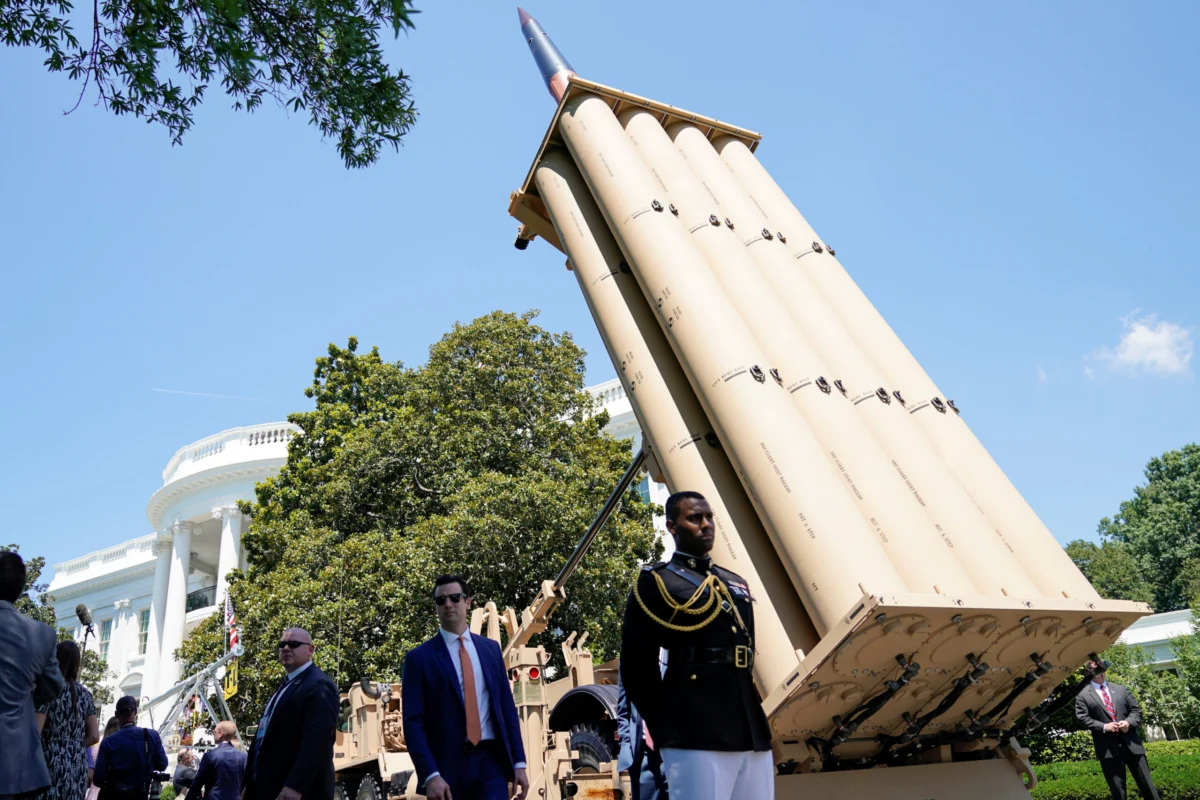
Trump Signs Executive Order Restricting Defense Contractor Reliance on Chinese Critical Minerals and Supply Chains
In a move intended to fundamentally reshape the American defense industrial base, President Donald Trump signed a sweeping executive order on Monday aimed at severing the U.S. military’s long-standing dependence on Chinese supply chains. The order significantly raises the threshold for U.S. defense contractors seeking waivers to use critical minerals and other essential materials sourced from prohibited foreign entities, most notably the People’s Republic of China. This directive represents the administration’s most aggressive effort to date to insulate the production of advanced weaponry from geopolitical vulnerabilities and ensure that the "Made in America" mandate extends to the deepest tiers of the military supply chain.
Under the new regulatory framework, the era of routine waivers for defense firms is effectively over. For decades, contractors have frequently utilized exemptions to source magnets, specialized alloys, and raw minerals from China, often citing the lack of domestic alternatives or the prohibitive cost of reshoring production. The newly signed order mandates that defense contractors must now provide exhaustive proof that they have conducted a comprehensive search for alternative suppliers before any waiver is considered. Furthermore, companies must now disclose the precise origin of every material used in a system and present a formal, time-bound transition plan to migrate toward domestic or allied sourcing. Failure to demonstrate sufficient progress in these areas could result in the immediate termination of federal contracts.
A Mandate for Supply Chain Transparency
The executive order shifts the burden of proof from the government to the private sector. White House adviser Peter Navarro, a key architect of the administration’s trade and industrial policies, emphasized during a press briefing that the Pentagon would no longer accept convenience as a justification for foreign dependency. "No more: ‘we tried nothing and we’re out of options’," Navarro stated, characterizing the previous waiver process as a loophole that undermined national security.
Beyond the tightening of waivers, the order introduces a mandatory "supply chain mapping" requirement. This directive requires the Department of Defense (DoD) to draft new regulations forcing prime contractors—such as Lockheed Martin, Boeing, and Raytheon—to map their entire production ecosystem. This visibility must extend from the raw material extraction phase through to the final assembly of finished military hardware. In the past, the Pentagon has often lacked clear visibility into the "lower-tier" suppliers that provide the sub-components and processed materials used by major defense firms.
Navarro described this initiative as a form of "battlefield preparation." He argued that the United States cannot afford to discover that its most advanced missile systems or stealth aircraft are dependent on components controlled by a strategic adversary only after a conflict has begun. The order also requires contractors to perform rigorous assessments of their suppliers’ financial health, foreign ownership structures, and manufacturing risks, with an explicit instruction to replace any vendor deemed a security or reliability threat.
Chronology of the Sourcing Crisis
The signing of this executive order is the culmination of nearly a decade of mounting tension regarding the vulnerability of the U.S. defense industrial base. The timeline of this transition highlights a growing bipartisan consensus on the need for "decoupling" in the defense sector:
- 2017: Executive Order 13806 is signed, directing a government-wide assessment of the manufacturing and defense industrial base. The resulting report identifies hundreds of "gaps" where the U.S. is reliant on foreign suppliers, particularly China.
- 2018-2019: The Pentagon begins identifying specific components, such as high-capacity batteries and rare earth magnets, where Chinese dominance poses a "single point of failure" risk.
- 2021-2023: Disruptions in global shipping and the post-pandemic economic environment expose the fragility of "just-in-time" supply chains. Legislative efforts in the National Defense Authorization Act (NDAA) begin to restrict the use of Chinese-sourced printed circuit boards and certain metals.
- 2024-2025: High-profile delays in major weapons programs, including the F-35 Lightning II and various hypersonic missile projects, are partially attributed to shortages of specialized materials and components sourced from abroad.
- July 2026: President Trump signs the current executive order, transforming previous guidelines into strict mandates with significant financial penalties for non-compliance.
This chronology reflects a shift from viewing supply chain issues as purely economic concerns to treating them as central pillars of national defense strategy.
Supporting Data: The Depth of Dependency
The urgency of the executive order is underscored by stark data regarding the global minerals market. China currently controls approximately 60% of the world’s rare earth mineral production and a staggering 85% to 90% of the global capacity for processing these minerals into the metals and magnets required for military technology.
Critical minerals such as neodymium, dysprosium, and terbium are essential for the guidance systems of precision-guided munitions, the radar systems of advanced destroyers, and the motors of electric-drive naval vessels. For example, a single F-35 fighter jet requires roughly 920 pounds of rare earth materials. Similarly, a Virginia-class submarine utilizes nearly 10,000 pounds of these specialized minerals.
In addition to rare earths, the U.S. remains heavily reliant on foreign sources for:
- Antimony: Used in ammunition and infrared sensors (China is the primary producer).
- Titanium: Essential for aerospace frames and engine components (significant reliance on foreign processing).
- Lithium and Cobalt: Critical for the high-density batteries powering everything from soldier-worn tech to unmanned underwater vehicles (UUVs).
According to recent government audits, the Pentagon’s top weapons programs are currently averaging 12 years behind schedule, with supply chain bottlenecks cited as a primary driver of these delays. The administration argues that by forcing a shift to domestic production, the U.S. can simultaneously improve security and revitalize its own industrial capacity, eventually leading to more predictable production timelines.
Industry and Political Responses
The reaction to the executive order from the defense industry has been a mix of cautious support for the principle of national security and significant concern over the logistics of implementation. Major trade groups, such as the National Defense Industrial Association (NDIA) and the Aerospace Industries Association (AIA), have previously warned that a rapid "decoupling" from China could lead to increased costs and further delays in the short term.
"The goal of a secure, domestic supply chain is one the industry shares," a spokesperson for a major defense prime noted anonymously. "However, the infrastructure to process these minerals at scale does not yet exist in the United States. We are being asked to source domestically from a domestic industry that is still in its infancy."
On Capitol Hill, the order has received support from "China hawks" in both parties. Supporters argue that the U.S. has been "funding its own demise" by allowing defense dollars to flow into the Chinese economy. Critics, however, worry that the aggressive timeline for compliance could place an undue burden on small and medium-sized "Tier 3" suppliers who lack the administrative resources to map their supply chains to the degree required by the new rules.
In Beijing, the Chinese Ministry of Commerce has historically responded to such measures with its own export controls. Analysts suggest that China may retaliate by further restricting the export of the very minerals the U.S. is trying to reshore, potentially creating a "supply crunch" before American domestic capacity can fully come online.
Strategic Implications and Battlefield Readiness
The strategic implications of this executive order extend far beyond the balance sheets of Lockheed Martin or Boeing. By requiring "battlefield preparation" through supply chain mapping, the administration is preparing for a potential "protracted conflict" scenario. In modern warfare, the ability to rapidly surge production of missiles and munitions is often the deciding factor in a long-term engagement. If the U.S. is dependent on an adversary for the raw materials needed to replenish its stockpiles, its "strategic depth" is compromised.
Furthermore, the order addresses the growing concern of "technological infiltration." By mandating the identification of software and component origins, the Pentagon aims to mitigate the risk of cyber backdoors or "kill switches" being embedded in military hardware during the manufacturing process in foreign facilities.
The executive order also directs the Pentagon to explore the use of the Defense Production Act (DPA) to provide low-interest loans and purchase guarantees to American mining and processing firms. This suggests that the administration views this not just as a restrictive measure, but as a proactive industrial policy designed to create a "fortress economy" capable of sustaining the U.S. military regardless of global trade disruptions.
Conclusion: The Path Ahead
The implementation of this executive order will likely be the defining challenge for the Department of Defense over the next several years. As the Pentagon works to codify these rules, defense contractors will be forced to undergo a painful and expensive transition. The success of the policy depends on whether the U.S. government can foster a domestic mining and processing industry fast enough to meet the demands of the military-industrial complex.
While the transition poses significant economic and logistical hurdles, the administration’s stance is clear: the cost of dependency is now considered higher than the cost of reshoring. As the U.S. military monitors Chinese research vessels in the Arctic and navigates rising tensions in the Indo-Pacific, the security of the supply chain has moved from a back-office concern to a front-line priority. The executive order signed on Monday marks the beginning of a new era in American defense procurement—one defined by transparency, domestic resilience, and a decisive break from the globalized sourcing models of the past three decades.

Related Posts
Pentagon Forges Landmark Seven-Year Agreements with Boeing and RTX to Accelerate Standard Missile-3 Production and Stabilize Defense Supply Chains
Boeing Unveils Ultra Low-Cost Seeker to Enhance Missile Inventory and Combat Cost Challenges in Modern Warfare