US President Trump Confirms ‘Very Hard’ Strikes on Iran, Citing Honour for Fallen Service Members Amid Deepening Regional Crisis
In a stark escalation of tensions in the Middle East, United States President Donald Trump confirmed early on July 20, 2026, that the U.S. military had carried out significant strikes against targets in Iran. Speaking to reporters, President Trump stated that these attacks were executed "in honour of the, probably three, it’s probably three great patriots" – referring to U.S. service members recently killed in the region. The President’s announcement signals a dramatic intensification of the protracted standoff between Washington and Tehran, raising immediate concerns about the potential for a full-scale regional conflict.
The revelation of these punitive strikes, delivered with President Trump’s characteristic directness, underscored a somber mood in Washington. When pressed for details regarding the military fatalities that prompted this forceful response, Trump expressed deep regret, stating, "we feel very badly." He further contextualized the sacrifices of the fallen, adding that they were fighting to prevent Tehran from acquiring a nuclear weapon, a long-standing U.S. policy objective that has been a flashpoint in bilateral relations for decades. The exact nature, location, and scale of the U.S. strikes remain officially undisclosed, though early reports from regional defense analysts suggest a coordinated aerial and missile campaign targeting key military infrastructure within Iranian territory.
A Chronology of Escalation: The Path to Conflict
The July 20, 2026, strikes represent a critical juncture in a series of escalating confrontations that have plagued U.S.-Iran relations for years, significantly intensifying in the preceding weeks. The foundational animosity between the two nations dates back to the 1979 Iranian Revolution, but the recent period of heightened friction can be traced more directly to the U.S. withdrawal from the Joint Comprehensive Plan of Action (JCPOA), commonly known as the Iran nuclear deal, in 2018. This decision, under the Trump administration, reinstated crippling economic sanctions on Iran, severely impacting its economy and leading Tehran to gradually roll back its commitments under the nuclear accord.
Key Events Leading to the Current Crisis:
- 2018-2022: Maximum Pressure Campaign and Iranian Retaliation: Following the U.S. withdrawal from the JCPOA, Washington implemented a "maximum pressure" campaign, designed to choke off Iran’s oil exports and isolate its economy. In response, Iran engaged in a series of actions including harassment of international shipping in the Persian Gulf, attacks on regional oil infrastructure attributed to its proxies, and gradual enrichment of uranium beyond JCPOA limits.
- 2023-2025: Regional Proxy Conflicts Intensify: Proxy conflicts in Yemen, Syria, Iraq, and Lebanon saw increased activity, with U.S. and allied interests frequently clashing with Iranian-backed forces. Incidents involving rocket attacks on U.S. bases in Iraq and drone strikes targeting strategic assets became more frequent, often met with limited, retaliatory U.S. strikes.
- Early 2026: Diplomatic Deadlock and Mounting Tensions: Efforts by European nations and other international actors to revive the JCPOA or broker de-escalation proved fruitless. Both Washington and Tehran maintained firm stances, with Iran insisting on sanctions relief before any negotiations, and the U.S. demanding verifiable cessation of perceived malign regional activities. Military exercises in the Gulf by both sides became increasingly provocative.
- July 15, 2026: The Fatal Incident: Reports, as yet unconfirmed by official U.S. military channels beyond President Trump’s vague reference, indicate that on or around July 15, a precision strike, widely attributed to an Iranian-designed and operated unmanned aerial vehicle (UAV), targeted a forward operating base or logistical hub used by U.S. forces in a neighboring Gulf state. This attack resulted in the deaths of three U.S. service members and multiple injuries. The incident immediately triggered widespread condemnation and vows of swift retaliation from Washington.
- July 16-19, 2026: U.S. Deliberations and Iranian Denials: Following the fatalities, the U.S. National Security Council convened multiple emergency sessions. Initial intelligence assessments quickly pointed to Iranian involvement, directly or through proxies. Iranian state media, however, vehemently denied any responsibility for the attack, labeling U.S. accusations as pretexts for aggression.
- July 19, 2026 (Evening, GMT): The Strikes Commence: In the late hours of July 19 and into the early morning of July 20, multiple sources reported significant aerial activity and missile launches from U.S. assets in the region. These reports, initially unverified, were later substantiated by President Trump’s statement. The timing, just before the early morning hours in Iran, suggested a coordinated effort to achieve strategic surprise.
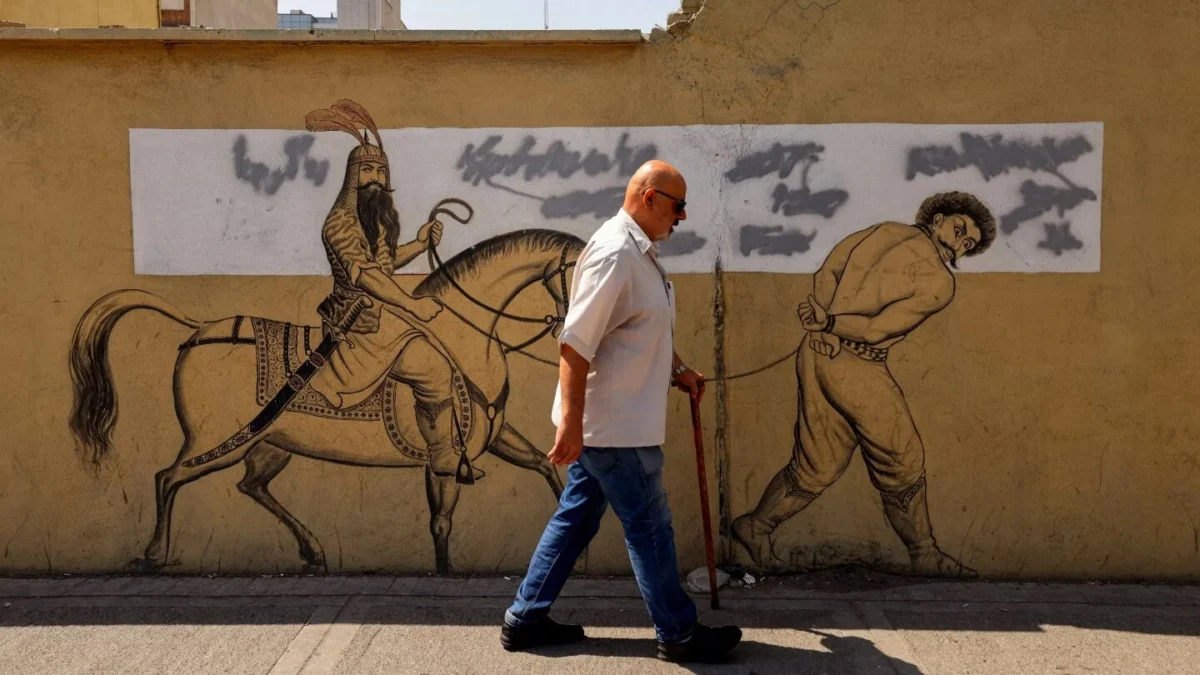
The image accompanying the initial news update, depicting a man walking past a mural in Tehran on July 19, 2026, provides a poignant snapshot of a city seemingly on the brink, yet imbued with its rich cultural and historical narratives. Such murals, often depicting scenes from Iranian epics or revolutionary themes, serve as a constant reminder of the nation’s resilience and its deep-seated identity, factors that will undoubtedly play into any future Iranian response.
The Nature of the Strikes and U.S. Objectives
While specific operational details remain scarce, President Trump’s declaration of "hitting them very hard again tonight" suggests a substantial military operation. Analysts speculate that the targets would likely include a mix of Iranian Revolutionary Guard Corps (IRGC) facilities, missile launch sites, drone manufacturing or storage facilities, and potentially naval assets involved in Gulf security. The use of "again tonight" implies a possible multi-wave attack or continued operations following initial strikes.
The explicit linkage of the strikes to "honour" for the fallen service members underscores a retributive motive, signaling that the U.S. will not tolerate attacks on its personnel without a forceful response. Furthermore, President Trump’s reiteration that the deceased soldiers were fighting to prevent Iran from obtaining a nuclear weapon highlights the broader strategic objective. This indicates that beyond immediate retaliation, the strikes may also be aimed at degrading Iran’s military capabilities, particularly those perceived as supporting its nuclear ambitions or its regional proxy network.
Military experts suggest that such strikes would typically involve precision-guided munitions launched from a combination of naval vessels in the Persian Gulf, strategic bombers based in regional U.S. airfields, and potentially advanced fighter jets. The objective would be to minimize collateral damage while maximizing the impact on specific military targets, although the inherent risks in any military action in a densely populated region are significant.

Reactions from Tehran and the International Community
The immediate aftermath of President Trump’s announcement has plunged the region and the international community into a state of heightened alert.
Iranian Response:
Initial reactions from Tehran have been swift and condemnatory. Iranian state media, citing anonymous military sources, have vehemently denied U.S. claims of responsibility for the attack that killed the U.S. service members, instead portraying the U.S. strikes as unprovoked acts of aggression. Senior Iranian officials, including Foreign Minister Hossein Amir-Abdollahian, are expected to issue formal condemnations and threats of severe retaliation against U.S. interests and allies in the region. There are strong indications that Iran will call for an emergency session of the UN Security Council, accusing the U.S. of violating international law and sovereignty. The Iranian public, historically unified in the face of external threats, is likely to rally behind the government, as evidenced by past crises.
International Responses:
- United Nations: UN Secretary-General António Guterres is expected to issue an urgent plea for de-escalation, warning of the catastrophic consequences of a full-scale conflict in the Middle East. The UN Security Council will likely convene to address the crisis, though consensus on a unified response, particularly from permanent members, is expected to be challenging.
- European Union: European leaders, who have consistently advocated for de-escalation and a diplomatic resolution to the Iran nuclear issue, have expressed deep alarm. High Representative for Foreign Affairs and Security Policy Josep Borrell is anticipated to issue a statement calling for immediate restraint from all parties and a return to dialogue. The EU’s primary concern will be preventing a wider regional war and protecting the flow of oil through the Strait of Hormuz.
- Regional Allies (Saudi Arabia, UAE, Israel): While some U.S. allies in the Gulf and Israel may privately welcome a strong U.S. stance against Iran, public reactions are likely to be cautious. These nations face the immediate threat of Iranian retaliation and regional destabilization. They will likely call for stability while affirming their security partnerships with the U.S.
- Russia and China: Both Russia and China, often critical of U.S. unilateral military actions, are expected to condemn the strikes, calling for adherence to international law and advocating for diplomatic solutions. They are likely to reiterate their support for the JCPOA and oppose any military intervention. Their statements will likely emphasize the potential for destabilization and the impact on global energy markets.
Broader Impact and Implications
The U.S. strikes against Iran carry profound implications across geopolitical, economic, and humanitarian spheres, potentially reshaping the regional and global landscape.
Geopolitical Implications:
The most immediate and severe implication is the heightened risk of a full-scale regional war. Iran possesses significant conventional military capabilities, a vast network of proxy forces, and the strategic ability to disrupt global oil flows. Any sustained military campaign could draw in regional and international powers, creating a cascading effect of conflict. The stability of key shipping lanes, particularly the Strait of Hormuz, through which a significant portion of the world’s oil supply passes, would be severely jeopardized. This could also lead to a surge in terrorist activities and further destabilization of already fragile states like Iraq, Syria, and Yemen. The global balance of power could shift, with a potential strengthening of alliances among nations wary of U.S. unilateralism.
Economic Implications:
Global oil markets reacted instantly to the news, with crude oil prices soaring in early trading. A sustained conflict would likely lead to unprecedented spikes in energy costs, triggering global economic recessionary pressures. Supply chain disruptions, increased insurance premiums for shipping, and investor uncertainty would compound these effects. Countries heavily reliant on imported oil would face severe economic challenges, potentially leading to social unrest. The economic impact on Iran, already reeling from years of sanctions, would be catastrophic, further impoverishing its population and potentially leading to internal instability.
Humanitarian Crisis:
A full-scale conflict would undoubtedly trigger a severe humanitarian crisis. Civilian casualties, mass displacement, and a surge in refugee flows would overwhelm existing aid infrastructure in the region and beyond. The destruction of critical infrastructure, including hospitals, schools, and water treatment facilities, would have long-lasting consequences for millions. The psychological toll on populations living under constant threat of war would be immense. International humanitarian organizations are already sounding alarms, preparing for the worst-case scenarios.
Domestic U.S. Implications:
Domestically, the strikes will undoubtedly ignite a fierce political debate in the United States. President Trump’s actions will likely be lauded by his base and hawks who advocate for a strong stance against Iran. However, critics in Congress and among the opposition will question the legality of the strikes without congressional authorization, the strategic wisdom of escalating military action, and the potential for a protracted and costly conflict. The timing, just months before a potential presidential election, adds another layer of complexity, with foreign policy and national security becoming dominant campaign issues.
As the world watches with bated breath, the coming days will be critical in determining whether the U.S. strikes mark a calibrated punitive measure or the opening salvo in a much larger and more devastating conflict in the Middle East. The delicate balance of power in the region has been irrevocably altered, and the repercussions of these actions will resonate globally for years to come.

Related Posts
Over 150 Israeli Settlers Storm Al-Aqsa Compound and Perform Prayers, Violating Status Quo Under Police Protection.
UN Report Highlights Over 900 Obstacles Hampering West Bank Aid Amid Escalating Humanitarian Crisis