Defund the Olympics over Russian re-entry, say 9 EU countries
The geopolitical friction surrounding the international sporting arena has reached a boiling point as a coalition of nine European Union member states formally called for the defunding of the Olympic Games. This unprecedented demand, issued in a joint missive, centers on the continued inclusion of Russian and Belarusian athletes under the International Olympic Committee’s (IOC) neutral-athlete framework. The signatory nations, led by a bloc of Baltic and Central European states, argue that the presence of these competitors during an ongoing, full-scale invasion of Ukraine renders the fundamental Olympic principle of "peaceful competition" a nullity.
The core of the argument presented by these nine EU nations is rooted in the practical impossibility of equitable participation. While the IOC has maintained that individual athletes should not be punished for the actions of their governments, the signatories contend that Ukrainian athletes have been systematically deprived of the ability to train, travel, and compete under equal conditions. With infrastructure destroyed and active military service depleting the ranks of their national sports teams, these nations argue that the playing field is not only tilted but fundamentally corrupted by the ongoing conflict.
A Chronology of Diplomatic Escalation
The path to this ultimatum began shortly after the initial invasion of Ukraine in February 2022. The subsequent months saw a series of tentative, often contradictory, statements from international sporting bodies regarding the status of Russian and Belarusian athletes.

In the early stages, the IOC recommended a total ban on athletes from both nations, citing safety and integrity concerns. However, as the conflict transitioned into a prolonged war of attrition, international sports governance began to soften its stance, moving toward a "neutral athlete" status. This shift sparked immediate backlash from Kyiv and its European allies. By early 2026, as the lead-up to the summer games intensified, the pressure from EU capitals mounted. The joint missive issued on July 14 represents the culmination of years of diplomatic friction, where behind-the-scenes lobbying transitioned into a formal public challenge to the financial and moral legitimacy of the Olympic movement.
Supporting Data and The Human Cost
The economic and human implications of this standoff are profound. According to reports from the Ukrainian Ministry of Youth and Sports, over 400 Ukrainian athletes and coaches have been killed since the start of the full-scale invasion. Furthermore, the destruction of sports infrastructure—including stadiums, training centers, and aquatic facilities—has been valued at over $300 million.
For the nine EU nations, these statistics are not merely footnotes; they are evidence that the Russian state’s military campaign has directly dismantled the foundation upon which Ukrainian sports are built. The signatory countries point to the fact that while Russian athletes continue to receive state support and training in relative security, their Ukrainian counterparts are often forced to train abroad, separated from their families and lacking consistent access to home-grown facilities. This disparity, they argue, violates the core Olympic charter which emphasizes fair play and equal opportunity.
Institutional Friction: The Role of the European Commission
The call to defund the Olympics follows a broader trend of EU member states attempting to force the European Commission’s hand on sensitive geopolitical issues. In a parallel development, several EU capitals have been attempting to exert pressure on the Commission regarding sanctions against Israeli settlers. In that instance, as in the Olympic debate, member states have struggled to force the executive branch of the EU to translate policy sentiment into concrete, actionable measures.

Analysts note that the Commission often faces a delicate balancing act. While it seeks to maintain a unified stance on foreign policy, it is frequently hampered by the requirement for consensus among member states. In the case of the Olympics, the Commission must navigate the autonomy of the IOC—an independent, non-governmental organization—while acknowledging the strong, collective voice of the nine member states. The failure of member states to force the Commission’s hand on Israeli sanctions earlier in July serves as a sobering precedent for the Olympic push; despite strong rhetoric from national capitals, the mechanisms for institutional enforcement remain sluggish and legally complex.
The Broader Implications for Global Sport
The push to defund the Olympic movement over the inclusion of Russian athletes raises existential questions about the future of international sports. Historically, the Olympics have positioned themselves as a "neutral" space, a sanctuary from the volatility of international politics. However, the current situation suggests that such neutrality is increasingly viewed as an untenable relic.
If the nine EU nations succeed in disrupting the financial flows to the Olympics, the impact would be felt across the entire sporting ecosystem. Sponsorship deals, broadcasting rights, and national government subsidies—which make up the vast majority of the Olympic budget—could face legal challenges or parliamentary scrutiny. The ripple effect could potentially force the IOC to fundamentally rewrite its participation criteria or face a fragmented sporting world where boycotts and parallel games become the new norm.
Official Responses and Reactions
While the IOC has not issued a detailed response to the specific ultimatum, previous statements suggest they remain committed to the current path. IOC officials have consistently argued that sports must remain a bridge between peoples, even in times of war. "The Olympic Games are not a tool for political retribution," a spokesperson noted in a briefing earlier this year.

Conversely, the nine signatory nations—which include several countries currently at the forefront of the European security debate—maintain that there is no "neutrality" in a war of aggression. They argue that the presence of athletes representing a state currently sanctioned by the majority of the Western world is a propaganda victory for the aggressor. As the July 14 missive suggests, these countries are prepared to use their financial leverage to force a change, signaling a departure from traditional diplomacy toward more aggressive, coercive statecraft.
Future Outlook: A Testing Ground for EU Foreign Policy
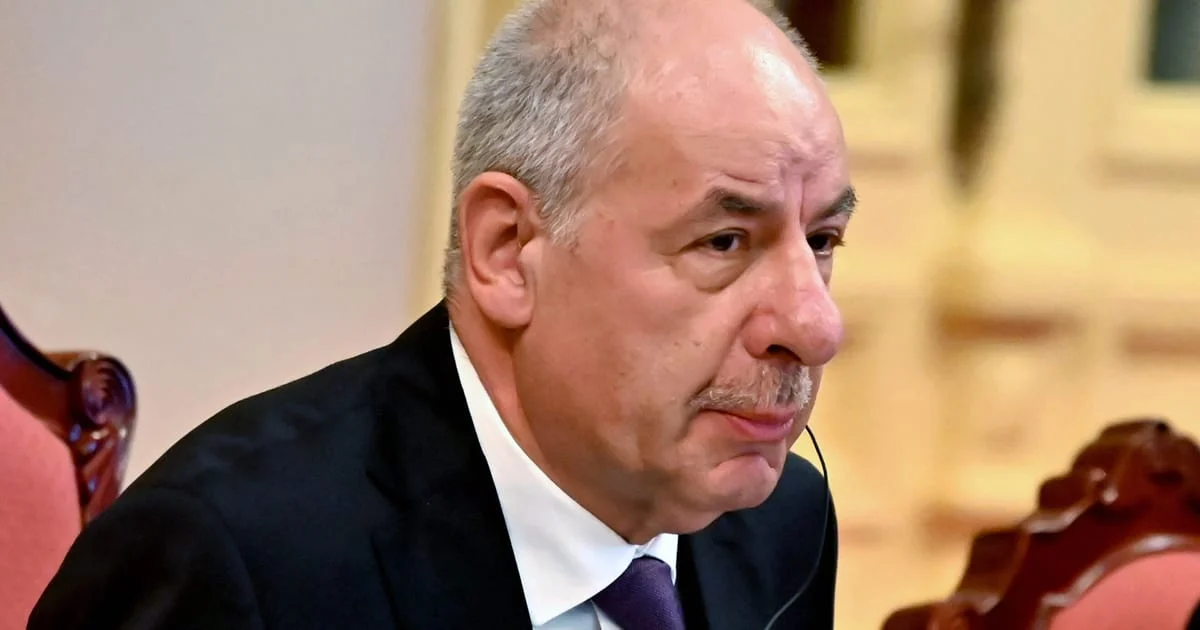
As the summer season progresses, the standoff between these nine EU states and the Olympic establishment will serve as a bellwether for the influence of European collective action. The situation in Hungary, where the parliament recently voted to oust an Orbán-appointed president, underscores the volatility currently present in European political structures. This internal instability, combined with external pressures like the war in Ukraine, has created an environment where traditional institutional norms are being tested at every level.
The demand to defund the Olympics is more than a sporting dispute; it is a manifestation of the deeper ideological divide regarding how Europe should respond to existential threats. Whether the coalition can maintain its resolve in the face of institutional pushback from the Commission and the IOC remains to be seen. However, the message delivered on July 14 is clear: the era of business-as-usual for international organizations operating within the European sphere is effectively over.
The coming months will likely see further legal and diplomatic maneuvering as both sides weigh the cost of their convictions. For the athletes caught in the middle, the uncertainty is a stark reminder that in an increasingly polarized world, the boundaries between the stadium and the battlefield have become dangerously thin. Whether this leads to a reform of the Olympic charter or a permanent fracturing of international sports, the events of July 2026 will undoubtedly be remembered as a pivotal moment in the intersection of athletics, finance, and global politics.