WNBA Coach with ‘Trans Kids Belong’ Shirt Fears Men Taking Coach Jobs
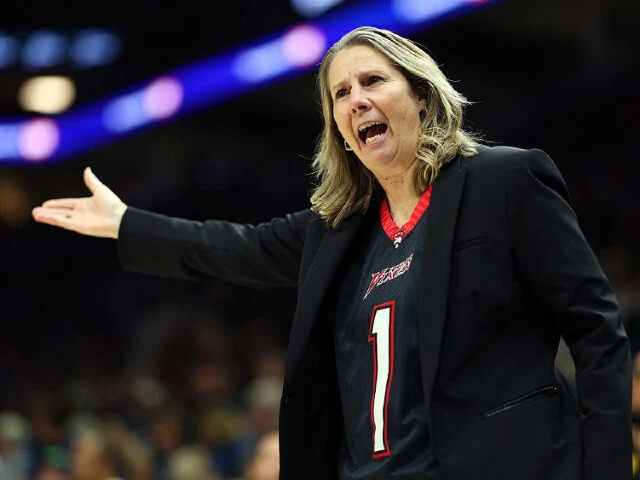
The recent appearance of Minnesota Lynx head coach Cheryl Reeve wearing a shirt emblazoned with "Trans Kids Belong" during a WNBA game has intensified an already fervent public discourse surrounding gender identity, athletic participation, and women’s sports. The sartorial statement, widely interpreted as a direct counterpoint to Indiana Fever star Sophie Cunningham’s vocal advocacy for protecting women’s sports for biological females, underscores a complex ideological divide within professional athletics and broader society. This incident not only pits two prominent figures against each other on a sensitive issue but also brings into sharp relief Reeve’s own historical advocacy for women’s professional opportunities, particularly in coaching, creating a nuanced intersection of gender-based protections.
The controversy unfolded against a backdrop of increasing public debate on the inclusion of transgender athletes in women’s sports categories. Sophie Cunningham, a forward for the Indiana Fever, has become an outspoken proponent for maintaining separate sports categories based on biological sex. In a recent interview with ESPN, Cunningham articulated her position, stating, "I got a lot of negative feedback about me hating trans. And I’m like, ‘I never once said that.’" She clarified her stance, emphasizing, "I think that I am here to extend love. But I also think with that love is truth, being honest. And I want to protect young girls in a locker room, or young girls in sport who shouldn’t have to go against biological men."
Cunningham’s comments, which resonated with a segment of the public concerned about fairness and safety in women’s sports, concurrently drew significant backlash from online communities and advocacy groups supportive of transgender rights. Unfazed by the criticism, Cunningham reiterated her position in a subsequent press conference, declaring, "I said what I said. I think it’s kind of common sense, and I think I will always believe in that. I think it’s really important to protect children." She further clarified her motivations, asserting, "I don’t dislike anyone. I’m there to love, but I’m also there to love biological women." This unwavering stance set the stage for Reeve’s public display of support for transgender inclusion.
Reeve’s Stance on Transgender Inclusion and Nuance
In response to Cunningham’s remarks and the broader debate, Coach Reeve publicly expressed her view, asserting that "every kid has a right to sports regardless of (being) gender diverse, transgender." She acknowledged the complexities inherent in the discussion, particularly concerning older athletes and competitive levels. "Now, what gets nuanced is when you’re beyond puberty, when you’re in Olympic sport, when… we have scholarships at stake and that sort of thing," Reeve elaborated. She advocated for a collaborative approach to finding common ground, stating, "That’s where I say that common-sense people get together, and you find common ground to find a way to be inclusive. The answer isn’t no."
Reeve also directly addressed what she perceives as problematic narratives surrounding transgender individuals in sports. "It is not the case that we have ‘biological men in girls’ locker rooms,’ the way it’s being phrased, the innuendo there that somehow transgender women are predators," she stated. "There’s a lot of narrative that is problematic that we need to address. That is simply not what’s happening." Her comments reflect a common viewpoint among advocates for transgender inclusion, who argue that the debate often mischaracterizes transgender individuals and oversimplifies the science and social aspects of gender identity.
Historical Advocacy: A "Rooney Rule" for Women’s Coaching
What adds a compelling layer of complexity to Reeve’s current advocacy for transgender inclusion is her long-standing and vocal support for women’s employment opportunities within professional sports, particularly in coaching. Years prior to the "Trans Kids Belong" incident, Reeve publicly expressed significant concern about the erosion of women’s coaching jobs, particularly as professional women’s sports gained financial traction and visibility.
In an interview on the podcast Good Game with Sarah Spain, Reeve candidly shared her fears about men increasingly occupying coaching positions that were historically held by women. She drew a historical parallel to the impact of Title IX, a landmark federal civil rights law passed in 1972 that prohibits sex-based discrimination in any education program or activity receiving federal financial assistance. While Title IX dramatically expanded athletic opportunities for women and girls, Reeve argued it paradoxically led to a decline in women coaching women’s teams.
"We had more women coaching college basketball before Title IX. After Title IX, when it became more important and more investment — that was code for, ‘well, that’s a man’s job.’ You got paid more; it became a man’s job," Reeve explained. This observation is supported by historical data: in 1972, over 90% of women’s collegiate teams were coached by women. By 2020, that number had plummeted to roughly 40%, despite the massive growth in women’s sports participation. This trend is often attributed to the professionalization of women’s sports post-Title IX, which made coaching positions more financially lucrative and thus more attractive to men.
Reeve further extended this concern to the WNBA, noting a recent trend of men taking over coaching roles. "To this day, we still don’t have more women coaching in college basketball than we do men. Apply that same thing to two years ago, we lost seven WNBA coaches, they got fired, because all of the sudden, this money, the WNBA blew up," she continued. "Valuations of franchises. In comes the NBA folks again, who had cast us aside for many years. Now, they want their franchises back. That sorta thing. It’s more important again. And then we have more men."
To counteract this trend, Reeve called for the implementation of a "Rooney Rule" within women’s sports organizations. The Rooney Rule, initially adopted by the NFL in 2003, requires teams to interview minority candidates for head coaching and senior football operations jobs. Reeve’s proposal suggested a similar mechanism to ensure that qualified women are given fair consideration for coaching and leadership roles in women’s leagues, thereby protecting and promoting female representation in these critical positions.
The Broader Context: Gender, Equity, and Rights
The clash between Reeve and Cunningham highlights a fundamental tension in contemporary discussions about gender equity and rights. On one side, there is a strong movement advocating for the rights and inclusion of transgender individuals, emphasizing self-identification and the importance of creating safe and affirming spaces. This perspective often frames the exclusion of transgender women from women’s sports as discriminatory and harmful, particularly for youth.
On the other side, there is a growing movement focused on safeguarding the category of "women’s sports" specifically for biological females, citing concerns about competitive fairness, potential physical advantages of individuals assigned male at birth, and the integrity of female athletic achievements. Proponents of this view often argue that while transgender individuals deserve respect and rights, these should not come at the expense of biological women’s opportunities in sports.
This debate is not unique to the WNBA but is mirrored across various levels of sport, from youth leagues to collegiate and Olympic competitions. Governing bodies worldwide are grappling with developing policies that balance inclusion with fairness. Some organizations have adopted policies based on hormone levels, while others maintain categories based strictly on sex assigned at birth, and still others lean towards full inclusion based on gender identity. The lack of a universal consensus underscores the profound complexity of the issue, which involves biological, ethical, legal, and social dimensions.
Implications for the WNBA and Professional Sports
The public exchange between a prominent coach and a celebrated player carries significant implications for the WNBA and professional sports at large. The WNBA, known for its progressive stance and vocal advocacy on social justice issues, finds itself navigating an internal ideological divide that mirrors broader societal tensions.
- League Image and Brand: The WNBA has cultivated an image as a league that champions diversity, inclusion, and social justice. While this stance resonates with a significant portion of its fanbase and aligns with the values of many players, the internal disagreement on transgender inclusion could challenge this unified front. The league will need to carefully manage its messaging and policies to avoid alienating either segment of its audience or its athletes.
- Player and Coach Dynamics: Public disagreements between coaches and players, even those not directly on the same team, can create an environment of tension. While healthy debate is part of a vibrant league, deeply personal and values-driven issues can impact locker room dynamics, player relationships, and the overall cohesion of the athletic community.
- Fan Engagement: The debate could polarize the WNBA’s fanbase. Supporters of Cunningham’s position may feel their concerns are being dismissed, while those aligning with Reeve’s view may expect the league to take a stronger stance on inclusion. This polarization could affect viewership, attendance, and merchandise sales.
- Policy Development: The incident may pressure the WNBA and its governing bodies to articulate clearer and more comprehensive policies regarding transgender athlete participation, if they haven’t already, and to provide educational resources to players and staff to foster understanding and respectful dialogue.
- Intersectionality of Rights: Reeve’s dual advocacy—for women’s jobs in coaching and for transgender inclusion—highlights the complex and sometimes conflicting nature of rights and equity movements. While both aim to promote fairness and opportunity, the specific manifestations of these goals can create friction. This underscores the need for nuanced discussions that acknowledge the validity of different concerns without resorting to dismissiveness.
The ongoing conversation spurred by Coach Reeve’s shirt and Sophie Cunningham’s advocacy is a microcosm of a larger societal reckoning with gender identity, biological sex, and the future of sports. As professional leagues like the WNBA continue to grow in prominence and influence, their responses to these intricate debates will not only shape the future of athletics but also contribute to the broader cultural dialogue on inclusion, fairness, and human rights. The challenge lies in finding pathways for dialogue and policy that honor the diverse experiences and legitimate concerns of all stakeholders, striving for a future where sport can be a realm of opportunity and respect for everyone.

Related Posts
Democratic Candidates Must Moderate to Win General Elections, Says Rep. Greg Stanton
Lisa Demuth Secures Republican Gubernatorial Nomination in Minnesota, Defeating Trump-Endorsed Mike Lindell