Wildfire Threatens Sizewell B Nuclear Plant as Wind Shift Looms, Raising Operational Concerns
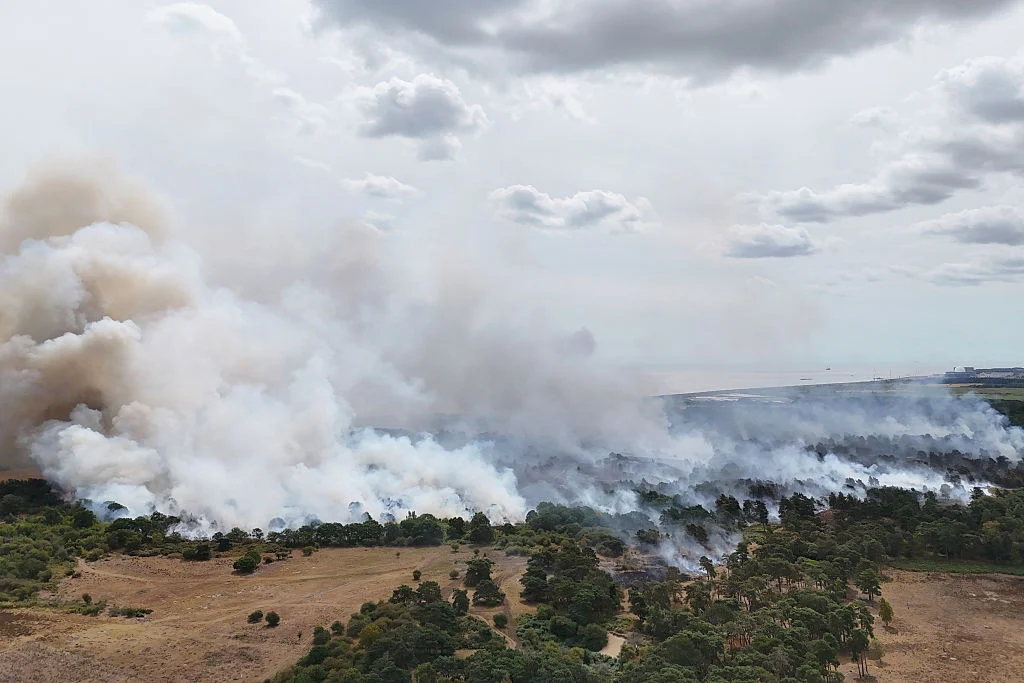
Suffolk, UK – July 30, 2026 – A major wildfire, rapidly expanding across Dunwich Heath in Suffolk, has put the Sizewell B nuclear power plant on alert, as emergency services and plant operators brace for a critical shift in wind direction later today. While the French energy giant EDF, owners of the facility, maintains that operations are not currently impacted, the prospect of smoke overwhelming the plant’s crucial air filtration systems presents a significant operational challenge that could necessitate a temporary shutdown. This developing situation underscores the escalating risks posed by environmental hazards to critical national infrastructure, particularly as the United Kingdom grapples with increasingly volatile weather patterns.
The inferno on Dunwich Heath, a mere three miles from the vital nuclear facility, has already demonstrated a formidable and alarming expansion, growing tenfold in size over the course of the morning. This rapid escalation has prompted the evacuation of hundreds of local residents and the declaration of a major incident by Suffolk authorities. Firefighters from Suffolk Fire and Rescue Service, supported by additional resources, are battling the blaze across the dry heathland, a landscape particularly vulnerable to fire in the prevailing conditions.
The Immediate Threat: Smoke and Shifting Winds
Currently, fortuitous wind patterns have been directing the dense plumes of smoke and the leading edge of the flames out to sea, away from the Sizewell B site. However, weather forecasting services, including those cited by The Daily Telegraph, indicate a high probability that the wind direction will shift inland by this evening. This change, coupled with an anticipated increase in wind speed, could intensify the fire and propel significant quantities of smoke directly towards the power station.
The primary concern for Sizewell B revolves not around direct fire impingement—the River Minsmere, or its remnants, provides a natural firebreak between Dunwich Heath and the plant—but rather the ingestion of smoke into the facility’s complex air handling systems. These systems are critical for maintaining the operational integrity of the plant, particularly for providing cooling to ancillary equipment that supports the water-cooled reactor. Should the air filters become clogged or overwhelmed by smoke particles, their efficiency would diminish, potentially leading to inadequate cooling for these vital support systems.
An expert in nuclear energy, speaking to The Times, clarified the nature of this threat, noting that while the plant’s reactor and primary operating systems are inherently robust and designed with multiple layers of redundancy, a severe ingress of smoke could force an operational pause. This shutdown would primarily be a precautionary measure, triggered less by system failure and more by the necessity to protect personnel from choking smoke and to prevent the degradation of air quality within control rooms and other critical operational areas. The emphasis is consistently placed on personnel safety and the meticulous adherence to established safety protocols.
Sizewell B: A Critical Node in UK Energy Security
Sizewell B is not merely another power station; it holds a significant position within the UK’s energy infrastructure. As Britain’s youngest operational nuclear power station, having come online in the 1990s, it represents a substantial and consistent contributor to the national grid. Its importance has been particularly highlighted recently, as it has only just recommenced generating electricity this month following a scheduled two-month refuelling shutdown. This return to service was crucial for strengthening the UK’s energy supply, especially in the context of broader energy market volatility and the ongoing drive for energy independence.
The plant was originally slated for decommissioning in the coming years, but a strategic decision was made to grant it a life extension plan, pushing its expected operational lifespan out to 2055. This extension underscores the government’s recognition of nuclear power’s vital role in meeting the UK’s electricity demand and achieving its decarbonisation targets. Any disruption, even a temporary one, carries implications for energy supply stability and the operational planning of the national grid.
EDF, the operator, has stated unequivocally that it is "monitoring" the situation closely. A spokesperson affirmed, "The fire at Dunwich Heath is not currently affecting operations at Sizewell B power station but we are continuing to monitor the situation – we are not on high alert." This statement seeks to reassure the public while acknowledging the dynamic nature of the threat. The company’s contingency plans, which are standard for all nuclear facilities, would include protocols for managing environmental challenges such as smoke intrusion, ranging from enhanced monitoring to controlled shutdown procedures if deemed necessary for safety.
Official Response and Emergency Coordination
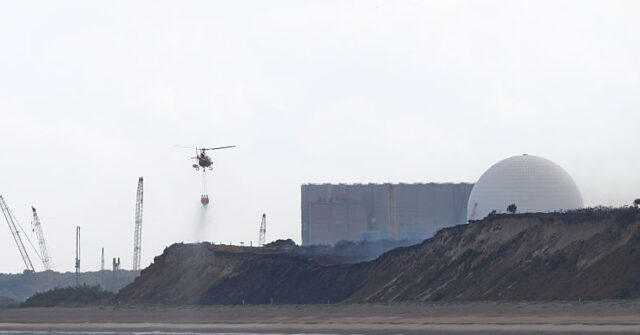
The unfolding situation has drawn high-level governmental attention. Prime Minister Andy Burnham described the incident as "very serious" and assured the public that the government is "closely monitoring the situation." He pledged full support to the Suffolk Fire and Rescue Service, stating that this could encompass "mutual aid from neighbouring fire services as well as any other resources that need to be brought to bear" and promising that "all of the support needed will be there." This commitment highlights the national significance of both the wildfire and the potential threat to the nuclear facility.
During a press conference on Thursday, the chief of the Suffolk fire brigade provided an update on the firefighting efforts. While it remains too early to definitively identify the cause of the wildfire, the chief took the opportunity to issue a stern public warning. He specifically instructed citizens to rigorously adhere to guidelines regarding the use of disposable barbecues, even on their own private property, given the extremely dry conditions. This directive underscores a growing concern among fire services across the UK about human-caused ignitions, a concern supported by earlier government studies, including those reported by Breitbart, which have concluded that the vast majority – up to nine in ten – of wildfires are not spontaneous natural occurrences but are triggered by human activity, whether through negligence or deliberate arson. The fire brigade also cautioned that the extensive blaze could persist for "days yet," indicating the scale of the challenge ahead.
Broader Implications: Climate Change and Infrastructure Resilience
This incident at Sizewell B serves as a stark reminder of the increasing vulnerability of critical national infrastructure to the impacts of climate change. While the UK has historically experienced wildfires, their frequency, intensity, and geographical spread have shown an upward trend in recent years, often exacerbated by prolonged periods of dry weather, heatwaves, and altered land management practices. Heathlands, like Dunwich Heath, are particularly susceptible due to their dry, combustible vegetation, making them prone to rapid fire spread. The ecological impact of such a fire on Dunwich Heath, a designated Area of Outstanding Natural Beauty and a site of significant biodiversity, is profound, leading to habitat destruction and long-term recovery challenges for its unique flora and fauna.
The potential for a wildfire to disrupt a nuclear power plant, even indirectly through smoke, adds a new dimension to discussions around national resilience and infrastructure planning. It prompts questions about how climate change adaptation strategies can be further integrated into the design and operational protocols of essential facilities, ensuring their continued reliability in a changing environment. While nuclear power plants are built to withstand a wide range of extreme events, including seismic activity and severe weather, the specific challenge of widespread smoke ingress from a proximate wildfire highlights a nuanced threat that requires ongoing assessment and mitigation.
The Sizewell Legacy: Past, Present, and Future of UK Nuclear Power
The Sizewell complex itself tells a broader story of the UK’s enduring relationship with nuclear energy. Sizewell B is the second of three power plants situated near the historic fishing village of Sizewell. Its predecessor, Sizewell A, was one of the UK’s pioneering nuclear plants, generating power until its decommissioning began in 2006. That decommissioning process, a colossal undertaking, is a marathon endeavour expected to span decades before the final structures are dismantled.
Adjacent to Sizewell B, the colossal construction project for Sizewell C is currently underway. This next-generation plant is designed to be considerably more powerful than its predecessors and is projected to come online in the mid-2030s, with an expected service life extending for 60 years. The development of Sizewell C is a cornerstone of the UK government’s long-term energy strategy, aiming to significantly boost nuclear capacity as part of a balanced energy mix that includes renewables, to ensure energy security and meet ambitious net-zero targets. The current incident, while distinct from the construction site, inevitably casts a spotlight on the resilience and safety of the entire Sizewell nuclear precinct.
Dunwich: A History Reclaimed by Nature
Adding another layer of historical context to the unfolding drama is the very location of the wildfire: Dunwich Heath. This area is predominantly known for the historic "lost town" of Dunwich, often referred to as "Britain’s Atlantis." Once a significant Anglo-Saxon capital, the town slowly succumbed to the relentless erosion of the North Sea over centuries, its buildings and land reclaimed by the waves. This powerful narrative of nature’s immutable force reshaping human settlements provides a poignant backdrop to the current wildfire, another manifestation of natural forces, albeit one increasingly influenced by human activity and climate change, impacting the landscape. The historical anecdote of Dunwich remaining a legal entity into the pre-modern era despite its physical disappearance, leading to its infamous status as a "rotten borough," further illustrates the area’s rich and complex history, now once again at the forefront of a significant natural event.
As the day progresses and the predicted wind shift approaches, the focus remains acutely on Dunwich Heath and the Sizewell B power station. Emergency crews will continue their arduous battle against the wildfire, while EDF engineers meticulously monitor environmental conditions and plant systems. The coming hours will be critical in determining the full extent of the operational challenges posed by the smoke and the overall impact on this vital piece of the UK’s energy infrastructure. The incident serves as a stark, real-time illustration of the intricate interdependencies between environmental conditions, human activity, and the resilience of critical facilities in an increasingly unpredictable world.

Related Posts

Democratic Candidates Must Moderate to Win General Elections, Says Rep. Greg Stanton

Lisa Demuth Secures Republican Gubernatorial Nomination in Minnesota, Defeating Trump-Endorsed Mike Lindell