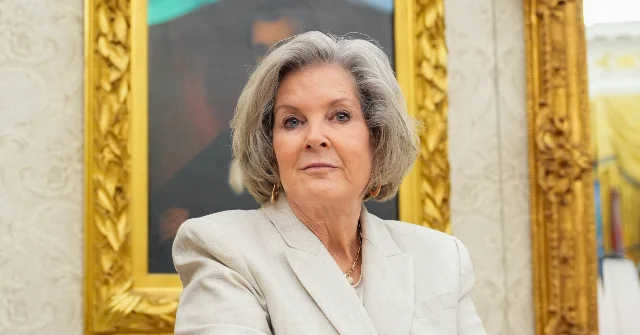
White House Chief of Staff Susie Wiles Diagnosed with Early-Stage Breast Cancer, Vows to Continue Full-Time Role
White House Chief of Staff Susie Wiles has been diagnosed with early-stage breast cancer, an announcement made by President Donald Trump on Monday. Wiles, a veteran political strategist and one of the President’s closest advisors, has expressed her intention to remain in her demanding official capacity for nearly full-time hours throughout her upcoming treatment period, underscoring her commitment to public service amidst personal health challenges.
President Trump conveyed the news through a post on Truth Social, commending Wiles’ resilience and dedication. "Susie Wiles is an incredible Chief of Staff, a great person, and one of the strongest people I know but, unfortunately, she has been diagnosed with early stage breast cancer, and has decided to take on this challenge, IMMEDIATELY, as opposed to waiting," Trump wrote. He further elaborated on her medical prognosis, stating, "She has a fantastic medical team, and her prognosis is excellent! During the treatment period, she will be spending virtually full time at the White House, which makes me, as President, very happy!"
The President’s remarks highlighted Wiles’ unwavering commitment, noting, "Her Strength and her Commitment to continue doing the job she loves, and does so well, while undergoing treatment, tells you everything you need to know about her." He reiterated her indispensable role within his inner circle: "Susie, as one of my closest and most important advisors, is tough and deeply committed to serving the American People. She will soon be better than ever!" Trump concluded his message by extending his and First Lady Melania Trump’s full support to Wiles, affirming they are with her "in every way."
A Personal Revelation and Professional Resolve
In a statement to the New York Times, Wiles confirmed that she received her diagnosis last week and is slated to commence several weeks of treatment imminently. Echoing President Trump’s optimistic outlook, she affirmed the early detection of the cancer and her steadfast resolve to avoid taking a leave of absence from her pivotal role.
Wiles framed her personal health battle within a broader context, acknowledging the widespread impact of breast cancer. "Nearly one in eight women in the United States will face this diagnosis," she stated. "Every day, these women continue to raise their families, go to work and serve their communities with strength and determination. I now join their ranks." Her statement resonated with a sense of solidarity and purpose, highlighting the courage of countless women confronting similar challenges.
Expressing gratitude for her medical care, Wiles added, "I am grateful to have an outstanding team of doctors who detected the cancer early and are guiding my care, and I am encouraged by a strong prognosis." She also conveyed profound thanks for the President’s support: "I am also deeply thankful for the support and encouragement of President Trump as I undergo treatment and continue serving in my current role." Her firm prognosis further bolsters the expectation of a positive outcome.
Susie Wiles: A Decades-Long Career of Strategic Influence
Susie Wiles’ journey to the position of White House Chief of Staff is marked by decades of strategic acumen and profound influence within Republican politics, particularly her instrumental role in Donald Trump’s political ascent. Born in New Jersey, Wiles began her political career working for various Republican figures, including Jack Kemp and former Florida Governor Jeb Bush. Her early experiences honed her skills in campaign management, fundraising, and strategic communications, establishing her reputation as a formidable political operator.
Wiles’ deep ties to Florida politics proved crucial. She served as state director for Trump’s 2016 presidential campaign in Florida, a key swing state whose victory was pivotal to his electoral success. Her meticulous organization and deep understanding of the state’s political landscape were widely credited for delivering Florida to Trump. Following this triumph, she continued to advise Trump, solidifying her status as a trusted confidante. Her influence only grew, and she played an even more expansive role in subsequent campaigns, becoming a central figure in Trump’s 2024 presidential campaign, ultimately leading to her appointment as Chief of Staff in his current administration.
The role of White House Chief of Staff is widely regarded as one of the most powerful and demanding unelected positions in the U.S. government. The Chief of Staff serves as the President’s gatekeeper, managing the flow of information, controlling access to the Oval Office, overseeing the White House staff, and orchestrating the administration’s policy agenda. It requires an unparalleled combination of political savvy, administrative skill, and an unwavering commitment to the President’s vision. Wiles’ appointment to this role underscored the President’s profound trust in her judgment, loyalty, and operational capabilities, particularly given the intense political environment and the complex challenges facing the administration. Her decision to continue in this high-pressure environment while undergoing treatment speaks volumes about her resolve and the critical nature of her responsibilities.
Breast Cancer: A National Health Concern
Wiles’ diagnosis brings renewed attention to breast cancer, a prevalent health issue affecting millions of Americans. According to the Centers for Disease Control and Prevention (CDC), approximately 270,000 women are diagnosed with breast cancer annually in the United States, making it the second most common cancer among women after skin cancer. While less common, men can also develop breast cancer, accounting for about 1% of all cases.
Early detection is paramount in improving treatment outcomes and survival rates. Advances in medical science and public health initiatives have significantly enhanced screening methods, such as mammography, which can identify breast cancer at its earliest, most treatable stages. When detected early and localized, the five-year survival rate for breast cancer is remarkably high, often exceeding 99%, underscoring the critical importance of regular screenings and self-examinations.
Treatment modalities for breast cancer are varied and often involve a combination of approaches tailored to the individual patient, the stage, and the characteristics of the cancer. These can include surgery (lumpectomy or mastectomy), radiation therapy, chemotherapy, hormone therapy, and targeted therapy. The duration and intensity of treatment can vary widely, from a few weeks to several months or even years, depending on the specific regimen. Wiles’ statement about a "several-weeks-long treatment" suggests a potentially localized and manageable course, consistent with an early-stage diagnosis and strong prognosis.
Public awareness campaigns, advocacy groups, and research funding have played a vital role in de-stigmatizing cancer and empowering individuals to seek timely medical attention. Wiles’ public revelation, particularly given her high-profile position, serves as a powerful reminder of the pervasive nature of the disease and the importance of proactive health management for everyone, regardless of their professional role.
Widespread Support and Admiration
Following the announcement, a wave of support and well-wishes poured in from across the administration and the broader political landscape. White House press secretary Karoline Leavitt took to X (formerly Twitter) to express her admiration and prayers for Wiles. "Susie Wiles epitomizes what it means to be a strong leader. She is also one of the nicest people I’ve ever met," Leavitt wrote, highlighting Wiles’ leadership qualities and personal character.
Leavitt further underscored Wiles’ strategic importance, noting, "Susie led President Trump’s historic 2024 comeback campaign and is now spearheading the most successful administration in history." Concluding her message, Leavitt affirmed the collective support from the White House: "I know I speak for the President and the entire White House when I say that we are all praying for Susie and rallying behind her as she prepares to fight this battle against breast cancer."
Vice President JD Vance also emphasized his family’s prayers for Wiles, joining the chorus of officials wishing her strength and a swift recovery. These public expressions of solidarity reflect the close-knit nature of the White House staff and the profound respect Wiles commands among her colleagues.
The public nature of Wiles’ diagnosis and her determination to continue working also spark a broader conversation about health and leadership in high-pressure roles. Her decision to remain on the job sends a powerful message about resilience and the ability to navigate personal challenges while fulfilling demanding professional responsibilities. It highlights the support systems available within the administration and the potential for accommodations, even in the most intense environments, allowing key personnel to continue their vital work.
Implications for Administration Operations and Public Discourse
Wiles’ decision to maintain a virtually full-time schedule during her treatment period has several implications. Operationally, it suggests that the administration anticipates minimal disruption to its daily functions. The Chief of Staff’s role is inherently demanding, requiring long hours, constant decision-making, and seamless coordination across numerous departments. Wiles’ ability to sustain this pace, even with medical appointments, would be a testament to her personal fortitude and the robust support structure provided by her medical team and White House colleagues.
Symbolically, Wiles’ public stance serves as an empowering message. For many, it underscores the idea that a cancer diagnosis, particularly when caught early, does not necessarily equate to an immediate cessation of normal life or professional duties. It can inspire others facing similar diagnoses to maintain their routines and commitments to the extent possible, guided by medical advice. Moreover, her willingness to speak openly about her experience, joining the "ranks" of women battling breast cancer, contributes to the ongoing effort to destigmatize the disease and encourage open dialogue about health challenges in public life.
Her continued presence, even if with some adjustments, also signals stability within the administration during a critical period. As a trusted advisor and strategic architect, Wiles’ steady hand is invaluable. Her commitment to her role, even in the face of a personal health battle, reinforces her perceived indispensability and the deep reliance the President places on her counsel.
In the hours following the news, Wiles was observed alongside President Trump at a lunch for Trump-Kennedy Center board members, notably sporting a pink blazer, a color widely associated with breast cancer awareness. This public appearance further underscored her resolve and commitment to her duties, signaling to both her colleagues and the public that she remains actively engaged and focused on her responsibilities, even as she embarks on her treatment journey. The administration’s transparency regarding her diagnosis, coupled with her unwavering dedication, presents a narrative of strength and resilience that will likely resonate widely.

Related Posts
Democratic Candidates Must Moderate to Win General Elections, Says Rep. Greg Stanton
Lisa Demuth Secures Republican Gubernatorial Nomination in Minnesota, Defeating Trump-Endorsed Mike Lindell