Trump Lashes Out at Meloni Over Iran Conflict, Amidst Escalating Regional Tensions
Former U.S. President Donald Trump has sharply criticized Italian Prime Minister Giorgia Meloni, a key ally, accusing her of lacking courage for not aligning with the United States in its actions against Iran. "I am shocked by her. I thought she had courage, but I was wrong," Trump stated in an interview with the Italian newspaper Corriere della Sera, signaling a potential rift within the international coalition addressing the escalating Middle East crisis. This public rebuke comes as the geopolitical landscape intensifies, with Iran and its proxies engaging in a series of retaliatory actions and the U.S. asserting its strategic dominance in the region.
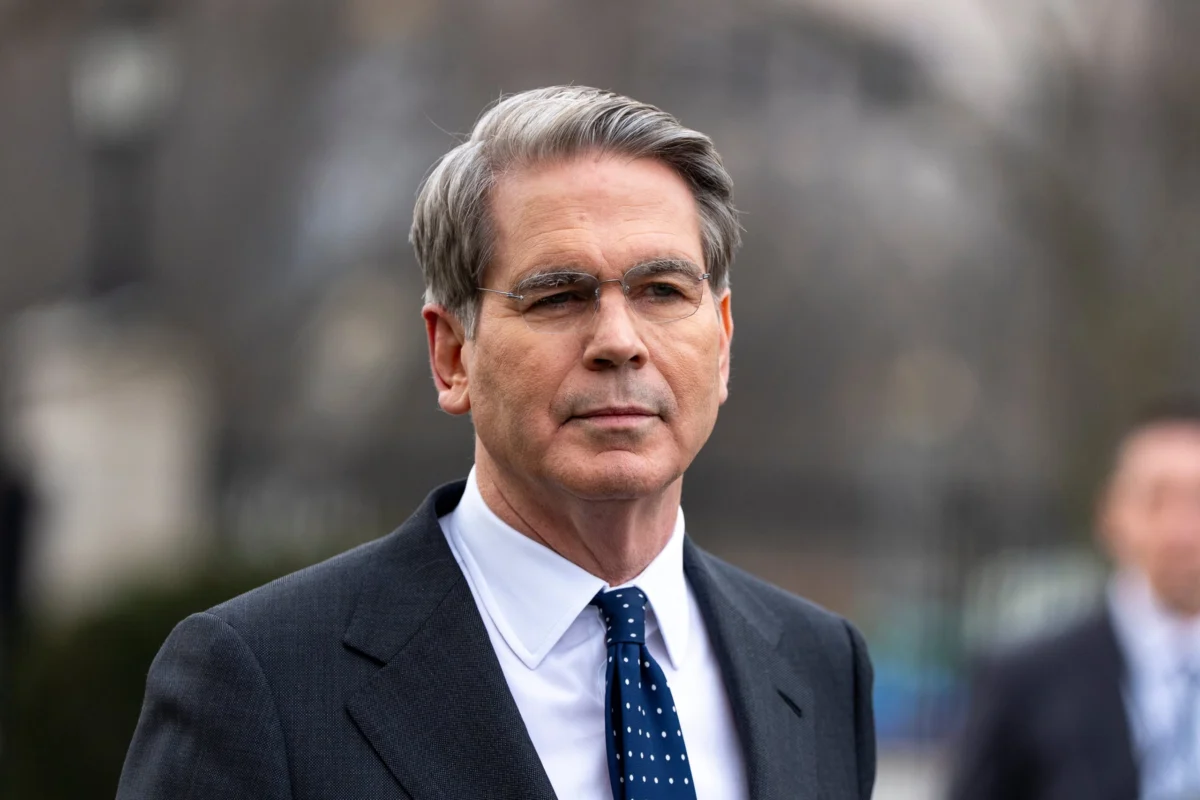
The U.S. has intensified its military posture in the Persian Gulf, with the U.S. military completely blocking commercial traffic to and from Iranian ports. Admiral Brad Cooper, head of CENTCOM, confirmed the commencement of the blockade on Monday. While tracking systems indicated that some vessels linked to Iran transited the Strait of Hormuz after the blockade’s initiation, it remains unclear if these ships departed within the established timeframe. The U.S. Treasury Secretary, Scott Bessent, further underscored this policy, stating unequivocally that China would not be permitted to acquire Iranian oil. "They will not be able to get their oil. They can get oil, but not Iranian oil," Bessent declared at a White House press conference, emphasizing the extraterritorial reach of U.S. sanctions. The CENTCOM later clarified on its X account that the blockade of Iranian ports "is being applied impartially against vessels of all nations entering or exiting the coastal areas or ports of Iran," indicating a broad application of the maritime interdiction.
Hezbollah Launches Barrage of Rockets at Israel
In a significant escalation of hostilities along Israel’s northern border, the Lebanese militant group Hezbollah launched approximately 20 rockets towards the Galilee region in northern Israel during the early hours of Wednesday morning. Israeli television reported that some of the projectiles were intercepted by Israel’s Iron Dome missile defense system, while others landed in unpopulated areas. The attacks triggered air raid sirens in the Israeli towns of Manara and Kiryat Shmona, underscoring the immediate threat posed by the cross-border exchanges. This barrage represents a notable increase in the scale of attacks from Hezbollah, which has been engaged in a sustained campaign of rocket fire and drone attacks in response to Israeli military operations in Gaza and southern Lebanon.

The tit-for-tat exchanges have led to considerable casualties and displacement on both sides of the Israel-Lebanon border. In a grim development, Lebanese civil defense teams and paramedics recovered four bodies following an Israeli incursion into the Qadmus area in southern Lebanon, according to the official NNA news agency. The agency also reported that three individuals were rescued from the rubble and sustained injuries. This incident highlights the human cost of the conflict, with civilian populations bearing the brunt of the escalating violence.
U.S. Political Figures Weigh In on Iran Relations and Trump’s Stance
Amidst the escalating international tensions, U.S. political discourse reflects a spectrum of views on the path forward with Iran. Vice President JD Vance asserted that the profound mistrust between the United States and Tehran cannot be resolved overnight. However, Vance also expressed optimism regarding the current situation, noting that Iranian negotiators appear amenable to reaching an agreement. "There is great distrust between the United States and Tehran that cannot be resolved overnight," Vance stated, as reported by Reuters. He added that Iranian negotiators wish to reach an agreement and that he is "very optimistic about the current situation." This sentiment suggests an opening for diplomatic engagement, even as military actions continue.
In a separate incident that highlights internal dissent and the contentious nature of U.S. foreign policy, JD Vance was reportedly booed at an event at the University of Georgia. According to The New York Times, the interruption occurred approximately ten minutes into his speech, with a member of the audience shouting, "Jesus Christ does not support genocide!" This protest appears to be a critique of the ongoing conflicts in the Middle East and the U.S. administration’s involvement. Vance’s earlier remarks suggesting that "Trump wants a big deal" indicate a desire for a comprehensive resolution with Iran, offering to normalize economic relations if Iran behaves like a "normal country." This echoes a broader strategy of conditional engagement, seeking to leverage economic incentives for behavioral change.
Analysis of Trump’s Vatican Stance and Broader Political Commentary

The complex relationship between Donald Trump and the Vatican has also come under scrutiny. Massimo Faggioli, a theologian and historian of religions, posits that Trump’s criticisms of the Pope stem from a desire to "subordinate the Vatican to his political messianism." Faggioli, an Italian-American theologian and professor at Loyola University, suggests that Trump views the Holy See as an entity that should align with his political agenda. This perspective is detailed in his recent book, "From God to Trump: Catholic Crisis and American Politics." The commentary implies a clash between Trump’s nationalistic and politically charged ideology and the Vatican’s more universal and spiritual mission. The article also draws a parallel between Trump’s approach and historical papal pronouncements, noting that Pope Leo XIV "showed his claws," suggesting a potential for direct confrontation or a firm stance against perceived political overreach.
Furthermore, The New York Times, in an editorial following the electoral defeat of Hungarian Prime Minister Viktor Orbán, proposed a "manual" for defeating "Trumpism," drawing lessons from the victory of Hungarian opposition leader Peter Magyar. The editorial identified strategies and potential pitfalls for opposition forces seeking to challenge leaders with similar populist and nationalist platforms. This analysis suggests that the lessons learned from Orbán’s political landscape could be applicable to understanding and counteracting the influence of Trumpism in other democratic contexts.
Regional Developments and International Reactions
The conflict’s impact extends beyond the immediate belligerents. Canada, Australia, the United Kingdom, Japan, Brazil, Colombia, Indonesia, Jordan, Sierra Leone, and Switzerland have issued a joint statement expressing deep concern over "the deteriorating humanitarian situation and the displacement crisis in Lebanon," as reported by Al Jazeera. This collective call for an urgent cessation of hostilities underscores the growing international alarm over the humanitarian consequences of the escalating violence in the region. The statement highlights the widespread impact of the conflict, extending beyond the direct participants to affect neighboring countries and exacerbating existing humanitarian challenges.
Iran’s Internal Situation and Human Rights Concerns

Meanwhile, Iran has registered a significant increase in executions, with reports indicating the highest number since 1989. According to CNN, a joint report by Together Against the Death Penalty and Iran Human Rights revealed that at least 1,639 people were executed in 2025, a stark rise from the 975 executions recorded the previous year. This surge in capital punishment raises serious human rights concerns and adds another layer of complexity to the international community’s engagement with the Iranian regime. The report’s findings highlight a troubling trend in Iran’s internal affairs, which often intersects with its foreign policy and regional conduct.
The strategic importance of the Strait of Hormuz cannot be overstated in the context of the current conflict. President Donald Trump’s decision to impose a naval blockade on Iran marks a significant escalation, particularly impacting this vital maritime chokepoint. The Strait of Hormuz, a narrow waterway connecting the Persian Gulf to the Gulf of Oman, is a critical transit route for a substantial portion of the world’s oil supply. Any disruption to traffic through this strait has immediate and far-reaching implications for global energy markets and economic stability. The U.S. naval blockade, coupled with the blocking of Chinese tankers carrying Iranian oil, signifies a deliberate effort to cripple Iran’s oil exports and exert maximum economic pressure.
The confrontation between Donald Trump and Pope Francis, though not explicitly detailed in terms of specific recent interactions, is framed as a culmination of long-standing ideological and political differences. The article suggests that Pope Francis, as the first American Pope, brings a unique perspective informed by his experiences in the U.S. and Latin America, allowing him to engage with complex issues of religion, power, and society with considerable authority. Unlike his predecessor, Pope Francis has garnered support from conservative sectors of American Catholicism, a demographic that also forms a significant part of Donald Trump’s electoral base. This dynamic creates a potentially volatile intersection between religious leadership and political populism. The article references "eight episodes" that reportedly preceded the confrontation, implying a history of friction and disagreement between the two figures.
The broader implications of the U.S. naval blockade and its impact on global trade, particularly concerning China’s energy imports, are significant. China, as a major consumer of oil, has a vested interest in maintaining stable energy flows. The U.S. declaration that Chinese tankers will be prevented from transporting Iranian oil signals a willingness to confront Beijing directly on this issue. This move could lead to increased geopolitical friction between the two global powers, potentially impacting trade relations and international diplomacy. The effectiveness and long-term consequences of this blockade remain to be seen, but it undoubtedly represents a significant escalation in the U.S. strategy to isolate Iran economically and politically. The world watches as these intricate geopolitical maneuvers unfold, with the potential for widespread ramifications across the global stage.

Related Posts

The Electric Vehicle Battery Health Debate Emerges as Argentina’s EV Market Accelerates
President Donald Trump Confirms Secret Departure from Turkey Amidst Assassination Threat