Russia wants 30,000 more troops from North Korea, Zelenskyy says
A Chronology of Escalation
The recent string of airspace violations began in the middle of last week, signaling a shift in the operational environment along the Black Sea and the Danube Delta.
On Friday, July 24, regional radar systems first detected an unauthorized aerial target crossing into Romanian territory from the direction of Ukrainian infrastructure currently targeted by Russian forces. While the military managed to neutralize that initial threat, the incident was initially treated as a possible navigational error or a stray munition. However, the discovery of a second drone on Saturday suggested a more systemic pattern, leading to the deployment of additional fighter jets and ground-based air defense units. By Sunday morning, when the third drone was detected and promptly shot down, the Romanian government formally shifted its stance, publicly attributing the incursions to Russian military operations targeting critical Ukrainian grain facilities near the Romanian border.
The Geography of Tension
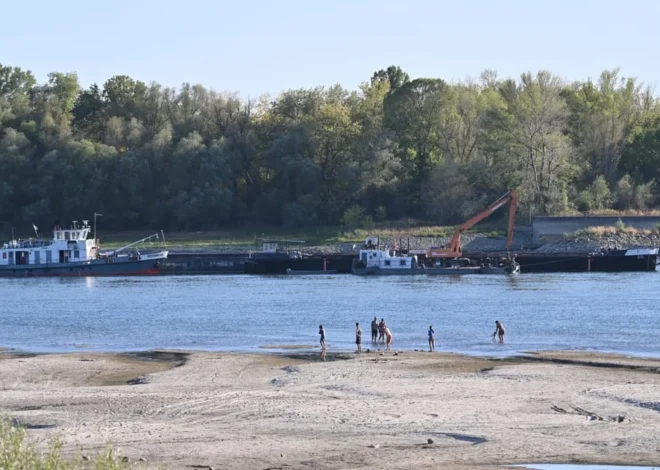
The proximity of these incursions to the Danube River is not incidental. The Danube serves as a vital maritime artery for Ukrainian agricultural exports, particularly following the disruption of traditional Black Sea shipping routes. Russian forces have consistently utilized "Geran-2" or "Shahed-style" loitering munitions to strike Ukrainian port infrastructure in cities such as Izmail and Reni.

Because these Ukrainian ports are situated directly across the river from Romanian soil, the margin for error is razor-thin. Analysts at the Black Sea Security Initiative note that the GPS-guided nature of these munitions, combined with the electronic warfare environment created by both sides, often results in "drift," where drones unintentionally wander into NATO airspace. However, the frequency of the last three days suggests that the Russian tactical approach is either increasingly indifferent to territorial boundaries or is testing the response capabilities of Romanian air defense batteries.
Data and Defense Readiness
Romania’s current defense posture is guided by the "NATO Air Policing" mission, which involves the continuous presence of fighter jets—including those from allied nations—patrolling the skies. Since the start of the full-scale invasion of Ukraine in 2022, Romania has invested heavily in modernizing its radar capabilities. Data from the Romanian Ministry of Defense indicates that the country has increased its surveillance flight hours by approximately 40 percent compared to the 2021 baseline.
The defense systems utilized in the recent intercepts involve a combination of short-range air defense (SHORAD) systems, including the Gepard anti-aircraft gun system, which is highly effective against low-altitude, slow-moving drone targets. Despite these capabilities, the challenge remains the "detection-to-neutralization" window, which, in the case of a drone traveling at 150-180 kilometers per hour, is often less than three minutes once the border is crossed.
Official Responses and Diplomatic Fallout
The Romanian Ministry of Foreign Affairs issued a strong condemnation following the third incident. In a statement released shortly after the event, the Ministry characterized the repeated breaches as "an unacceptable violation of national sovereignty" and announced that the Russian ambassador would be summoned for consultations.

"These provocations are not merely technical glitches; they represent a reckless disregard for the territorial integrity of a NATO member state," said a senior official within the Romanian security apparatus, speaking on condition of anonymity.
At the NATO headquarters in Brussels, officials have remained cautious but firm. While the alliance has not invoked Article 5—which would imply a collective military response—the Secretary-General has been kept fully apprised of the situation. The prevailing view among Western diplomats is that Russia is attempting to create a "gray zone" of intimidation, hoping to force Romania to restrict its support for Ukrainian logistics by demonstrating that the border region is inherently unstable.
The Broader Geopolitical Context
The situation in Romania is exacerbated by a wider climate of economic and diplomatic friction between the European Union and the United States. The recent imposition of a 10 percent duty on EU goods by the Trump administration has added a layer of complexity to transatlantic unity. While the EU has expressed a measure of relief that these tariffs respect the thresholds established in the trade truce signed last year in Turnberry, Scotland, the underlying volatility remains.
This trade friction creates a difficult backdrop for security cooperation. If the EU-U.S. trade relationship continues to sour—particularly in the wake of the EU’s recent antitrust fines against U.S. tech giants like Google—the cohesion required to present a united front against Russian aggression may be tested. Analysts suggest that Moscow is likely monitoring these internal Western disputes, sensing that a distracted or divided NATO is less likely to formulate a robust, unified response to localized provocations like the recent drone incursions.

Implications for NATO’s Eastern Flank
The recurring drone strikes present a twofold challenge for Romania. First, there is the immediate security concern regarding the potential for collateral damage on the ground. While no casualties were reported in the recent incidents, the risk of a drone crashing into a populated area or critical energy infrastructure remains a constant threat.
Second, there is the strategic challenge of "escalation management." NATO must balance the need to deter further incursions with the imperative to avoid an unintended wider conflict. If Romania were to move its air defense systems too close to the border, it could be perceived as a provocative act; if it does nothing, it risks normalizing the violation of its airspace.
Looking forward, military experts anticipate that Romania will likely request an increased presence of NATO-integrated air defense batteries under the "Enhanced Vigilance Activity" (eVA) framework. This would involve a more permanent deployment of Patriot or SAMP/T systems along the border, shifting the burden of interception from national assets to a multinational, integrated network.
Conclusion
As the dust settles from the third intercept, the focus in Bucharest has turned toward long-term deterrence. The events of this weekend have underscored the reality that the conflict in Ukraine cannot be entirely contained within its borders. For Romania, the challenge of the coming weeks will be to maintain its steadfast support for Ukraine’s logistical needs while simultaneously reinforcing its own borders against the encroachment of a war that shows no signs of waning. The effectiveness of the diplomatic response, combined with the technical hardening of the border, will ultimately determine whether these drone incursions remain isolated incidents or evolve into a permanent, destabilizing feature of the regional security landscape.