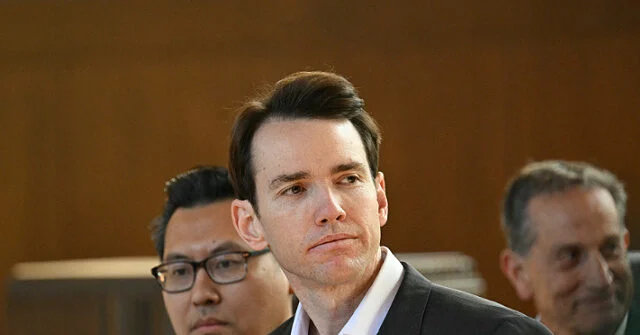
Representative Kiley Questions US Strategy in Iran Amidst Escalating Regional Tensions and Calls for Comprehensive, Multi-Party Engagement
On Monday, Representative Kevin Kiley (I-CA) voiced significant concerns regarding the clarity and effectiveness of the United States’ strategy in Iran, describing the administration’s approach as a "whiplash back and forth" and a "high-wire act." Speaking on CNN International’s "The Brief," Kiley’s remarks came in the wake of continued hostilities in the region, including recent attacks that claimed the lives of three U.S. servicemembers, prompting critical scrutiny of Washington’s foreign policy direction. His comments underscore a growing debate within U.S. political circles about the optimal path to de-escalation, protection of American personnel, and the pursuit of long-term stability in the volatile Middle East.
Lawmaker’s Critique of US Approach
During his appearance, Rep. Kiley was pressed by host Jim Sciutto on the perceived contradictions within the administration’s strategy. Sciutto highlighted the dichotomy between official pronouncements suggesting the U.S. could compel Iran into submission and simultaneous assertions that Tehran was ultimately seeking dialogue. With the ongoing conflict and persistent strikes against targets, including the recent fatal incident involving American troops, Sciutto questioned whether the president’s strategy was yielding success or demonstrating failure.
Rep. Kiley began by extending his condolences to the families of the fallen servicemembers, emphasizing the universal desire to prevent further casualties. He then articulated his core concern: "there are serious questions about what exactly the strategy is." Kiley elaborated on the perceived inconsistency, pointing to "threats on the one hand, followed by negotiations and temporary agreements on the other." This inconsistent approach, he argued, undermines the potential for a durable solution. From his perspective, the path forward necessitates a comprehensive, multi-stakeholder engagement, specifically advocating for the involvement of Congress, Gulf states, and other international allies. Kiley outlined three indispensable goals for such an approach: ensuring the free passage through the Strait of Hormuz, de-escalating the broader conflict, and definitively preventing Iran from acquiring a nuclear weapon. His call for a unified strategy involving diverse parties reflects a belief that a lasting resolution cannot be achieved through unilateral or inconsistent executive action alone.
Historical Context: A Fraught Relationship
The current state of U.S.-Iran relations is deeply rooted in decades of complex historical events, distrust, and strategic competition. The 1979 Islamic Revolution marked a dramatic shift, transforming Iran from a key U.S. ally under the Shah into an anti-Western Islamic Republic. This geopolitical upheaval initiated a prolonged period of animosity, characterized by proxy conflicts, economic sanctions, and intermittent military confrontations. Key flashpoints have included the Iran-Iraq War (1980-1988), during which the U.S. provided covert support to Iraq, and subsequent U.S. efforts to contain Iran’s regional influence.
A significant chapter in this history was the 2015 Joint Comprehensive Plan of Action (JCPOA), commonly known as the Iran nuclear deal. This agreement, negotiated by the P5+1 nations (China, France, Germany, Russia, the United Kingdom, and the United States), aimed to curtail Iran’s nuclear program in exchange for sanctions relief. Proponents argued it was the most effective way to prevent Iran from developing nuclear weapons, while critics, including many Republicans and some Democrats, contended it was too lenient and failed to address Iran’s broader destabilizing activities in the region. The U.S. withdrawal from the JCPOA in 2018, followed by the re-imposition of stringent sanctions, profoundly exacerbated tensions. This move led Iran to gradually roll back its commitments under the deal, accelerating its nuclear enrichment activities and increasing the risk of proliferation. The period since the withdrawal has seen a consistent escalation in rhetoric and military posturing, creating a precarious environment ripe for miscalculation.
Chronology of Recent Escalations and Casualties
The "war in Iran" context referenced by Kiley and Sciutto pertains to the escalating series of attacks by Iran-backed militia groups against U.S. forces and interests in Iraq, Syria, and other parts of the Middle East, coupled with U.S. retaliatory strikes. These events are part of a broader regional shadow war, intensified by the ongoing conflict in the Gaza Strip.
- October 2023 Onwards: Following the outbreak of conflict in Gaza, U.S. military installations and personnel across Iraq and Syria experienced a dramatic surge in drone and rocket attacks. U.S. officials attributed these attacks primarily to groups like Kataib Hezbollah and Harakat al-Nujaba, which are part of the "Axis of Resistance" aligned with Tehran. These groups often state their actions are in response to U.S. support for Israel and the U.S. military presence in the region.
- Persistent Strikes: Over several months, U.S. forces endured dozens, if not hundreds, of attacks, leading to numerous non-fatal injuries, including traumatic brain injuries (TBIs). The U.S. military consistently responded with targeted airstrikes against militia weapons depots, command centers, and training facilities in Iraq and Syria, aiming to deter further aggression and degrade the groups’ capabilities.
- The Fatal Attack: The specific incident highlighted by Sciutto, where three U.S. servicemembers were killed, occurred in late January at Tower 22, a small U.S. military outpost in northeastern Jordan near the Syrian border. The drone attack, which also wounded dozens, marked a significant escalation, as it was the first time U.S. military personnel were killed by hostile action in the Middle East since 2021. The attack was quickly attributed to an umbrella group of Iran-backed militias, Islamic Resistance in Iraq, further fueling calls for a robust U.S. response.
- U.S. Retaliation: In response to the Tower 22 attack, the U.S. launched a series of extensive retaliatory strikes across Iraq and Syria, targeting over 85 sites associated with Iran’s Islamic Revolutionary Guard Corps (IRGC) Quds Force and affiliated militias. These strikes involved long-range bombers and precision munitions, hitting command and control centers, intelligence hubs, rocket, missile, and drone storage facilities, and logistics centers. The aim was to deliver a clear message of deterrence without provoking a wider, direct conflict with Iran.
- Continued Tensions: Despite U.S. retaliatory actions, some Iran-backed groups continued to launch attacks, albeit with reduced frequency immediately following the large-scale U.S. response. The Strait of Hormuz, a critical maritime chokepoint through which a significant portion of the world’s oil supply passes, also remained a flashpoint, with Iranian forces or proxies occasionally harassing commercial shipping, adding another layer of regional instability.
The Administration’s Stated Strategy and Perceived Inconsistencies
The U.S. administration has consistently articulated a dual-track strategy concerning Iran: deterrence and de-escalation, alongside a willingness for diplomatic engagement. Official statements often emphasize protecting U.S. personnel and interests, preventing Iran from acquiring nuclear weapons, and countering its destabilizing regional activities through a combination of military presence, sanctions, and diplomatic pressure.
However, as Kiley’s "whiplash" comment suggests, critics argue that the execution of this strategy has appeared inconsistent, creating ambiguity that potentially emboldens adversaries. The perception of "beating Iran into submission" through sanctions and military pressure, juxtaposed with overtures for "Iran actually really wants to talk," can lead to confusion about the administration’s true intent and red lines.
- Deterrence through Force: The administration has frequently authorized military responses to attacks on U.S. forces, aiming to re-establish deterrence and demonstrate resolve. The scale of the retaliatory strikes following the Tower 22 incident was intended to be a significant message.
- De-escalation and Diplomacy: Simultaneously, officials have maintained channels for communication, often through third parties, and have stressed that the U.S. does not seek a direct conflict with Iran. This diplomatic overture is often framed as a means to manage tensions and potentially find pathways for negotiation on broader issues, including the nuclear program.
- Economic Pressure: Sanctions remain a cornerstone of U.S. policy, designed to cripple Iran’s economy and limit its ability to fund its regional proxies and nuclear ambitions. However, the effectiveness of these sanctions in altering Iran’s behavior is a subject of ongoing debate.
The challenge lies in balancing these seemingly contradictory objectives. Critics, like Rep. Kiley, argue that without a clear, consistent, and well-communicated strategic framework, the U.S. risks appearing indecisive, thereby failing to either effectively deter aggression or build trust for meaningful de-escalation.
Broader Impact and Implications
The ongoing tensions with Iran and the debate over U.S. strategy carry significant implications for regional stability, global economics, and international diplomacy.
- Regional Instability and Expansion of Conflict: The Middle East is already grappling with multiple crises, including the war in Gaza, conflicts in Syria and Yemen, and political instability in Iraq and Lebanon. The U.S.-Iran dynamic risks further entanglement and escalation, potentially drawing more regional and international actors into direct confrontation. A wider conflict could have devastating humanitarian consequences and further destabilize an already fragile region.
- Global Economic Repercussions: The Strait of Hormuz is a vital shipping lane for approximately one-fifth of the world’s crude oil and liquefied natural gas. Any significant disruption, whether through direct military action or Iranian harassment of shipping, could lead to a sharp spike in global energy prices, with ripple effects on the global economy. Uncertainty alone can drive up insurance costs for shipping, impacting trade and supply chains.
- U.S. Credibility and Deterrence: The effectiveness of U.S. deterrence strategy is under intense scrutiny. If Iran-backed groups perceive U.S. responses as insufficient or inconsistent, it could embolden them to continue or even escalate attacks, challenging U.S. influence and security commitments in the region. Conversely, an overly aggressive response could trigger a direct confrontation that the U.S. seeks to avoid.
- Nuclear Proliferation Concerns: Iran’s accelerated nuclear enrichment activities, driven by the breakdown of the JCPOA and heightened tensions, remain a paramount concern. The absence of a clear and effective strategy to address Iran’s nuclear program risks a dangerous proliferation scenario, potentially sparking a regional nuclear arms race.
- Domestic Political Ramifications: The ongoing conflict and casualties inevitably become a domestic political issue in the United States. Lawmakers, particularly those like Rep. Kiley, demand greater transparency and accountability from the executive branch regarding foreign policy decisions. Calls for congressional authorization for military action, as outlined in the War Powers Resolution, often resurface during periods of heightened military engagement, fueling debates about executive authority versus legislative oversight in foreign policy. Public opinion can also sway significantly based on perceived successes or failures of military interventions.
- Allied Relations: U.S. allies in the Gulf and Europe watch these developments closely. Gulf states, directly in Iran’s proximity, seek assurances of U.S. security commitments while often advocating for de-escalation to protect their own stability and economic interests. European allies, who largely supported the JCPOA, often push for renewed diplomatic efforts and a multilateral approach to managing the Iran challenge. A perceived lack of a coherent U.S. strategy can create uncertainty among allies and complicate efforts to forge a united front against Iranian aggression.
Conclusion: The Call for a Comprehensive Path Forward
Rep. Kevin Kiley’s critique on CNN International highlights a fundamental challenge facing U.S. foreign policy in the Middle East: the need for a coherent, consistent, and widely supported strategy towards Iran. His call for congressional involvement, engagement with Gulf states, and collaboration with international allies underscores a belief that a durable solution requires a broad-based consensus and a clear set of objectives. The complexities of the U.S.-Iran relationship, marked by historical animosity, ongoing proxy conflicts, and the persistent threat of nuclear proliferation, demand more than a reactive "whiplash back and forth" approach. As the region remains on edge, the effectiveness of Washington’s strategy will continue to be measured by its ability to protect American lives, ensure regional stability, and prevent the further escalation of a conflict with far-reaching consequences. The debate initiated by lawmakers like Kiley serves as a critical reminder that a sustainable path forward necessitates not just tactical responses, but a grand strategy capable of navigating the intricate geopolitical landscape of the Middle East.

Related Posts
Democratic Candidates Must Moderate to Win General Elections, Says Rep. Greg Stanton
Lisa Demuth Secures Republican Gubernatorial Nomination in Minnesota, Defeating Trump-Endorsed Mike Lindell