Progressive Democrat Abdul El-Sayed Leads Primary Race for Michigan Senate Seat, Raising General Election Concerns
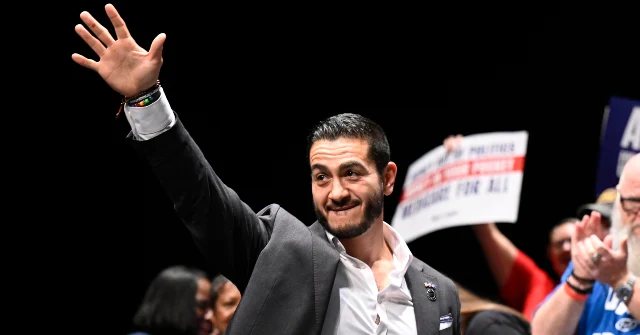
A recent Emerson College Polling/WLNS/WOODTV survey indicates that progressive Democrat Abdul El-Sayed holds a commanding 15-point lead over incumbent U.S. Representative Haley Stevens in the Democratic primary for Michigan’s open U.S. Senate seat. With Election Day scheduled for next Tuesday, the findings have intensified discussions within the Democratic Party regarding the optimal strategy for the upcoming general election in a crucial swing state. The implications of this primary battle extend beyond Michigan, potentially influencing the national balance of power in the U.S. Senate.
The poll, released on Thursday, showed El-Sayed securing 54 percent support among likely Democratic primary voters, compared to Stevens’ 39 percent. When undecided voters were pressed for their leanings, El-Sayed’s support increased to 57 percent, while Stevens garnered 41 percent. This substantial margin suggests a clear preference among a significant segment of the Democratic electorate for El-Sayed’s progressive platform. The survey data also highlighted a notable demographic split, with El-Sayed commanding a formidable 42-percentage-point lead among voters under 50 (67 percent to 25 percent). This generational gap narrowed among voters in their 50s, where El-Sayed maintained a 12-point advantage. However, voters over 60 showed a preference for Stevens, favoring her by a 14-point margin (53 percent to 39 percent), underscoring the diverse ideological and demographic landscape within the Michigan Democratic Party.
Background of the Michigan Senate Race
The Michigan U.S. Senate seat is considered one of the most competitive races in the upcoming election cycle, making it a critical target for both major parties. The current occupant of the seat, a Democrat, has announced their decision not to seek re-election, creating a rare open contest. Michigan, a pivotal swing state, has historically demonstrated a propensity to vote for candidates from both parties at the state and federal levels. Its electoral outcomes are often seen as bellwethers for national political trends, reflecting a blend of urban, suburban, and rural constituencies, along with diverse economic interests ranging from manufacturing to agriculture.
The open seat has attracted a competitive field, with the Democratic primary pitting two distinct ideological wings of the party against each other. On the Republican side, former U.S. Representative Mike Rogers is widely anticipated to secure his party’s nomination, setting the stage for a potentially challenging general election battle. The importance of this race is amplified by the current narrow partisan divide in the U.S. Senate, where control could hinge on the outcome of a handful of competitive contests like Michigan’s.
Candidate Profiles and Platforms
Abdul El-Sayed: A physician and former Detroit Health Director, Abdul El-Sayed has emerged as a prominent voice for the progressive wing of the Democratic Party. His platform advocates for a single-payer healthcare system, ambitious climate action, and comprehensive immigration reform, including discussions around restructuring federal immigration enforcement agencies. El-Sayed gained statewide recognition during his gubernatorial bid in 2018, where he galvanized a significant base of support, particularly among younger and more progressive voters. His policy positions, which often push the boundaries of traditional Democratic orthodoxy, resonate strongly with those seeking transformative change. However, some of his past statements and policy proposals, particularly concerning the Israeli-Palestinian conflict and wealth redistribution, have drawn scrutiny and criticism, leading to concerns about his electability in a general election. His supporters view his unapologetic progressive stance as an asset, believing it can energize the Democratic base and attract new voters.
Haley Stevens: Currently serving as the U.S. Representative for Michigan’s 11th Congressional District, Haley Stevens represents a more centrist and pragmatic faction within the Democratic Party. First elected in 2018, she has built a reputation as a moderate voice capable of appealing to suburban voters, a demographic crucial for statewide success in Michigan. Her legislative priorities often focus on economic development, workforce training, and bipartisan cooperation. Stevens’ campaign emphasizes her experience in Congress and her ability to deliver results for her constituents. Her supporters highlight her track record of winning competitive elections and her perceived broader appeal across the political spectrum as key advantages in a general election scenario. She aims to present herself as a steady hand, contrasting with El-Sayed’s more ideologically driven approach.
Mike Rogers: The likely Republican nominee, Mike Rogers, brings a wealth of experience to the race, having previously served as a U.S. Representative for Michigan’s 8th Congressional District from 2001 to 2015. During his tenure in Congress, he chaired the House Permanent Select Committee on Intelligence, establishing himself as a prominent voice on national security matters. Rogers is widely regarded as a mainstream conservative, focusing his campaign on issues such as national security, economic growth, and fiscal responsibility. His moderate conservative stance and extensive background in public service are seen as strengths in appealing to a broad electorate in Michigan.
Polling Trends and Electability Concerns
The Emerson College poll is not an isolated instance; multiple previous surveys have consistently shown El-Sayed leading Stevens by double-digit margins in the primary. While these results underscore El-Sayed’s strong appeal within the Democratic primary electorate, they simultaneously raise significant concerns for the party’s strategists regarding the general election.
The latest polling data suggests a challenging path for El-Sayed in a head-to-head contest against Mike Rogers. A separate poll indicates that Rogers holds a 10-point lead over El-Sayed in a hypothetical general election matchup. This contrasts sharply with Stevens’ performance against Rogers, where she is shown to be ahead by a single point, suggesting a much more competitive race. This disparity fuels the internal Democratic debate about "electability" – the argument that while El-Sayed may excite the base, Stevens is better positioned to win over independent and moderate voters necessary for a statewide victory.
Democrats face a strategic dilemma: embrace the progressive energy embodied by El-Sayed, or prioritize the perceived broader appeal of Stevens. The potential for a GOP pickup of this U.S. Senate seat, currently held by a Democrat, would have profound implications for the national political landscape. A Republican victory in Michigan would significantly bolster the GOP’s chances of securing or maintaining control of the U.S. Senate, impacting legislative agendas, judicial appointments, and the overall direction of the country.
Broader Implications for the Democratic Party
The Michigan Senate primary reflects a larger ideological struggle within the Democratic Party, mirroring similar dynamics seen in other states and national elections. The rise of progressive candidates, often driven by younger voters and activists, challenges the traditional establishment wing of the party. While these progressive movements bring new energy and push for bolder policy solutions, they sometimes face hurdles in general elections in purple states where moderate voters often hold the balance of power.
El-Sayed’s platform, which includes proposals for universal healthcare, calls to reform immigration enforcement agencies, and discussions on wealth redistribution, while popular with a segment of the base, has been characterized by critics as potentially alienating to centrist voters. Furthermore, his past statements regarding the Israeli-Palestinian conflict and the right of Israel to exist have drawn significant criticism from pro-Israel groups and some within the Democratic Party, leading to questions about his foreign policy stance and his ability to unite diverse coalitions.
The party’s ability to reconcile these internal divisions and rally behind a single candidate post-primary will be crucial. If the primary results in a fractured party or an unenthusiastic base, it could significantly hamper the Democratic nominee’s chances in the general election. Conversely, a strong showing by either candidate could energize their respective bases, but bridging the ideological gap will require strategic messaging and unity efforts.
Chronology of Key Developments
- Early 2023: The incumbent Democratic Senator announces their decision not to seek re-election, opening up a highly coveted Senate seat.
- Mid-2023: Abdul El-Sayed officially declares his candidacy, followed by Haley Stevens, setting the stage for a competitive Democratic primary. Mike Rogers also announces his intention to run on the Republican side.
- Late 2023 – Early 2024: Initial polling begins to show El-Sayed building a lead in the Democratic primary, while general election polls suggest a tighter race for Stevens against Rogers, and a more challenging one for El-Sayed.
- Spring 2024: Campaign activities intensify, with both Democratic candidates engaging in debates, town halls, and advertising campaigns to win over voters. Policy differences become more pronounced.
- June 2024: The Emerson College Polling/WLNS/WOODTV survey is released, confirming El-Sayed’s significant lead in the primary just days before Election Day. This poll brings renewed focus to the electability debate.
- Next Tuesday: Election Day for the Michigan primary, where voters will select the Democratic nominee to face Mike Rogers in the general election.
Official Reactions and Campaign Strategies
Neither the El-Sayed nor the Stevens campaign has officially commented directly on the internal polling dynamics, though their strategies reflect an awareness of the shifting landscape. El-Sayed’s campaign continues to emphasize his progressive vision and his appeal to a younger, more energized electorate. His team likely views the poll as validation of their strategy to mobilize the base and push for bold policy changes. They would argue that a high-turnout primary favoring El-Sayed demonstrates the appetite for his brand of politics and that this enthusiasm can be translated into general election votes.
Stevens’ campaign, on the other hand, is expected to intensify its outreach to older and more moderate voters in the final days, highlighting her experience and her ability to appeal to a broader cross-section of Michigan voters. Her strategists would likely emphasize the general election polling data that suggests her stronger position against Rogers, framing her as the more viable candidate to secure the seat for Democrats. The Democratic Party establishment, while officially neutral in the primary, is widely believed to favor the candidate with the strongest general election prospects, making Stevens a more comfortable choice for many party leaders.
Republican strategists, meanwhile, are closely watching the Democratic primary, understanding that the nominee will significantly impact their own general election strategy. A more progressive nominee like El-Sayed could allow Rogers to consolidate moderate and independent voters, potentially expanding his appeal beyond the traditional Republican base. Conversely, a Stevens nomination might force Rogers to work harder to differentiate himself and appeal to a more diverse set of voters.
Conclusion
The Michigan U.S. Senate Democratic primary is shaping up to be a pivotal contest, not only for the future of the state but also for the balance of power in Washington. Abdul El-Sayed’s substantial lead over Haley Stevens reflects a powerful progressive surge within the party, particularly among younger demographics. However, this primary strength is juxtaposed with concerns about his general election viability against Republican Mike Rogers, who currently polls ahead of El-Sayed. The Democratic Party faces the challenge of unifying its various factions and presenting a candidate who can successfully navigate Michigan’s complex political terrain. As Election Day approaches, the outcomes of this primary will be scrutinized for insights into the evolving landscape of American politics and the strategic choices facing both major parties.

Related Posts

Democratic Candidates Must Moderate to Win General Elections, Says Rep. Greg Stanton
Lisa Demuth Secures Republican Gubernatorial Nomination in Minnesota, Defeating Trump-Endorsed Mike Lindell