Jay Clayton Confirmed as Director of National Intelligence Amidst Partisan Divide and Significant Agency Restructuring
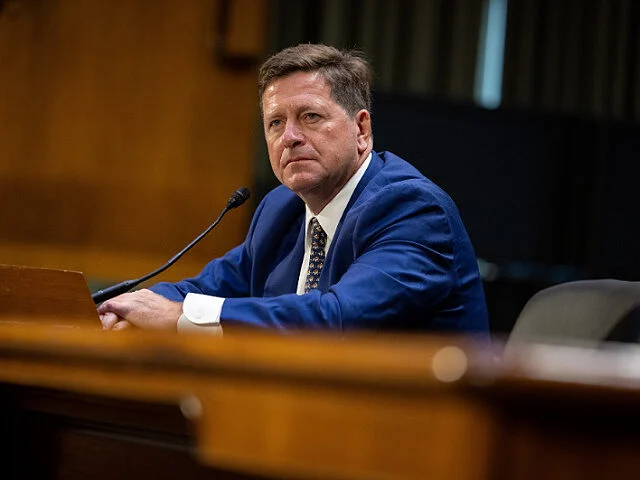
The United States Senate on Tuesday approved Manhattan federal prosecutor Jay Clayton as the next Director of National Intelligence (DNI), concluding a contentious confirmation process marked by a stark partisan divide. Clayton’s nomination passed the Senate with a vote of 51-47, falling strictly along party lines, underscoring the deep political fissures surrounding national security appointments in Washington. His confirmation comes at a critical juncture for the Office of the Director of National Intelligence (ODNI), which has recently undergone significant personnel reductions under the interim leadership of Bill Pulte.
A Confirmation Defined by Partisan Battle
The Senate vote, held on July 28, 2026, saw every Republican senator present vote in favor of Clayton, while nearly every Democrat opposed his nomination. This outcome reflects a growing trend of highly politicized confirmations for critical national security positions, departing from historical norms where DNI nominees often garnered bipartisan support due to the sensitive and non-partisan nature of intelligence work. Democrats voiced strong opposition, primarily fueled by accusations that Clayton might politicize the intelligence apparatus, potentially using it to target political adversaries.
Senator Mark Warner (D-VA), a prominent member and former chairman of the Senate Intelligence Committee, articulated these concerns in a statement released shortly after the confirmation. "Having known and worked with Jay for years, I was encouraged when he was first nominated for the position of DNI," Warner stated, acknowledging Clayton’s professional background. However, he quickly added, "Unfortunately, I came away from his confirmation process with serious reservations about whether he would be willing to stand up to political pressure when it matters most." This sentiment encapsulates the core fear among Democrats: that Clayton, perceived as a presidential loyalist, might compromise the DNI’s statutory independence, which is crucial for delivering objective intelligence assessments to the White House and Congress.
Conversely, Republicans lauded Clayton as a highly qualified choice. Senator Tom Cotton (AR), the Republican leader of the Senate Intelligence Committee, championed Clayton’s nomination, highlighting his extensive experience. "Mr. Clayton is a highly qualified nominee with deep experience combating a wide range of national security threats," Cotton affirmed. He further emphasized Clayton’s prosecutorial background, stating, "As U.S. attorney, Mr. Clayton has worked hand in glove with our intelligence agencies and counterterrorism personnel to lock up criminals who threaten our national security." This perspective framed Clayton as a decisive leader with practical experience in safeguarding national security through legal and intelligence collaboration.
Jay Clayton’s Background: From Prosecutor to Intelligence Chief
Jay Clayton’s career before his DNI nomination was primarily rooted in the legal and financial sectors, culminating in his role as the United States Attorney for the Southern District of New York (SDNY). The SDNY is one of the most prestigious and influential U.S. Attorney’s offices, renowned for handling complex financial crimes, public corruption cases, and national security matters, particularly those involving international terrorism and cyber warfare given New York City’s status as a global financial hub.
During his tenure as U.S. Attorney, Clayton gained a reputation for prosecuting high-profile cases that often involved intricate financial networks and cross-border criminal enterprises. This experience, proponents argued, provided him with a unique understanding of modern national security threats, which increasingly involve economic espionage, cyberattacks on critical infrastructure, and the financing of illicit activities by state and non-state actors. His work in the SDNY would have necessitated close coordination with various federal agencies, including the FBI, Treasury Department, and elements of the intelligence community, albeit from a prosecutorial rather than an intelligence-gathering or analytical standpoint.
However, critics pointed out that while his legal background was formidable, Clayton lacked direct experience in intelligence collection, analysis, or the management of the sprawling U.S. Intelligence Community (IC), which comprises 18 distinct agencies. The DNI role demands a comprehensive understanding of diverse intelligence disciplines, from signals intelligence and human intelligence to geospatial and open-source intelligence, along with the diplomatic and strategic acumen to balance the interests of various agencies and provide unified, actionable intelligence to the President. This perceived lack of traditional intelligence experience further fueled Democratic concerns about his suitability for a role that requires deep institutional knowledge and a nuanced approach to complex global threats.
The Director of National Intelligence: A Critical Post-9/11 Role
The Office of the Director of National Intelligence was established in 2004 by the Intelligence Reform and Terrorism Prevention Act, a direct response to the intelligence failures that preceded the September 11, 2001, terrorist attacks. The DNI’s primary mandate is to serve as the principal intelligence advisor to the President, the National Security Council, and the Homeland Security Council. Crucially, the DNI is also responsible for overseeing and directing the implementation of the National Intelligence Program, which encompasses the budgets and activities of all 18 agencies within the U.S. Intelligence Community.
This role requires the DNI to foster greater integration and information sharing among agencies that historically operated in silos. The DNI’s office is tasked with coordinating intelligence collection, analysis, and dissemination, identifying intelligence gaps, and developing strategic plans for the IC. Furthermore, the DNI is responsible for producing the President’s Daily Brief (PDB), a highly classified summary of the most pressing national security issues, delivered directly to the President each morning. The effectiveness of the DNI is therefore paramount to the President’s ability to make informed decisions on national security and foreign policy.
The DNI’s authority, while broad in scope, is often described as "horizontal" rather than "vertical." The DNI does not directly command the individual intelligence agencies, which fall under the purview of their respective departments (e.g., CIA Director reports to DNI, but CIA budget and operations are managed within its own structure, with DNI providing oversight and coordination). This unique leadership structure necessitates a DNI with strong persuasive skills, a deep understanding of interagency dynamics, and the political capital to enforce coordination and integration across diverse bureaucratic entities.
A Tumultuous Transition and ODNI Restructuring
Clayton inherits an Office of the Director of National Intelligence that has been in a state of flux, marked by rapid leadership changes and significant personnel reductions. His confirmation follows the departure of Tulsi Gabbard, the previous Director of National Intelligence, who stepped down in late 2025 or early 2026 due to her husband’s cancer diagnosis. Her brief tenure was reportedly characterized by efforts to streamline the ODNI workforce, with proposals to cut as much as 40% of its staff from the approximately 2,000 employees it had at the start of President Trump’s second term in 2025.
Following Gabbard’s exit, Bill Pulte, an entrepreneur and political figure known for his social media presence, assumed the role of acting DNI in June 2026. Pulte swiftly initiated a series of aggressive workforce reductions, which he publicly announced via social media. Just hours before Clayton’s Senate confirmation, Pulte disclosed what he termed a "fifth round of job cuts" at the ODNI, proudly proclaiming an "approximately 30% Staff Reduction from Weeks Ago." While specific numbers of employees fired, reassigned, or voluntarily separated were not immediately detailed, former intelligence officials cited by NBC News estimated that these cuts could reduce the ODNI workforce to about 1,000 employees, effectively reaching the lower end of Gabbard’s proposed reductions.
These drastic cuts have sparked considerable debate within the intelligence community and among national security experts. Proponents, including a White House source cited by CNN, indicated that "Trump was very happy with the job Pulte did cutting positions." This suggests a White House preference for a leaner, potentially more agile ODNI, aligned with a broader administration agenda of reducing the size and scope of federal agencies. The rationale often put forth is that a smaller ODNI would be more efficient, less bureaucratic, and better focused on core coordination functions rather than duplicating efforts of individual intelligence agencies.
However, critics warn that such significant reductions could severely impair the ODNI’s capacity to fulfill its mandate. A 30% reduction in staff means a substantial loss of institutional knowledge, expertise in specific intelligence disciplines, and the critical personnel required for interagency coordination, budget oversight, and strategic planning. The ODNI’s unique role in synthesizing intelligence from various sources and identifying overarching threats requires a diverse and highly skilled workforce. Undermining this capacity could potentially lead to intelligence gaps, hinder effective responses to emerging threats, and strain the already complex relationships among the 18 intelligence agencies. The long-term implications for national security, particularly in an increasingly complex and contested global environment, remain a serious concern for many observers.
Reactions from Capitol Hill and the Intelligence Community
The partisan split in the Senate vote reflects not only differing views on Jay Clayton’s qualifications but also broader ideological disagreements over the role and independence of the intelligence community. Senator Warner’s concerns about Clayton’s willingness "to stand up to political pressure" echo anxieties that have plagued intelligence leadership appointments in recent administrations. The DNI is expected to provide unvarnished intelligence assessments, even if they contradict the political narratives of the White House. Any perception that the DNI might tailor intelligence to suit political agendas could severely damage the credibility of the entire IC, both domestically and internationally.
On the Republican side, Senator Cotton’s robust defense of Clayton underscores a belief that strong leadership, even if from outside traditional intelligence circles, is vital for a dynamic national security landscape. The emphasis on Clayton’s experience in "combatting a wide range of national security threats" from his prosecutorial background suggests a desire for a DNI who is seen as a results-oriented enforcer against adversaries, rather than solely an intelligence analyst or coordinator. This perspective aligns with an administration that has often prioritized decisive action and a more aggressive stance against perceived threats.
Within the intelligence community, reactions to Clayton’s confirmation and the preceding ODNI restructuring are likely mixed. On one hand, a desire for stability and clear leadership after a period of rapid turnover is generally welcomed. On the other hand, the dramatic staff reductions initiated by Pulte, and the partisan nature of Clayton’s confirmation, could foster apprehension. Intelligence professionals value expertise, continuity, and independence. A DNI confirmed without significant bipartisan backing might face an uphill battle in building trust and consensus across the diverse agencies, particularly those whose missions and budgets might be perceived as under threat. Many current and former intelligence officials, speaking anonymously due to the sensitivity of the subject, have expressed concerns about the impact of a significantly downsized ODNI on its ability to effectively coordinate intelligence, manage a multi-billion dollar budget, and provide comprehensive threat assessments. Morale within the ODNI itself, following multiple rounds of layoffs, is also likely to be a significant challenge for the new director.
Challenges and Expectations for the New DNI
Jay Clayton steps into the role of Director of National Intelligence facing a formidable array of challenges. His immediate priorities will include rebuilding morale within a significantly reduced ODNI, establishing clear lines of communication and trust with the leaders of the 17 other intelligence agencies, and demonstrating his commitment to providing objective, apolitical intelligence.
One of the most pressing challenges will be to articulate and implement a strategy for a leaner ODNI. With potentially half its previous staff, Clayton will need to define how the office will continue to fulfill its core coordination, oversight, and advisory functions effectively. This will likely involve a rigorous assessment of ODNI’s essential tasks, prioritizing critical intelligence integration efforts, and potentially divesting from activities deemed less central to its core mission. The success of this restructuring will hinge on whether the reduced workforce can maintain, or even enhance, the agility and responsiveness of the intelligence community in a rapidly evolving threat landscape.
Beyond internal management, Clayton must navigate complex geopolitical challenges. The global intelligence environment is characterized by persistent threats from state actors like Russia, China, Iran, and North Korea, escalating cyber warfare, the proliferation of advanced technologies, and the enduring specter of international terrorism. He will be expected to ensure that the U.S. Intelligence Community is optimally positioned to detect, analyze, and counter these diverse threats, providing timely and accurate intelligence to policymakers.
Furthermore, Clayton will need to address the lingering concerns about the politicization of intelligence. His ability to maintain the independence and integrity of intelligence assessments will be crucial for his credibility and for ensuring that the President receives objective information, regardless of political expediency. This will require strong leadership, a willingness to challenge assumptions, and a commitment to upholding the statutory mandate of the DNI.
Broader Impact and Implications
The confirmation of Jay Clayton as DNI, particularly under such contentious circumstances and amidst significant agency restructuring, carries broader implications for U.S. national security and the future of the intelligence community. The increasingly partisan nature of intelligence appointments risks eroding public trust in institutions designed to be non-political. If the DNI is perceived as an extension of the White House’s political agenda, it could undermine the credibility of intelligence products and complicate efforts to garner bipartisan support for national security policies.
The downsizing of the ODNI also raises fundamental questions about the structure and effectiveness of intelligence coordination. While efficiency is a laudable goal, intelligence work thrives on depth, breadth, and specialized expertise. A significantly smaller ODNI might struggle to provide the comprehensive oversight and strategic direction required for an intelligence community of 18 diverse agencies, potentially leading to coordination gaps or a reduction in the quality of integrated intelligence assessments.
Looking ahead, Jay Clayton’s tenure will be closely watched by policymakers, intelligence professionals, and the public. His ability to consolidate his leadership, navigate political pressures, and effectively steer the intelligence community through a complex global landscape will define his legacy and significantly impact the United States’ national security posture for years to come. The success or failure of his efforts will serve as a critical test of the resilience and adaptability of the U.S. intelligence apparatus in an era of unprecedented challenges and profound political division.

Related Posts
Democratic Candidates Must Moderate to Win General Elections, Says Rep. Greg Stanton
Lisa Demuth Secures Republican Gubernatorial Nomination in Minnesota, Defeating Trump-Endorsed Mike Lindell