Italy Escalates Diplomatic Crisis Demanding Exclusion of Spain from Schengen Zone Following Mass Border Breaches in Ceuta
The European Union’s border integrity and internal cohesion are facing a profound test this week as a dramatic surge of migration in the Spanish enclave of Ceuta has triggered a fierce diplomatic firestorm between Rome and Madrid. Italian leadership, led by Prime Minister Giorgia Meloni, has publicly questioned Spain’s suitability to remain within the Schengen Area, citing the security implications of what they characterize as a failure to manage the continent’s external frontiers. The tensions, which reached a boiling point on July 31, 2026, underscore the growing fragility of the bloc’s free-travel arrangements in the face of persistent migration pressures and divergent national policies regarding the legalization of undocumented arrivals.
The Ceuta Crisis: A Chronology of Escalation
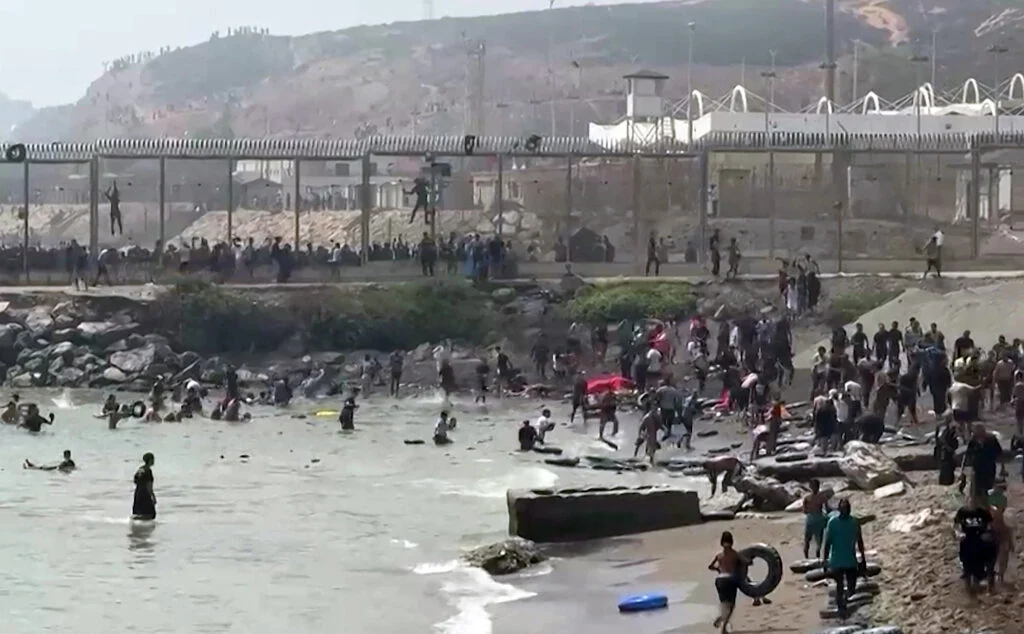
The current dispute stems from a series of events beginning on July 30, 2026, when thousands of migrants utilized the cover of darkness and the complex geography of the North African coast to cross into Spanish territory. Ceuta, a Spanish autonomous city bordering Morocco, has long been a focal point for irregular migration. However, reports from the ground indicate that the scale and coordination of this latest crossing overwhelmed local security infrastructure, leading to chaotic scenes that were rapidly circulated across international media and social platforms.
By the early hours of July 31, the images of hundreds of individuals navigating the perimeter fences and swimming toward the Spanish shore had already prompted an immediate, high-level reaction from the Italian government. Prime Minister Meloni’s declaration that Italy is prepared to implement "extraordinary measures" to secure its own borders serves as a warning that the Italian government views the Spanish security breach as a contagion risk to the entire Schengen zone.
The Italian Stance and the Schengen Challenge
The Schengen Agreement, signed in 1985 and now encompassing 29 countries, is the cornerstone of European integration, allowing for the passport-free movement of over 400 million people. However, the treaty contains provisions that permit member states to temporarily reintroduce border controls in the event of a serious threat to public policy or internal security.
Italy, under the coalition government of Giorgia Meloni, Matteo Salvini, and Antonio Tajani, has increasingly utilized these provisions. Italy has already enforced stricter checks at its border with Slovenia to combat what it describes as systematic smuggling and terrorism risks. The Italian leadership now argues that Spain’s domestic migration policy—specifically the recent legislative move to grant legal status to over 500,000 undocumented individuals—is a "pull factor" that destabilizes the Schengen zone.

Foreign Minister Antonio Tajani, in a sharp departure from traditional diplomatic decorum, explicitly blamed the Spanish government for the unrest. By labeling Prime Minister Pedro Sánchez’s legalization initiatives as "profoundly wrong" and an "incentive for human trafficking," Tajani has effectively accused a fellow EU member state of facilitating illegal migration. This rhetoric has pushed the diplomatic relationship between the two Mediterranean powers to a historic low, resulting in Spain summoning the Italian ambassador to Madrid to provide an explanation for these remarks.
Diplomatic Fallout and Official Responses
The Spanish government has reacted with indignation. Foreign Minister José Manuel Albares dismissed the Italian criticism as "partisan demagoguery," asserting that it is unbecoming of a partner and friendly nation. Albares emphasized that Spain expects European solidarity, particularly during a period when the country is simultaneously managing a series of devastating wildfires that have strained national resources.
The European Commission, tasked with mediating such disputes, has attempted to strike a balance between acknowledging the security concerns of the Italian government and supporting the sovereignty of the Spanish administration. European Migration Commissioner Magnus Brunner, representing the European People’s Party (EPP), confirmed that he has been in direct contact with Spanish authorities. The Commission’s official position highlights the necessity of the "Migration Pact"—a complex set of legislative reforms designed to harmonize asylum processes and return regulations across the bloc.
Brussels has also underscored the role of Morocco as a "key and trusted partner" in managing migration flows. EU spokespeople have noted that ongoing cooperation with Rabat is essential to the "comprehensive and strategic partnership" the bloc seeks to establish, aimed at curbing irregular arrivals before they reach the Mediterranean coastline.
Supporting Data: The Magnitude of the Migration Pressure
To understand the intensity of the current political friction, one must examine the broader data regarding Mediterranean migration. According to recent reports from border agencies, the Mediterranean routes remain the most high-risk passages into the EU. While exact figures for the July 30-31 period are currently being verified, the influx in Ceuta follows a broader trend of increased arrivals in 2026.
Historical data suggests that when border entry points are overwhelmed, the political fallout tends to follow a predictable pattern:

- Security Anxiety: Member states with high levels of irregular immigration, such as Italy, Greece, and Malta, demand stricter enforcement of the EU’s "external wall."
- Internal Friction: Countries like Spain, which deal with the immediate logistical burden of processing arrivals, often prioritize humanitarian approaches or domestic labor-market integration (regularization), which other member states perceive as a policy failure.
- Institutional Gridlock: The European Parliament and the Council often find themselves at odds over how to distribute the responsibility for asylum seekers, a debate that has remained unresolved for over a decade.
Implications for European Integration
The demand to suspend Spain from the Schengen zone, while legally complex and politically unprecedented, signals a dangerous trend in European politics: the weaponization of border policy to achieve domestic political gains. If Italy follows through on its threat to implement "extraordinary measures" at its own borders, it could create a domino effect of internal checkpoints that would effectively dismantle the practical benefits of the Schengen Area.
The economic implications are equally significant. The free movement of goods and services is essential to the internal market’s efficiency. Any disruption to these flows caused by re-instated, systematic border checks would result in substantial logistical costs and trade delays. Furthermore, the public dispute between Rome and Madrid undermines the EU’s ability to present a united front in negotiations with North African nations. If the bloc is perceived as divided, partners like Morocco may find themselves with increased leverage, complicating efforts to manage migration outflows.
Looking Ahead: The Path Toward Resolution
As the dust settles on the immediate crisis in Ceuta, the European Commission is expected to call for an emergency meeting of interior ministers. The primary agenda will likely focus on three pillars: reinforcing the border management capabilities of the Spanish-Moroccan frontier, accelerating the implementation of the EU Migration Pact, and attempting to repair the fractured relationship between the governments of Rome and Madrid.
For now, the situation remains precarious. The rhetoric used by Italian officials suggests that the government feels significant domestic pressure to show tangible results in curbing migration. Simultaneously, the Spanish government, facing criticism from both the Italian right and domestic opposition, is under pressure to prove that its migration policy is both humane and controlled.
The events of late July 2026 serve as a stark reminder that migration remains the most volatile issue on the European agenda. Whether the bloc can move toward a more unified, cohesive approach to border management or whether it will succumb to the temptation of individual national protectionism remains the central question for the remainder of the year. The coming weeks will be critical in determining if this diplomatic spat is a temporary flashpoint or the beginning of a deeper structural shift in the governance of the Schengen zone.