Iran: Hormuz Shut ‘Until U.S. Corrects Behavior’ — Vance: ‘Middle Game’
Iran’s highest national security official declared Saturday that the strategically vital Strait of Hormuz would remain closed indefinitely until the United States fundamentally "corrects its behavior," presenting a comprehensive list of demands. This assertive stance from Tehran comes as U.S. Vice President JD Vance emphasized that Washington remains deeply engaged in the ongoing geopolitical contest, continuing to exert multifaceted diplomatic, economic, and military pressure on the Islamic Republic. The pronouncements from both sides underscore the profound chasm separating their positions, casting a pall over nascent diplomatic efforts to de-escalate tensions in the critical waterway.
Iran’s Uncompromising Demands and Strategic Posture
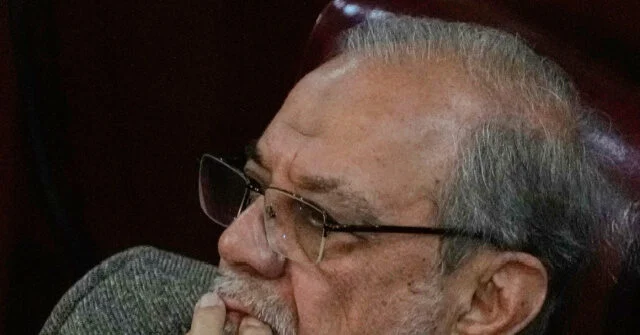
Mohammad Bagher Zolghadr, Secretary of Iran’s Supreme National Security Council and a formidable former commander within the Islamic Revolutionary Guard Corps (IRGC), articulated Iran’s stringent conditions for the reopening of the Strait. His demands, published via Iranian state media, were sweeping: an immediate cessation of all U.S. military actions and threats against Iran and its regional allies, the lifting of the existing naval blockade, the withdrawal of U.S. naval and air forces from Iranian proximity, financial compensation for what Tehran deems "war damages," the complete lifting of international sanctions, and the unconditional release of all frozen Iranian assets.
"Until America corrects its behavior, the Strait of Hormuz will not be reopened," Zolghadr asserted in a statement carried by the Islamic Republic News Agency (IRNA). He further underscored the popular backing for these demands, stating, "These are the demands of the Iranian people, which they have loudly proclaimed during 160 days of steadfast presence in the field and in the streets." Zolghadr’s declaration also conveyed an unyielding resolve from Iran’s Supreme National Security Council, vowing, "will never back down, whether in war or in negotiations." This uncompromising rhetoric signals Iran’s intent to leverage its control over the Strait as a powerful bargaining chip in the broader confrontation with the United States.
Echoing this hardline stance, Iranian Foreign Minister Abbas Araghchi confirmed on Saturday that while Tehran and Muscat were nearing a navigation framework agreement, this accord would not, in itself, guarantee the reopening of the Strait. "We believe we are very close to a final agreement. However, this does not indicate the reopening of the strait," Araghchi told reporters. He explicitly linked the full reopening to "other conditions and compensation for the United States’ violation of the Memorandum of Understanding," referring to a previously collapsed June U.S.-Iran framework. The distinction drawn by Iranian officials between a technical navigation agreement and the broader geopolitical conditions for full commercial passage highlights Tehran’s determination to extract significant concessions. IRGC Gen. Hossein Mohebbi further reinforced this, stating that the reopening of Hormuz is "completely independent" of the Iran-Oman negotiations, contingent solely on Washington accepting Tehran’s extensive conditions and abandoning its "interventionist approach."
The Strategic Imperative of the Strait of Hormuz
The Strait of Hormuz, a narrow waterway connecting the Persian Gulf to the open ocean, stands as the world’s most critical oil chokepoint. Approximately one-fifth of the world’s total petroleum liquids consumption, or about 21 million barrels per day, passes through this 21-mile-wide passage. This includes nearly all the crude oil and liquefied natural gas (LNG) exported from Saudi Arabia, Iran, the UAE, Kuwait, Qatar, and Iraq. Its closure, or even significant disruption, would send immediate and severe shockwaves through global energy markets, trigger skyrocketing oil prices, and severely impact the world economy. For decades, the Strait has been a flashpoint, with Iran repeatedly threatening its closure in response to perceived threats or sanctions. The current situation, marked by direct Iranian control and the imposition of maximalist demands, represents an unprecedented level of leverage assertion by Tehran over this vital international artery. The global implications of its continued closure extend far beyond energy, impacting shipping, insurance, and supply chains worldwide.
Chronology of Escalation and Diplomatic Maneuvers
The current crisis escalated significantly following President Donald Trump’s launch of "Operation Epic Fury" on February 28. This military campaign, according to Vice President Vance, aimed to dismantle Iran’s nuclear program, decimate its conventional military capabilities, and drastically reduce its asymmetric warfare capacity. In June, an initial U.S.-Iran framework agreement on navigation through Hormuz briefly emerged, offering a glimmer of hope for de-escalation. However, this fragile accord quickly collapsed after Iranian forces resumed attacks on commercial vessels utilizing the U.S.-backed routes, prompting renewed American military action.
In the wake of this breakdown, Oman, a historically neutral and adept regional mediator, stepped in to facilitate fresh negotiations between Iran and the United States. These talks, which have been ongoing for several days, aimed to establish a temporary navigation agreement, paving the way for a new, long-term system to replace pre-war traffic patterns. Despite indications of progress on a technical shipping framework, Iran’s latest pronouncements, particularly Zolghadr’s sweeping demands, reveal a much more complex and politically charged negotiation landscape.
Adding to the instability, attacks on commercial shipping have persisted even as diplomatic efforts advance. On Saturday, the United Arab Emirates (UAE) accused Iran of striking a tanker belonging to the state-owned Abu Dhabi National Oil Company (ADNOC) with a missile as it transited Hormuz. While no casualties were reported in this latest incident, ADNOC had reported on Friday that 15 of its vessels had been attacked in Hormuz since the war began, resulting in one fatality and 20 injuries among crew members. Oman, the host of the ongoing navigation talks, swiftly condemned these "repeated attacks" and cautioned against actions that could jeopardize negotiations, despite maintaining that discussions continued in a "positive and constructive atmosphere."
The U.S. Stance: Pressure and Verification
Vice President JD Vance, in an interview with Fox News, reiterated the Trump administration’s firm stance, emphasizing that Washington is maintaining a robust approach comprising diplomatic, economic, and military pressure. He described the current situation as being "in the middle of the game," suggesting a prolonged and intricate phase of engagement rather than an imminent resolution.
Vance outlined the immediate U.S. objectives: restoring the flow of oil and gas from the Gulf to pre-conflict levels and ensuring the safe transit of commercial vessels through the Strait. "Our expectation is you’re going to see the same amount of oil and gas come out of the Gulf that you saw before the conflict started," he stated. Achieving this, he explained, necessitates the daunting task of clearing mines laid by Iran during the conflict and securing an unequivocal commitment from Tehran to cease all attacks on commercial shipping. "The one problem, of course, is the Iranians laid a large number of mines at the beginning of the war," Vance noted. "And so what we’re really working through now is how you can actually set up a traffic scheme so that the ships that pass can pass through safely. That includes, of course, demining. That also includes a commitment from the Iranians that they’re not going to fire at commercial vessels."
Regarding the contentious issue of potential Iranian tolls for passage, Vance acknowledged public discussions within Iran about such charges but asserted that Iranian officials had privately assured Washington they had "no plans to toll the Strait of Hormuz." However, he underscored the administration’s skepticism: "We don’t trust, we verify. We actually look not at people’s words, but people’s deeds." This "trust but verify" doctrine reflects a deep-seated distrust given past Iranian actions.
The United States continues to enforce its naval blockade of Iranian ports, a key component of its economic pressure strategy. CENTCOM reported on Saturday that U.S. forces have redirected 53 commercial vessels, disabled two, and boarded another two under the renewed blockade. Over 30 additional vessels have been granted passage to deliver humanitarian aid, highlighting a nuanced application of the blockade. Vance suggested that this sustained military and economic pressure has left Iran eager to conclude the broader conflict, stating, "They’re hurting in a big way. They want this thing to be over."
The Vice President also pointed to the significant damage inflicted on Iran since "Operation Epic Fury" commenced, citing the destruction of their nuclear program, conventional military, and a radical reduction in their asymmetric military capabilities, as potent leverage held by Washington. He indicated that the U.S. is now testing whether Tehran is prepared to make more profound and lasting changes that could lead to a better relationship. "And if not, that’s fine too," Vance warned, "We’re just going to keep on applying the pressure that we can apply." President Trump has repeatedly signaled that military action remains a viable option if diplomacy fails to yield acceptable outcomes.
Oman’s Delicate Mediation and Regional Repercussions
Oman’s role as a neutral interlocutor in the volatile Gulf region is crucial. Historically, Muscat has maintained diplomatic channels with both Washington and Tehran, often acting as a bridge during times of heightened tension. Its current efforts to mediate a navigation agreement reflect its vested interest in regional stability and the unimpeded flow of commerce through the Strait. However, the latest maximalist demands from Tehran complicate Oman’s task considerably, transforming what might have been a technical negotiation into a high-stakes political concession. The condemnation of continued attacks on shipping by Oman underscores the precarious balance it seeks to maintain, navigating between facilitating dialogue and upholding international maritime law.
Broader Implications and The Path Forward
The current standoff in the Strait of Hormuz carries immense global implications. A prolonged closure or sustained insecurity in the waterway would not only destabilize global energy markets but also severely impact international trade and shipping logistics. Insurance premiums for vessels transiting the Gulf have already soared, and the threat of further attacks or naval incidents remains high, deterring commercial shippers from risking billion-dollar vessels.
The chasm between Iran’s extensive demands—which go far beyond simple navigation and include reparations, sanctions relief, and military withdrawal—and the U.S. insistence on freedom of navigation without Iranian impediments or tolls, presents a formidable diplomatic challenge. While the U.S. has indicated a willingness to lift the naval blockade once Iran permits unobstructed commercial traffic, Tehran’s conditions represent a fundamental reordering of regional power dynamics and a significant rollback of American influence.
Vice President Vance’s assessment that "we’re really in the middle of the game here" suggests a protracted period of negotiation, pressure, and potential escalation. The administration’s multi-pronged approach—diplomatic engagement through Oman, economic sanctions, and the lingering threat of military action—aims to compel Tehran to concede. However, Iran’s leadership, emboldened by what it portrays as steadfast resistance, appears unwilling to back down, at least publicly.
The immediate future of the Strait of Hormuz, and indeed the broader U.S.-Iran relationship, remains uncertain. While some progress on a temporary navigation framework might be achieved, a full and unconditional reopening of the Strait, coupled with a fundamental shift in U.S.-Iran relations, appears distant. The high stakes involved, for both regional stability and the global economy, ensure that the world will be watching the evolving situation in this critical waterway with intense scrutiny. The "middle of the game" could still hold significant twists and turns, with the threat of further military confrontation remaining a tangible, if undesirable, possibility.

Related Posts
Democratic Candidates Must Moderate to Win General Elections, Says Rep. Greg Stanton
Lisa Demuth Secures Republican Gubernatorial Nomination in Minnesota, Defeating Trump-Endorsed Mike Lindell