French Warship Accused of Intimidation During British Politician’s English Channel Visit Amid Migrant Crisis Tensions
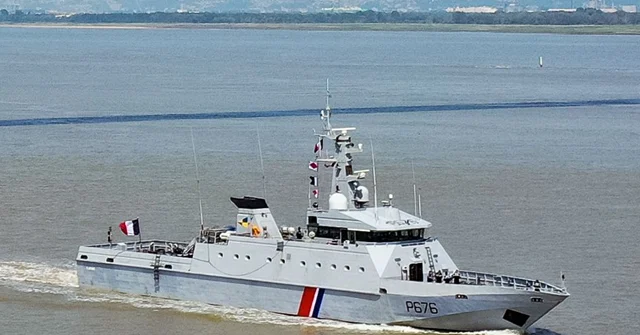
A senior British politician has publicly accused the French government of attempted intimidation following an incident in the English Channel where a French warship conducted an unannounced live-firing exercise in close proximity to a vessel carrying the politician and British media observing migrant boat crossings. Chris Philp, the Conservative Party’s home affairs spokesman, was aboard a hired boat on Wednesday morning, gathering material for news reports on the persistent issue of illegal migrant crossings, when the French patrol boat P676 Flamant reportedly passed within 300 meters and commenced firing. Philp vehemently denounced the act, citing the absence of prior radio warnings, the clear state of the sea, and the timing of the firing coinciding with the warship’s closest approach as indicators of deliberate intimidation. This event has further inflamed diplomatic tensions between London and Paris, already strained by ongoing disputes over Channel migration and post-Brexit relations.
Chronology of the Incident
The incident unfolded on Wednesday morning, October 25, as Chris Philp, a prominent voice within the Conservative Party on immigration matters, embarked on a media-facilitated observation trip in the English Channel. Accompanied by journalists from outlets including the BBC, who were actively conducting an interview with Philp, the purpose of the excursion was to highlight the scale and challenges of migrant boat crossings from France to the UK. The English Channel, one of the world’s busiest shipping lanes, has become a focal point of intense political debate and humanitarian concern due to the increasing numbers of migrants attempting the perilous journey in small, often unseaworthy, vessels.
According to reports from those present, the atmosphere of the observation mission shifted dramatically when the French patrol boat P676 Flamant was sighted. The vessel, a Flamant-class coastal patrol boat typically engaged in maritime surveillance and fisheries protection, approached the British boat. As Philp was delivering a piece to camera for the BBC, the French warship passed approximately 300 meters to starboard. It was at this critical juncture, as the Flamant reached its closest point of approach, that a live-firing exercise reportedly began. Witnesses described a French officer discharging a handgun at a towed target, a detail that, while perhaps suggesting a routine training drill, took on a different complexion given the circumstances. Crucially, no warnings were broadcast on marine radio channels, nor was any Notice to Mariners (NOTAM) apparently issued to alert other vessels in the area of a live-fire exercise. The unexpected nature of the firing, coupled with the close proximity and the absence of customary safety protocols, immediately raised alarms among the British contingent.
Accusations of Intimidation and Diplomatic Fallout
Chris Philp wasted no time in articulating his profound displeasure and suspicion regarding the French warship’s actions. Speaking to the BBC immediately after the event, he characterized the incident as a clear attempt at intimidation. "It felt to me like an attempted intimidation to stop us covering migrant crossings," Philp stated, underscoring his belief that the French Navy’s actions were deliberate and politically motivated. His comments quickly escalated into a broader critique of French efforts, or perceived lack thereof, in stemming the flow of illegal crossings.
Philp’s rhetoric was sharp and direct: "It is extraordinary that the French Navy will fire live rounds to defend their waters against a visiting British politician but cannot bear to do anything about stopping illegal Channel crossings." He continued, drawing a stark comparison: "If France showed people smugglers half the seriousness they showed me, the boats would stop. Instead, the French wave them through and pass them off to the British coastguard so it’s our problem." These statements reflect a long-standing grievance within British political circles regarding what is often perceived as insufficient French intervention to prevent migrant boats from departing their shores. Philp confirmed his intention to lodge a formal complaint with the French Ambassador in London, signaling the seriousness with which the British government, or at least its Conservative elements, views the incident.
The Vessel and the Nature of the Exercise
The P676 Flamant is one of three Flamant-class coastal patrol vessels operated by the French Navy. These ships are relatively small, designed primarily for coastal constabulary duties, including maritime surveillance, fisheries protection, pollution control, and search and rescue operations. They typically have a displacement of around 400 tonnes and are armed with light machine guns, though they are capable of embarking additional weaponry for specific missions. The report of an officer discharging a handgun at a towed target suggests a small-arms training exercise rather than the deployment of heavy naval weaponry.
However, the context of the exercise, particularly its execution in a busy international waterway without prior notification, has drawn significant criticism. Standard maritime safety protocols dictate that live-fire exercises, even with small arms, should be conducted in designated firing zones, with clear warnings broadcast via marine radio and through official Notice to Mariners channels. This ensures that other vessels in the vicinity are aware of potential hazards and can take evasive action. The absence of such warnings in this instance, as reported by British media, raises serious questions about adherence to international best practices for maritime safety. While warships often operate with certain exemptions from civilian maritime regulations, the principle of avoiding unnecessary risk to other vessels, especially in peacetime and crowded waters, remains paramount.
Official Responses and Conflicting Narratives
In the immediate aftermath, official responses from both sides have begun to emerge, presenting a somewhat divergent narrative. A spokesperson for the UK Home Office confirmed that "We are in contact with the French authorities to understand the full context of this incident," indicating a diplomatic approach to ascertain the facts.
However, British newspaper The Times reported an intriguing detail: sources suggested that the French government might have, in fact, informed the British government of its plans for a live-fire exercise ahead of time. If true, this information was evidently not disseminated to the British boat carrying Chris Philp or publicly announced via maritime channels. This potential disconnect raises questions about internal communication within the British government or a failure to adequately warn civilian vessels operating in the area despite prior knowledge.
Conversely, sources within the French government, as reported by the BBC, stated that the patrol boat Flamant was not engaged in monitoring illegal migrant boats at the time of the incident. This assertion attempts to decouple the live-firing exercise from the broader migrant crisis, implying that the two events were coincidental rather than linked by intent. Yet, this claim is met with skepticism in some quarters, given the Flamant’s documented history of involvement in English Channel operations, including those related to migrant crossings. Its presence in the vicinity of a British politician observing migrant activity, regardless of its specific task at that moment, inevitably fuels speculation about the true motives behind its actions.
The Broader Context: The English Channel Migrant Crisis
The incident involving the P676 Flamant cannot be isolated from the highly charged political and humanitarian context of the English Channel migrant crisis. For years, the waterway has been a primary route for migrants attempting to reach the UK from continental Europe. Data indicates a significant increase in these crossings over recent years, with tens of thousands of individuals making the perilous journey annually, often in flimsy dinghies.
The crisis has become a major point of contention between the UK and France. The British government frequently accuses France of not doing enough to prevent departures from its coastline, despite substantial financial contributions from London to bolster French border security efforts. Conversely, France often points to UK policies, such as its asylum system and perceived economic opportunities, as pull factors for migrants, arguing that the ultimate solution lies in addressing these root causes.
Past revelations have further complicated this relationship. In 2020, reports emerged of "secret missions" by French warships escorting migrant boats into British waters before handing them off to UK Coastguard vessels. These revelations fueled accusations that France was actively facilitating, rather than deterring, illegal crossings. Following these discoveries, concerns also mounted over French warships reportedly "going dark" – turning off their Automatic Identification System (AIS) trackers – while engaged in migrant operations in the Channel. While military vessels are not legally obligated to transmit AIS data, doing so in a busy, peacetime waterway is widely considered against best practice for maritime safety and collision avoidance. This history of opacity and perceived uncooperativeness provides a deeply unsettling backdrop to the latest live-firing incident.
Diplomatic and Maritime Implications
The live-firing incident carries significant diplomatic and maritime implications. Diplomatically, it represents a new low in an already fraught relationship between two close European allies. While official complaints will likely be lodged and investigated through established channels, the public nature of the accusation of "intimidation" by a senior British politician has already inflicted damage. It feeds into existing narratives of French recalcitrance and British frustration, making cooperation on shared challenges, including the migrant crisis, potentially even more difficult. The incident could exacerbate the trust deficit between the two nations, impacting future negotiations and joint operations.
From a maritime safety perspective, the unannounced live-fire exercise in a busy international shipping lane is a serious concern. The English Channel is traversed by thousands of vessels daily, ranging from large cargo ships and ferries to smaller fishing boats and pleasure craft. Any activity involving live ordnance, regardless of its scale, necessitates stringent safety measures to prevent accidents. The reported lack of warnings not only put the British boat and its occupants at potential risk but also created an unpredictable hazard for any other unsuspecting vessel in the vicinity. International maritime law and best practices emphasize transparency and communication to ensure the safety of navigation. A naval vessel, even when conducting training, is expected to adhere to these principles, particularly in congested waters.
Looking Ahead
The formal complaint promised by Chris Philp to the French Ambassador will undoubtedly trigger a diplomatic exchange. The outcome of such an exchange will be crucial in determining whether this incident escalates further or is contained. It will test the resilience of the Anglo-French relationship and the effectiveness of existing mechanisms for dispute resolution.
Beyond the immediate diplomatic fallout, the incident refocuses attention on the broader challenge of the English Channel migrant crisis. It underscores the political sensitivities surrounding border control and national sovereignty, and the difficulties in achieving genuine, coordinated action between neighboring states. The accusations leveled by Philp, whether fully substantiated or not, reflect a deep-seated frustration within the British political establishment over the perceived French approach. As both governments grapple with the humanitarian, logistical, and political complexities of the Channel crossings, incidents like this threaten to undermine the very cooperation needed to find sustainable solutions. The transparency and accountability surrounding maritime operations in such a critical waterway will remain under intense scrutiny as the international community watches how this latest diplomatic spat unfolds.

Related Posts
Democratic Candidates Must Moderate to Win General Elections, Says Rep. Greg Stanton

Lisa Demuth Secures Republican Gubernatorial Nomination in Minnesota, Defeating Trump-Endorsed Mike Lindell