Berlin Terror Attack at Pride Parade Leaves One Dead and Dozens Injured as Authorities Identify Suspect
A violent assault targeting the Christopher Street Day (CSD) parade in Berlin on Saturday has sent shockwaves through Germany, resulting in the death of one individual and leaving 29 others injured. The incident, which took place in the iconic Tiergarten park, has been officially classified by federal authorities as an Islamist terrorist attack. The suspect, identified as 21-year-old Abdul Ballout, was killed by police during a confrontation in the Berlin suburbs on Sunday evening following a high-stakes 20-hour manhunt.
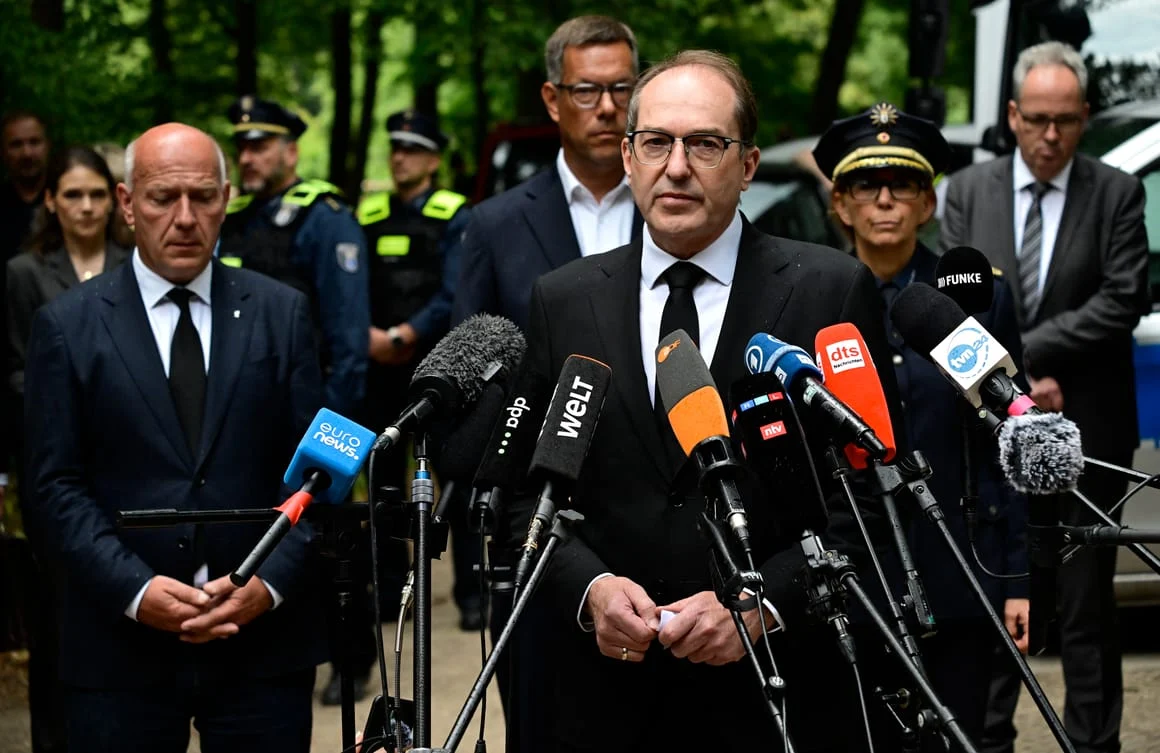
The violence unfolded during one of the capital’s most significant cultural events, turning a celebration of inclusivity and diversity into a scene of carnage. German Interior Minister Alexander Dobrindt addressed the public at the site of the attack, confirming the severity of the incident and the ideological motivation behind it. "Everything we have seen so far indicates that we are dealing with an Islamist terrorist attack," Dobrindt stated, underscoring the gravity of the threat posed to public safety.
A Chronology of the Assault
The sequence of events began on Saturday afternoon when a van was driven into a crowd of participants gathered near the Tiergarten. According to police reports, the perpetrator, Ballout, utilized the vehicle as a weapon before exiting and continuing the assault with a bladed implement, described by witnesses and officials as a machete. The attack caused widespread panic among the thousands of attendees, leading to a massive mobilization of emergency services.
Following the initial ramming and stabbing, the suspect fled the scene, triggering a sprawling manhunt involving specialized counter-terrorism units. For nearly 20 hours, law enforcement agencies coordinated an intensive search across Berlin and its surrounding Brandenburg state. The search concluded on Sunday evening in a suburban garden, where officers encountered the suspect. Police reported that Ballout attempted to attack the responding officers with a bladed weapon, necessitating the use of lethal force.
Profile of the Perpetrator and Security Failures
The identification of Abdul Ballout has raised immediate questions regarding the effectiveness of Germany’s domestic surveillance and de-radicalization programs. Ballout, a German national of Lebanese descent, was not an unknown entity to security services. Minister Dobrindt confirmed that the suspect had a documented history of criminal activity and had previously been radicalized.
Public records and reports from the German media outlet WELT indicate that Ballout had been classified as a "Gefährder"—a term used by German authorities to describe individuals deemed capable of committing a serious, politically motivated act of violence. Notably, he had previously been convicted under the German Criminal Code for preparing a serious act of violence endangering the state. Despite being enrolled in a mandatory state-ordered de-radicalization program, which included scheduled counseling sessions, Ballout managed to bypass these safeguards to carry out the attack.
The Broader Context of Vehicle-Ramming Attacks
The attack in Berlin joins a sobering list of similar incidents that have plagued Germany and Europe over the past decade. Since the 2016 Breitscheidplatz Christmas market attack, German security agencies have significantly bolstered measures to harden public spaces against vehicle-ramming threats. These include the installation of concrete bollards, increased police presence at large-scale public gatherings, and enhanced intelligence-sharing between federal and state police departments.
Data from the Federal Criminal Police Office (BKA) suggests that while the number of successful large-scale terrorist attacks has remained relatively low compared to the peak years of 2015-2017, the threat of "lone actor" radicalization remains a persistent challenge for domestic intelligence. The transition from monitored "threat" to active participant in violence highlights the difficulty of predicting and preventing individuals who operate outside of formal, organized terror cells.

Official Responses and Political Repercussions
The national leadership in Berlin has responded with a mixture of condemnation and resolve. Chancellor Friedrich Merz, leading the government’s response, visited the site of the tragedy on Sunday to attend a memorial service. Speaking to the press, Merz emphasized that the primary goal of the attackers was to destabilize the social fabric of the nation.
"These attacks have only one purpose," Merz said. "They seek to divide our society. They seek to take away what is most precious to us: our openness and our freedom. We will not allow this poison of terrorism, this poison directed against our freedom, to spread farther through our society."
European leaders, including the President of the European Commission and various heads of state, issued statements expressing their solidarity with the victims and the German government. Within the Bundestag, the incident has already sparked intense debate regarding the adequacy of the current legal framework for monitoring high-risk individuals. Opposition parties are calling for a thorough review of the justice system’s handling of extremist offenders, specifically targeting why individuals convicted of preparing violence are able to remain at large in the community.
Implications for Public Security
Interior Minister Dobrindt has signaled that while the risk of immediate copycat attacks is currently assessed as low, the federal government is advising states to heighten security protocols at upcoming summer festivals and public gatherings. The challenge for local law enforcement is to balance the preservation of the open, celebratory nature of events like the CSD parade with the need for robust, visible security.
Experts in counter-terrorism suggest that the psychological impact of such an attack is intended to be disproportionate to the actual capability of the perpetrator. By targeting a pride event, the assailant sought to maximize the symbolic reach of his actions. Security analysts are now calling for a shift in strategy, focusing not just on physical barriers, but on deeper community-level interventions that can identify the point at which an individual moves from ideological alignment to operational intent.
The Path Forward
As the investigation into Ballout’s network and communications continues, German authorities are working to determine whether he received support or instructions from any organized extremist groups. The forensic investigation of his digital devices and personal effects is expected to provide more clarity on his movements in the days leading up to the attack.
For the victims and their families, the focus remains on recovery and mourning. The 29 individuals injured—several of whom remain in critical condition—are receiving care in hospitals across Berlin. Meanwhile, the city is grappling with the task of reconciling the trauma of the event with the need to maintain the civic spirit that defines the Christopher Street Day celebrations.
The attack has served as a grim reminder that the threat of domestic terrorism in Germany remains a volatile and evolving issue. As the government navigates the political fallout and the public processes the grief, the focus will undoubtedly shift toward long-term security reforms. Whether these reforms will involve stricter sentencing guidelines for radicalized offenders or an overhaul of the monitoring systems for those deemed security threats remains to be seen in the coming legislative sessions.
For now, the city of Berlin remains under a heightened state of alert. While the immediate threat posed by Abdul Ballout has been neutralized, the underlying questions regarding how a known extremist was able to strike the heart of the capital persist, ensuring that this tragedy will remain a central point of political and social discourse in Germany for the foreseeable future.