Actress Patricia Heaton Criticizes Dr. Anthony Fauci’s Conduct During Pandemic Amid Release of Revealing Personal Diaries
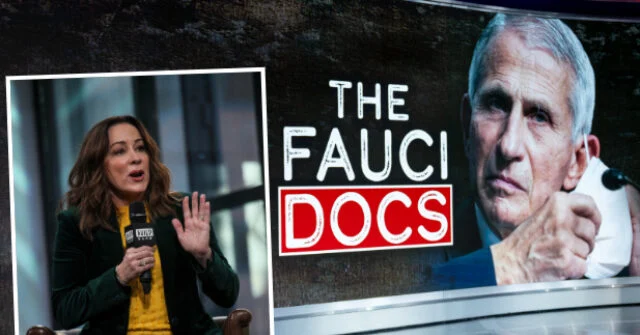
Actress Patricia Heaton has publicly accused Dr. Anthony Fauci, former Chief Medical Advisor to the President, of "exulting in his fame" while American citizens endured widespread lockdowns during the Chinese coronavirus pandemic. Heaton’s strong remarks, shared via an X post on Monday morning, were made in response to a summary of Fauci’s recently released personal diary entries. These diaries, brought to light through a subpoena by Senator Rand Paul (R-KY), offer an unprecedented glimpse into Fauci’s private thoughts, his interactions with high-profile political figures and celebrities, and his personal reflections during one of the most tumultuous periods in recent American history. The content of these entries has fueled renewed debate over the motivations and priorities of public health leadership during the crisis, particularly in light of what some critics perceive as a focus on personal accolades rather than solely on scientific rigor and public welfare.
The Genesis of the Controversy: Patricia Heaton’s Remarks
Patricia Heaton, widely recognized for her roles in popular television series such as Everybody Loves Raymond and The Middle, entered the public discourse surrounding Dr. Fauci with a pointed critique. Her X post stated, "So we were all shut down and Fauci was exulting in his fame…" This comment directly linked the hardship faced by millions of Americans under stringent lockdown measures to Fauci’s perceived enjoyment of his elevated public profile. Heaton’s statement resonated with a segment of the public that has long questioned the efficacy and necessity of certain pandemic policies, as well as the conduct of public health officials. Her criticism was prompted by a post from Grabien founder Tom Elliott, who compiled a striking statistical analysis of words appearing in Fauci’s diary entries. Elliott’s summary highlighted the complete absence of terms like "peer review," "meta-analysis," "risk-benefit," "learning loss," and "mental health" from Fauci’s private reflections, while other critical terms like "N95," "seroprevalence," and "cost-benefit" appeared only once. "Cloth mask," "school closure," and "natural immunity" were mentioned twice. This data point, juxtaposed against the backdrop of widespread societal disruption, provided the specific context for Heaton’s assertion regarding Fauci’s priorities during the crisis.
Unveiling the Diaries: Senator Paul’s Role and the Public Release
The release of Dr. Anthony Fauci’s personal diaries marks a significant development in the ongoing efforts to scrutinize the nation’s pandemic response. These entries were obtained and subsequently released by Senator Rand Paul, Chairman of the Senate Homeland Security Committee. Senator Paul, a vocal critic of Fauci’s handling of the pandemic and his role as Director of the National Institute of Allergy and Infectious Diseases (NIAID), had long sought access to Fauci’s communications and records. His persistent efforts culminated in a subpoena, compelling the release of these private documents. The diaries, spanning crucial periods of the pandemic from early 2020 onwards, offer an intimate, unfiltered look into Fauci’s daily life, his interactions, and his internal monologue. For Senator Paul and other critics, these documents serve as crucial evidence in their quest for transparency and accountability from federal health agencies and officials during the COVID-19 era. The release package, made publicly available through Senate channels, details Fauci’s engagements with a diverse array of individuals, ranging from President Donald Trump and former White House Chief of Staff Mark Meadows to media personalities like Lou Dobbs and Dana Bash, and even celebrities such as Julia Roberts and NBA star Stephen Curry. This wide net of interactions underscores Fauci’s unprecedented visibility and influence during the pandemic.
A Glimpse into Fauci’s Inner World: Key Revelations from the Diaries
The released diary entries paint a multifaceted picture of Dr. Fauci’s experience, revealing a blend of professional engagement, political navigation, and personal reflections on his burgeoning celebrity status.
Early Pandemic: Praise, Public Acclaim, and Presidential Interactions
In the nascent stages of the pandemic, as the novel coronavirus began its global spread, Fauci’s diary entries reveal an individual rapidly ascending to national prominence. A January 29, 2020 entry documents a call from Lou Dobbs, then a Fox News host, who informed Fauci that President Trump would be contacting him, having praised Fauci as the "smartest person around." Fauci recounted Trump’s subsequent call, where the President reportedly told him, "Anthony, you are really a famous guy. My good friend Lou Dobbs told me that you were the one of the smartest, knowledgeable and outstanding persons he knows." The entry concludes with Fauci’s satisfaction, noting, "When Trump finally left, he said: ‘Anthony, are we OK?’ I said: ‘We are good’. He smiled and as he walked out of the room, he said ‘Thanks, again, Anthony. We are counting on you’." This initial period was marked by a seemingly cordial and mutually appreciative relationship with the highest echelons of government. A February 6, 2020 entry further illustrates this, with Fauci noting that President Trump "told Melania that I was the smartest person in the world."
As the pandemic intensified and public attention gravitated towards scientific guidance, Fauci’s public profile soared to unprecedented heights for a public health official. An April 1, 2020 entry, though dated on April Fool’s Day, appears to reflect genuine observations about his newfound celebrity: "Continued crazy stuff: Petition to name me ‘Sexiest Man Alive’; videos games named after me; Fauci Bobblehead; dishes in restaurants named after me, and on and on." These details, recorded privately, lend credence to Heaton’s observation about Fauci "exulting in his fame," suggesting an awareness and perhaps enjoyment of the extensive public adulation he received. This period saw Fauci become a household name, a ubiquitous presence in media, and for many, a reassuring voice of scientific authority amidst uncertainty.
Growing Tensions and Media Scrutiny
However, the narrative of unbridled acclaim soon began to shift as the pandemic’s complexities deepened and policy decisions became more contentious. An April 15, 2020 entry reveals a flash of private anger directed at a journalist. Fauci lamented Peter Nicholas, a staff writer for The Atlantic, for writing "a piece saying I was humiliated and ‘shamed’ by getting in front of the cameras and backing off the CNN interview with Tapper." Fauci’s raw, unedited response, "Fuck you, Peter," offers a rare glimpse into his private frustrations with media criticism, underscoring the intense pressure and scrutiny he faced as public opinion became increasingly polarized. This marks an early indication of the growing friction between Fauci and segments of the media and public.
Political Clashes and White House Friction
The diaries also chronicle the deterioration of Fauci’s relationship with the Trump administration, particularly with then-White House Chief of Staff Mark Meadows. A July 13, 2020 entry details a heated confrontation. Fauci recounted making a public comment that the "current outbreak was ‘comparable to 1918’," clarifying that he "did not mean in numbers, but for a sensitive person, it could mean that I was predicting 50 million deaths." This statement, however, provoked a strong reaction from the White House. Fauci wrote, "Well, tonight Francis Collins called me up saying that he just got off the phone with Mark Meadows who was screaming at him about what I said. Mark wanted this ‘walked back’." This incident highlights the immense political pressure placed on public health officials to align their messaging with the administration’s narrative, especially as the economic and social costs of the pandemic response mounted. The reference to the 1918 flu pandemic, a historical event synonymous with devastating mortality, illustrates the sensitivity surrounding any public health pronouncement that could be perceived as alarmist or economically damaging.
Media Relationships and Personal Support
Beyond the political sphere, Fauci’s diaries illuminate his interactions and perceived alliances within the media landscape. An April 17, 2021 entry recounts a text message from CNN’s Dana Bash following a contentious exchange between Fauci and Representative Jim Jordan (R-OH) during a congressional hearing. Bash reportedly told Fauci he was "a better man" and relayed a joke from CNN anchor Wolf Blitzer, who allegedly quipped that "no one would have blamed Fauci if he had simply said, ‘Mr. Jordan, go fuck yourself’." The following day, an April 18, 2021 entry further details Bash texting Fauci a Vanity Fair headline that mocked Rep. Jordan: "Jim Jordan trips over his own asshole trying to debate Anthony Fauci." These entries suggest a degree of camaraderie and shared sentiment between Fauci and certain media figures, particularly concerning his political adversaries. For critics, these revelations raise questions about the perceived impartiality of public health messaging and the potential for blurring lines between public health advocacy and political alignment.
The "Numbers" and Scientific Omissions: A Deeper Look
Perhaps one of the most significant revelations from the diary summary, as highlighted by Tom Elliott, is the striking absence or minimal mention of key scientific and societal terms within Fauci’s private reflections. This aspect of the diaries provides fertile ground for analysis regarding Fauci’s priorities and focus during the crisis.
Critical Scientific Terms: "Peer Review" and "Meta-analysis"
The complete absence of "peer review" and "meta-analysis" is particularly noteworthy for a leading scientific figure. Peer review is the cornerstone of scientific validity, where research findings are scrutinized by independent experts before publication. Meta-analysis involves statistically combining results from multiple scientific studies to draw more robust conclusions. The lack of these terms in Fauci’s diary entries could be interpreted by some as a reflection of a focus on public communication and political navigation over the foundational processes of scientific inquiry, especially at a time when rapid scientific consensus and rigorous evidence evaluation were paramount. During the pandemic, the scientific community grappled with rapidly evolving data, and the process of peer review was often accelerated or bypassed in the urgency to publish findings, leading to debates about scientific rigor.
Risk Assessment and Societal Impact: "Risk-Benefit," "Learning Loss," and "Mental Health"
Equally striking is the complete absence of "risk-benefit" from the diaries and the rare mention of "learning loss" and "mental health" (never once mentioned). Public health interventions like lockdowns, school closures, and mask mandates carry significant societal costs alongside their intended benefits. A comprehensive public health strategy typically involves a meticulous risk-benefit analysis, weighing the epidemiological advantages

Related Posts
Democratic Candidates Must Moderate to Win General Elections, Says Rep. Greg Stanton

Lisa Demuth Secures Republican Gubernatorial Nomination in Minnesota, Defeating Trump-Endorsed Mike Lindell