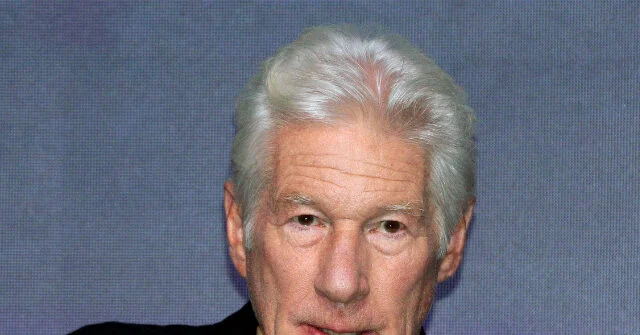
Actor Richard Gere’s Critique of USAID Cuts Ignites White House Rebuttal Amidst Broader Debate on Foreign Aid Efficacy and U.S. Global Engagement
The White House has issued a sharp rebuke to actor Richard Gere following his recent public criticisms of the Trump administration’s decision to scale back funding for the United States Agency for International Development (USAID). Gere, during promotional appearances for the second season of his Paramount+ series, The Agency, diverted from discussing his professional work to launch a direct attack on the administration’s foreign policy, specifically lamenting the perceived "elimination" of USAID and its implications for humanitarian efforts and global stability. This exchange has reignited a long-standing national debate over the purpose, effectiveness, and accountability of U.S. foreign aid programs, with administration officials asserting that the changes are aimed at reining in wasteful spending and refocusing aid on core American interests.
Richard Gere’s Critique and Activist Stance
During a series of interviews, including one with the Associated Press, Richard Gere articulated strong disapproval of the Trump administration’s policies, particularly those concerning immigration, Israel, and, most prominently, USAID. The veteran actor, known for his decades of political and humanitarian activism, expressed profound dismay at the alterations to USAID, characterizing its original mission as "probably the most pure thing America did up to that moment." He further asserted that the program was a "giveaway program to needy people" and criticized its alleged cessation "day one" of the administration, attributing the decision to ignorance among the President and his advisors. Gere’s comments underscored a deeply held belief in the benevolent and essential role of American foreign assistance in global affairs.
The actor’s foray into political commentary during a press tour is not an isolated incident. Throughout his career, Gere has been a vocal advocate for human rights, particularly in Tibet, a staunch supporter of various social justice causes, and an outspoken critic of policies he perceives as detrimental to humanitarian principles. His public profile lends significant visibility to the issues he champions, often placing him at the intersection of entertainment and political discourse. His recent remarks reflect a consistent pattern of leveraging his platform to address what he views as critical global challenges, signaling a personal conviction that extends beyond his professional endeavors. His assertion that the President "wouldn’t even know what it stands for, USAID" and that he is surrounded by "idiots" with similar ignorance, highlights the depth of his frustration and signals a perceived lack of understanding or empathy from the administration regarding international development.
The White House’s Swift Rebuttal
The White House, through its official Rapid Response account on X (formerly Twitter), wasted no time in countering Gere’s statements. The administration’s response was sharp and direct, challenging the actor’s characterization of USAID and defending its policy shifts. The X account questioned the efficacy and priority of certain USAID expenditures, asking rhetorically, "What will the world do without millions for Guatemalan sex changes or DEI in Serbia? Because that’s the type of bullshit USAID was funding." This pointed critique aimed to highlight specific projects that have drawn controversy and criticism for allegedly deviating from core humanitarian or development objectives.
The White House statement further asserted that USAID, under its previous operational model, had functioned as "a slush fund for Radical Left activists to enrich themselves and undermine America’s interests." This framing aligns with the administration’s broader "America First" foreign policy doctrine, which prioritizes domestic concerns and a more transactional approach to international relations. The use of terms like "slush fund" and "Radical Left activists" underscores a narrative that portrays foreign aid as susceptible to political manipulation and mismanagement, rather than a purely altruistic endeavor. The Rapid Response team’s strategy is typical of the administration’s communication style: direct, confrontational, and designed to quickly discredit perceived political opponents and their arguments, often by highlighting specific, controversial examples of spending. This immediate pushback serves not only to defend the administration’s policies but also to frame the public discourse around the perceived excesses and inefficiencies of past foreign aid practices.
Deconstructing USAID: Mission, History, and Critiques
To fully understand the current debate, it is essential to delve into the history and operational complexities of USAID. Established in 1961 by President John F. Kennedy, USAID was conceived as the primary U.S. government agency responsible for administering civilian foreign aid. Its mandate was broad, encompassing global health, humanitarian assistance, economic development, democracy promotion, and environmental protection. For decades, USAID has been a cornerstone of American soft power, serving as a critical tool for advancing U.S. foreign policy objectives alongside diplomatic and military efforts. Its programs have spanned continents, addressing poverty, disease, illiteracy, and political instability in numerous developing nations.
Evolution of U.S. Foreign Aid Policy
The creation of USAID marked a significant evolution in U.S. foreign aid, consolidating various programs under a single, dedicated agency. In its early years, much of USAID’s work focused on Cold War objectives, aiming to prevent the spread of communism by fostering economic growth and stability in vulnerable nations. Over time, its focus expanded to include responding to global crises, promoting human rights, and supporting sustainable development. From battling infectious diseases like HIV/AIDS and malaria to providing emergency relief after natural disasters, USAID has played a pivotal role in countless international initiatives. Its annual budget, often in the tens of billions of dollars, represents a substantial investment of American taxpayer money in global affairs, reflecting a long-standing bipartisan consensus on the importance of international development and humanitarian assistance.
Persistent Criticisms of Aid Effectiveness
Despite its noble intentions and numerous successes, USAID has not been immune to criticism. Over the years, debates have frequently arisen regarding the effectiveness, efficiency, and accountability of foreign aid. Concerns have often centered on high administrative costs, the potential for corruption in recipient countries, and the challenge of measuring tangible impact. Critics have also pointed to instances where aid programs, however well-intentioned, have inadvertently created dependency, distorted local economies, or been co-opted by authoritarian regimes. Furthermore, the sheer scale and complexity of USAID’s operations, involving thousands of projects in scores of countries, have made comprehensive oversight a continuous challenge.
These criticisms intensified in the early 21st century, particularly as questions arose about whether U.S. aid truly reached its intended beneficiaries or became mired in bureaucratic overhead and indirect expenses. Specific projects, sometimes perceived as politically charged or culturally insensitive, have occasionally drawn public scrutiny, fueling arguments that some funds were being misdirected from core development goals. The White House’s recent attack on "Guatemalan sex changes or DEI in Serbia" spending taps into these pre-existing narratives, suggesting a perceived misalignment between USAID’s stated mission and its actual expenditures. Such examples, whether representative of the agency’s overall portfolio or isolated incidents, contribute to a public perception that not all foreign aid serves genuinely critical humanitarian or strategic interests.
Secretary Marco Rubio’s Assessment and Proposed Reforms
Adding substantial weight to the administration’s stance on USAID’s restructuring is the assessment provided by U.S. Secretary of State Marco Rubio. In May of last year (2025, according to the article’s timeline), Secretary Rubio publicly addressed the issue of USAID’s efficiency, presenting data that starkly illustrated his concerns. He revealed that only "12 cents of every dollar" from USAID funding actually reached the intended needy recipients. This figure, if accurate and broadly representative, paints a troubling picture of significant administrative waste and indirect spending within the agency.
The ’12 Cents’ Revelation
Rubio’s revelation sparked considerable debate among policymakers, development experts, and the public. His statement implied that the vast majority of American taxpayer dollars allocated to USAID were consumed by administrative overhead, contractor fees, consulting costs, and funding for programs that, while potentially having some merit, did not directly provide aid to those in immediate need. He characterized this situation as supporting a "foreign aid industrial complex," a term suggesting a self-perpetuating ecosystem of organizations, consultants, and administrative structures that thrive on the flow of aid money, often at the expense of direct impact. This critique aligns with a broader argument that large-scale, institution-heavy aid models can become inefficient and detached from ground-level realities.
The Secretary of State’s analysis suggests that the existing structure of USAID had become cumbersome, with too many intermediaries and too much bureaucracy diluting the effectiveness of aid delivery. This perspective directly challenges the notion, as articulated by Richard Gere, that USAID was a "pure" and unadulterated "giveaway program to needy people." Instead, Rubio’s data presents it as a complex system with significant leakage, prompting a critical re-evaluation of its operational model.
Towards a Reformed Aid Architecture
In response to these perceived inefficiencies, Secretary Rubio outlined the administration’s commitment to finding "more efficient ways to deliver aid to people directly." This new approach is envisioned to be "directed by our regional bureaus" and to "sponsor programs that make a difference." The emphasis on regional bureaus suggests a decentralization of decision-making, aiming to tailor aid more specifically to local needs and conditions, potentially reducing the layers of bureaucracy. Furthermore, the call for programs that "make a difference" implies a renewed focus on measurable outcomes and demonstrable impact, moving away from projects deemed less effective or aligned with U.S. strategic priorities.
Rubio emphasized that these reforms would be part of a "holistic approach to our foreign policy," indicating that foreign aid is no longer seen as a standalone humanitarian endeavor but as an integrated component of a broader strategy to advance American interests and global stability. This holistic approach likely involves closer coordination between aid, diplomacy, and security efforts, ensuring that every dollar spent contributes to defined strategic objectives. The administration’s vision for a reformed aid architecture seeks to streamline processes, enhance accountability, and ensure that aid dollars are deployed with maximum impact, directly benefiting those in need while also serving U.S. national interests more effectively.
The Broader Policy Implications
The ongoing contention between actor Richard Gere and the White House regarding USAID cuts is more than just a celebrity spat; it represents a microcosm of a much larger and more profound debate about the fundamental principles of U.S. foreign policy, global engagement, and the role of humanitarian assistance in the 21st century. The administration’s pivot away from what it perceives as an inefficient and politically misaligned aid structure signals a significant shift in how the United States intends to interact with the rest of the world.
Realigning Foreign Policy Objectives
The Trump administration’s "America First" doctrine has consistently advocated for a re-evaluation of international commitments and expenditures, placing a premium on tangible benefits to American interests. In the context of foreign aid, this translates into a demand for greater efficiency, accountability, and a clearer alignment of aid programs with U.S. strategic objectives, whether economic, security-related, or diplomatic. Critics of the traditional USAID model, including Secretary Rubio, argue that a more focused and streamlined approach will not only save taxpayer money but also make aid more impactful by eliminating wasteful projects and empowering local partners more directly. This realignment could lead to a significant reallocation of funds, favoring programs that demonstrably contribute to stability in critical regions, counter hostile foreign influence, or support American economic opportunities abroad.
However, this approach carries potential risks. A significant reduction or reorientation of traditional humanitarian aid could diminish America’s global standing as a benevolent leader, potentially creating vacuums that other global powers might fill. International NGOs and development organizations, often reliant on USAID funding, could face severe operational challenges, impacting their ability to deliver critical services. Furthermore, reducing support for long-term development initiatives, even those with less immediate returns, could undermine efforts to address root causes of instability, poverty, and migration, potentially leading to future humanitarian crises that could ultimately require more costly interventions.
The Future of Humanitarian Assistance
The debate also highlights a fundamental philosophical divide regarding the nature and purpose of humanitarian assistance. One perspective, championed by figures like Richard Gere, views aid as an ethical imperative, a moral obligation to alleviate suffering and promote human dignity globally. This perspective often emphasizes universal human rights and the interconnectedness of global challenges, advocating for robust, broadly defined aid programs that address a wide spectrum of needs, from disaster relief to gender equality initiatives.
The other perspective, articulated by the White House and Secretary Rubio, while not necessarily rejecting humanitarian aid outright, prioritizes strategic utility and cost-effectiveness. It argues that aid must be delivered with greater discernment, ensuring that it directly serves both the recipient population and the donor nation’s interests. This often entails a more critical examination of program types, administrative overhead, and the potential for aid to be diverted or misused. The challenge for the administration will be to demonstrate that its reformed approach can deliver aid more effectively and efficiently, while still upholding America’s humanitarian values and fulfilling its role as a global leader. The success or failure of these reforms will have far-reaching consequences for millions of people worldwide and for the future trajectory of U.S. foreign policy.
Conclusion: A Deepening Divide Over Global Engagement
The exchange between Richard Gere and the White House illuminates a widening ideological chasm within American political discourse regarding the nation’s role on the global stage. Gere’s impassioned defense of USAID as a beacon of American benevolence contrasts sharply with the administration’s pragmatic, "America First" critique, which views parts of the agency as a bloated, misdirected "slush fund." This isn’t merely a disagreement over budgetary line items but a fundamental clash over values, priorities, and the very definition of American leadership in the 21st century.
As the Trump administration continues to reshape its foreign policy, focusing on direct bilateral relationships and a more transactional approach to international affairs, the future of multilateral institutions and broad-based humanitarian programs like USAID remains a key point of contention. The outcomes of these policy shifts, and the ongoing debate they provoke, will undoubtedly have profound implications not only for the efficacy of American aid but also for the nation’s standing and influence in a rapidly evolving global landscape. The call for greater accountability and efficiency in foreign aid is not new, but the current administration’s willingness to fundamentally alter long-standing structures has brought these debates to the forefront, forcing a critical re-evaluation of how the United States engages with the world.

Related Posts
Democratic Candidates Must Moderate to Win General Elections, Says Rep. Greg Stanton
Lisa Demuth Secures Republican Gubernatorial Nomination in Minnesota, Defeating Trump-Endorsed Mike Lindell