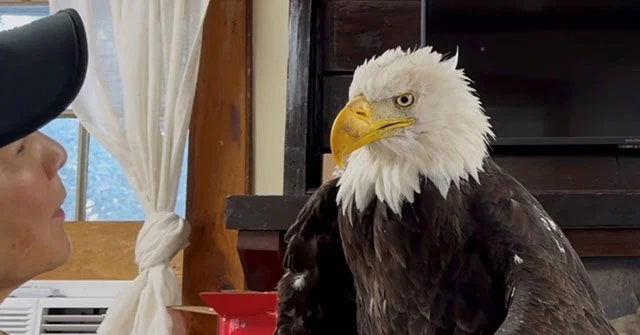
Beloved California Bald Eagle Jackie Dies After Mysterious Illness
The news of Jackie’s death marks a somber moment for a global community of wildlife enthusiasts who had followed her journey and that of her mate, Shadow, since their partnership began in 2018. The livestream, offering an intimate window into the lives of these majestic raptors, transformed Jackie and Shadow into internet sensations, allowing viewers to witness everything from the harsh realities of freezing winter storms to the tender moments of incubating eggs and doting on fuzzy chicks. Her battle with the undiagnosed ailment had been closely monitored at the Ojai Raptor Center, a rehabilitation facility dedicated to the care and conservation of birds of prey, where experts tirelessly worked to save her until her untimely passing.
The Onset of Illness and Rescue Efforts
The first signs of trouble emerged in mid-July when Jackie was discovered in a severely weakened and disheveled state on the north shore of Big Bear Lake, visibly unable to take flight. This distressing discovery was initially linked to a reported scuffle with two younger, presumably territorial, eagles. While the encounter may have grounded her, subsequent medical assessments revealed a more profound underlying health crisis. Following her rescue, Jackie was swiftly transferred to the Ojai Raptor Center, a specialized facility renowned for its expertise in raptor care. Upon arrival, initial reports indicated she was in stable condition, offering a glimmer of hope to her anxious followers.
However, as the weeks progressed, it became clear that Jackie’s condition was far more complex than a simple recovery from a physical altercation. Chris Eksteen, the executive director of the Ojai Raptor Center, confirmed that while the scuffle might have precipitated her capture, it was not the root cause of her severe anemia, a critical symptom that necessitated a blood transfusion from another eagle. Eksteen noted in a social media update that the clinical picture suggested Jackie had been unwell for some time prior to her discovery, hinting at a prolonged, insidious health decline.
Intensive Medical Intervention and Diagnostic Challenges
At the Ojai Raptor Center, Jackie received an extraordinary level of care, reflecting her status and the center’s commitment to wildlife rehabilitation. Her treatment regimen was extensive, involving a dedicated veterinary team, consulting specialists, and a battery of diagnostic tests. These tests were crucial in attempting to unravel the mystery of her illness. Among the conditions rigorously investigated were common threats to bald eagles, such as lead poisoning, a significant cause of mortality in raptor populations. Encouragingly, test results released on July 23 confirmed that Jackie did not suffer from lead poisoning, ruling out a widespread and often fatal environmental contaminant. Other potential causes, including various forms of cancer and the ingestion of metal objects, were also systematically eliminated through comprehensive testing, including advanced imaging like a CT scan.
Despite these efforts, the exact etiology of Jackie’s mysterious illness remained elusive. Her health trajectory was characterized by alarming fluctuations; doctors observed her packed cell volume (PCV), a measure of red blood cell concentration, dip to critically low levels below 6 percent, only to rebound temporarily above 9 percent. These erratic changes underscored the severity and complexity of her internal struggles. The Ojai Raptor Center’s announcement conveyed the deep distress felt by the team, stating, "Over the past several days, her condition continued to deteriorate despite intensive treatment and the combined efforts of our veterinary team and consulting specialists." The inability to pinpoint a definitive diagnosis highlights the inherent challenges in treating wild animals, where patient history is absent and symptoms can be vague or atypical.
The Phenomenon of the Big Bear Eagle Cam
Jackie’s ascent to global fame began with the installation of the Big Bear Eagle Cam, a partnership that brought the intimate lives of bald eagles into millions of homes worldwide. Since 2018, the livestream provided an unprecedented view into the natural behaviors of these iconic birds. Viewers watched in awe as Jackie and Shadow meticulously constructed and maintained their nest, a testament to their dedication and engineering prowess. The cameras captured the delicate process of egg incubation, the thrilling moment of hatching, and the subsequent meticulous care of their fuzzy chicks, known affectionately as "eaglets."
The nest cam offered more than just entertainment; it served as a powerful educational tool, demystifying the lives of bald eagles and fostering a deeper appreciation for wildlife conservation. Viewers became intimately familiar with the eagles’ routines: their hunting strategies, their territorial squabbles, their resilience against harsh weather conditions, and their tender interactions as a breeding pair. This continuous observation cultivated a unique bond between the eagles and their human audience, transforming passive viewers into an engaged community that shared in the eagles’ triumphs and tribulations. The comment sections and social media channels dedicated to the Big Bear eagles became vibrant forums for discussion, support, and collective anticipation, particularly during nesting seasons or periods of perceived challenge.
Bald Eagles: A Conservation Success Story and Enduring Challenges
Jackie’s life and legacy are inextricably linked to the broader narrative of bald eagle conservation in the United States. Once teetering on the brink of extinction due to habitat loss, hunting, and the devastating effects of pesticides like DDT, the bald eagle has made a remarkable recovery, largely thanks to stringent conservation efforts, habitat protection, and the banning of harmful chemicals. Removed from the Endangered Species List in 2007, they remain a protected species, a powerful symbol of American resilience and environmental stewardship.
Bald eagles typically have a lifespan of 20-30 years in the wild, though some can live longer in captivity. At 14, Jackie was still considered to be in her prime reproductive years, making her death particularly poignant. Her age underscores that even thriving populations face individual threats. While the species’ overall recovery is a triumph, individual eagles continue to confront myriad challenges, including environmental contaminants (despite Jackie’s negative lead test), diseases, habitat encroachment, and human-wildlife conflicts. The "scuffle" with younger eagles highlights the natural territoriality of these birds, especially around prime nesting sites, but also serves as a reminder of the competitive pressures within wild populations.
The Ojai Raptor Center: A Beacon of Hope for Wildlife
The Ojai Raptor Center, a non-profit organization, plays a critical role in the rehabilitation and release of injured and orphaned raptors, as well as in public education. Their tireless efforts on behalf of Jackie exemplify the dedication and expertise required in wildlife medicine. The center’s mission extends beyond individual care; it aims to contribute to the health and vitality of raptor populations by returning healthy birds to the wild and by educating the public about conservation issues.
The center’s profound sorrow over Jackie’s passing was palpable in their official statements. "We know this news will be deeply felt by the many thousands of people around the world who have followed her journey, hoped alongside us, prayed for her and supported the people caring for her," the center posted on Instagram. "Our team is heartbroken. It has been an extraordinary privilege to care for her." This sentiment reflects not only the personal connection forged with Jackie but also the immense emotional toll that comes with the difficult work of wildlife rescue and rehabilitation. The transparency with which the center communicated Jackie’s condition throughout her illness allowed her global fanbase to stay informed, fostering a collective sense of hope and, ultimately, shared grief.
Broader Implications and Jackie’s Enduring Legacy
Jackie’s death, while tragic, carries several broader implications for wildlife conservation and public engagement. Firstly, the inability to definitively diagnose her illness underscores the ongoing challenges in understanding and addressing emerging diseases or complex health issues in wild populations. Such cases often highlight gaps in scientific knowledge and resource allocation for wildlife health surveillance. Further research into similar unexplained raptor mortalities could be spurred by this event, potentially leading to new insights into environmental factors or pathogens affecting bald eagles.
Secondly, Jackie’s story powerfully illustrates the impact of modern technology, specifically livestreams, in fostering unprecedented public connection with wildlife. The millions who tuned in daily became de facto citizen scientists, observing and learning about eagle behavior. This deep engagement can translate into increased support for conservation initiatives, funding for rehabilitation centers, and a greater overall awareness of ecological issues. The emotional investment in Jackie’s life and her ultimate passing serves as a stark reminder of the fragility of wildlife and the importance of human stewardship.
Finally, the future of the Big Bear eagle population, particularly for Shadow, Jackie’s mate, remains a significant point of interest. Bald eagles are known to form strong pair bonds, often mating for life. Shadow will now face the challenge of finding a new mate to continue the nesting cycle in their territory. The Big Bear Lake area, with its abundant resources and suitable nesting sites, remains a crucial habitat for bald eagles, and conservationists will continue to monitor the population dynamics closely.
Jackie’s 14 years, though cut short by an enigmatic illness, were lived fully and openly, shared with a world that watched, learned, and ultimately mourned her passing. Her legacy will not only be remembered through the captivating footage of her life but also in the heightened awareness and profound connection she forged between humanity and the wild, underscoring the enduring power and vulnerability of nature’s magnificent creatures. Her story will undoubtedly inspire continued dedication to the protection of bald eagles and the critical work of wildlife rehabilitation centers across the globe.

Related Posts

Democratic Candidates Must Moderate to Win General Elections, Says Rep. Greg Stanton

Lisa Demuth Secures Republican Gubernatorial Nomination in Minnesota, Defeating Trump-Endorsed Mike Lindell