
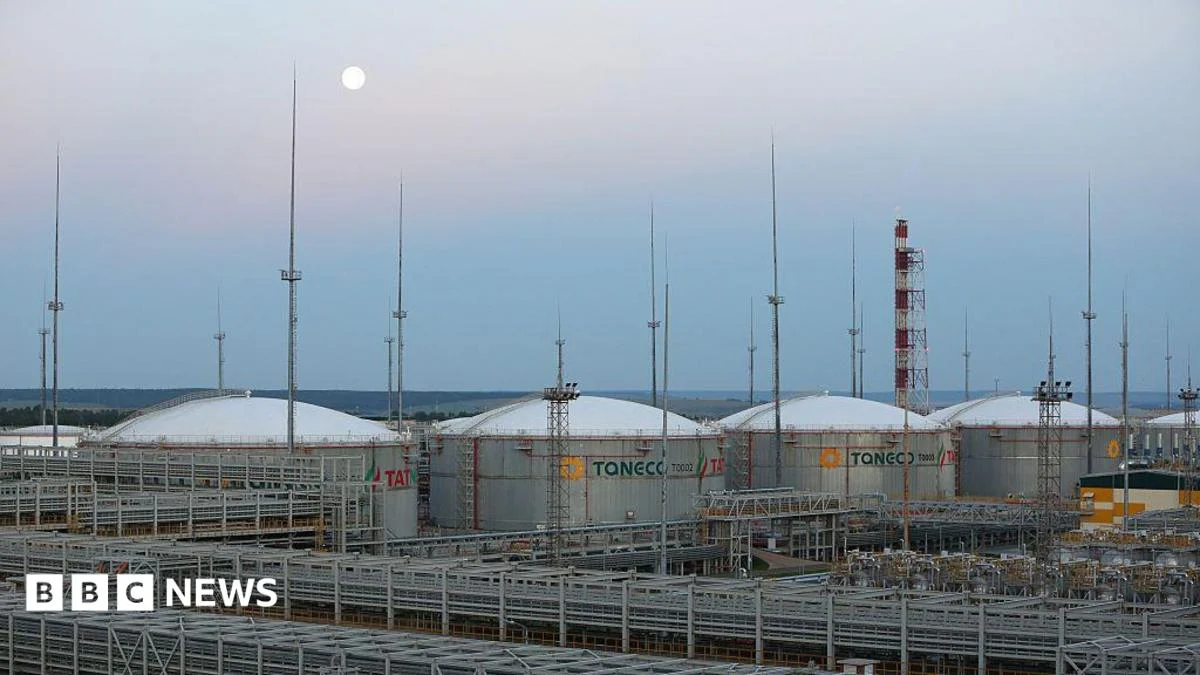
Deadly Ukrainian Drone Strike on Tatarstan Oil Facilities Claims 13 Lives, Including Child, Marking Escalation in Long-Range Warfare
A devastating Ukrainian drone strike on the Russian republic of Tatarstan has resulted in the deaths of at least 13 individuals, including one child, and left 75 more injured, according to Russian authorities. This incident, which targeted the city of Nizhnekamsk, located more than 1,100 kilometers (680 miles) from the Ukrainian border, stands as one of the deadliest single attacks on Russian territory since the commencement of Moscow’s full-scale invasion of Ukraine in February 2022. The extended range of the attack underscores Ukraine’s evolving capabilities in projecting force deep into Russian heartland, raising significant questions about Russia’s internal air defense effectiveness and the strategic implications for the ongoing conflict.
The overnight strike, which reportedly lasted for several hours into the morning, specifically impacted industrial facilities, including the Tanevo oil refinery in Nizhnekamsk, as confirmed by Ukraine’s Armed Forces. Kyiv has not yet issued a direct official comment regarding the broader attack or its specifics beyond the initial confirmation of the refinery hit. However, Ukrainian defense technology manufacturer FirePoint claimed its FP-1 drones were utilized in the operation, indirectly asserting responsibility and highlighting the role of advanced indigenous drone technology in Ukraine’s long-range strategy. Verified images and videos circulating on social media captured large plumes of smoke and flames rising into the daytime sky over Nizhnekamsk, accompanied by the eerie wail of air raid sirens, painting a vivid picture of the destruction.
Chronology of a Deep Strike
The assault unfolded under the cover of darkness, commencing late in the evening and continuing through the early morning hours. Local sources reported a sustained period of aerial activity, with residents hearing explosions and the characteristic buzzing of drones. Emergency services were reportedly dispatched to the affected areas shortly after the initial impacts. As dawn broke, the scale of the damage became apparent. Visual evidence, corroborated by various independent analyses of satellite imagery and ground-level footage, showed significant damage to industrial infrastructure within Nizhnekamsk.
Russian authorities were quick to confirm the attack and its devastating human toll. The head of Tatarstan, Rustam Minnikhanov, acknowledged the strike and extended his condolences to the families of those who perished. Radmir Belayev, the mayor of Nizhnekamsk, described the event as "a tremendous pain for all of us," reflecting the profound shock and grief felt within the community. In response to the tragedy, a period of mourning was officially declared across Tatarstan, underscoring the severity of the incident and its emotional impact on the region. The swift declaration of mourning signifies not only the immediate human cost but also the psychological blow delivered by an attack of such depth and lethality.
Casualties and Humanitarian Impact
The human cost of the strike is significant, with 13 confirmed fatalities and 75 individuals sustaining injuries of varying degrees. Among the deceased was a child, a detail that has amplified the tragedy and drawn particular condemnation from Russian officials. The presence of civilian casualties, especially a minor, complicates the narrative of targeting purely military or industrial assets and is likely to be leveraged by Moscow in its information warfare efforts.
Russian authorities, including the Investigative Committee, confirmed that while industrial facilities were targeted, residential areas were also impacted. The committee explicitly stated that "civilian individuals who were not involved in any military operations were present" at the scene of the attack, a claim the BBC has not independently verified. The high number of injured, some of whom may be in critical condition, suggests a wide impact radius or multiple points of impact within populated or industrially active zones. Medical teams and emergency responders worked tirelessly to provide aid and evacuate the wounded, facing challenging conditions amid the ongoing threat and damage. The psychological trauma for survivors and the wider community in Nizhnekamsk is expected to be profound, given the unexpected nature and severity of the attack on a region previously considered relatively safe from direct conflict.
Targeted Infrastructure: The Tanevo Oil Refinery
The primary target of the drone strike was identified as the Tanevo oil refinery in Nizhnekamsk. This facility is a crucial component of Russia’s vast energy infrastructure, playing a significant role in the country’s oil processing capabilities. Nizhnekamsk itself is a major industrial hub within Tatarstan, home to several large petrochemical and oil refining complexes. The Tanevo refinery, specifically, contributes to Russia’s production of various petroleum products, including gasoline, diesel, and aviation fuel, which are vital for both the civilian economy and, critically, for sustaining Russia’s military operations in Ukraine.
The distance of Nizhnekamsk from the Ukrainian border—over 1,100 kilometers—highlights a significant advancement in Ukraine’s drone capabilities. Previous strikes often focused on targets within 500-800 kilometers. This extended reach indicates either the deployment of new, longer-range drone models or the successful implementation of more sophisticated navigation and targeting systems, potentially with improved resilience against electronic warfare countermeasures. Ukraine’s defence forces had previously struck oil refineries in Nizhnekamsk on June 12, indicating a persistent strategic interest in these facilities. That earlier attack, while causing damage, did not result in the same scale of casualties, underscoring a potential escalation in the intensity or precision of subsequent strikes.
Ukrainian Strategy: Economic Disruption and War Machine Degradation
While Kyiv has maintained a policy of strategic ambiguity regarding direct responsibility for many cross-border drone attacks, the pattern of targeting and the indirect claims from entities like FirePoint provide insight into Ukraine’s overarching strategy. Ukraine has explicitly stated its intention to target facilities that contribute revenue and logistics to Russia’s war on Ukraine. Energy infrastructure, particularly oil refineries, pipelines, and storage depots, are prime targets under this doctrine. These facilities generate substantial export revenues for Russia, directly funding its military budget and enabling the procurement of weapons and equipment.
By striking refineries, Ukraine aims to:
- Reduce Russia’s Capacity to Fund the War: Diminishing oil processing capabilities directly impacts Russia’s ability to sell refined products on international markets, thereby reducing its hard currency earnings.
- Disrupt Fuel Supply for the Military: While Russia has vast reserves, sustained damage to refineries can complicate the logistics of supplying fuel to its front-line forces and air assets, potentially impacting operational tempo.
- Create Domestic Economic Pressure: Attacks on critical infrastructure can cause fuel shortages or price hikes within Russia, potentially generating public discontent and diverting resources from the war effort to domestic repair and stabilization.
- Demonstrate Capability and Project Power: Long-range strikes serve as a potent psychological tool, demonstrating Ukraine’s capacity to reach deep into Russian territory, thereby undermining Moscow’s claims of invulnerability and potentially impacting civilian morale.
The use of indigenous drones, such as those claimed by FirePoint, also signifies Ukraine’s growing self-reliance in military technology. This reduces dependence on foreign aid for certain offensive capabilities and allows for tailored solutions optimized for specific strategic objectives against Russian targets.
Russian Response and Air Defense Challenges
Moscow’s immediate reaction involved condemnation and the activation of its Investigative Committee, a powerful state body responsible for major criminal investigations, indicating the seriousness with which Russia views the attack. The confirmation of industrial and residential targets, coupled with the assertion of civilian presence, forms a cornerstone of Russia’s public narrative, portraying Ukraine as targeting non-military assets and civilians.
Russia also claimed that its air defenses shot down "more than 450 Ukrainian drones overnight" across various regions. While this number is exceptionally high and difficult to independently verify, it points to a significant wave of drone activity that night, of which the Tatarstan strike was just one, albeit the most deadly, component. The success of drones in reaching Nizhnekamsk, despite Russian claims of extensive interceptions, highlights persistent vulnerabilities in Russia’s layered air defense systems.
Several factors could contribute to these perceived shortcomings:
- Geographical Expanse: Russia is the largest country in the world by land area, making comprehensive air defense coverage across its entire territory an immense challenge, especially for low-flying, small radar cross-section drones.
- System Overload: Large-scale, coordinated drone swarms can overwhelm air defense systems, forcing them to prioritize or allowing some drones to slip through.
- Technological Advancement: Ukrainian drones are becoming increasingly sophisticated, incorporating improved navigation (e.g., GPS spoofing resistance), stealth features, and potentially swarm intelligence, making them harder to detect and intercept.
- Diversion of Resources: A significant portion of Russia’s most advanced air defense assets (like S-400s) are deployed closer to the front lines in Ukraine or protecting critical military installations, potentially leaving other regions less protected.
The ability of Ukrainian drones to penetrate deep into Russian airspace underscores a strategic dilemma for Moscow: either divert valuable air defense assets from the front lines, potentially weakening its combat operations, or accept the risk of further strikes on its homeland and critical infrastructure.
Broader Impact and Implications for the Conflict
This deadly strike in Tatarstan carries significant broader implications for the trajectory of the war:
- Escalation Cycle: The attack is part of an intensifying cycle of long-range strikes. Russia continues to target Ukrainian cities and residential centers with regular large-scale aerial attacks. Just last week, a combined drone and missile strike on Kyiv reportedly killed 21 people. Similarly, in Kharkiv, close to the front lines, five people were killed overnight in a Russian artillery attack. This tit-for-tat escalation indicates a hardening of resolve on both sides and a willingness to inflict damage beyond the immediate front lines.
- Economic Pressure on Russia: Sustained attacks on oil refineries and energy infrastructure are designed to cripple Russia’s war economy. While a single strike might not halt production entirely, repeated successful attacks can force Russia to invest heavily in repairs, divert resources, and potentially impact its ability to maintain stable fuel supplies, both domestically and for its military. This pressure aligns with broader Western sanctions aimed at reducing Russia’s financial capacity to wage war.
- Psychological Warfare: The strike deep within Russia’s interior serves as a powerful psychological blow, demonstrating Ukraine’s reach and ability to disrupt normal life far from the front. It challenges the Kremlin’s narrative of security and control, potentially impacting public morale and confidence in the government’s ability to protect its citizens.
- Evolving Nature of Warfare: The conflict has become a testing ground for advanced drone technology and long-range precision strikes. Both sides are continuously innovating, leading to an arms race in drone development, electronic warfare, and air defense countermeasures. The increasing range and lethality of these strikes suggest a future where such deep penetration attacks could become more commonplace.
- International Reaction: While specific condemnation of this particular strike might vary, the international community generally expresses deep concern over civilian casualties on both sides and calls for de-escalation. However, many Western nations view Ukraine’s right to self-defense as extending to striking targets within Russia that directly contribute to its war effort. The targeting of residential areas, however, will undoubtedly draw renewed calls for adherence to international humanitarian law.
A History of Long-Range Engagements
Since the full-scale invasion, Ukraine has progressively expanded its capacity for long-range strikes. Initially reliant on limited numbers of modified Soviet-era drones or improvised systems, Kyiv has significantly invested in developing and manufacturing its own fleet of drones capable of extended ranges. This has enabled attacks on targets such as military airfields in Engels and Ryazan, naval facilities in Crimea, and numerous oil depots and refineries across western and central Russia.
The motivation behind these strikes has been consistent: to degrade Russia’s military logistics, reduce its economic capacity to wage war, and exert pressure on the Russian populace and leadership. Each successful deep strike represents a tactical victory for Ukraine, demonstrating its resilience and ingenuity in the face of a larger adversary. Simultaneously, it compels Russia to divert resources to homeland defense, potentially easing pressure on the Ukrainian front lines.
Conclusion
The deadly drone strike on Nizhnekamsk marks a grim milestone in the conflict, highlighting the escalating reach and impact of Ukraine’s long-range capabilities. With 13 lives lost and dozens injured, it underscores the tragic human cost of a war that increasingly transcends traditional front lines. For Ukraine, it represents a strategic success in its efforts to disrupt Russia’s war machine and exert pressure deep within its territory. For Russia, it exposes persistent vulnerabilities in its air defense network and poses a significant challenge to its claims of domestic security. As the conflict grinds on, the likelihood of further deep strikes and retaliatory actions remains high, signaling a continued escalation in the destructive nature of modern warfare. The international community watches closely, balancing calls for de-escalation with the complex realities of a nation defending itself against a full-scale invasion.

Related Posts

Zambia on Edge: Opposition Leader Arrested Amid Allegations of Insurrection Plot and Election Tensions

Rescuers search for survivors of powerful Indonesia earthquake

