Life on Mars: The Echoes of Industrial Transformation in the Ruhr’s Werksschwimmbad
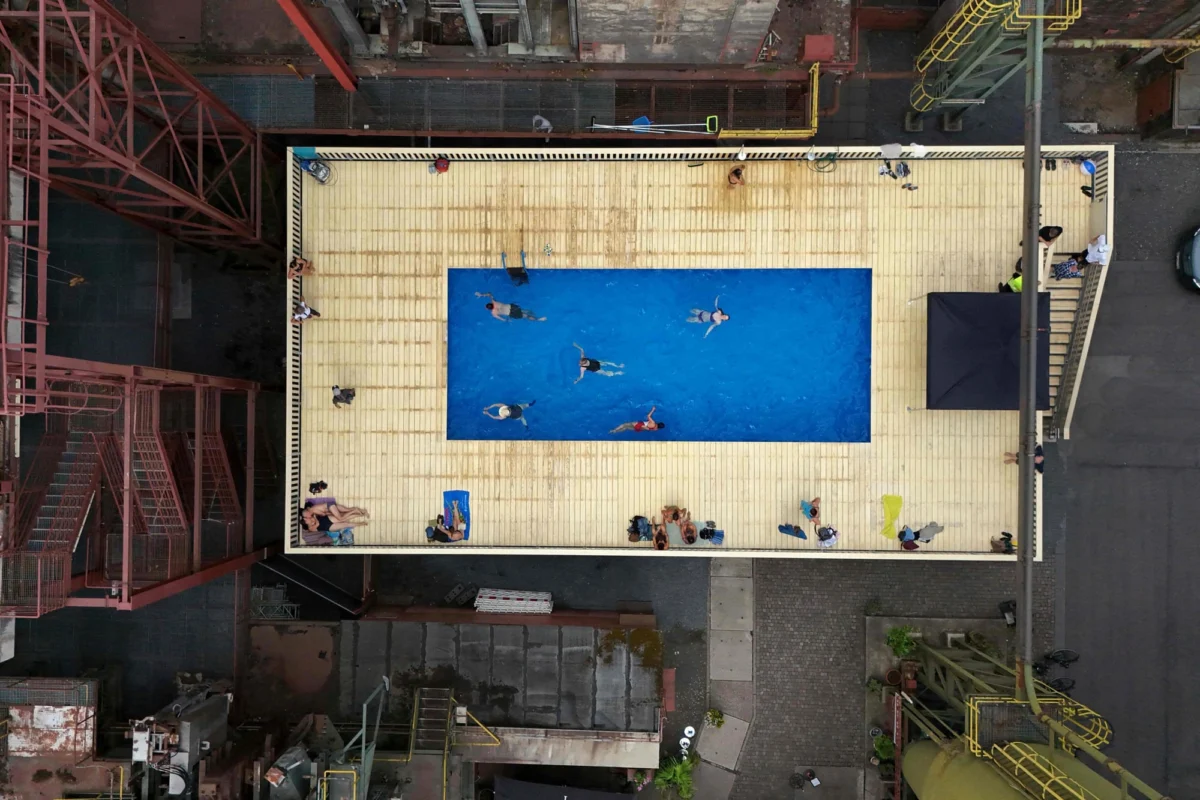
The premise of the British television series Life on Mars offered a compelling science fiction hook: a contemporary police inspector is inexplicably transported to the 1970s, only to discover that his modern sensibilities and attitudes appear as alien to the inhabitants of that not-so-distant past as those of a Martian. In one particularly poignant episode, the protagonist develops empathy for a striking miner. His investigation leads him to the miner’s working-class neighborhood, which, in the series’ present day of 2006, has been transformed into a sophisticated complex of lofts. This revelation carries a bittersweet weight; the inspector understands he is interacting with what feels like a species on the brink of extinction. Had a similar series been produced in Germany, a comparable episode might have been set in the Ruhr district, a region once defined by its heavy industry, which now invites visitors to enjoy a unique swimming pool designed by artists Dirk Paschke and Daniel Milohnic. Titled Werksschwimmbad (Factory Swimming Pool), this artistic intervention has replaced the thunderous roar of machinery with the gentle murmur of splashing water.
From Industrial Heartbeat to Artistic Oasis: The Metamorphosis of the Ruhr
The Ruhrgebiet, or Ruhr Area, located in the German state of North Rhine-Westphalia, was historically the industrial engine of Germany and one of the largest industrial regions in the world. For over a century, its landscape was dominated by coal mines, steel mills, and the accompanying infrastructure, employing millions and shaping the identity of the region and its people. The economic ascendancy of the Ruhr was intrinsically linked to the global demand for coal and steel, particularly during the 19th and 20th centuries, fueling industrial revolutions and wartime economies. By the latter half of the 20th century, however, the region began to face significant economic challenges. The global shift towards other energy sources, increased international competition, and declining profitability of coal mining led to a period of profound structural change.
This period of deindustrialization, often referred to as "structural change" (Strukturwandel) in German discourse, was marked by the closure of mines and factories, rising unemployment, and a sense of loss for a way of life that had defined generations. The once-bustling industrial sites, symbols of prosperity and hard work, gradually fell into disuse, leaving behind a scarred landscape and a population grappling with a new economic reality. This era of decline, which began in earnest in the late 1950s and intensified through the 1970s and 1980s, saw a significant population exodus and economic hardship. According to the Federal Statistical Office of Germany (Destatis), the number of employed persons in the mining and quarrying sector in North Rhine-Westphalia plummeted from approximately 470,000 in 1960 to under 100,000 by 1980, and further to mere thousands by the early 21st century. Similarly, employment in the iron and steel industry experienced a drastic reduction during the same period.
The Genesis of Werksschwimmbad
It is against this backdrop of profound industrial metamorphosis that the Werksschwimmbad project emerged. Conceptualized and realized by artists Dirk Paschke and Daniel Milohnic, the project is not merely a swimming pool; it is a deliberate artistic intervention designed to recontextualize the industrial heritage of the Ruhr and offer a new perspective on its future. The chosen location for this transformation is a former industrial site, a space that once reverberated with the relentless rhythm of production. The artists’ vision was to reclaim these spaces, not by erasing their past, but by imbuing them with new life and meaning.
The Werksschwimmbad project specifically transformed a former industrial bathing facility, likely used by workers during their shifts. This choice of location is particularly resonant, as it directly connects the present-day artistic endeavor to the historical use of the space by the industrial workforce. The transition from a utilitarian facility for laborers to an artistic attraction for leisure and contemplation is a powerful symbol of the region’s ongoing transformation. The project was inaugurated in the summer of 2009, coinciding with a broader wave of cultural and urban regeneration initiatives across the Ruhr.
Redefining Public Space and Memory
The Werksschwimmbad project is more than just a place to cool off; it is a potent symbol of the Ruhr’s successful structural change and its embrace of a new identity. The transformation of industrial relics into cultural and recreational spaces has become a hallmark of the region’s revitalization strategy. This approach, often termed "industrial tourism" or "cultural industrial heritage," seeks to leverage the unique history and monumental architecture of the former industrial sites to attract visitors and foster a sense of pride and renewed purpose within the local communities.
The project by Paschke and Milohnic directly engages with this strategy by repurposing an existing industrial structure and infusing it with artistic and social relevance. The "thunderous roar of machinery" has been replaced by the "gentle murmur of splashing water," a literal and metaphorical shift from an era of intense labor and production to one of relaxation, creativity, and leisure. The artists’ intervention invites a dialogue between the past and the present, encouraging visitors to reflect on the historical significance of the site while simultaneously enjoying its contemporary function.
Supporting Data and Case Studies
The Ruhr Area has become a leading example of successful deindustrialization and subsequent revitalization. Numerous former industrial sites have been transformed into parks, museums, cultural centers, and residential areas. For instance, the Zollverein Coal Mine Industrial Complex in Essen, a UNESCO World Heritage site, has been repurposed into a museum and cultural hub, attracting millions of visitors annually. The Landschaftspark Duisburg-Nord, a former steelworks, has been transformed into a public park with integrated recreational facilities, offering climbing walls on blast furnaces and guided tours that highlight its industrial past. These examples demonstrate a broader trend in the Ruhr of embracing its industrial heritage not as a burden, but as a valuable asset for future development.
The Werksschwimmbad project aligns perfectly with these regional efforts. By transforming a functional industrial amenity into an art installation and public swimming facility, Paschke and Milohnic contribute to the ongoing narrative of reinvention that defines the Ruhr. The project serves as a testament to the region’s ability to adapt and evolve, transforming its industrial scars into sources of creative expression and community engagement.
Artistic Intent and Broader Implications
The artistic intent behind Werksschwimmbad appears to be rooted in a desire to create a space that fosters contemplation and connection. By situating a swimming pool within the remnants of an industrial bathing facility, the artists highlight the cyclical nature of human activity and the evolution of societal needs. The act of swimming, a fundamental human activity, is juxtaposed with the ghosts of industrial labor, creating a thought-provoking contrast.
The project also speaks to the concept of "ruin value," where the aesthetic and historical significance of former industrial structures are recognized and preserved. Rather than demolishing these imposing remnants of the past, the Ruhr region has increasingly chosen to integrate them into new urban and cultural landscapes. This approach not only preserves architectural heritage but also provides unique and inspiring settings for contemporary life.
The success of Werksschwimmbad, and similar projects in the Ruhr, has broader implications for urban planning and heritage preservation worldwide. It demonstrates that deindustrialization does not have to signal the end of a region’s vitality. Instead, it can be an opportunity for creative reimagining and the development of new economic and cultural drivers. The transformation of industrial sites into vibrant public spaces can foster social cohesion, attract tourism, and create a renewed sense of place for residents.
Inferred Reactions and Perspectives
While specific public statements from the artists Dirk Paschke and Daniel Milohnic regarding the Werksschwimmbad project are not detailed in the provided text, their artistic choices strongly suggest an intention to evoke reflection on the past and present. It can be inferred that local authorities and cultural institutions in the Ruhr would likely view the project as a positive contribution to the region’s ongoing structural change narrative. Such initiatives are often supported as they align with strategic goals for economic diversification, tourism promotion, and the cultural enrichment of the area.
Former industrial workers or their descendants might experience a complex range of emotions upon encountering such a transformation. For some, it could represent a poignant reminder of lost livelihoods and a way of life, echoing the bittersweet sentiment of the Life on Mars episode. For others, it might signify progress and a testament to the resilience and adaptability of their community, showcasing how their heritage is being honored and reinterpreted for future generations. The project likely sparks conversations about memory, identity, and the evolving definition of what constitutes a valuable public space.
Conclusion: A Legacy Reimagined
The Werksschwimmbad project by Dirk Paschke and Daniel Milohnic in the Ruhr district stands as a powerful testament to the region’s remarkable journey of deindustrialization and reinvention. Much like the fictional inspector in Life on Mars confronting the echoes of a bygone era, the project invites contemporary audiences to engage with the tangible remnants of industrial history. By transforming a site of former labor into a space of leisure and artistic expression, the artists have not only created a unique public amenity but have also contributed to a broader cultural narrative of resilience, adaptation, and the enduring power of human creativity. The gentle whisper of splashing water now resonates where once the industrial heart of a nation beat, symbolizing a legacy reimagined for a new era. The Ruhr’s ability to repurpose its past, transforming its industrial heritage into cultural capital, offers a compelling model for regions facing similar transitions, proving that even in the wake of profound change, new life and vibrant communities can emerge from the foundations of what once was.

Related Posts
The Electric Vehicle Battery Health Debate Emerges as Argentina’s EV Market Accelerates

President Donald Trump Confirms Secret Departure from Turkey Amidst Assassination Threat