U.S. Missile Stockpiles Reach Critical Lows Following Five Months of Conflict in Iran Raising National Security Concerns
The United States Army has significantly depleted its inventory of high-precision, long-range missiles during the first five months of a joint military campaign against Iran, according to multiple sources familiar with internal Pentagon data. This rapid expenditure of sophisticated munitions has ignited a quiet but intense debate within the Trump administration regarding the military’s readiness to respond to potential escalations in other global flashpoints, particularly the Indo-Pacific and Eastern Europe. The munitions in question—primarily the Army Tactical Missile System (ATACMS) and its successor, the Precision Strike Missile (PrSM)—form the backbone of the U.S. military’s ability to conduct deep-strike operations without putting piloted aircraft at risk.
According to three individuals with direct knowledge of the current stockpile levels, the U.S. has used "virtually all" of its available land-based long-range strike assets. While the Pentagon has historically maintained robust reserves, the intensity of the five-month conflict, which began in February as a joint operation with Israel, has outpaced the defense industrial base’s ability to replenish these sophisticated systems. This revelation marks the first time the specific extent of the missile shortage has been made public, providing a stark look at the logistical toll of modern high-intensity warfare.
The Role of Long-Range Munitions in Modern Warfare
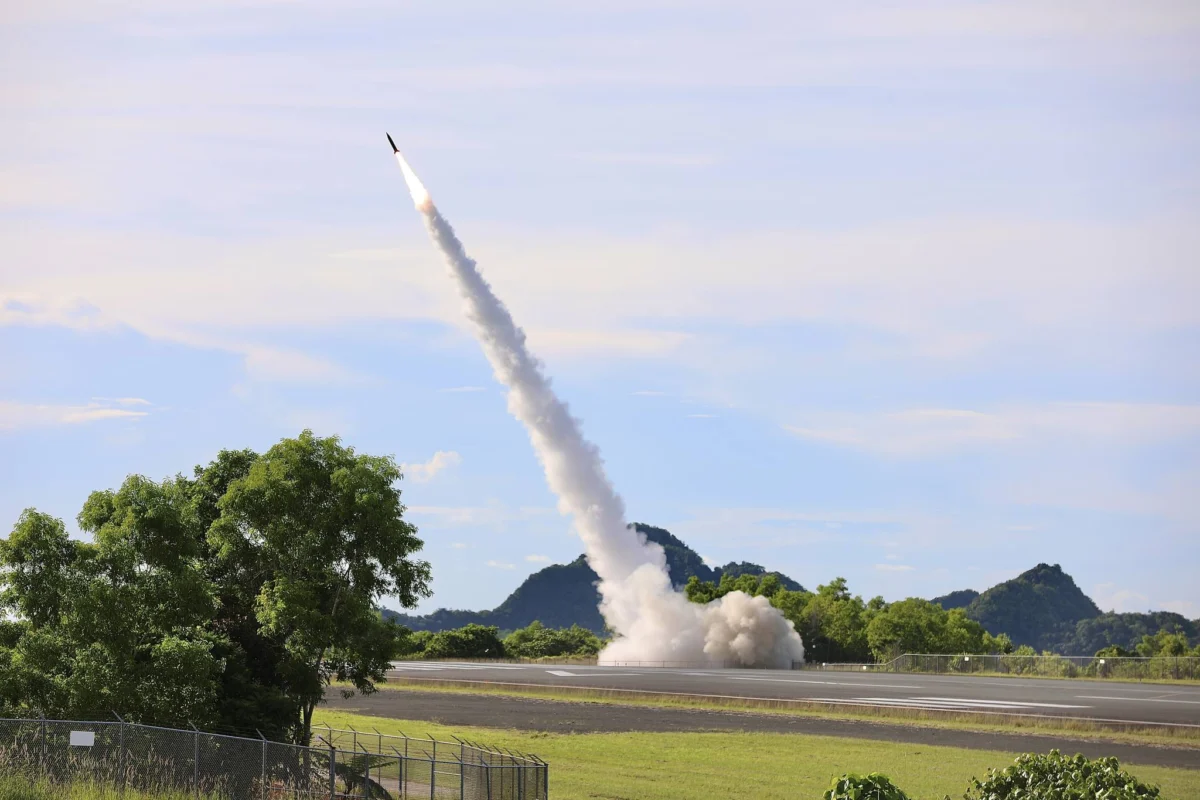
The ATACMS and PrSM are critical components of the U.S. Army’s Long-Range Precision Fires (LRPF) portfolio. These surface-to-surface missiles allow commanders to strike high-value targets—such as command-and-control centers, air defense batteries, and logistical hubs—from hundreds of miles away. The ATACMS, a legacy system that has seen extensive use in the conflict in Ukraine, has proven its effectiveness in bypassing modern electronic warfare and hitting targets with GPS-guided precision.
The Precision Strike Missile (PrSM) represents the next generation of this capability. Designed to be faster, more survivable, and capable of reaching distances exceeding 300 miles, the PrSM is intended to replace the aging ATACMS fleet. However, because the PrSM is a relatively new addition to the arsenal, initial production numbers were low. The sudden demand for these missiles in the Iranian theater has reportedly exhausted the limited initial batches delivered to the Army, leaving the military reliant on older stockpiles that are now reaching near-zero levels.
Analysts note that these weapons, which carry a price tag exceeding $1 million per unit, are not easily replaced. Unlike standard artillery shells, the manufacturing process for a guided missile involves complex supply chains, specialized semiconductors, and high-grade propellants, all of which currently face significant lead times.
Chronology of the Conflict and Stockpile Depletion
The current crisis began in February, when President Donald Trump authorized a joint military offensive alongside Israeli forces targeting Iranian military infrastructure. At the outset of the campaign, the administration predicted a "short and decisive" conflict aimed at degrading Iran’s regional influence and neutralizing its ballistic missile capabilities. However, as the war entered its third and fourth months, the conflict evolved into a sustained exchange of long-range strikes and counter-strikes.
By March, reports from the Center for Strategic and International Studies (CSIS) indicated that the U.S. was increasingly relying on land-based missiles to strike targets deep within Iranian territory. This tactical choice was made to minimize the risk to U.S. Air Force and Navy pilots, who would otherwise have to navigate Iran’s sophisticated, Russian-made air defense networks.
By June, internal warnings began to circulate within the Department of Defense. Military advisors cautioned the White House that the rate of fire was unsustainable. Last week, several reports emerged suggesting that President Trump opted against a massive new offensive inside Iran. While some officials attributed this restraint to diplomatic pressure from Gulf allies, others familiar with the situation suggest the primary driver was the dwindling supply of munitions.
Data on Defensive and Naval Stockpiles
The depletion is not limited to offensive land-based missiles. Defensive systems, which are vital for protecting U.S. bases in the Middle East from Iranian retaliation, are also reaching critical thresholds. Data published by CSIS estimates that between February and July, approximately 65% of the U.S. inventory of Patriot interceptors—the primary defense against ballistic missiles—has been expended. Furthermore, the number of Terminal High Altitude Area Defense (THAAD) interceptors has dropped by at least 38%.
The situation for the U.S. Navy is similarly concerning. The Tomahawk cruise missile, launched from destroyers and submarines, has been the "workhorse" of the naval campaign. Sources indicate that the U.S. has burned through nearly 50% of its global supply of Tomahawks since February. While the Navy has more diverse launching platforms than the Army, the sheer volume of strikes has strained the global inventory, forcing the Pentagon to "reload" Central Command (CENTCOM) by diverting missiles from the Pacific and European theaters. This "robbing Peter to pay Paul" strategy has raised alarms among strategic planners focused on the potential for conflict with China over Taiwan or the South China Sea.
Official Responses and Industrial Realities
In response to inquiries regarding the stockpile data, the White House released a statement from President Trump striking a tone of confidence. The President asserted that the U.S. possesses "far more munitions than anyone in the world" and characterized the current supply as being "far more than we need." He further emphasized that American defense companies are currently expanding production at "record levels."
Pentagon spokesperson Sean Parnell echoed this sentiment, stating, "America’s military is the most powerful in the world and has everything it needs to execute at the time and place of the President’s choosing." Parnell maintained that the U.S. military possesses a "deep arsenal of capabilities" to protect national interests across all combatant commands.
However, industry experts and defense analysts offer a more cautious perspective. While it is true that companies like Lockheed Martin (which produces ATACMS and PrSM) and Raytheon (which produces Tomahawks and Patriots) are operating at maximum capacity, the "just-in-time" manufacturing model adopted by the defense industry over the last two decades is not designed for the consumption rates of a prolonged peer-level conflict.
Raytheon has recently entered into a tentative multi-year agreement with the Pentagon to boost Tomahawk production, but these increases will likely take years to manifest in the form of delivered hardware. Analysts warn that the current production surge may still fall short of the requirements for a multi-front war.
Strategic Implications and Global Deterrence
The most pressing concern for military planners is the "deterrence gap" created by the current shortages. The ATACMS and PrSM are viewed as essential tools for a potential conflict in the Pacific. In a scenario involving China, the U.S. would rely on these missiles to strike coastal defenses and naval assets from dispersed locations on "First Island Chain" territories. Without a robust stockpile of these weapons, the U.S. might be forced to rely more heavily on aircraft carriers and manned bombers, which are highly vulnerable to China’s "anti-access/area-denial" (A2/AD) capabilities.
The depletion also impacts European security. U.S.-supplied ATACMS have been a cornerstone of Ukraine’s defense strategy against Russia. If the U.S. can no longer provide these munitions to allies or maintain its own stocks in Europe, it could embolden Russian aggression or leave NATO’s eastern flank under-equipped.
Furthermore, the conflict has reignited a legal debate in Washington regarding the War Powers Resolution. President Trump has prosecuted the war against Iran without a formal declaration of war or an Authorization for Use of Military Force (AUMF) from Congress. Critics argue that the depletion of national strategic reserves without congressional oversight constitutes a threat to long-term national security.
Future Outlook
As the conflict with Iran enters its sixth month, the Trump administration faces a difficult choice: continue the current tempo of operations and risk a total exhaustion of key missile types, or scale back military objectives to preserve readiness for other global contingencies.
The Army has indicated that it expects a significant influx of PrSM missiles by 2027, but that date remains years away. In the interim, the U.S. military may find itself in a period of "strategic vulnerability," where its ability to project power and deter adversaries is limited by the physical availability of the very munitions that define modern American air and sea power. The coming months will likely see increased pressure on the defense industrial base to achieve what some call a "war footing," moving beyond peacetime production levels to meet the realities of a new era of global instability.

Related Posts
Pentagon Forges Landmark Seven-Year Agreements with Boeing and RTX to Accelerate Standard Missile-3 Production and Stabilize Defense Supply Chains
Boeing Unveils Ultra Low-Cost Seeker to Enhance Missile Inventory and Combat Cost Challenges in Modern Warfare