Schengen under strain as Spain and Italy clash over migration policies and border security
The delicate architecture of Europe’s border-free Schengen area is facing one of its most significant challenges in years as a bitter ideological feud between Rome and Madrid manifests in the form of restored passport controls and travel delays. What began as a dispute over migration management in the Spanish exclave of Ceuta has spiraled into a diplomatic standoff, forcing thousands of travelers to navigate renewed identification checks and highlighting the deep-seated divisions within the European Union regarding the future of border policy.
A Chronology of Escalation
The current tension trace back to the beginning of August 2026, following a surge of migration into the Spanish territory of Ceuta. On August 1, the Italian government, led by Prime Minister Giorgia Meloni, implemented stringent border controls for all passengers arriving from Spanish airports and ports. Rome justified the move by citing "security concerns" and the potential for unauthorized migrants to traverse the European mainland via the Schengen zone.
Madrid reacted with immediate frustration, noting that the migrants in Ceuta lacked the necessary documentation to board ferries to the Spanish mainland, let alone travel further into the EU. Despite assurances from Spanish authorities and the European Commission that the Ceuta situation remained contained, Italy maintained its border measures.
By August 7, the friction reached a breaking point. Following a failed ultimatum issued by the Spanish government—which threatened "proportional measures" if Rome did not lift its restrictions—the Italian administration explicitly rejected the demand. Meloni’s office stated that Italy does not accept "ultimatums or demands from abroad regarding national security." Consequently, on August 8, the Spanish government officially restored internal border controls on all arrivals from Italy, effectively suspending the principles of free movement between the two Mediterranean powers.
The Migration Policy Divide
The current standoff is not merely a technical dispute over border management; it is a public display of the widening chasm between the political visions of Prime Minister Giorgia Meloni and her Spanish counterpart, Pedro Sánchez.
Meloni, a central figure in the European conservative movement, has staked her political legacy on a "security-first" approach to migration. Her administration has consistently lobbied for tougher external border controls, the construction of physical barriers, and stricter asylum processing rules. She views the free movement afforded by the Schengen agreement as a privilege that must be secondary to national security and the prevention of unauthorized entry.
Conversely, Sánchez represents a contrasting approach, advocating for a more pragmatic and human-rights-oriented policy. Madrid has recently moved to integrate labor markets by granting legal status to hundreds of thousands of undocumented migrants, arguing that an aging European population requires an influx of foreign labor to prevent a demographic and economic collapse. This policy, in particular, has drawn sharp rebuke from Rome, with Meloni characterizing such moves as "pull factors" that undermine the stability of the entire bloc.
Official Responses and Mediation Efforts
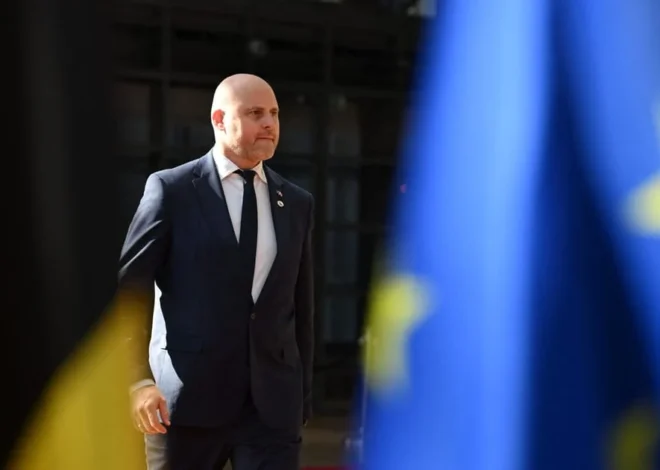
The European Union, currently navigating a complex period of institutional adjustment, has found itself in the role of mediator. Magnus Brunner, the European commissioner for internal affairs and migration, has been at the forefront of efforts to de-escalate the situation.
"I was in contact with both the Spanish and Italian Interior Ministers today," Brunner stated in a public address via social media. "Both confirmed that the internal border controls are temporary. I stressed the progress we’ve made on tackling illegal migration and that trust between Member States is our most valuable currency."

Despite this, the rhetoric remains heated. A letter drafted by Meloni and signed by 22 other EU leaders addressed to Commission President Ursula von der Leyen and Council President António Costa explicitly critiqued Madrid’s policies. The signatories argued that the "regularization of a very large number of irregular migrants" serves to destabilize the bloc’s collective security.
Spanish officials have pushed back, citing internal data that paints a stark picture of the broader European context. According to a spokesperson for the Spanish government, Italy has recorded the highest number of irregular crossings in the EU over the last several years, sometimes doubling the figures reported by Spain. By highlighting these statistics, Madrid aims to frame the Italian border measures as a performative distraction from Rome’s own challenges with irregular migration.
The Economic and Social Impact
The disruption of the Schengen area—which has facilitated seamless travel across 29 countries since 1995—is being felt most acutely by the millions of people who traverse the Spain-Italy corridor annually. In 2024 alone, approximately 3.2 million Spaniards visited Italy, while 5.4 million Italians traveled to Spain.
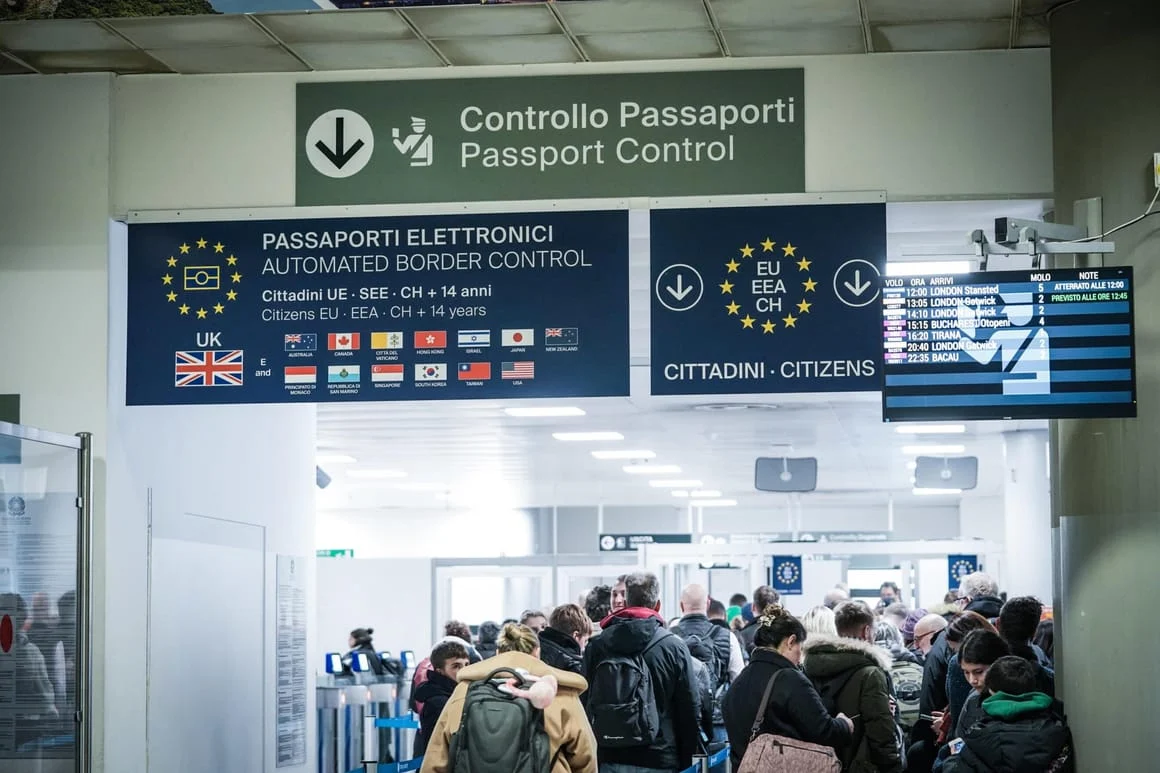
The impact of the new border regime has been immediate. Travelers arriving at airports in Rome and Madrid have reported significant delays as border police, including Italy’s Carabinieri and Spain’s National Police, conduct identity verification checks. For tourists, business travelers, and cross-border workers, these delays are not merely an inconvenience; they represent a potential long-term shift in travel behavior.
Industry experts suggest that if these measures persist, the tourism sector—a vital component of both nations’ GDPs—could suffer. Travelers may opt for destinations where the friction of transit is lower, potentially diverting millions of euros in economic activity to other parts of the continent.
Analysis: The Fragility of Schengen
The legal framework for this dispute is found in the Schengen Borders Code. Member states are permitted to reintroduce temporary border controls for an initial period of six months to address "serious threats to public policy or internal security." These measures can be extended for up to two years, and under "exceptional circumstances," up to three years.
While both governments have described their current actions as "temporary," the political nature of the dispute suggests that a swift resolution may be elusive. The situation serves as a stark reminder that the Schengen area’s survival relies on a level of political consensus that is currently in short supply.
When national interests clash with collective European obligations, the "passport-free" ideal is often the first casualty. If the feud between Rome and Madrid continues to escalate, it risks creating a precedent where member states utilize border controls as a weapon of political signaling rather than a genuine security tool.
The European Commission now faces the daunting task of enforcing the spirit of the Schengen agreement while managing the diverging migration philosophies of its most influential leaders. Whether this dispute remains a brief diplomatic skirmish or evolves into a structural crisis for the EU will likely depend on the upcoming rounds of ministerial talks and the ability of the Commission to provide a unified path forward that satisfies both the security concerns of the right and the economic and demographic realities identified by the left.
For the time being, the passport queues at European airports stand as a physical manifestation of a deeper ideological struggle, serving as a warning that the dream of a seamless, borderless Europe remains contingent upon the political stability of its constituent parts. As summer travel peaks, the patience of the European public will be tested, and the political cost of this border battle will likely become clearer with each passing day of delays.