
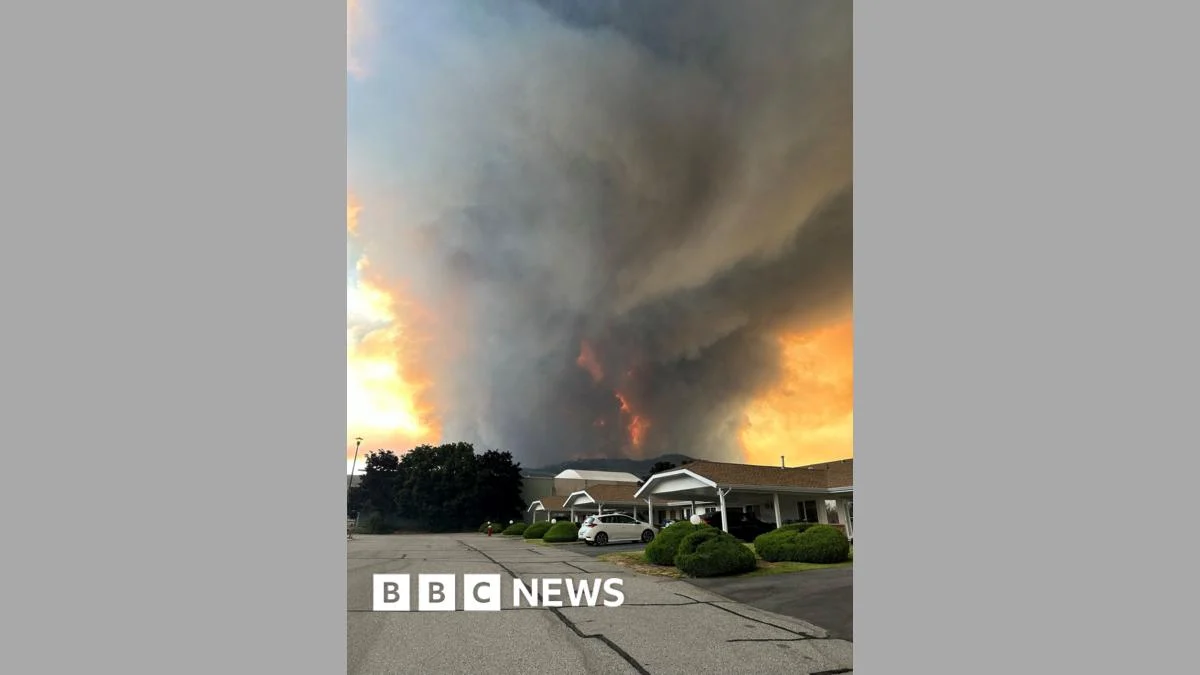
Summerland Under Siege: Thousands Evacuated as Wildfires Engulf Okanagan Valley, Power Grid Fails Amid Regional Crisis
The district of Summerland, a picturesque community of approximately 12,000 residents nestled within British Columbia’s Okanagan Valley, was plunged into a state of emergency early Saturday, facing a mandatory evacuation order as rapidly spreading wildfires threatened homes and infrastructure. The unfolding crisis saw the entire area lose power, a critical disruption confirmed by officials, exacerbating an already tense situation for residents and emergency responders. This localized emergency was symptomatic of a broader, unprecedented wildfire season gripping Canada, particularly the western provinces, pushing emergency services and communities to their limits.
The Escalation in Summerland: A Detailed Account
The evacuation order for Summerland underscored the immediate and severe threat posed by the encroaching blaze. For a community known for its tranquil landscapes and vibrant agricultural sector, the sudden shift to emergency protocols marked a profound disruption. The complete power outage across Summerland was a significant operational challenge, impacting communication, lighting, and the functionality of essential services. While the exact cause of the outage was not immediately specified, it is a common consequence of intense wildfires, either through direct damage to power lines and infrastructure or as a precautionary measure to prevent further ignition from downed lines. Such outages complicate evacuation efforts, particularly during nighttime hours, and add to the stress experienced by those forced to leave their homes.
A critical component of the evacuation strategy involved the careful relocation of vulnerable populations. Hundreds of residents housed in Summerland’s care facilities, including senior living accommodations, were systematically moved to safer locations. This complex operation was spearheaded by Interior Health, British Columbia’s publicly funded health authority responsible for delivering healthcare services across the region. The logistical challenges inherent in moving a large number of individuals with varying mobility and medical needs during an active emergency highlight the meticulous planning and coordination required from health officials, first responders, and support staff. The swift action aimed to ensure the safety and well-being of those most susceptible to the immediate dangers of the fire and the disruptions caused by the power failure.
BC Premier David Eby took to social media to commend the Herculean efforts of those on the front lines. "Throughout the night and into this morning, first responders, BC Wildfire Service crews, [Royal Canadian Mounted Police] officers, emergency management teams, and local communities worked tirelessly to keep people safe and fight the fire near Summerland," Eby stated. His message underscored the multi-agency collaboration essential in such large-scale disasters, emphasizing the unwavering commitment of these groups. "They continue to do everything possible to protect people and communities," he added, aiming to reassure a distressed populace of the concerted efforts being made. At the time of these urgent developments, the full extent of structural damage within Summerland remained unclear, with assessments pending once the immediate threat subsided and access could be safely re-established.
Regional Impact: Spreading Orders and Alerts
The threat was far from confined to Summerland. The wildfire’s rapid progression triggered a cascade of emergency measures across the broader Okanagan-Similkameen region, a vast and ecologically diverse area stretching from the south Okanagan to the US border. The nearby districts of Okanagan, Peachland, and the larger Okanagan-Similkameen regional district all issued their own evacuation orders in particularly threatened zones, alongside widespread evacuation alerts in other areas. An evacuation order mandates immediate departure from a designated zone, while an alert signals a strong possibility of future evacuation, urging residents to prepare to leave at a moment’s notice. These escalating measures painted a stark picture of a region under severe duress, with multiple communities facing imminent danger.
The personal toll of the crisis was vividly illustrated by the experience of a local official, identified only as Thompson in the original report, who had been providing critical updates on the rapidly spreading fire from the Okanagan-Similkameen emergency operations centre (EOC). On Friday evening, Thompson had been the face of calm and coordination, delivering vital information to the public. However, by the next morning, the encroaching threat had become so immediate that it necessitated a personal decision of profound gravity. In a video posted from his car, a visibly strained Thompson revealed, "I had to leave the EOC to come and get my family to leave this area. We’re heading south." His personal evacuation underscored the severity of the situation and the fact that no one, regardless of their official capacity, was immune to the dangers posed by the fire. This powerful anecdote served as a poignant reminder of the human element at the heart of the crisis, where professional duties often intersected with personal survival.
Challenges on the Ground: Animal Evacuations and Community Resilience
The logistical complexities of large-scale evacuations are immense, and they extend beyond human residents to include animals, particularly livestock and pets. In the district of Okanagan, a significant challenge emerged concerning the evacuation of numerous horses. Canadian broadcaster CBC reported on the struggles residents faced in relocating these large animals, which require specialized transport and care. For many owners, the bond with their animals is profound, making the decision to leave them behind incredibly painful.
In desperate attempts to offer their animals a chance at survival, some residents, unable to relocate their horses, resorted to opening gates and fences, hoping the animals would instinctively find their own way to safety amidst the chaos. This heart-wrenching decision reflected the limited options available under extreme pressure. Furthermore, local residents told CBC that some owners went as far as painting identifying markings on their animals. This proactive measure aimed to make it easier to identify and reunite with their horses later, should they become separated during the fire or found wandering in safer areas. These stories highlighted not only the profound bond between humans and animals but also the resourcefulness and resilience of communities facing overwhelming adversity, striving to protect all forms of life under their care.
The Broader Context: Canada’s Unprecedented Wildfire Season
The crisis unfolding in Summerland and the Okanagan Valley was not an isolated incident but rather a critical chapter in what has been widely declared Canada’s most devastating wildfire season on record. Throughout the summer, hundreds of wildfires raged across the vast Canadian landscape, from the western provinces to the eastern territories, burning an unprecedented area of forest and wildland. By July, nearly 200 fires were actively burning in Ontario alone, contributing to massive plumes of smoke that frequently drifted south and east.
The scale of the Canadian wildfires had far-reaching international implications, notably affecting air quality in major urban centers. In July, smoke from these fires caused air quality in Toronto, Canada’s largest city, to plummet to some of the worst levels recorded globally for several days. This widespread atmospheric pollution was a stark reminder of the interconnectedness of global ecosystems and the transboundary nature of environmental disasters. The smoke plumes also drifted significantly into parts of the United States, impacting air quality in states such as Minnesota and New York. The phenomenon even prompted a controversial reaction from then-US President Donald Trump, who publicly threatened new tariffs on Canada, framing the smoke as an issue requiring a retaliatory response, a stance that drew criticism for its disregard of the complex environmental factors at play. This national and international context underscores the immense pressures on Canadian resources and the global attention garnered by the scale of the 2023 wildfire season.
Historical Precedent and Climate Change
While the 2023 wildfire season set new records, British Columbia, and particularly the Okanagan Valley, is no stranger to the destructive power of wildfires. The region’s dry climate, abundant forests, and increasing human presence create a perennial risk. Historic blazes, such as the devastating 2003 Okanagan Mountain Park fire, which destroyed over 200 homes and burned more than 25,000 hectares, serve as stark reminders of the potential for catastrophe. More recently, the 2017 and 2018 wildfire seasons also saw significant destruction and widespread evacuations across BC. These past events have informed current emergency management strategies, but the escalating intensity and frequency of fires suggest that established protocols are continually being tested and adapted.
A consensus among climate scientists points to climate change as a primary driver behind the increasing severity and duration of wildfire seasons. Warmer temperatures contribute to drier fuels, prolonged drought conditions, and earlier snowmelt, all of which create a more volatile environment susceptible to rapid fire ignition and spread. The Okanagan Valley, with its semi-arid climate, is particularly vulnerable to these climatic shifts. The 2023 season, characterized by record-breaking heatwaves and extended periods of drought, provided a grim illustration of these predictions. The fires are not just natural occurrences but are exacerbated by human-induced changes to the global climate, transforming weather patterns and intensifying extreme events. This broader context frames the Summerland evacuation not merely as a local incident but as a tangible manifestation of a global environmental challenge.
Emergency Response and Resource Deployment
The response to the Okanagan Valley wildfires involved a highly coordinated effort from numerous agencies. The BC Wildfire Service (BCWS) formed the core of the firefighting operations, deploying ground crews, specialized incident management teams, and a fleet of aerial resources including helicopters and air tankers. These resources worked tirelessly to establish containment lines, douse active flames, and protect critical infrastructure. The Royal Canadian Mounted Police (RCMP) played a crucial role in enforcing evacuation orders, managing traffic flow, ensuring public safety, and preventing potential looting in evacuated areas.
Local emergency management teams, often comprised of municipal staff and volunteers, were responsible for establishing reception centers for evacuees, providing essential services such as food, shelter, and emotional support, and disseminating critical information to the affected public. Interior Health’s role in the safe relocation of vulnerable individuals from care facilities highlighted the intricate web of support services required. This multi-agency approach, refined over years of dealing with similar crises, is essential for managing the complex logistics and diverse needs that arise during large-scale emergencies. The sheer number of active fires across the province during the 2023 season, however, strained these resources, necessitating inter-provincial and even international assistance in some instances.
The Okanagan Valley: A Region Under Threat
The Okanagan Valley is not just a residential area but a vital economic hub for British Columbia. Renowned for its burgeoning wine industry, fruit orchards, and vibrant tourism sector, the region’s economy is deeply intertwined with its natural beauty and environmental stability. Wildfires pose a multifaceted threat to this delicate balance. Immediate impacts include the destruction of vineyards and orchards, which represent years of cultivation and significant investment. The smoke itself, even without direct fire damage, can taint crops, reduce tourism, and deter visitors, leading to substantial economic losses for local businesses.
Beyond the immediate economic fallout, there are significant environmental consequences. Wildfires release vast quantities of carbon into the atmosphere, contributing to climate change, creating a feedback loop. They can also degrade water quality by increasing erosion and sediment runoff into lakes and rivers, impacting aquatic ecosystems and municipal water sources. The long-term recovery of burned areas can take decades, altering landscapes, disrupting wildlife habitats, and increasing the risk of landslides in subsequent years. For a region that prides itself on its pristine environment and outdoor attractions, the recurring threat of wildfires presents an existential challenge that demands ongoing adaptation and resilience strategies.
Health and Safety Concerns
Beyond the immediate danger of flames, wildfires present a myriad of health and safety concerns. The widespread power outage in Summerland, for instance, not only disrupted daily life but also posed risks to individuals relying on medical equipment and compromised the functionality of essential services. Air quality deterioration due to smoke is a pervasive and long-term health threat. Fine particulate matter in wildfire smoke can penetrate deep into the lungs, exacerbating respiratory conditions such as asthma and chronic obstructive pulmonary disease (COPD), and increasing the risk of heart attacks and strokes. Vulnerable populations, including children, the elderly, and individuals with pre-existing health conditions, are particularly susceptible to these health impacts.
The psychological toll of forced evacuations, loss of property, and the constant threat of fire cannot be overstated. Residents experience significant stress, anxiety, and trauma, which can have lasting mental health implications. The uncertainty surrounding their homes, livelihoods, and communities creates a profound sense of loss and disruption. Interior Health’s focus on relocating care facility residents underscores the additional layers of vulnerability for seniors and those with special needs, for whom displacement can be particularly disorienting and detrimental to their well-being. Ensuring adequate mental health support and long-term care planning is an essential, though often overlooked, aspect of disaster recovery.
Economic Repercussions and Recovery Efforts
The economic repercussions of the Summerland and regional wildfires extend far beyond the immediate damage to property. Businesses in affected areas face significant interruptions, from forced closures and loss of inventory to decreased customer traffic due to evacuation orders and poor air quality. The tourism sector, a cornerstone of the Okanagan economy, suffers immensely as visitors cancel plans and travel advisories deter new arrivals. Agricultural operations, including the region’s renowned wineries and fruit orchards, can face immediate crop damage and long-term impacts on soil health and water availability.
Government support and recovery efforts become critical in the aftermath. Provincial and federal programs typically offer financial assistance for property owners, businesses, and farmers affected by such disasters. However, the sheer scale of the 2023 wildfire season across Canada meant that resources were stretched thin, and recovery processes were protracted. The rebuilding phase often involves substantial investment in infrastructure, housing, and environmental restoration. Long-term strategies focus on supporting economic diversification, enhancing community resilience, and investing in fire-resistant building codes and land management practices to mitigate future risks. The process of healing and rebuilding, both physically and emotionally, is a multi-year endeavor that requires sustained commitment from all levels of government and community stakeholders.
Looking Ahead: Preparedness and Prevention
The Summerland evacuation and the broader Okanagan wildfire crisis serve as a stark reminder of the urgent need for enhanced preparedness and prevention strategies in the face of a changing climate. Proactive measures, such as FireSmart programs that encourage residents to reduce combustible materials around their homes, fuel management in forests, and early detection systems, are increasingly vital. Investment in robust emergency communication systems, effective evacuation planning, and sufficient resources for fire suppression are also paramount.
Furthermore, there is a growing consensus on the need for broader climate action to address the root causes of intensified wildfire seasons. This includes transitioning to cleaner energy sources, reducing greenhouse gas emissions, and adapting infrastructure to withstand more extreme weather events. For communities like Summerland, the experience of 2023 will undoubtedly shape future planning, fostering a heightened sense of community resilience and a collective commitment to mitigating the impacts of future wildfires, ensuring the safety and sustainability of the Okanagan Valley for generations to come.

Related Posts
Zambia on Edge: Opposition Leader Arrested Amid Allegations of Insurrection Plot and Election Tensions
Rescuers search for survivors of powerful Indonesia earthquake

