France Mobilizes Automotive Industry to Scale Military Drone Production Amid Shifting Global Security Landscape
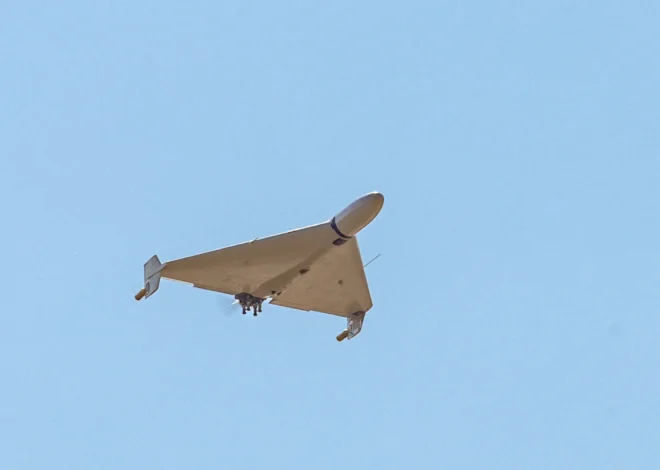
The French government has officially transitioned its strategic initiative to integrate the national automotive sector into military production from a conceptual framework to industrial implementation. This move marks a significant shift in European defense policy, as Paris seeks to leverage the mass-manufacturing capabilities of carmakers and their suppliers to address the urgent demand for unmanned aerial systems (UAS). By merging the high-volume automation and cost-efficiency of the automotive industry with the cutting-edge requirements of modern electronic warfare, France aims to establish a "war economy" capable of producing tens of thousands of drones annually.
Since the beginning of 2026, at least six major partnerships between French automakers, global parts suppliers, and established defense contractors have been finalized. These collaborations are designed to apply the lessons learned from the conflict in Ukraine, where the rapid consumption and technological evolution of loitering munitions and reconnaissance drones have redefined the parameters of land warfare. The initiative reflects a broader European realization that traditional defense procurement cycles—often characterized by low volumes and high unit costs—are insufficient for the attrition-heavy reality of contemporary high-intensity conflict.
The Strategic Shift to Mass-Produced Attritable Systems
For decades, military drones were viewed as high-value, specialized assets, such as the Reaper or Global Hawk platforms, which required years of development and significant capital investment. However, the battlefield in Eastern Europe has demonstrated the dominance of "attritable" systems—low-cost, expendable drones that can be deployed in massive quantities. French defense officials have noted that the front lines have effectively become "kill zones" where constant aerial surveillance and the threat of First-Person View (FPV) kamikaze drones force traditional armor and infantry to remain in a state of perpetual concealment.
The French Senate’s defense committee released a report in July 2026 highlighting the vulnerability of the nation’s current inventory. With only a few thousand drones in stock, the committee described the current numbers as "insufficient to achieve a critical mass" necessary for a prolonged conflict. In response, the Ministry of Armed Forces has tasked the Direction Générale de l’Armement (DGA), the national defense procurement agency, with redesigning military hardware for mass production.
Patrick Pailloux, head of the DGA, emphasized that the transition requires a fundamental change in engineering philosophy. "It is not the same thing to produce a drone in a defense startup as it is to make something that can be reproduced in very large volumes using production-line robots," Pailloux stated. The goal is to move away from labor-intensive 3D printing and manual assembly toward automotive-standard injection molding and automated circuitry placement.
A Timeline of Industrial Convergence
The integration of the two sectors has accelerated rapidly throughout the first half of 2026, characterized by a series of landmark agreements:
- December 2025: Defense Minister Sébastien Lecornu pledges a €150 million ($175 million) investment to catalyze a dedicated domestic drone sector, focusing on short-range and loitering munitions.
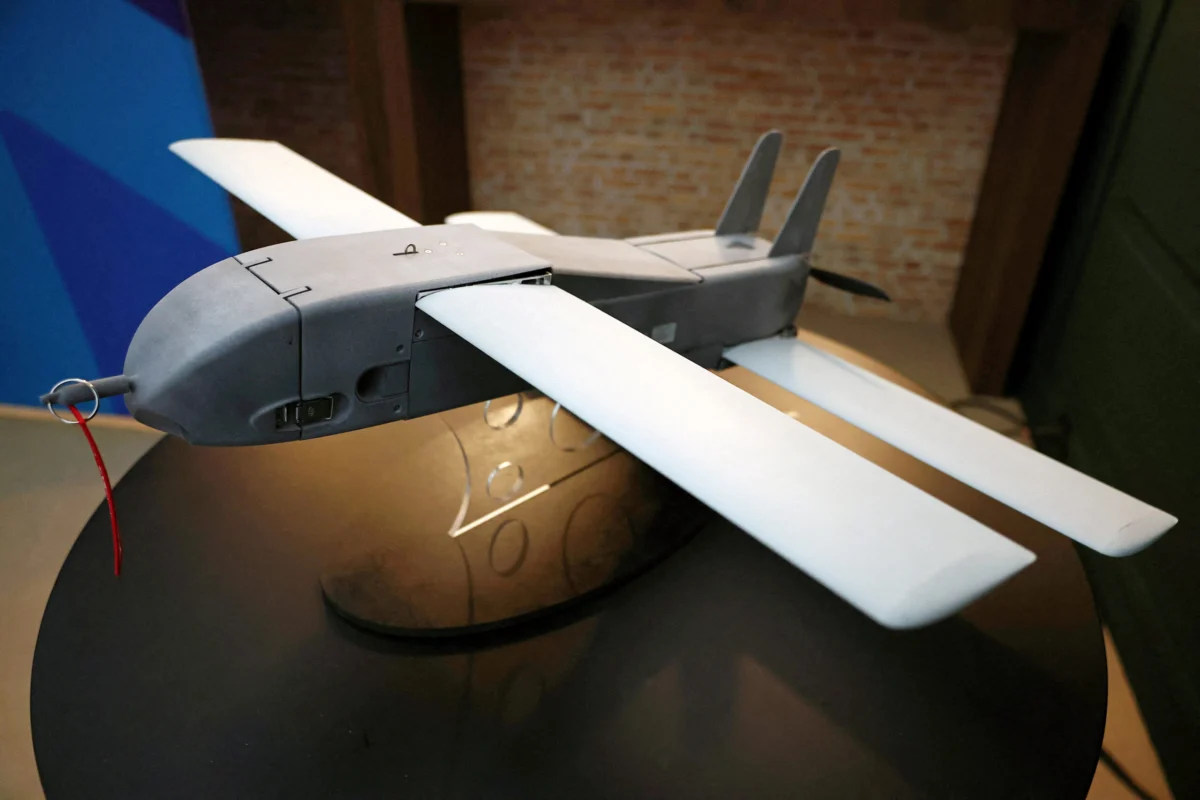
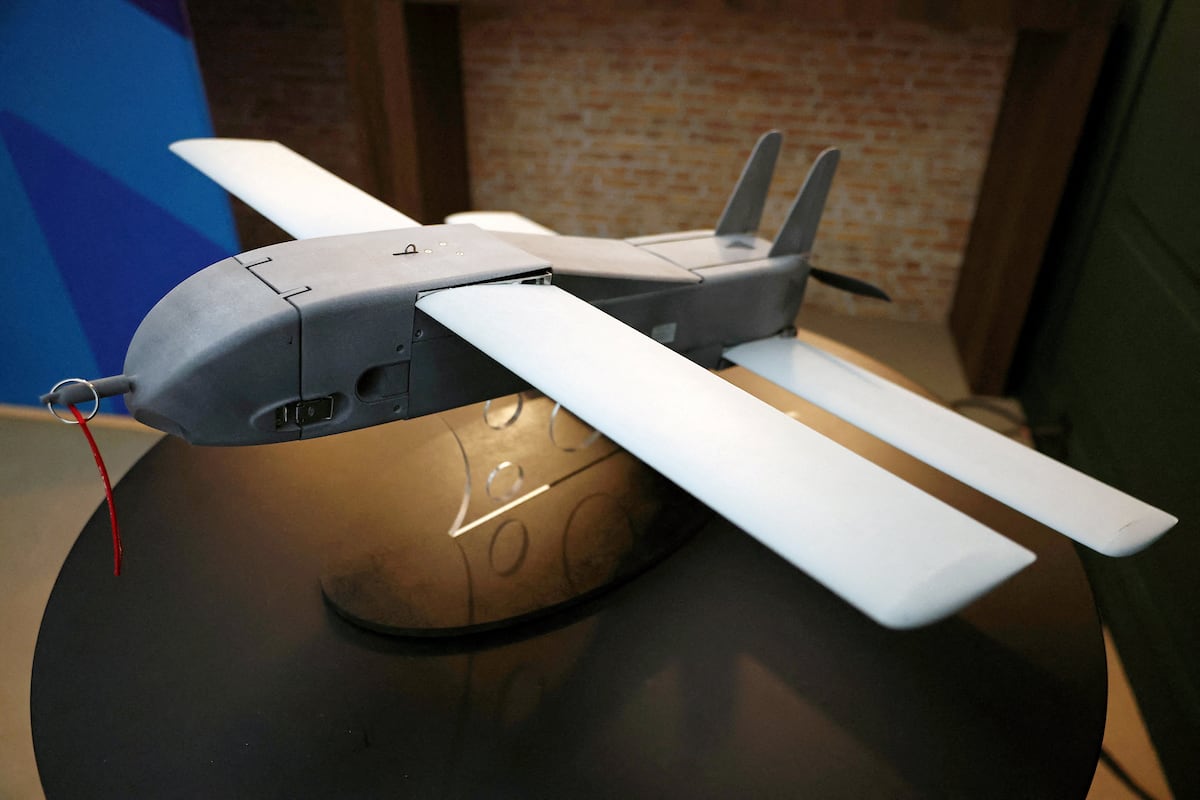
- June 2026: Renault, France’s flagship automaker, announces a dual-track strategy. The company partners with Turgis & Gaillard to develop long-range capabilities while simultaneously joining forces with defense giant Thales to industrialize the "Toutatis" kamikaze drone.
- June 2026: German automotive supplier Schaeffler and French drone manufacturer Delair announce a joint production line in France. The facility aims to produce 100 reconnaissance drones per day by late autumn.
- July 2026: Valeo, a global leader in automotive electrification, confirms it will manufacture high-performance electric motors for Harmattan AI, a firm specializing in autonomous flight systems.
- August 2026: Forvia, a major Tier-1 automotive supplier, unveils a partnership with an AI-driven defense firm to manufacture 1,000 interceptor drones per month, specifically designed to counter enemy UAS swarms.
Technical Synergy: From Electric Cars to Loitering Munitions
The rationale for involving the automotive industry lies in the shared technological DNA between modern electric vehicles (EVs) and military drones. Both rely on high-energy-density batteries, lightweight composite materials, sophisticated sensors (LiDAR and radar), and efficient electric motors.
Valeo’s CEO, Christophe Périllat, highlighted this synergy during a late-July press briefing. "Why now? Because the need is now. And why in France? Because we are being asked to guarantee our sovereignty," Périllat remarked. By utilizing existing supply chains for semiconductors and rare-earth magnets used in EV motors, French defense firms can bypass the bottlenecks that typically plague specialized military manufacturing.
Renault’s approach to the Toutatis drone serves as a primary case study for this industrial evolution. François Provost, Renault’s Chief Procurement Officer, explained that the drone is being "de-engineered" to suit mass production. This involves reducing the total number of components and switching from 3D-printed housings to injection-molded plastics. This transition not only lowers the cost per unit but also ensures that the production rate can be scaled from dozens to thousands within weeks should a national emergency arise.
Comparative Scale and the "Ukraine Standard"
While France’s projected output of 60,000 drones per year represents a monumental increase over its current capacity, it remains a fraction of the production levels seen in active conflict zones. Ukrainian President Volodymyr Zelenskyy recently stated that his nation aims to produce 10 million drones in 2026, supported by hundreds of small-scale workshops and large-scale state enterprises. Russia has similarly shifted its domestic economy toward "military Keynesianism," with vast factories operating 24/7 to produce the Orlan and Lancet series drones.
The French strategy is not necessarily to match the sheer volume of a nation at war, but to build the capability to do so. The "War Economy" doctrine championed by President Emmanuel Macron focuses on "scalability" and "responsiveness." Defense officials argue that maintaining a massive standing stockpile of drones is counterproductive because the technology evolves so rapidly. A drone that is effective today may be rendered obsolete by new electronic jamming frequencies in six months.
Patrice Caine, CEO of Thales, noted that drones are "objects that evolve quickly under the impetus of technological advances." Therefore, the French industrial base is being designed for "just-in-time" adaptation rather than "just-in-case" hoarding. The focus is on having the robotic assembly lines ready to pivot to new designs as soon as software or hardware updates are required.
Economic and Geopolitical Implications
The move to integrate the automotive sector also serves a dual economic purpose. As the global car industry faces intense competition from Chinese EV manufacturers, pivoting toward defense contracts provides a stable, state-backed revenue stream for French suppliers. This "dual-use" industrial strategy helps preserve high-tech manufacturing jobs and maintains the health of the domestic supply chain.
Geopolitically, this initiative is a direct response to the "strategic autonomy" goals set by the European Union. With increasing pressure from Washington for European nations to take greater responsibility for their own security, France is positioning itself as the continent’s drone manufacturing hub. However, some industry experts suggest that France may still be lagging behind its neighbors. Antoine Level, head of France’s drone industry association, pointed out that Germany has been more aggressive in funding short-range drone development, and that the French government still needs to place larger, more consistent orders to provide the industry with the long-term certainty it requires.
Challenges to Implementation
Despite the momentum, several hurdles remain. The first is the "regulatory lag." Traditional aviation safety standards and military certification processes are often too slow for the rapid iteration cycles of drone technology. The DGA is currently working to streamline these processes to allow for faster deployment.
The second challenge is the global supply chain for microelectronics. While French carmakers have deep relationships with chip manufacturers, the specific high-grade processors required for AI-driven autonomous flight are often sourced from the United States or Taiwan. Securing a "sovereign" supply of these components is a long-term goal that will require significant investment in the European semiconductor industry.
Finally, there is the issue of training. Patrick Pailloux of the DGA noted that France needs "enough drones so that we can train." Mass production is useless if the military does not have a large cadre of operators skilled in drone warfare. This suggests that a significant portion of the early production runs from Renault and Delair will be diverted to training schools and domestic exercises to build a "drone-literate" force.
Conclusion: A New Industrial Blueprint
The partnership between France’s automotive titans and its defense establishment represents more than just a procurement shift; it is a fundamental reimagining of national defense in the 21st century. By treating the drone not as a precious aircraft but as a mass-produced consumer electronic, France is building an industrial infrastructure that can survive the rigors of modern attrition warfare.
As the production lines at Renault, Valeo, and Forvia begin to churn out military hardware alongside family sedans, the distinction between civilian and military industrial bases continues to blur. The success of this initiative will likely serve as a blueprint for other NATO members, as the alliance grapples with the need to replenish stocks and prepare for a future where quantity has a quality of its own. In the words of Defense Minister Lecornu, the transition to a "war economy" is no longer an option but a necessity for maintaining national sovereignty in an increasingly volatile world.

Related Posts
Pentagon Forges Landmark Seven-Year Agreements with Boeing and RTX to Accelerate Standard Missile-3 Production and Stabilize Defense Supply Chains
Boeing Unveils Ultra Low-Cost Seeker to Enhance Missile Inventory and Combat Cost Challenges in Modern Warfare