Iranian Defiance Over Hormuz Control Undermines White House Optimism for Middle East Deal
Despite persistent optimism from the White House regarding an imminent "deal" to de-escalate Middle East conflicts and ensure safe maritime passage, Iranian officials on Friday continued their disparaging remarks against the United States and reaffirmed their intentions to assert permanent control over the strategically vital Strait of Hormuz. This firm stance from Tehran stands in stark contrast to Washington’s hopeful pronouncements, creating a chasm between diplomatic aspirations and on-the-ground realities that continues to fuel regional instability and global economic uncertainty.
Iranian Assertions on Strait of Hormuz Control
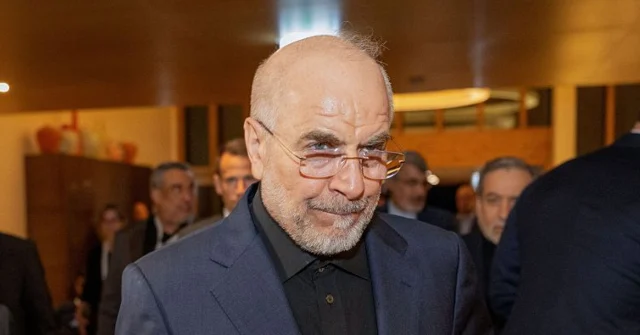
The most direct challenge to international maritime norms came from Deputy Foreign Minister Kazem Gharibabadi, who announced Iran was nearing an "understanding" with Oman regarding the management of the Strait of Hormuz. Crucially, Gharibabadi clarified that this proposed arrangement would fundamentally diverge from the established practices of the past six decades. The new model, he stated, would not guarantee unrestricted international traffic or immunity from what Iran deems necessary security measures, suggesting a significant portion of shipping would be compelled to transit through Iranian territorial waters under terms dictated by Tehran.
This declaration signals a profound shift from the principle of innocent passage, which has long governed navigation through international straits. For 60 years, the Strait of Hormuz, a narrow choke point between the Persian Gulf and the Arabian Sea, has been recognized under international law as an international waterway, allowing for unimpeded transit. Iran’s proposed "new model" implies an intent to levy charges or impose conditions on commercial vessels, effectively transforming a global commons into a revenue stream or a tool of political leverage. Such a move would have monumental implications for global energy markets and international trade, potentially leading to increased shipping costs, insurance premiums, and transit times. The potential for such a unilateral redefinition of maritime law is a source of significant concern for major shipping nations and international organizations.
US Diplomatic Stance and Market Reaction
Amidst these provocative statements from Tehran, the Trump administration maintained a public posture of confidence, repeatedly suggesting that a comprehensive deal to end hostilities and normalize passage through the Strait of Hormuz was within reach. President Trump himself reiterated on Friday that "they want to make a deal," implying that Iran’s desire to avoid further conflict would ultimately compel them to negotiate. This consistent optimism from Washington has, at times, sent ripples through global markets. Earlier in the week, hints of a diplomatic breakthrough led to a notable dip in oil prices and a rise in stock market indices, reflecting the market’s innate desire for stability and predictability.
However, as the week concluded, these speculative gains evaporated, with no tangible evidence of an impending deal or even active negotiations with Iranian representatives. This recurring pattern underscores what RBC Capital Markets global head of commodity strategy Helima Croft termed a "tremendous optimism bias in the markets." This bias, she explained to CNBC, stems from the logical assumption that both the United States and Iran have compelling incentives to resolve the conflict through diplomatic means, given the high economic and geopolitical costs of continued confrontation.
The market’s hopeful scenarios often envision a compromise wherein Iran might extract "fees" from global shipping as the price for restoring full functionality to the Strait of Hormuz, provided these fees are not exorbitant and attacks on civilian vessels cease. Yet, even these faint hopes are likely to be dashed. Iran, facing severe economic pressure from international sanctions, is unlikely to be satisfied with modest fees, viewing the Strait as a crucial bargaining chip. Conversely, the U.S. has explicitly stated its opposition to any form of "ransoms" or unauthorized tolls. An unnamed U.S. official affirmed to CNBC that any "temporary routes" established as part of a ceasefire must be "without impediments — meaning no approvals or permissions, and no tolls or charges." This fundamental disagreement on the very premise of passage fees highlights the deep chasm that separates the two sides, making a quick resolution appear increasingly improbable. Rapidan Energy Group president Bob McNally encapsulated this skepticism, stating, "While Iran and Oman may agree on a narrow Hormuz management plan, we do not see the broader and durable settlement between the U.S. and Iran that Hormuz normalization requires and the crude markets want to see."
Iranian Political Rhetoric and Internal Dynamics
Beyond the issue of the Strait, Iranian officials continued their broader campaign of defiance against the U.S. and its allies. Mohammad Bagher Ghalibaf, the Iranian parliamentary speaker, took to social media platform X (formerly Twitter) to mock President Trump’s repeated threats of a "massive attack" followed by claims of Iran’s desire for negotiation. Ghalibaf characterized this as "theater diplomacy on loop," accusing the U.S. of employing "bullying + broken promises + fake news as leverage," a strategy he deemed "failed." He demanded that the U.S. "acknowledge the facts and fulfill your commitments," dismissing further theatrical gestures. These statements are indicative of a hardened posture within the Iranian leadership, which views American overtures with deep suspicion and perceives strength as the only viable negotiating position.
Echoing this sentiment of resilience and strategic resolve, Deputy Foreign Minister Kazem Gharibabadi emphasized that Iran would engage in diplomacy only from a position of strength. "Our experience in negotiations has shown that whenever we have shown unnecessary flexibility toward the U.S. and the West, their demands have only increased," he told the state-run Islamic Republic News Agency (IRNA). He further stressed the necessity of full coordination between "diplomacy and the battlefield," asserting that this coordination has "never been as strong as it is now." This rhetoric signals a belief that military posturing and regional influence are integral components of Iran’s diplomatic toolkit, a stark contrast to Western notions of diplomacy as a distinct process separate from coercive actions.
Meanwhile, Iranian President Masoud Pezeshkian presented a narrative of regional unity and internal cohesion. In an interview with state-run Islamic Republic of Iran Broadcasting (IRIB), Pezeshkian claimed Iran was fostering "closer ties" with its neighbors, despite a documented history of missile and drone attacks against several of them. He lauded neighboring countries for their "security cooperation," crediting them with preventing "hostile groups from entering Iran through border regions and creating unrest during recent periods of conflict and tension." Pezeshkian attributed this perceived success to Iran’s strategy of "building unity and cooperation both with neighboring countries and within Iran," which he said "played a crucial role in frustrating plans aimed at destabilizing the country."
This official narrative starkly diverges from independent assessments. While Pezeshkian praised "security cooperation," Iran has, in reality, launched numerous attacks against its neighbors, including Iraq and Pakistan. His remarks were likely aimed at acknowledging the actions of states that have cooperated in suppressing militant groups opposed to Tehran, such as Baloch and Kurdish factions. This selective interpretation aligns with the Iranian regime’s broader strategy of framing internal dissent, such as the massive January uprising where thousands protested government policies, as foreign-orchestrated plots involving "malevolent foreign powers and traitorous saboteurs," rather than genuine domestic grievances. Pezeshkian also lauded the "resilience" of the Iranian regime and its loyalists, particularly their ability to withstand damaging sanctions and blockades, reinforcing the image of an unyielding state.
The Strategic Importance of the Strait of Hormuz
The Strait of Hormuz is not merely a regional waterway; it is a critical artery for global commerce, particularly for the international energy market. Approximately one-fifth of the world’s total petroleum liquids consumption and one-third of the world’s liquefied natural gas (LNG) transits through this narrow passage. This equates to roughly 21 million barrels per day of crude oil, condensates, and refined petroleum products, according to the U.S. Energy Information Administration (EIA). Key oil producers like Saudi Arabia, Iraq, UAE, Kuwait, and Iran rely on the Strait for their exports, making its uninterrupted flow indispensable for global energy security and economic stability.
Any disruption, or even the threat of disruption, in the Strait of Hormuz sends immediate shockwaves through global commodity markets. Increased shipping costs due to higher insurance premiums, longer routes to bypass the Strait (if feasible), or direct tolls imposed by Iran would translate into higher energy prices for consumers worldwide. Beyond oil and gas, the Strait also facilitates the passage of numerous other goods, linking manufacturers and consumers across continents. Iran’s stated intention to impose its will on this international waterway is therefore not just a regional dispute but a matter of profound global concern, threatening the foundational principles of free navigation and international trade.
Historical Context of US-Iran Tensions
The current standoff is deeply rooted in decades of complex and often adversarial relations between the United States and Iran. A pivotal moment in recent history was the 2015 Joint Comprehensive Plan of Action (JCPOA), or Iran nuclear deal, which saw Iran agree to curb its nuclear program in exchange for sanctions relief. The U.S. withdrawal from the JCPOA in 2018 under the Trump administration, followed by the re-imposition of crippling sanctions, dramatically escalated tensions.
Since then, the region has witnessed a series of provocative incidents: attacks on oil tankers in the Gulf, drone and missile strikes attributed to Iranian proxies, and direct confrontations with U.S. military assets. Iran’s increasing enrichment of uranium beyond JCPOA limits, its continued development of ballistic missile capabilities, and its support for regional proxy groups (such as Hezbollah in Lebanon, Houthi rebels in Yemen, and various militias in Iraq and Syria) have further fueled anxieties. These actions are often viewed by Washington and its allies as attempts to project power, destabilize the region, and challenge U.S. influence, while Tehran views them as necessary measures for its self-defense and regional security in the face of what it perceives as aggressive U.S. policies.
Regional Geopolitics and Iran’s Role
Iran’s stated goal of "closer ties" with its neighbors, as articulated by President Pezeshkian, belies a complex and often confrontational reality. Tehran’s regional strategy has long involved cultivating a network of proxy forces and allies, often referred to as the "Axis of Resistance," to project its influence and counter perceived threats from the U.S. and its regional partners, primarily Saudi Arabia and Israel.
While some countries, like Oman, have historically played a mediating role between Iran and the West, others have borne the brunt of Iran-backed aggression. Iraq has seen its sovereignty challenged by Iranian-aligned militias, while Saudi Arabia and the UAE have faced drone and missile attacks from Houthi rebels in Yemen, widely believed to be supplied and supported by Iran. This intricate web of alliances and conflicts creates a volatile geopolitical landscape where Iran’s actions in the Strait of Hormuz are not isolated but are part of a broader strategy to assert regional dominance and extract concessions from international powers.
Economic Pressures and Sanctions
The backdrop to Iran’s assertive rhetoric is an economy severely constrained by U.S. sanctions. These sanctions target various sectors, including oil exports, banking, and shipping, significantly limiting Iran’s access to international markets and global financial systems. The economic pressure has led to high inflation, currency depreciation, and widespread public discontent within Iran. It is plausible that Iran’s aggressive stance on the Strait of Hormuz and its demands for "fees" are partly driven by a desperate need to alleviate these economic pressures and generate revenue outside the traditional international banking system.
However, the effectiveness of sanctions as a tool for behavioral change remains a subject of debate. While they undoubtedly inflict pain, they can also harden resolve and lead to more defiant actions, as evidenced by the statements from Iranian officials. The Iranian leadership’s praise for the "resilience" of its people in the face of sanctions indicates a narrative aimed at unifying the population against external pressure, rather than capitulating to it.
Challenges to Diplomacy and Future Outlook
The fundamental disconnect between U.S. optimism for a deal and Iran’s unwavering defiance presents immense challenges to any genuine diplomatic breakthrough. The U.S. seeks a return to stability and unfettered international maritime passage, while Iran appears intent on leveraging its strategic geographic position for political and economic gain. The Trump administration’s "maximum pressure" campaign, designed to force Iran to the negotiating table on U.S. terms, has so far failed to achieve its primary objectives, instead leading to heightened tensions.
For a comprehensive and durable settlement to emerge, both sides would need to make significant concessions, a prospect that appears increasingly remote given the current rhetoric and geopolitical climate. Iran demands an end to sanctions and a recognition of its regional security concerns, while the U.S. insists on verifiable curbs on Iran’s nuclear program, an end to its support for proxy groups, and guaranteed freedom of navigation. The absence of direct, high-level negotiations, coupled with a deep mistrust built over decades, further complicates the path forward.
The implications of continued impasse are severe. Escalation in the Strait of Hormuz could trigger a global energy crisis, disrupt supply chains, and plunge the Middle East into a wider conflict. For international shipping and trade, the uncertainty itself is detrimental, forcing companies to reconsider routes, insurance, and investment strategies. The international community, including major powers like China and European nations, has a vested interest in de-escalation and ensuring the freedom of navigation, making the Strait of Hormuz a critical flashpoint that demands sustained diplomatic engagement, however difficult it may prove to be.

Related Posts

Democratic Candidates Must Moderate to Win General Elections, Says Rep. Greg Stanton

Lisa Demuth Secures Republican Gubernatorial Nomination in Minnesota, Defeating Trump-Endorsed Mike Lindell