
Spain Threatens Italy with Retaliatory Measures Amid Ceuta Migration Crisis and Schengen Rift
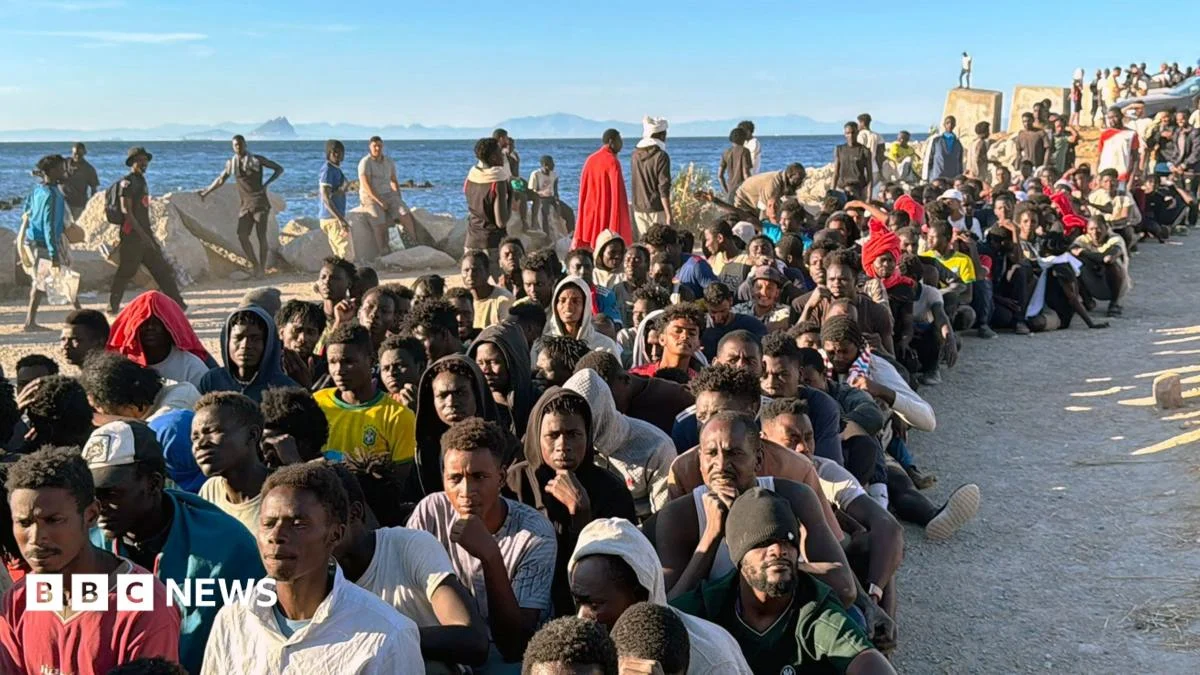
Madrid has issued a stern warning to Rome, threatening to impose unspecified counter-measures if Italy does not immediately reverse its decision to re-introduce border controls, a move prompted by an unprecedented mass migration event into the Spanish exclave of Ceuta. The diplomatic confrontation underscores escalating tensions within the European Union regarding migration policy, border security, and the integrity of the Schengen Area, following an influx of approximately 78,000 migrants from Morocco into Ceuta within a span of hours last week.
Unprecedented Influx Strains Ceuta and European Borders
The crisis unfolded with astonishing speed last Thursday and Friday, when tens of thousands of individuals, primarily from Morocco, streamed into Ceuta, an autonomous Spanish city bordering Morocco on the North African coast. The vast majority of migrants arrived by sea, swimming or using rudimentary craft, overwhelming local Spanish border forces and humanitarian aid capacities. This sudden surge, described by Spanish authorities as an "invasion" and an "attack on Spain’s borders," led to tragic consequences, with an estimated 100 lives lost in the perilous crossings. The sheer volume of arrivals, which included a significant number of vulnerable individuals, notably nearly 1,400 minors, some described as "very young boys and girls," has placed immense strain on Ceuta’s infrastructure and resources. Spanish Youth Minister Sira Rego acknowledged the system was "overwhelmed" but stated efforts were underway to bring the situation "under control," prioritizing the most vulnerable cases.
Ceuta, alongside Melilla, represents the European Union’s only land borders with an African nation, making them flashpoints for irregular migration and complex diplomatic challenges. For decades, these exclaves have been a persistent source of contention between Spain and Morocco, as the latter does not formally recognize Spanish sovereignty over them. This historical tension often plays a critical role in the dynamics of border management and migration flows.
Chronology of Escalation and Diplomatic Fallout
The rapid sequence of events triggered an immediate and multifaceted international response:
- Thursday/Friday, Last Week: The mass crossings into Ceuta occur, with an estimated 78,000 migrants entering the Spanish territory in less than 48 hours. The scale of the influx raises immediate questions about the unexpected lack of intervention from Moroccan border guards, a point that would later become central to diplomatic discussions.
- Following the Crossings: Italy, citing national security concerns and the potential for secondary movements of migrants within the Schengen Area, unilaterally implements partial suspensions of its Schengen arrangements with Spain. This decisive action includes the closure of maritime and air entry points to Spanish nationals and goods, as well as a significant reinforcement of land border controls at its shared frontiers with other Schengen states that could potentially serve as transit routes from Spain.
- Friday, This Week: Spain officially condemns Italy’s actions, labeling them "unjustified" and "discriminatory against the Spanish population." Madrid issues a formal demand for Rome to reverse its decision by Sunday, August 9. The Spanish government explicitly states that failure to comply would result in the introduction of "proportionate measures to protect the interests and dignity of its citizens," though it refrains from specifying the exact nature of these potential reprisals.
- Prompt Italian Rebuff: Italy swiftly responds to Spain’s ultimatum, declaring it would not accept "ultimatums or impositions" from Madrid. Rome confirms its intention to maintain the enhanced border checks until at least August 15. This date, according to Italy, is predicated on intelligence suggesting Spain "expects a new wave of migration" to hit Ceuta, implying a proactive measure to safeguard its own borders.
- Spain’s Denial and Monitoring: The Spanish prime minister’s office, however, denies any official anticipation of a second wave of crossings. While acknowledging reports fueled by social media activity among Moroccan users planning another attempt, Spanish officials told El País that they are "monitoring the situation" but do not "expect a repeat of scenes from last week." This discrepancy in intelligence assessments further complicates the diplomatic exchange.
The Schengen Agreement Under Duress
Italy’s decision to partially suspend its Schengen commitments with Spain has sent ripples across the European Union, exposing vulnerabilities in the bloc’s free movement principles. The Schengen Area, a cornerstone of European integration, allows for passport-free travel across most of the EU, contingent on robust external border management and mutual trust among member states. Unilateral re-introduction of internal border controls, even if temporary and justified by specific threats, is always a sensitive issue, potentially undermining the entire framework.
The immediate reactions from other EU member states highlighted the divisive nature of such actions. Finland and Denmark publicly expressed support for Italy’s position, signaling a shared concern about uncontrolled migration flows and the potential for secondary movements impacting their own territories. Conversely, the Czech Republic went further, calling for Spain’s membership in the Schengen Area to be temporarily suspended, arguing that the Ceuta situation demonstrated a failure in Spain’s external border control responsibilities, thereby jeopardizing the security of the entire zone. This fracturing of opinion within the EU underscores the deep-seated disagreements over burden-sharing and collective responsibility in managing migration crises.
Underlying Causes and Blame Allocation
The exact catalyst for the sudden, mass migration into Ceuta remains a subject of ongoing investigation and diplomatic finger-pointing. EU Migration Commissioner Magnus Brunner suggested that "criminal networks spreading disinformation" were instrumental in instigating the crossings. This assertion, which the Spanish government has publicly endorsed, points to the potential for organized crime to exploit vulnerable populations and diplomatic tensions for illicit gains. Such networks often leverage social media and informal communication channels to spread rumors and false promises, inciting large-scale movements that overwhelm official responses.
A significant element in the narrative, particularly from Morocco’s perspective, is a recent ruling by Spain’s Supreme Court. The court had ruled that migrants stopped at sea while attempting to reach Ceuta or Melilla could not be summarily returned to Morocco without individual processing. Morocco, through an unnamed government source briefing local outlets, explicitly laid blame for the crisis on this judicial decision, stating that "the deterrent element of the system collapsed and the dam gave way, not under the weight of the criminals, but of a judge’s decision." This interpretation suggests that Morocco viewed the ruling as weakening Spain’s ability to deter illegal crossings, thereby indirectly contributing to the surge.
The question of why Morocco’s border guards did not effectively interdict the thousands of individuals attempting to cross into Ceuta simultaneously has also become a central point of international scrutiny. While Morocco maintains its own sovereignty and border management policies, the scale of the unhindered movement raised eyebrows across Europe, fueling speculation about potential deliberate inaction or a relaxation of controls, possibly as a form of diplomatic leverage against Spain amidst long-standing bilateral disputes.
Humanitarian Crisis and Long-Term Challenges
Beyond the diplomatic sparring, the human cost of the Ceuta crisis is profound. The presence of nearly 1,400 unaccompanied minors remaining in Ceuta presents a significant humanitarian and logistical challenge for Spanish authorities. These children, often traumatized and vulnerable, require specialized care, shelter, and legal processing. The procedure for identifying, protecting, and potentially repatriating or integrating these minors is complex and time-consuming, further straining Ceuta’s social services. The influx highlights a broader EU challenge concerning unaccompanied minors, who are particularly susceptible to exploitation and often fall through the cracks of national and international protection systems.
The immediate aftermath also saw reports from Moroccan media of fresh online calls to coordinate another mass border-crossing attempt, echoing the social media activity observed before last week’s influx. This persistent threat underscores the volatile nature of the situation and the potential for repeat events, fueled by both economic desperation and the perceived opportunities created by previous successful crossings.
Broader Impact and Implications
The Ceuta crisis and its subsequent diplomatic fallout carry significant implications for the future of European migration policy, inter-state relations, and the very fabric of the Schengen Area:
- Erosion of Schengen Principles: Italy’s unilateral re-imposition of border controls, even if temporary, sets a concerning precedent. If other member states follow suit in response to perceived threats, the principle of free movement, a cornerstone of EU integration, could be irrevocably weakened, leading to a fragmented and less cohesive Union.
- Strained Bilateral Relations: The open confrontation between Spain and Italy, two major EU economies and founding members, risks damaging their broader bilateral relationship, potentially affecting cooperation on other EU policies, trade, and even cultural exchanges. Spain’s unspecified "proportionate measures" could range from economic sanctions to diplomatic downgrades, further escalating the dispute.
- EU Solidarity and Burden-Sharing: The varied reactions from Finland, Denmark, and the Czech Republic expose the persistent divisions within the EU on migration. The crisis underscores the urgent need for a more unified and equitable approach to managing external borders, processing asylum claims, and distributing migrants across the bloc, rather than leaving frontline states to bear the disproportionate burden.
- Spain-Morocco Relations: The crisis has intensified the already delicate diplomatic relationship between Spain and Morocco. The issue of the Spanish exclaves, migration control, and the perception of Morocco’s role in the border management will continue to be a source of friction, impacting regional stability and security.
- The Role of Disinformation: The alleged role of criminal networks spreading disinformation highlights a growing challenge for governments worldwide. Combating false narratives that incite dangerous mass movements requires sophisticated intelligence gathering, public awareness campaigns, and international cooperation to dismantle these networks.
- Humanitarian Concerns: The ongoing presence of vulnerable migrants, particularly minors, in Ceuta necessitates a sustained humanitarian response and a long-term strategy for their protection and integration or safe return. The crisis serves as a stark reminder of the human cost of geopolitical tensions and migration pressures.
As the August 9 deadline set by Spain looms, and Italy remains steadfast in its decision to maintain border checks until August 15, the international community watches closely. The outcome of this diplomatic standoff will not only shape the immediate future of migration management between Spain and Italy but also serve as a critical test of the European Union’s ability to maintain unity and uphold its core principles in the face of complex, multi-faceted challenges.

Related Posts

Zambia on Edge: Opposition Leader Arrested Amid Allegations of Insurrection Plot and Election Tensions
Rescuers search for survivors of powerful Indonesia earthquake

