Latin America’s Geopolitical Divide: Public Outcry Against Israel Meets Right-Wing Embrace
A profound geopolitical schism is currently reshaping Latin America, creating a stark contrast between widespread public sentiment and the foreign policy leanings of a burgeoning wave of right-wing governments. While numerous polls consistently indicate that the region’s populace is increasingly critical of Israel, particularly in light of its protracted military operations in Gaza, which are widely perceived as genocidal, a significant number of new administrations are moving in the opposite direction. This political realignment is deepening security, diplomatic, and technological ties with Israel, often at the expense of Palestinian self-determination and broader human rights considerations.
The Shifting Sands of Public Opinion
The growing anti-Israel sentiment among Latin American citizens is not a sudden phenomenon but rather an intensification of existing sympathies for the Palestinian cause, exacerbated by the recent conflict in Gaza. The perception of Israel’s three-year assault on Gaza as a "genocide" has resonated deeply across a continent with its own history of colonial oppression, indigenous struggles, and human rights abuses. This framing, often amplified by social media and independent news outlets, has fueled widespread public protests, solidarity movements, and calls for governmental action against Israel. For many, the humanitarian crisis unfolding in Gaza evokes a powerful sense of injustice and a moral imperative to speak out, transcending traditional political divides at the citizen level.
The Rise of the Right and Its Geopolitical Implications
Paradoxically, this surge in public solidarity with Palestine coincides with a significant political shift towards the right in many Latin American nations. Countries such as El Salvador, Argentina, Chile, Ecuador, Peru, Bolivia, Honduras, Costa Rica, and most recently, Colombia, have seen conservative and often populist leaders ascend to power. These governments, frequently characterized by strong security agendas, economic liberalization, and an anti-leftist stance, have demonstrably altered their foreign policy orientations, often aligning more closely with the United States and, by extension, Israel. This shift is not merely ideological; it translates into concrete policy changes, including enhanced security cooperation, arms deals, and diplomatic reconfigurations that undermine long-standing regional support for Palestinian statehood.
Colombia: A Pivotal Turn
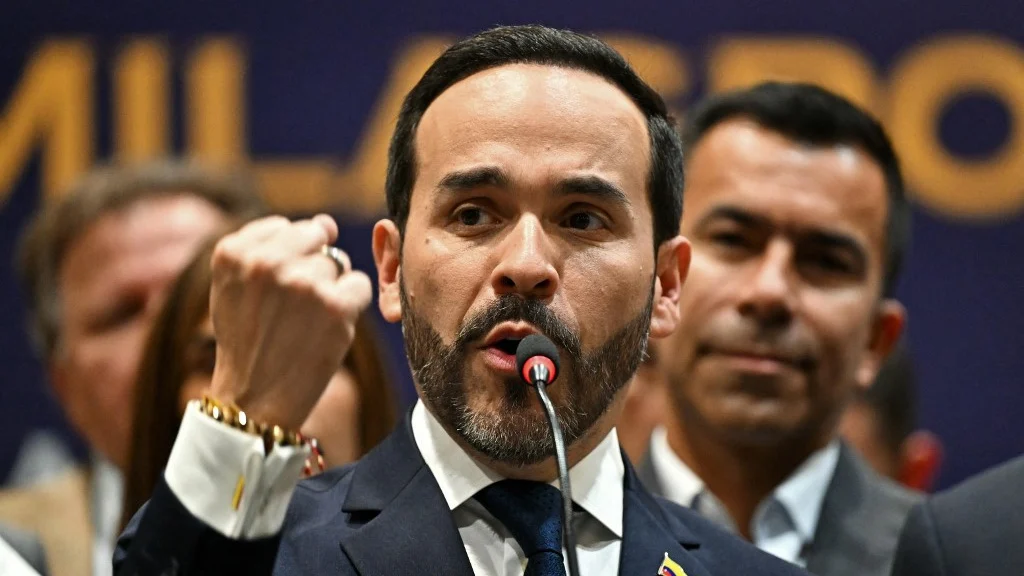
The clearest and most recent illustration of this regional dynamic unfolded last month in Colombia. The outgoing leftist president, Gustavo Petro, a former guerrilla leader who had become a vocal proponent of Palestinian rights—even addressing a pro-Palestine rally in New York before his U.S. visa was controversially revoked—lost power to Abelardo de la Espriella. De la Espriella, a lawyer with a history of defending paramilitary groups and known ties to military dictatorships and former U.S. President Donald Trump, represents a stark departure from Petro’s progressive agenda.
The Colombian election itself was not without controversy. President Petro publicly accused the Israeli cyber-intelligence firm BlackCore of engaging in election interference, alleging that the company deployed half a million bot accounts to flood Colombian voters with disinformation ahead of the June run-off. De la Espriella ultimately won by a razor-thin margin of less than a single percentage point, fueling suspicions among Petro’s supporters and international observers about the integrity of the electoral process. Israeli Prime Minister Benjamin Netanyahu, however, wasted no time in celebrating the outcome, congratulating the president-elect online and declaring, "Israel’s friends continue to win." This swift endorsement underscored the strategic importance of such political shifts for Israel’s diplomatic standing in a region home to significant Palestinian (approximately 700,000) and Jewish (approximately 500,000) communities.
Upon taking office, De la Espriella swiftly signaled a dramatic overhaul of Colombia’s foreign policy regarding the Israeli-Palestinian conflict. He announced plans to suspend the establishment of Colombia’s embassy to Palestine, a move initiated by Petro, and pledged to fully restore relations with Israel. Crucially, De la Espriella committed to moving Colombia’s diplomatic mission to Jerusalem, a highly symbolic act that recognizes Jerusalem as Israel’s capital, contrary to international consensus. This decision effectively strips Bogotá of its role as one of the more forceful voices behind South Africa’s genocide case against Israel at the International Court of Justice, further weakening the international legal challenge.
A Regional Domino Effect
Colombia’s pivot is not an isolated incident but part of a broader trend. Bolivia, for example, had been the first Latin American country to sever ties with Israel after the Hamas attacks of October 7, 2023, citing humanitarian concerns in Gaza. However, under its new centre-right President Rodrigo Paz, elected in December, Bolivia restored full diplomatic relations. This rapprochement was personally sealed by a phone call from Prime Minister Netanyahu shortly after Paz’s election, highlighting the direct engagement of Israeli leadership in these regional shifts.
Argentina, under President Javier Milei, has emerged as another staunch ally of Israel. Milei, an outspoken libertarian, has publicly declared himself a "fanatic of Israel" and has committed to moving Argentina’s embassy to Jerusalem, further solidifying diplomatic support for Israel. His policies reflect a broader ideological alignment with right-wing global movements, where support for Israel often intertwines with conservative political platforms.
Even nations traditionally associated with leftist or anti-imperialist stances are showing signs of realignment, often under sustained pressure from the United States. Venezuela’s nominally socialist government, despite its historical anti-US rhetoric, has hosted American congressional delegations and maintained Israeli humanitarian and diplomatic channels. The country recently announced plans to leave the International Criminal Court, a move that aligns with broader US interests in undermining international legal bodies. This suggests that Caracas, under continuous American pressure and economic sanctions, is increasingly operating as a de facto puppet of Washington’s regional interests, gradually tilting further right in its foreign policy. Similarly, Cuba, ravaged by decades of US sanctions and now pursuing American-promoted economic reforms (often met with even more sanctions), may not be far behind in its geopolitical recalibration. The historical context of Israeli entanglement in Latin America, dating back to the Cold War when Mossad reportedly operated out of Havana assisting the CIA, underscores the long-standing strategic interest in the region.
Washington’s Enduring Influence and Pressure Tactics

The underlying force driving many of these shifts is the enduring influence of the United States. Washington’s long-standing policy of supporting Israel is intricately linked to its geopolitical strategy in Latin America. The US has historically used various tools—economic leverage, diplomatic pressure, and even covert operations—to shape political outcomes in its "backyard." For instance, both Brazil and Mexico, currently led by leftist presidents (Lula da Silva and Claudia Sheinbaum, respectively), face mounting pressure from Washington over their critical posture towards Israel. This pressure manifests as "economic warfare," threats of military strikes, sanctions, and "terrorist designations" against cartels, which can open the door to direct incursions. Such tactics demonstrate the lengths to which the US is willing to go to ensure regional alignment with its foreign policy objectives.
The Shadow of Israeli Security Apparatus
Beyond direct diplomatic ties, a crucial aspect of Israel’s deepening engagement in Latin America is its robust security relationship. This relationship, often shielded from public scrutiny, primarily involves the sale of sophisticated surveillance technologies and advanced weaponry.
One of the most controversial elements of this security cooperation is the widespread use of Pegasus, the intrusive Israeli spyware sold to governments across the region. While ostensibly marketed for combating terrorism and organized crime, Pegasus has been repeatedly deployed to target journalists, opposition figures, and human rights activists, effectively becoming a tool for internal repression and silencing dissent. Examples from Mexico and other nations highlight a disturbing pattern where state-sponsored surveillance, facilitated by Israeli technology, undermines democratic freedoms and human rights.
Furthermore, Israeli weapons and training are integral to law enforcement operations in several Latin American countries. Brazilian police, known for their high lethality rates, utilize a plethora of Israeli weapons in their operations within the favelas, contributing to thousands of deaths annually. This transfer of military technology and expertise raises significant human rights concerns, as it often empowers security forces in countries with poor track records of accountability. In recent years, Israeli intelligence operatives have also worked alongside Brazilian authorities to investigate an alleged Hezbollah presence in the country, further entrenching security cooperation under the guise of counter-terrorism.
Cultural and Social Flashpoints
The increased Israeli presence in Latin America has also led to cultural and social friction. Israeli tourists in the region have become a flashpoint in their own right. Argentine officials, for example, have blamed Israeli tourists for wildfires in Patagonia. In Brazil, Israeli tourists were detained by police after alleged violence against pro-Palestine protesters. Moreover, tourism fairs in São Paulo have controversially marketed occupied Palestinian land as Israeli destinations, sparking outrage and highlighting the political dimensions of even seemingly benign cultural exchanges. These incidents underscore the growing tension between the official narrative of strengthened ties and the public’s perception, which is often shaped by the Israeli-Palestinian conflict.
The Paradox of Palestinian Descent
Adding another layer of complexity to this narrative are figures like Nayib Bukele, El Salvador’s self-proclaimed "coolest dictator" and a "Maga darling," who is himself of Palestinian descent. Despite his heritage, Bukele has built his repressive security state partly on Israeli weapons and surveillance equipment, which is now "turbo-charging repression across Latin America." Similarly, Nasry Asfura, the new president of Honduras, pushed to power with Trump’s alleged meddling, is also of Palestinian descent but is a deep ally of Israel, having visited the country and met with Netanyahu.
This paradox was further illuminated by "Hondurasgate," leaked audio recordings that allegedly captured former Honduran president Juan Orlando Hernández, Asfura, and Argentina’s Milei discussing plans to use Honduras as a staging ground to target leftist governments across the region. This plot reportedly involved Netanyahu’s assistance in securing Hernández a pardon from Trump after a drug trafficking conviction, linking Israeli diplomatic maneuvering directly to US political influence and regional power plays.
Brazil: The Crucial Test Ahead
All eyes are now on Brazil’s upcoming October election, which represents a crucial test for the region’s geopolitical trajectory. Flavio Bolsonaro, son of the convicted former president Jair Bolsonaro, launched his campaign against incumbent Luiz Inácio Lula da Silva with a video endorsement from Prime Minister Netanyahu and fiery support from Argentine leader Javier Milei. This alliance signals a clear ideological front, consolidating the right-wing, pro-Israel stance across major Latin American powers.
In stark contrast, Lula, the sitting president, remains one of the last major heads of state in Latin America willing to unequivocally condemn Israel’s campaign in Gaza as a "genocide." He has gone further, controversially comparing it to the Holocaust, drawing strong public outrage in some quarters but also solidifying his position among those who advocate for Palestinian rights. The Brazilian election, therefore, is not merely a domestic contest but a bellwether for the broader regional alignment. Its outcome could either bridge the widening chasm between public sentiment and governmental policy or deepen the rift, further polarizing Latin America’s stance on one of the world’s most enduring conflicts.
Conclusion: An Elite-Citizen Divide
The evolving landscape in Latin America reveals a profound and widening gap between the foreign policy priorities of its ruling elites and the deeply held moral convictions of its citizens. While public opinion overwhelmingly decries the actions in Gaza and supports Palestinian self-determination, a rising tide of right-wing governments, often influenced by US pressure and attracted by Israeli security and technological offerings, is forging closer ties with Israel. This dynamic creates a complex web of security relationships, diplomatic realignments, and internal repression, all underpinned by a security paradigm where Latin American electorates often have no say. The upcoming Brazilian election stands as a pivotal moment, poised to either temper this deepening elite-citizen divide or entrench it further, with significant implications for human rights, regional stability, and Latin America’s voice on the global stage.

Related Posts

Over 150 Israeli Settlers Storm Al-Aqsa Compound and Perform Prayers, Violating Status Quo Under Police Protection.
UN Report Highlights Over 900 Obstacles Hampering West Bank Aid Amid Escalating Humanitarian Crisis