
Australian Aviation Crew Executes Historic Midwinter Antarctic Rescue in Extreme Darkness and Cold
An Australian aviation crew has successfully completed an extraordinary and unprecedented midwinter mission to evacuate a critically ill United States expedition member from McMurdo Station in Antarctica, navigating freezing temperatures, total darkness, and treacherous conditions. The daring medical evacuation, orchestrated by Skytraders, marked a significant milestone in polar aviation and international cooperation, underscoring the formidable capabilities required to operate in the world’s most extreme environment. The patient, whose identity has not been released, is now recovering well after being transported to Christchurch, New Zealand, where they received urgent medical attention following the complex operation.
The mission, which took place on Friday, July 28th, followed an urgent request for medical assistance from the U.S. Antarctic Program (USAP) relayed via the Australian Antarctic Division (AAD). McMurdo Station, the largest research station in Antarctica, located on Ross Island, experiences perpetual darkness and temperatures plummeting well below -40°C during the austral winter. Such conditions render aviation operations exceptionally hazardous, often deemed impossible for routine flights. The successful execution of this rescue highlights not only the resilience and expertise of the Skytraders crew but also the robust framework of international collaboration that underpins scientific research and support operations on the frozen continent.
The Unprecedented Challenge of Antarctic Winter Operations
Antarctica in July is a realm of profound extremes. The sun does not rise over McMurdo Station, plunging the region into continuous polar night. Temperatures routinely drop to bone-chilling lows, with wind chill making conditions even more perilous. The reported -43°C (-45.4°F) during the rescue mission was compounded by strong winds, creating a truly hostile environment for both ground crew and aviation personnel. Aircraft systems, human physiology, and logistical support are all pushed to their absolute limits under such duress. Ice accumulation, fuel freezing, reduced visibility, and the immense strain on equipment are just some of the factors that typically preclude midwinter flights.
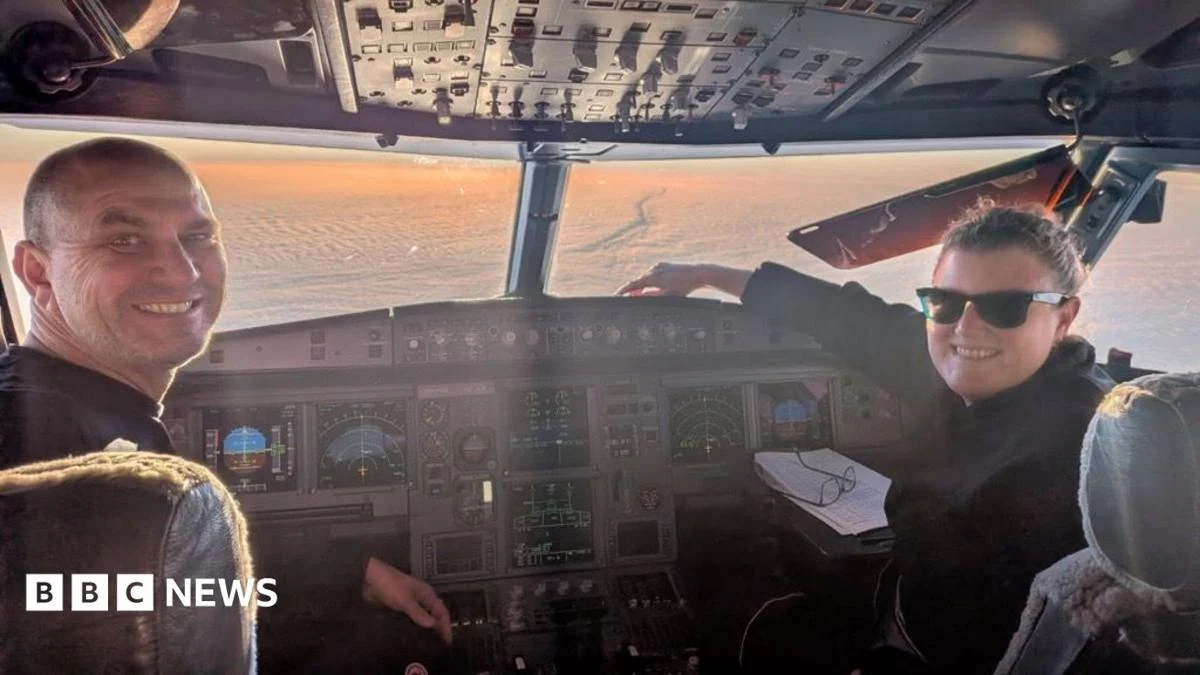
Captain Louise Robertson, one of the four pilots on the flight, revealed to the BBC that this was the first time such a mission had ever been completed in July and entirely in total darkness. "We completed it on the 31st July, and the first day of any sort of sunlight, which was very minimal, would be on the 1st August," she stated, emphasizing the narrow window and the complete absence of natural light. Her husband of 18 years, Rod Robertson, piloted the Airbus A319, known as Snowbird 1, for the critical landing at the US research station on Ross Island. Captain Robertson, occupying the right seat, described it as the most complex operation she had been involved in during her seven years with Skytraders and 25 years as a pilot, a testament to the unparalleled difficulty of the task.
A Detailed Chronology of the Rescue Mission
The chain of events leading to the successful evacuation began on Wednesday afternoon, July 26th, when Skytraders received the urgent medical evacuation request from the USAP through the AAD. The immediate challenge was to prepare the aircraft, an Airbus A319, for a mission far beyond its standard operational parameters. This involved a "major operation" by engineers and a design team to reconfigure the plane, fitting it with a specialized stretcher system to safely transport the patient. This meticulous modification process alone took a full 24 hours to complete, ensuring every detail met the stringent requirements for medical transport in such extreme conditions.
Initial plans for takeoff were then delayed by an additional 12 hours as the crew awaited a suitable weather window. A severe snowstorm on the first intended day of departure grounded the operation. This storm not only affected visibility but also prevented the ground crew at McMurdo Station’s Phoenix Airfield from accessing and preparing the runway. The runway, made of compacted snow and ice, required extensive grading and grooming to achieve the necessary smoothness for an Airbus A319 landing. This critical six-hour task could only commence once the blizzard had sufficiently abated, further compressing the operational timeline.
Despite the setbacks, the dedicated ground crew at McMurdo persevered. "They did a phenomenal job to make a 3-km-long runway available for us given the conditions they were also facing, -45C and strong wind," Captain Robertson lauded, highlighting the heroic efforts of those on the ground. Finally, in the early hours of Friday morning, July 28th, the Airbus A319 departed from Hobart, Tasmania, embarking on its perilous journey south. The flight itself was a testament to precision navigation and expert airmanship, culminating in a landing at Phoenix Airfield. The crew spent exactly one hour on the ground, a tightly managed period to quickly and safely transfer the patient onto Snowbird 1. With the patient secured, the aircraft swiftly took off again, commencing the return leg to Christchurch, New Zealand, where medical teams were on standby. The patient was subsequently treated and is now reported to be recovering well, a direct result of this multi-faceted, high-stakes operation.
The Aircraft and Crew: Expertise Under Pressure
The choice of aircraft, an Airbus A319, is crucial for such missions. While commonly used for commercial flights, Skytraders operates a specialized version of the A319, configured for polar operations. These aircraft are robust and capable of enduring extreme cold, but even they have operational limits. The conditions encountered were described by Captain Al Wallach, another pilot on the mission, as "right on the edge of even the most specialised aircraft capability." This underscores the exceptional nature of the flight and the fine margins within which the crew operated. The A319’s range and payload capacity are vital for the long-haul flights to Antarctica, which can span thousands of kilometers from gateway cities like Hobart or Christchurch.
The success of the mission, according to Captain Wallach, was a reflection of the specialist expertise across the entire team. This encompassed not only the flight crews but also meteorologists who provided critical weather intelligence, operational planners who meticulously mapped out every contingency, the runway teams battling the elements at McMurdo, and the medical personnel providing care both on the ground and in the air. "Every Antarctic mission demands absolute precision, but winter operations raise the complexity significantly," Wallach emphasized, highlighting the layered challenges. The pilots’ extensive experience in polar flying, understanding of extreme weather phenomena, and mastery of their aircraft were indispensable in navigating the perpetual darkness and treacherous landing conditions. The partnership between Captains Louise and Rod Robertson, a husband-and-wife team, added a unique dimension to this historic flight, showcasing a level of trust and coordination honed over years of shared professional and personal experience.
International Collaboration: A Cornerstone of Antarctic Operations
This midwinter rescue serves as a powerful demonstration of the intricate and essential network of international cooperation that defines human presence in Antarctica. The request for assistance originated from the US Antarctic Program, which operates McMurdo Station, but was facilitated through the Australian Antarctic Division. Australia, a signatory to the Antarctic Treaty, maintains a significant presence on the continent and plays a crucial role in providing logistical and scientific support. Skytraders, an Australian aviation company, operates the country’s dedicated polar fleet, providing vital air links to its own research stations and, as seen in this instance, offering critical support to other nations.
Emma Campbell, head of the Australian Antarctic Division, underscored this aspect, stating that the operation "highlights both the capability of our people and the strong partnerships that underpin Antarctic programmes around the world." The Antarctic Treaty System, which governs activities on the continent, promotes peaceful scientific research and international collaboration. This mission is a tangible example of this ethos in action, where national boundaries dissolve in the face of shared challenges and humanitarian necessity. The support from New Zealand, through the provision of Christchurch as the crucial medical evacuation hub, further exemplifies this multilateral approach. Christchurch serves as a primary gateway for many national Antarctic programs, offering essential logistical and medical infrastructure.
McMurdo Station and Phoenix Airfield: A Vital Outpost
McMurdo Station, operated by the United States, is not merely a research outpost; it is a vital logistical hub supporting scientific endeavors across a vast region of Antarctica, including the South Pole. Situated on the southern tip of Ross Island, it is strategically located near the Ross Ice Shelf. The station typically houses a population of over 1,000 personnel during the summer season, dwindling to a skeleton crew of around 150-200 over the harsh winter. For those remaining through the long, dark months, medical emergencies pose a unique and terrifying threat, given the isolation and extreme difficulty of evacuation.
Phoenix Airfield, one of three airfields serving McMurdo Station, is specifically designed for wheeled aircraft like the Airbus A319. Unlike some other Antarctic runways carved into glacial ice, Phoenix is a compacted snow runway, making its maintenance and preparation even more challenging in blizzard conditions. The ground crew’s ability to clear, grade, and groom a 3-kilometer runway to the precise specifications required for a heavy jet landing, all while battling -45°C temperatures and strong winds in total darkness, represents an extraordinary feat of engineering and human endurance. The operational readiness of such infrastructure, even in the depths of winter, is a testament to the foresight and dedication of the USAP and its partners.
Echoes of Past Missions and Future Implications
While unprecedented in its midwinter timing and conditions, this mission is not Skytraders’ first rodeo in Antarctic medical evacuations. The company carried out a similar mission in March 2020, also evacuating a US Antarctic Program member from McMurdo. Although that mission occurred towards the end of the austral summer, with slightly warmer temperatures of around -30°C and some daylight, it established a precedent for rapid response and inter-program cooperation. The experience gained from such previous operations undoubtedly contributed to the meticulous planning and flawless execution of this latest, more challenging rescue.
The success of this mission has profound implications for future Antarctic operations. It demonstrates that with the right aircraft, highly specialized and experienced crews, and robust international cooperation, even midwinter medical evacuations, previously considered near-impossible, can be achieved. This capability provides a crucial safety net for the brave scientists and support personnel who commit to spending the harsh Antarctic winter in isolation, pushing the boundaries of human knowledge. It reinforces the importance of continued investment in polar aviation technology, crew training, and the collaborative frameworks that make such daring feats possible. The rescue stands as a beacon of human ingenuity and collective determination against the backdrop of one of Earth’s most unforgiving frontiers, ensuring that the pursuit of science in Antarctica can continue with the knowledge that help, however challenging to deliver, is ultimately within reach.

Related Posts

Zambia on Edge: Opposition Leader Arrested Amid Allegations of Insurrection Plot and Election Tensions

Rescuers search for survivors of powerful Indonesia earthquake

