Israel Considers Significant Military Escalation in South Lebanon Amidst Diplomatic Efforts
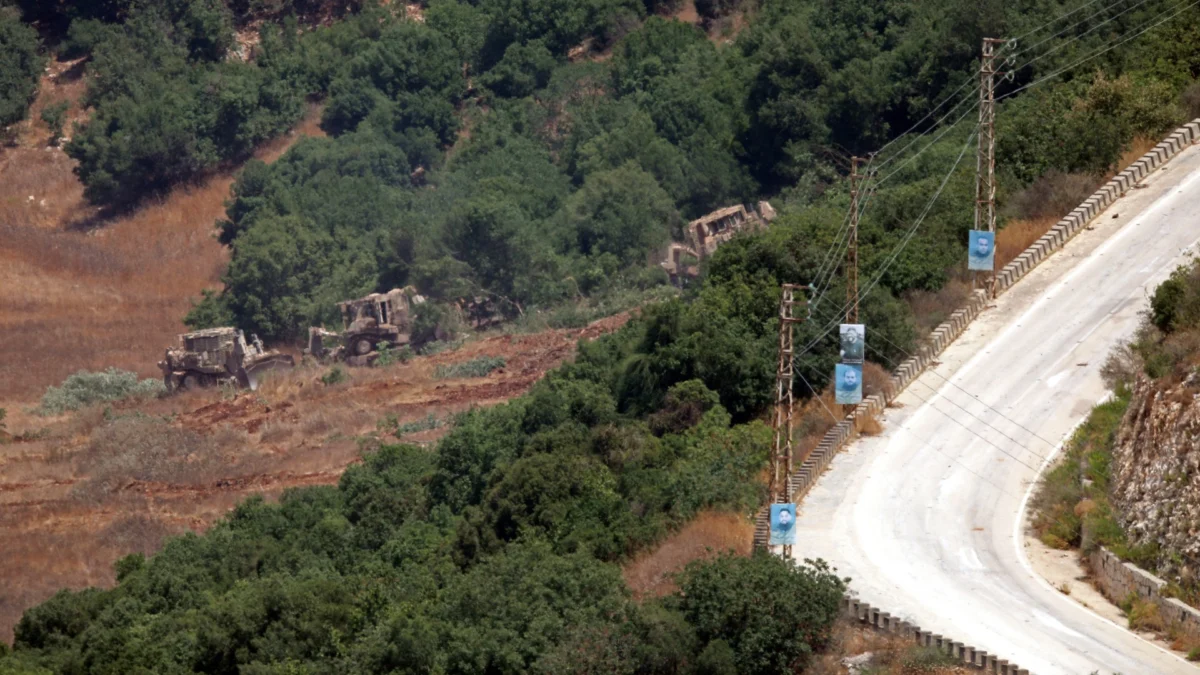
Reports emanating from various Israeli media outlets indicate that Israel is actively contemplating additional and potentially intensified military operations in southern Lebanon. This deliberation comes as the Israeli military reportedly prepares for further escalation in the region, a development that unfolds against a backdrop of ongoing, albeit fragile, peace talks and diplomatic efforts aimed at de-escalation. The emerging narrative from within Israel points to a critical juncture, where military and political leadership are weighing the costs and benefits of a more decisive response to what they describe as persistent provocations from the Iran-backed Hezbollah militant group.
Reports from Israeli Media Signal Heightened Readiness
The public broadcaster of Israel has reported that the military’s response to what it characterizes as Hezbollah’s violations "has not ended," suggesting that the recent limited engagements were merely a precursor. These reports hint at "sensitive operations" that are likely already underway or imminent, implying a strategic and covert dimension to Israel’s current posture. This phrase, often employed in security contexts, typically refers to intelligence-gathering missions, targeted strikes, or other actions designed to achieve specific objectives without immediately escalating to overt, large-scale conflict.
Further solidifying the impression of impending action, Channel 13, another prominent Israeli news channel, has detailed plans for additional strikes in the coming hours. Such a rapid timeline underscores the urgency and advanced planning behind these potential operations. The reports suggest that these strikes would not be random acts but part of a calculated strategy, indicating a shift from reactive measures to a more proactive stance. Meanwhile, Channel 12, a major commercial broadcaster, reported that the Israeli military is actively urging the political leadership to grant approval for a "stronger and more decisive" response in Lebanon. This appeal highlights the internal dynamic between the military establishment, which often advocates for robust security measures, and the political echelon, which must weigh the broader diplomatic, economic, and humanitarian implications of such actions. The military’s push for a "decisive" response suggests a desire to restore deterrence and convey a clear message to Hezbollah that its perceived violations will not be tolerated.
A Volatile Border: Historical Context of the Israel-Lebanon Conflict
The current considerations for military escalation are deeply rooted in a long and often violent history between Israel and Lebanon, particularly involving Hezbollah. The border region, known as the Blue Line, demarcated by the United Nations after Israel’s withdrawal from southern Lebanon in 2000, has remained a flashpoint for decades.
Hezbollah’s Emergence and Role: Hezbollah, meaning "Party of God," emerged in the early 1980s during the Lebanese Civil War, with significant support from Iran. It evolved from a militia resisting Israeli occupation into a powerful political party and a formidable military force, often described as a state within a state in Lebanon. Its military wing possesses a vast arsenal of rockets, missiles, and drones, far exceeding that of many national armies, and has demonstrated its capability to strike deep into Israeli territory. Hezbollah views itself as the primary defender of Lebanon against Israeli aggression and is a crucial component of Iran’s regional "Axis of Resistance."
The 2006 Lebanon War: The most significant direct conflict in recent memory was the 2006 Lebanon War, triggered by a cross-border raid by Hezbollah that resulted in the capture of two Israeli soldiers and the killing of several others. The 34-day war led to widespread destruction in Lebanon, significant casualties on both sides, and left an indelible mark on the region. It concluded with UN Security Council Resolution 1701, which called for a full cessation of hostilities, Israel’s withdrawal from Lebanon, the deployment of the Lebanese Armed Forces (LAF) and the United Nations Interim Force in Lebanon (UNIFIL) to the south, and the disarmament of all armed groups in Lebanon, particularly Hezbollah. However, Hezbollah has largely retained its arsenal and presence south of the Litani River, in defiance of aspects of Resolution 1701.
UNIFIL’s Presence and Mandate: Established in 1978, UNIFIL plays a crucial role in monitoring the cessation of hostilities, preventing violations of the Blue Line, and supporting the Lebanese government in asserting its authority in the south. With approximately 10,000 peacekeepers from various nations, UNIFIL’s mandate is regularly renewed, but its ability to enforce Resolution 1701 fully is often challenged by Hezbollah’s entrenched presence and influence. Any significant military escalation would severely test UNIFIL’s capacity and could endanger its personnel.
Recent Triggers and Escalation Dynamics
The "Hezbollah violations" alluded to in Israeli reports typically refer to a range of cross-border incidents that Israel perceives as infringements on its sovereignty or threats to its security. In recent months and years, these have included:
- Border Incursions and Provocations: Hezbollah has been accused of establishing observation posts, erecting tents, or conducting patrols in areas Israel considers its sovereign territory or within the demilitarized zone. These actions are often seen as deliberate tests of Israel’s resolve and attempts to subtly shift the status quo along the Blue Line.
- Drone Incursions: The use of unmanned aerial vehicles (UAVs) by Hezbollah for surveillance or, potentially, attack purposes has become a growing concern for Israel. Israeli air defenses frequently intercept such drones, but their repeated deployment represents a persistent challenge.
- Underground Tunnels: While primarily associated with the Gaza Strip, concerns about Hezbollah constructing cross-border tunnels into Israel have also been raised, leading to Israeli operations to detect and destroy them.
- Rocket Fire: Though less frequent than in the past, sporadic rocket fire from Lebanese territory into Israel, often attributed to Palestinian factions but sometimes linked to Hezbollah’s operational sphere, remains a potent threat.
These incidents contribute to a cycle of provocation and retaliation, where each side seeks to deter the other without necessarily triggering an all-out war. The "rules of engagement" along the border are often unwritten and evolve with each incident, reflecting a delicate balance of power and a constant effort to avoid miscalculation. When one side perceives the other as having crossed a critical line, calls for a "stronger and more decisive" response, as reported by Channel 12, become louder.
The Nature of "Peace Talks" and Diplomatic Efforts
The mention of "ongoing peace talks" in the original article refers to broader diplomatic efforts aimed at de-escalating tensions in the region, rather than a formal, comprehensive peace process between Israel and Lebanon, which do not have diplomatic relations. These efforts often involve international mediators, particularly the United States and France, who have historically played a role in managing the Israel-Lebanon file.
- Maritime Border Demarcation: A notable diplomatic achievement was the US-brokered agreement in October 2022 to demarcate the maritime border between Israel and Lebanon. This deal, while not a peace treaty, resolved a long-standing dispute over offshore gas fields and was hailed as a significant step towards stability. It demonstrated that indirect negotiations, even between adversaries, are possible and can yield results.
- Broader De-escalation Efforts: Beyond specific agreements, diplomatic channels are constantly engaged in efforts to prevent escalations along the Blue Line. These involve communication through UNIFIL, direct engagement with key regional players, and multilateral discussions aimed at reinforcing stability.
Any significant military escalation by Israel in southern Lebanon would undoubtedly jeopardize these fragile diplomatic achievements and undermine ongoing efforts to foster regional stability. It could be seen as a direct challenge to the spirit of de-escalation and could make future mediation efforts considerably more difficult. The international community consistently calls for restraint and adherence to UN resolutions, particularly Resolution 1701, as the bedrock for maintaining calm along the Blue Line.
Military Readiness and Strategic Considerations
Israel’s military doctrine regarding its northern border is heavily influenced by the presence of Hezbollah and the lessons learned from past conflicts. The Israeli Defense Forces (IDF) maintain a high state of readiness, employing advanced surveillance, intelligence gathering, and precision strike capabilities.
- Air Superiority: Israel’s air force is considered one of the most advanced globally, providing a significant strategic advantage. Air strikes are often the preferred method for targeted responses, minimizing ground troop exposure while maximizing impact.
- Deterrence Strategy: A core tenet of Israeli security policy is deterrence. The goal is to discourage adversaries from initiating attacks by demonstrating a willingness and capability to inflict unacceptable costs. When deterrence is perceived to be eroding due to repeated provocations, the military often advocates for actions designed to restore it.
- Targeted Operations vs. Full-Scale War: The current deliberations likely revolve around the scale and nature of the escalation. "Sensitive operations" and "additional strikes" suggest targeted actions aimed at specific Hezbollah assets or personnel, rather than an immediate full-scale ground invasion. However, even targeted strikes carry the inherent risk of triggering a wider, uncontrolled conflict.
- Hezbollah’s Capabilities: Hezbollah’s military strength is not to be underestimated. Its arsenal includes tens of thousands of rockets, some with precision guidance, capable of reaching any part of Israel. It also possesses a well-trained and battle-hardened force, with experience from conflicts in Syria. This mutual capacity for inflicting significant damage acts as a powerful, albeit dangerous, deterrent for both sides.
Reactions and Potential Responses
Should Israel proceed with a "stronger and more decisive" response, the ripple effects would be immediate and far-reaching, eliciting varied reactions from key stakeholders:
- From Israel: Official statements would likely emphasize Israel’s sovereign right to self-defense, its commitment to protecting its citizens, and its resolve against any threats emanating from Lebanese territory. The actions would be framed as necessary to restore calm and deter future aggression.
- From Hezbollah: The group would almost certainly issue strong condemnations, portraying any Israeli action as unprovoked aggression. Its rhetoric would likely reaffirm its commitment to "resistance" and pledge retaliation, potentially in kind or disproportionately, depending on the scale of Israeli action. This could involve rocket barrages, anti-tank missile attacks, or other forms of asymmetric warfare.
- Lebanese Government: Lebanon’s government, already grappling with a severe economic crisis and political instability, would find itself in an extremely precarious position. It would likely condemn Israeli actions, appeal to the international community for intervention, and emphasize the need to respect Lebanese sovereignty and prevent further destabilization. However, its capacity to control Hezbollah’s actions is limited, placing it in a difficult bind.
- International Community: The United Nations, particularly UNIFIL, would immediately call for de-escalation, a cessation of hostilities, and full adherence to UN Security Council Resolution 1701. Major powers like the United States, France, and the European Union would likely express grave concern, urging all parties to exercise restraint and return to diplomatic channels. Sanctions or diplomatic pressure might be considered if the conflict escalates significantly.
- UNIFIL’s Role: UNIFIL peacekeepers would intensify their monitoring efforts, issue warnings to both sides, and attempt to mediate on the ground to prevent further exchanges of fire. Their presence, while vital for observation, does not inherently prevent military actions by sovereign states or powerful non-state actors.
Broader Implications and Regional Ramifications
The potential for significant military escalation carries profound implications, not just for Israel and Lebanon, but for the wider Middle East:
- Humanitarian Crisis: A large-scale conflict would inevitably lead to widespread displacement of civilians in southern Lebanon and northern Israel, significant casualties, and the destruction of critical infrastructure. Lebanon, already facing a severe humanitarian crisis, would be particularly vulnerable.
- Economic Impact: Both nations would suffer severe economic consequences. Israel’s northern communities would face disruption and damage, while Lebanon’s already collapsed economy, heavily reliant on international aid and remittances, would be pushed further into the abyss. Tourism, a vital sector for both, would be severely hit.
- Regional Instability: A conflict between Israel and Hezbollah could easily draw in other regional actors. Iran, Hezbollah’s primary patron, could become more directly involved, potentially activating other proxy groups in Syria or Iraq. This could trigger a wider regional conflagration, destabilizing an already volatile Middle East, impacting global energy markets, and diverting international attention from other pressing crises.
- Geopolitical Impact: Such an escalation would pose significant challenges to international diplomacy. It would test the effectiveness of UN resolutions and the capacity of major powers to mediate peace. It could also complicate the broader regional dynamics, including efforts towards normalization between Israel and other Arab states, as well as the ongoing discussions around Iran’s nuclear program.
In conclusion, the reports from Israeli media detailing considerations for significant military escalation in southern Lebanon underscore the persistent volatility of the region. While Israel’s military leaders reportedly seek approval for a "stronger and more decisive" response, the potential ramifications for regional stability, humanitarian welfare, and ongoing diplomatic efforts are immense. The delicate balance of deterrence, the complex interplay of internal and external pressures, and the historical context of conflict all contribute to a high-stakes scenario where any miscalculation could lead to a far-reaching and devastating confrontation. The international community will be closely watching, hoping that restraint and diplomacy ultimately prevail over the impulse for military action.

Related Posts
Over 150 Israeli Settlers Storm Al-Aqsa Compound and Perform Prayers, Violating Status Quo Under Police Protection.
UN Report Highlights Over 900 Obstacles Hampering West Bank Aid Amid Escalating Humanitarian Crisis