Navy Awards Saildrone $16.3 Million Task Order Following Significant Caribbean Cocaine Interdiction and Enhanced Maritime Surveillance Operations
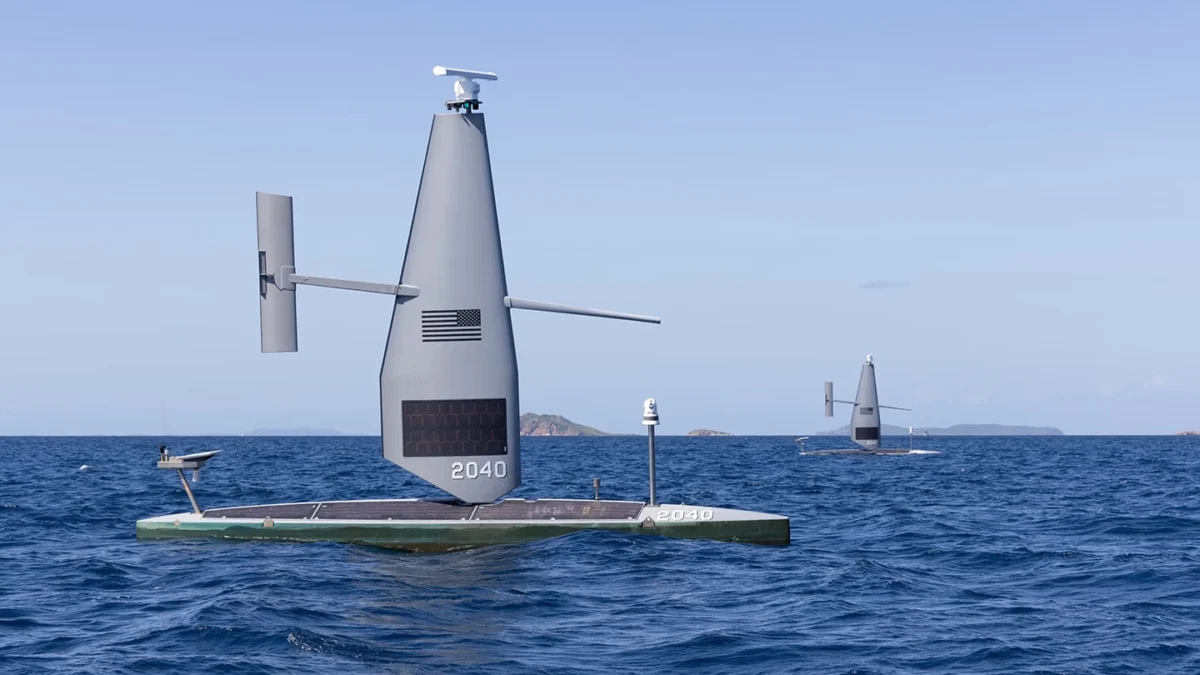
The United States Navy has formally issued a $16.3 million task order to Saildrone, the California-based developer of autonomous sailing vessels, to significantly expand the deployment of its Voyager unmanned surface vehicle (USV) fleet. This strategic move follows a highly successful drug interdiction operation in the Caribbean Sea, where a Saildrone Voyager provided critical intelligence that led to the seizure of more than $81 million worth of cocaine. The new funding is earmarked for the extension of persistent surveillance operations across the Caribbean and the Eastern Pacific, regions that have become focal points for the U.S. military’s intensified counter-narcotics campaign.
The award represents a deepening of the partnership between the U.S. Navy and the private autonomous technology sector, signaling a shift toward a "hybrid fleet" model that prioritizes cost-effective, long-endurance unmanned systems for maritime security. Since 2023, Saildrone’s USVs have been integrated into the operational framework of the U.S. Naval Forces Southern Command (USNAVSO) and the U.S. Fourth Fleet, working in close coordination with the Joint Interagency Task Force South (JIATF-S). The deployment is a cornerstone of a broader executive strategy to disrupt the flow of illicit narcotics into the United States, utilizing advanced technology to monitor expansive maritime corridors that were previously difficult to patrol with manned assets alone.
Success in the Caribbean: The $81 Million Interdiction
The recent catalyst for this contract extension was a high-stakes operation in the Caribbean transit zone. During a routine patrol, a Saildrone Voyager USV detected a suspicious vessel—often referred to as a "go-fast" boat or a low-profile vessel (LPV)—frequently used by cartels to transport high volumes of narcotics. The Voyager, equipped with an array of high-resolution sensors and artificial intelligence-driven detection software, tracked the vessel without being detected, relaying real-time targeting data to U.S. Navy and Coast Guard assets.
This seamless handoff between an autonomous sensor platform and manned interceptors resulted in the recovery of a massive shipment of cocaine, valued at over $81 million on the black market. This success underscores the "force multiplier" effect of USVs. By handling the "dull, dirty, and dangerous" work of long-term surveillance, these drones allow manned warships and aircraft to remain in reserve until a target is identified, thereby saving millions in fuel and operational wear-and-tear on the Navy’s primary fleet.
Technical Specifications and Capabilities of the Saildrone Voyager
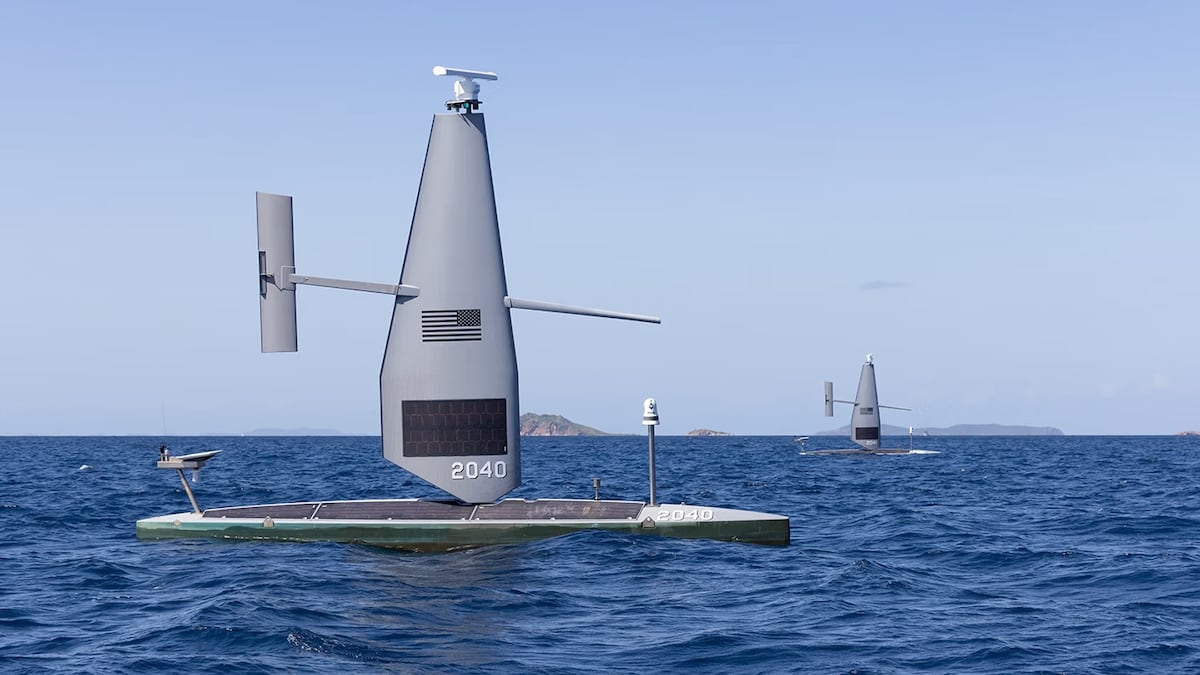
The Voyager is a 33-foot-long (10-meter) unmanned surface vehicle specifically engineered for persistent surveillance and maritime domain awareness. Unlike its smaller predecessor, the Saildrone Explorer, which is primarily used for oceanographic research, the Voyager is optimized for defense and security missions. It features a high-performance sensor suite that includes optical cameras, radar, and Automated Identification System (AIS) receivers.
One of the Voyager’s most significant advantages is its endurance. Powered by a combination of wind for propulsion and solar energy for its onboard electronics, the vessel can remain "on station" for several months at a time without the need for refueling or human maintenance. This allows the Navy to maintain a continuous "eyes-on" presence in remote areas of the Eastern Pacific and Caribbean that are notorious for smuggling activities.
Beyond surface surveillance, the Voyager is capable of conducting subsurface acoustic monitoring and nearshore mapping missions. Its ability to perform seafloor characterization is increasingly valuable for the Navy as it seeks to understand the underwater topography of strategic chokepoints and transit lanes. The vessel’s low physical profile and quiet operation make it difficult for smugglers to detect, effectively turning the drone into a stealthy sentinel that serves as both a deterrent and an early-warning system.
A Growing Chronology of Autonomous Integration
The integration of Saildrone technology into U.S. Navy operations has followed a steady trajectory of testing, validation, and operational deployment.
- Early 2023: Saildrone began formal coordination with the U.S. Navy’s Fourth Fleet. This period involved initial "proof of concept" missions to determine if autonomous wind-powered vessels could operate effectively in the volatile weather conditions of the Caribbean and the high-seas environment of the Eastern Pacific.
- Late 2023 – 2024: The partnership expanded under the auspices of JIATF-S. The focus shifted from mere observation to active integration with the "Unmanned Integrated Battle Group," a concept aimed at fusing data from drones, satellites, and manned ships into a single operational picture.
- September 2025: The U.S. military initiated a significant escalation in its counter-narcotics posture. This included a series of strikes against alleged drug-carrying vessels. The Pentagon cited the need for aggressive interdiction to stem the tide of synthetic drugs and cocaine entering the southern border.
- June 2026: Following the successful $81 million seizure, the Navy awarded the $16.3 million task order to ensure the continuity of the Voyager fleet’s presence.
As of late June 2026, the current administration and the U.S. military have disclosed a total of 66 strikes against maritime smuggling targets, resulting in the deaths of at least 196 individuals. This aggressive stance has necessitated a higher volume of persistent intelligence, which the Saildrone fleet is now contracted to provide.
Strategic Value and Official Responses
The continuity of the program is viewed by defense officials as a validation of the Navy’s long-term strategy to incorporate autonomous systems into every layer of maritime defense. Retired Vice Admiral John Mustin, current President of Saildrone, emphasized the strategic importance of the Voyager fleet in maintaining border security.
"The continuity of Saildrone’s presence along the southern border for nearly three years demonstrates the strategic value we bring as the world’s most experienced operators of unmanned surface vehicles," Mustin stated following the announcement of the task order. "Our unmatched ability to remain on station and on mission in critical regions for months at a time is why our fleet serves as a powerful deterrent to bad actors. We look forward to continuing to partner with the Navy in its mission to secure the country’s maritime approaches and southern border."
From the Navy’s perspective, the Voyager fleet addresses a critical "coverage gap." The Caribbean and Eastern Pacific cover millions of square miles, an area too vast for the Navy’s current number of manned surface combatants to monitor effectively. By deploying a "mesh network" of Saildrones, the Fourth Fleet can create a persistent sensor web that triggers an alarm the moment a suspicious vessel enters a monitored zone.
Implications for Future Naval Doctrine
The $16.3 million task order is more than just a procurement of services; it is a signal of the changing nature of naval warfare and law enforcement. Several key implications arise from this expanded deployment:
1. The Shift to Attritable Systems
The Navy is increasingly moving toward "attritable" systems—platforms that are inexpensive enough that their loss in high-risk environments is acceptable. While a Saildrone is a sophisticated piece of technology, its cost is a fraction of a traditional cutter or destroyer. This allows the military to take greater risks in surveillance and interdiction.
2. Data Fusion and AI
The success of the Voyager depends heavily on its ability to process vast amounts of data locally. Using edge computing, the USV filters out "noise"—such as legitimate commercial shipping or marine life—and only alerts human operators when it identifies a high-probability target. This prevents information overload for Navy command centers.
3. Economic Deterrence
The cost-to-benefit ratio of drug smuggling changes when the probability of detection increases. By maintaining a permanent fleet of autonomous sensors, the U.S. effectively increases the "cost of doing business" for cartels. The $81 million seizure is a testament to the high ROI of the $16.3 million investment in the drone fleet.
4. Legal and Ethical Considerations
As the military continues its strikes against drug-carrying vessels—as evidenced by the 66 strikes reported since September 2025—the role of autonomous intelligence becomes a focal point for international maritime law. The accuracy of the data provided by USVs like the Voyager is paramount to ensuring that kinetic actions are taken against valid targets, especially as the casualty count from these operations continues to rise.
Conclusion
The expansion of the Saildrone Voyager fleet represents a pivotal moment in the modernization of the U.S. Navy’s Fourth Fleet. By leveraging autonomous technology to secure the southern maritime border, the Navy is effectively extending its reach and enhancing its ability to disrupt transnational criminal organizations. As the $16.3 million task order goes into effect, the Caribbean and Eastern Pacific will see an unprecedented level of persistent, unmanned surveillance, setting a new standard for how the United States protects its maritime approaches in the 21st century. The success of this program will likely serve as a blueprint for other regions, including the South China Sea and the Middle East, where persistent domain awareness is equally critical.

Related Posts
Pentagon Forges Landmark Seven-Year Agreements with Boeing and RTX to Accelerate Standard Missile-3 Production and Stabilize Defense Supply Chains
Boeing Unveils Ultra Low-Cost Seeker to Enhance Missile Inventory and Combat Cost Challenges in Modern Warfare