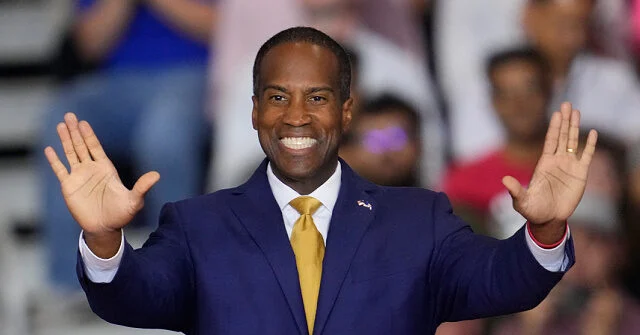
Representative John James Secures Republican Nomination for Michigan Governor, Setting Stage for High-Stakes General Election
U.S. Representative John James has decisively won the Republican nomination in the Michigan gubernatorial race, besting businessman Perry Johnson and consolidating his position as the leading GOP contender for the state’s highest office. The victory marks a significant milestone in James’s political career, positioning him to challenge the incumbent Democratic governor in what is anticipated to be one of the nation’s most closely watched general elections.
James, an Army veteran and current U.S. House member, secured a commanding 49.7 percent of the vote, far outpacing Johnson’s 35.2 percent by the time election analysts officially declared him the victor. The outcome underscores James’s growing influence within the Michigan Republican Party and his ability to mobilize a strong base of support despite facing a well-funded primary challenger. His win was widely seen as a testament to his established political brand, built through multiple statewide campaigns and his current legislative tenure.
A Challenging Path to the Nomination
The primary contest was not without its complexities, particularly given the financial might wielded by his main rival, Perry Johnson. According to AdImpact, a prominent ad-tracking firm, Johnson’s campaign reportedly invested more than $31 million in advertising across the state, saturating airwaves and digital platforms with his message. This colossal spending dwarfed James’s comparatively modest $2.8 million in advertising expenditure. Johnson, a self-made businessman with a background in quality control and business efficiency, largely self-funded his campaign, eschewing traditional political donations and positioning himself as an outsider unbeholden to special interests. His campaign focused heavily on a proposal to eliminate the state’s income tax, a bold economic platform designed to appeal to fiscally conservative voters and those frustrated with Michigan’s tax burden.
Despite Johnson’s significant financial advantage, James’s campaign effectively leveraged his existing name recognition, established political infrastructure, and a consistent message centered on conservative principles and a critique of the current state administration. His victory against such a high-spending opponent highlights the enduring power of grassroots organization, candidate familiarity, and a coherent political narrative in modern primary elections.
John James’s Political Trajectory and Enduring Appeal
James’s journey to the gubernatorial nomination has been marked by persistence and a steady ascent within Michigan politics. An alumnus of West Point, a combat veteran, and a successful businessman, James first entered the political arena with a bid for the U.S. Senate in 2018, where he challenged then-incumbent Senator Debbie Stabenow. Though he ultimately lost that race, he garnered significant support and established a statewide profile. He mounted a second Senate bid in 2020, this time against Senator Gary Peters, in another highly competitive contest that he narrowly lost. These two statewide campaigns, while unsuccessful, were crucial in building his brand, honing his political messaging, and cultivating a robust network of donors and volunteers across Michigan’s diverse regions.
Following his Senate campaigns, James successfully ran for the U.S. House of Representatives in 2022, securing a seat that he subsequently won re-election to in 2024. This recent legislative experience has further solidified his political credentials and provided him with a platform to articulate his policy positions and demonstrate his capacity for governance. His consistent electoral performance, even in challenging environments, underscores his resilience and his ability to connect with a broad spectrum of Republican voters, from traditional conservatives to those energized by populist themes.
During a televised debate last month, James articulated a clear vision for Michigan, framing his campaign as a necessary course correction for the state. "This is an amazing state with all the great ingredients, but for the past seven-and-a-half years, under Gretchen Whitmer, we’ve been led to higher taxes, more crime on the roads — and frankly, the roads we have aren’t fixed yet," James stated, directly challenging the incumbent’s record. His remarks encapsulated key themes that resonate with many Michigan voters: economic burden, public safety concerns, and infrastructure deficiencies.
He further elaborated on his priorities, promising a collaborative approach to address critical issues. "We’re going to work together to make sure that our children can read, to make sure that we put criminals in jail, and we hold those accountable who continue to let them back out," James affirmed. "And we’re going to be making sure that we come together to accomplish the mission of increasing hope and purpose with tested, positive leadership that has actually been tested from the battlefield to business to delivering for you right now." These statements highlight his emphasis on education reform, a tough-on-crime stance, and a leadership style forged through military service and business acumen.
The Broader Context of Michigan Politics
Michigan is a quintessential battleground state, often swinging between Republican and Democratic control in statewide and presidential elections. Its diverse demographics, including a significant urban population, robust suburban corridors, and economically crucial rural areas, make it a complex political landscape. Historically, the governorship has often alternated between parties, reflecting the state’s competitive nature.
The Republican Party in Michigan has been working to regain its footing in recent years, particularly after the 2020 presidential election and the 2022 statewide elections, which saw Democrats achieve a trifecta, controlling the governorship, state Senate, and state House. This primary victory for James is thus not just about his personal ambition but also about the broader strategy of the Michigan GOP to reclaim statewide power and reassert its influence. The party’s ability to unite behind James will be critical in mounting a credible challenge against a well-funded and popular incumbent governor.
Implications for the General Election
With James now officially the Republican nominee, the stage is set for a highly anticipated general election contest against Governor Gretchen Whitmer. The race is expected to draw national attention and significant financial investment from both parties and external political action committees.
For James, the immediate task will be to consolidate the Republican base and reach out to independent and disaffected Democratic voters. His military background, business experience, and current role in Congress provide him with a strong resume, and his ability to articulate conservative principles in an accessible manner has broad appeal. However, he will face the challenge of campaigning against an incumbent governor who has built a strong public profile, particularly through her handling of various crises and her focus on "kitchen table" issues. Whitmer’s campaign is likely to highlight her achievements in infrastructure investment, economic development, and public health initiatives, while also framing James as too extreme or out of touch with mainstream Michigan values.
Key issues in the general election are expected to include the state’s economy, particularly inflation and job growth; education policy, including school choice and curriculum debates; public safety and crime rates; and the ongoing debate over infrastructure improvements. Healthcare access and affordability, as well as environmental policy, are also likely to feature prominently in the campaigns.
The contrast in campaign spending between James and Johnson in the primary offers a fascinating insight into campaign effectiveness. While Johnson’s vast expenditures failed to secure him the nomination, James’s ability to win with significantly less ad money suggests a more efficient allocation of resources, stronger organic support, or a higher return on investment for his campaign messaging and voter outreach efforts. This strategic efficiency will be crucial in the general election, where fundraising parity with an incumbent governor is often difficult to achieve.
Furthermore, the outcome of the primary sends a clear message about the preferences of the Republican electorate in Michigan. It suggests a leaning towards candidates with established political experience and a track record within the party, over newcomers, regardless of their financial capacity. This could have long-term implications for how the Michigan Republican Party approaches candidate recruitment and primary contests in future cycles.
As the campaign transitions from the primary to the general election, both James and Whitmer will undoubtedly intensify their efforts to define themselves and their opponent in the minds of Michigan voters. The race is poised to be a closely fought battle, with the outcome potentially influencing not only the future direction of Michigan but also the broader national political landscape heading into future federal elections. John James’s decisive primary victory is merely the opening chapter in what promises to be a compelling and consequential contest for the governorship of Michigan.

Related Posts

Democratic Candidates Must Moderate to Win General Elections, Says Rep. Greg Stanton

Lisa Demuth Secures Republican Gubernatorial Nomination in Minnesota, Defeating Trump-Endorsed Mike Lindell