Inside the shadows of the AfD: Unmasking the mysterious political consultant Rohrböck and his influence on Germany’s far-right
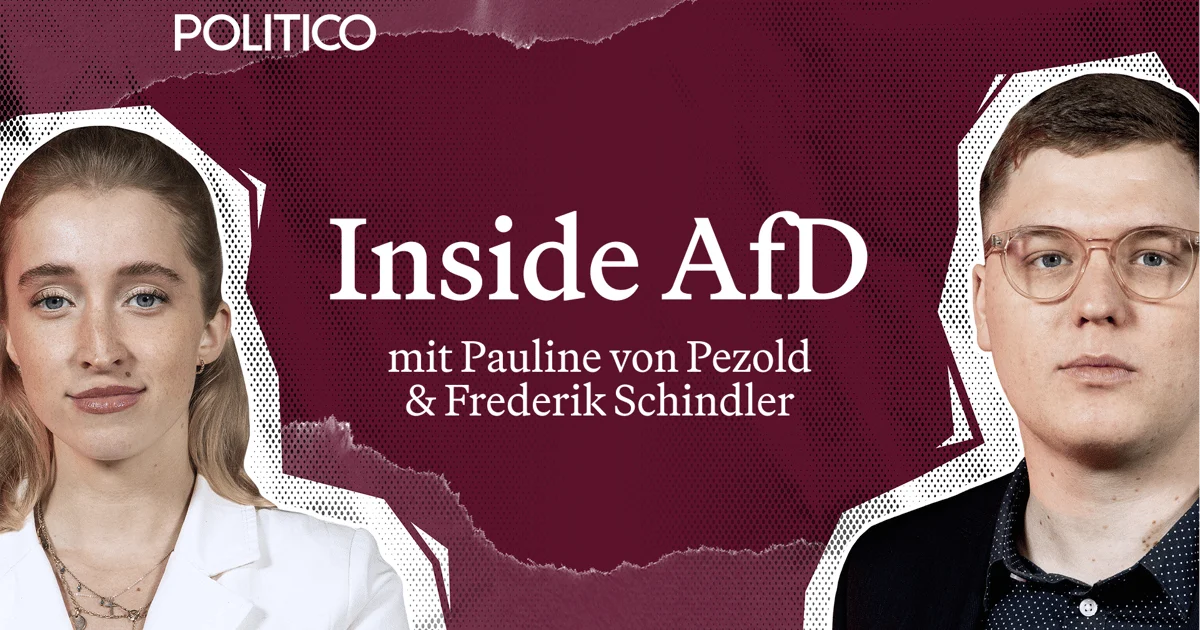
The political landscape of Germany has been increasingly defined by the rise of the Alternative für Deutschland (AfD), but beneath the public rallies and parliamentary debates lies a shadowy network of influence that has long evaded mainstream scrutiny. In a recent special edition of the "Inside AfD" podcast, journalists Pauline von Pezold and Frederik Schindler, joined by WDR investigative reporter Katja Riedel, turned their focus toward an elusive political consultant known as Rohrböck. Often described as a "political mercenary," this individual has allegedly operated within the fringes of the AfD since its inception, claiming to offer services to intelligence agencies and multinational corporations while simultaneously manipulating internal party dynamics through disinformation and strategic maneuvering.
The enigmatic strategist and the mechanics of influence
The central figure of this investigation is a man whose professional footprint is as expansive as it is opaque. Rohrböck has managed to cultivate an aura of mystery that serves his objectives, positioning himself as a "fixer" capable of swaying high-level political decisions. According to reporting by NDR and the insights provided by Katja Riedel, Rohrböck’s methodology relies on the strategic dissemination of information—and disinformation—to destabilize internal rivals and elevate loyalists.
Investigative findings suggest that Rohrböck’s influence was not merely peripheral; he is accused of orchestrating personnel decisions within the AfD, leveraging his proximity to key party functionaries to ensure that specific narratives take hold. For party members, the presence of such a figure is often a source of genuine apprehension. The fear stems from the lack of transparency regarding his true allegiances: Is he a consultant, a lobbyist, an intelligence asset, or a disruptive force operating for private gain? The ambiguity surrounding his role has created a climate of suspicion, where even senior party officials are forced to navigate his influence while publicly distancing themselves from his activities.
Chronology of a controversy: The rise and fall of access
The internal friction caused by Rohrböck’s presence eventually reached a breaking point, leading the AfD federal executive board to impose a formal contact ban. This move was not spontaneous; it was the result of mounting pressure from influential party hardliners, including Björn Höcke, the head of the party’s Thuringian branch, and Stephan Protschka.
The timeline of this fallout illustrates the fragility of the party’s internal cohesion:
- Formation years (2013–2016): Rohrböck establishes early connections within the nascent AfD, positioning himself as an advisor capable of navigating the complex German political terrain.
- Expansion phase (2017–2020): During this period, reports emerge of Rohrböck facilitating high-level meetings and influencing key campaign narratives. His luxurious lifestyle and international travel become points of interest for investigative journalists.
- The tipping point (2021–2023): As the AfD faces increased surveillance by the Federal Office for the Protection of the Constitution (BfV), the party leadership begins to purge elements deemed too risky or overtly compromised. Rohrböck becomes a primary target of these internal clean-up efforts.
- Implementation of the ban (2024): Following investigative reports into his financial activities, the federal board formally bans members from interacting with Rohrböck, effectively attempting to cauterize the influence he exerted over key functionaries.
Financial entanglements and the Liechtenstein connection
One of the most concerning aspects of the investigation into Rohrböck is the opacity of his financial dealings. Investigative reporting has traced potential links to offshore assets, particularly in Liechtenstein, raising questions about the source of the capital that sustains his lifestyle and his ability to host influential party members at exclusive events.
The case also draws a disturbing parallel to the legacy of the late billionaire August von Finck. Von Finck was a well-known financier of conservative and right-wing causes in Germany; investigators are now probing whether the financial architecture surrounding Rohrböck shares structural similarities with the networks once utilized by the von Finck estate. Furthermore, reports have surfaced regarding significant losses incurred by small-scale investors who were drawn into financial schemes allegedly linked to Rohrböck. These "disappeared" funds suggest a pattern of predatory financial activity that extends far beyond the realm of political consulting, painting a picture of a man who operates at the intersection of political subversion and white-collar exploitation.
Official responses and party dynamics
The AfD’s reaction to the exposure of the "Rohrböck network" has been characterized by a mix of denial and tactical distancing. While public statements from the party leadership emphasize a commitment to internal discipline and the purging of "harmful influences," the reality of the party’s structure suggests a more complex relationship.
Björn Höcke and other high-ranking officials have sought to frame the contact ban as a necessary step to protect the party’s institutional integrity. However, critics argue that the belated nature of this response—coming only after extensive media scrutiny—indicates that the party was either complicit in or willfully ignorant of his influence for years. For the AfD, the challenge remains: how to maintain the support of its base while shedding the reputation of being a party susceptible to manipulation by "phantoms" and external mercenaries.
Implications for the German political landscape
The existence of a figure like Rohrböck underscores a significant vulnerability in the German political system. In an era of digital disinformation and polarized discourse, the capacity for non-state actors to insert themselves into party structures is a growing concern for democratic institutions.
- The threat of covert influence: The ability of an individual to influence personnel and policy without a democratic mandate or transparency is a direct challenge to the accountability expected of political parties.
- The role of investigative journalism: The collaborative work between outlets like POLITICO, WELT, and the NDR highlights the vital role of the "fourth estate" in uncovering networks that operate in the dark. Without such scrutiny, these influences would likely continue to shape the political agenda unchecked.
- Institutional resilience: The AfD’s struggle with internal influence reflects a broader, systemic issue. As parties become more radicalized or alienated from traditional consensus, they often become more susceptible to actors who offer shortcuts to power through unconventional, and often unethical, means.
The investigation into the "right-wing phantom" is far from over. As more evidence regarding his financial networks and political maneuvers comes to light, the questions for the AfD will only become more pressing. How deep did his influence go? Which other political actors were aware of his activities? And to what extent has the political discourse in Germany been altered by his behind-the-scenes interventions?
Ultimately, the case of the consultant known as Rohrböck serves as a sobering case study on the mechanics of modern political disruption. It demonstrates that in the digital age, power is not only wielded by those who hold office, but also by those who know how to manipulate the shadows behind the scenes. For the German electorate, the story serves as a reminder of the importance of transparency, the danger of unchecked influence, and the ongoing necessity of vigilant investigative reporting in protecting the integrity of the democratic process.
The "Inside AfD" podcast, led by Pauline von Pezold and Frederik Schindler, continues to offer critical, albeit unsparing, analysis of these developments. As they navigate the complexities of the party’s internal life, they provide a necessary, fact-based perspective on a political movement that remains, for many, the most contentious development in post-war German history. Whether the AfD can successfully sanitize its internal processes or whether it remains a vehicle for such manipulative forces remains a central question for the future of German politics.