
Russia Unleashes Deadly Ballistic Missile and Drone Barrage on Kyiv, Claiming At Least 14 Lives in One of Year’s Deadliest Strikes
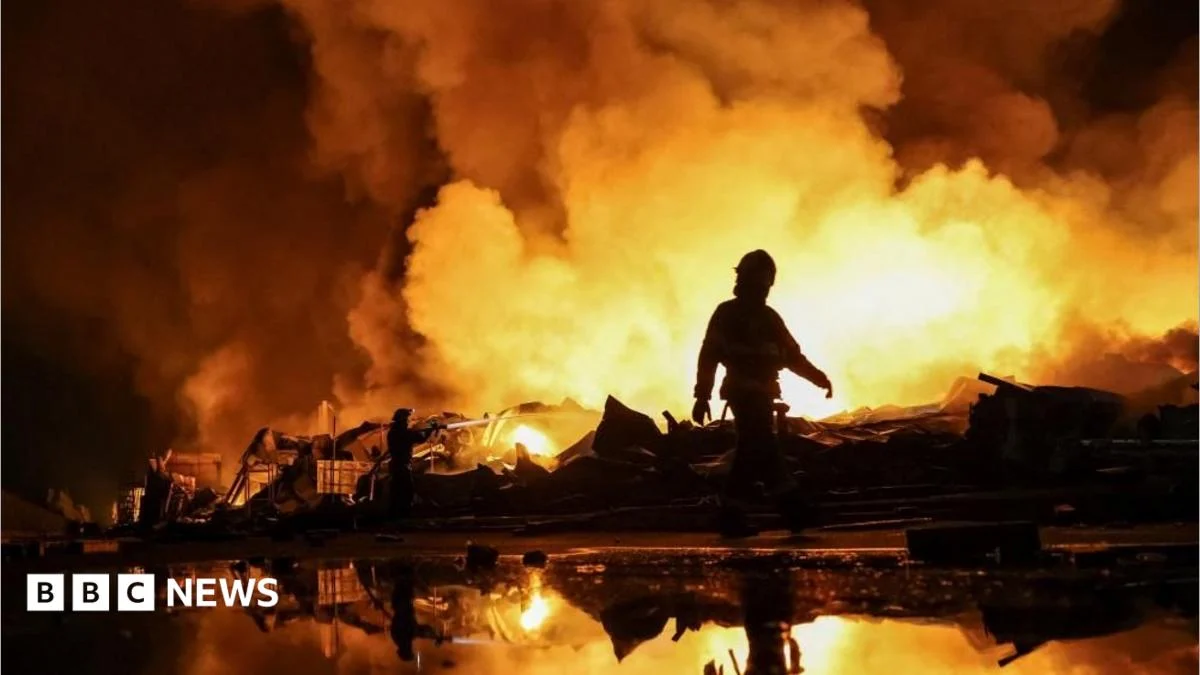
Kyiv, Ukraine – In a brutal escalation marking one of the deadliest assaults on the Ukrainian capital this year, Russia launched a large-scale combined attack using ballistic missiles and drones after midnight on Wednesday. The extensive bombardment resulted in the confirmed deaths of at least 14 people and left at least 22 others injured, primarily across residential areas and critical infrastructure. The coordinated strike targeted Kyiv and its surrounding regions, igniting widespread panic and prompting urgent calls from Ukraine for bolstered international air defense support.
The assault began in the early hours of Wednesday, shattering the night’s calm with a prolonged series of explosions. Air raid alerts blared across the Kyiv region for more than an hour, signaling the severe and immediate threat posed by incoming projectiles. According to Timur Tkachenko, head of Kyiv’s military administration, the "enemy is once again massively attacking the Kyiv region," underscoring the intensity and widespread nature of the offensive. The barrage caused significant damage, striking multiple residential buildings and warehouses, leaving a trail of destruction and raising fears of individuals trapped beneath rubble.
Immediate Impact and Casualty Toll
The human cost of the attack quickly mounted as emergency services scrambled to respond. Tkachenko provided an initial breakdown of the casualties, reporting that nine people were killed in the Boryspil district, four in the Bucha district, and one in the Fastiv district. These districts, historically impacted by the conflict, once again bore the brunt of Russia’s aggressive tactics. Kyiv Mayor Vitali Klitschko further elaborated on the humanitarian fallout, noting via Telegram that four of the injured were in serious condition, highlighting the critical nature of their wounds and the immense strain on medical facilities. Rescue operations continued throughout the day, with emergency crews sifting through debris, searching for survivors, and working to secure damaged structures. The deliberate targeting of civilian areas prompted strong condemnation from Ukrainian officials, with Kyiv’s military administration asserting, "The enemy is once again deliberately striking civilians and civilian infrastructure."
Chronology of the Wednesday Assault
The coordinated attack unfolded in several phases, a tactic frequently employed by Russian forces to overwhelm Ukrainian air defenses. The initial wave, believed to consist primarily of Shahed-type drones, commenced shortly after midnight, serving to probe and exhaust Ukraine’s air defense systems. These unmanned aerial vehicles, often slow-moving but capable of carrying explosive payloads, force air defense operators to expend valuable interceptor missiles.
Following this preliminary drone assault, a more lethal barrage of ballistic missiles was launched. Ballistic missiles, characterized by their high speed and steep trajectory, pose a significant challenge for interception, often leaving only minutes for warning and response. Eyewitness accounts and official reports indicated multiple impacts across the city and its outskirts, suggesting a broad targeting strategy rather than a pinpoint strike. The intensity of the missile attacks led to air raid sirens being active for over 60 minutes, compelling residents to seek shelter in metro stations and reinforced basements. The timing of the attack, under the cover of darkness, compounded the terror and complexity of the emergency response. The damage reports from residential buildings and warehouses indicate that the missiles bypassed or overwhelmed certain layers of defense, reaching densely populated areas.
Weaponry and Air Defense Challenges
While the specific types of ballistic missiles used in this particular attack were not immediately detailed by Ukrainian officials, Russia has previously deployed a range of advanced weaponry in its assaults on Kyiv, including Iskander-M short-range ballistic missiles and potentially Kh-47M2 Kinzhal hypersonic missiles. These systems are designed to penetrate sophisticated air defense networks due to their extreme speed and maneuverability. The drones involved are typically Iranian-made Shahed-136/131 variants, rebranded by Russia as Geran-2, which are relatively inexpensive and used in swarms to saturate defenses.
Ukraine’s air defense capabilities, significantly bolstered by Western aid, have proven highly effective against many aerial threats. Systems like the US-made Patriot missile interceptors, German IRIS-T, and Norwegian NASAMS have played a crucial role in protecting Ukrainian cities. However, the sheer volume and varied nature of Russian attacks continue to strain these resources. Ukraine has repeatedly urged its allies for more US-made Patriot missile interceptors, specifically highlighting their superior capability in defending against ballistic threats. Each successful interception comes at a significant cost, as the interceptor missiles themselves are expensive and in limited supply. The Wednesday attack underscored this critical need, demonstrating that despite improvements, vulnerabilities remain, particularly against large, complex strikes.
Russian Justification and Counterclaims
In response to the international outcry, the Russian Ministry of Defense issued a statement claiming responsibility for the strikes, albeit with a different narrative regarding their targets. Moscow asserted that it had successfully struck "logistics hubs and supply centres" in Kyiv and the surrounding region. The ministry’s statement elaborated, "These centres were involved in the storage, delivery of various weapons and military supplies, as well as in the production and distribution of unmanned aerial vehicles." This justification aligns with Russia’s consistent portrayal of its strikes as targeting military infrastructure, despite overwhelming evidence of civilian casualties and damage to non-military sites.
Furthermore, the Russian defense ministry also claimed to have hit three cargo vessels "which were transporting weapons and military equipment" near the Black Sea port of Odesa. This claim, if verified, would mark an expansion of Russian targeting to maritime supply lines, potentially impacting Ukraine’s vital grain export corridor and broader naval activity in the Black Sea. Ukrainian officials did not immediately confirm or deny the claims regarding the vessels, focusing instead on the devastating impact within Kyiv.
Broader Context of Escalation: A Cycle of Retaliation
The deadly assault on Kyiv comes amid a discernible pattern of intensified attacks by both sides in recent weeks. Russia has indeed escalated its bombardments of Kyiv and other Ukrainian cities, often targeting energy infrastructure and civilian areas. Concurrently, Ukraine has ramped up its own attacks on Russian territory, increasingly focusing on civilian infrastructure, including power facilities, oil refineries, and logistics hubs.
Recent examples of this escalating tit-for-tat include:
- Strikes on Russian Warehouses: Just the day before the Kyiv attack, on Tuesday morning, five people were killed and ten wounded in the Moscow region during strikes on warehouses, including those belonging to the Russian e-commerce giant Wildberries. These attacks have targeted key logistical nodes within Russia, aiming to disrupt supply chains and inflict economic pressure.
- Krasnodar Beach Attack: The day prior, Russian officials reported seven fatalities and 58 injuries after a drone hit a busy beach in the southern Krasnodar region. This incident highlighted the increasing reach of Ukrainian drone capabilities and the growing risk to Russian civilians.
- Kherson Drone Incident: Ukraine, meanwhile, expressed outrage over a disturbing video showing a man being chased by a drone in Kherson, characterizing it as a deliberate "hunt" and "safari" targeting civilians. This incident, regardless of intent, underscored the brutal and often indiscriminate nature of modern warfare, particularly when involving unmanned systems.
Both Moscow and Kyiv have consistently denied deliberately targeting civilians, yet the mounting civilian casualty figures on both sides tell a grim story of the conflict’s expanding scope and disregard for non-combatant safety. The Wednesday attack on Kyiv fits squarely within this escalating dynamic, signaling a continued readiness by Russia to inflict severe damage on Ukraine’s urban centers.
International Reactions and Implications
The international community swiftly condemned the latest Russian aggression. United Nations officials reiterated calls for the protection of civilians and adherence to international humanitarian law, expressing deep concern over the rising death toll. European Union leaders and NATO member states are expected to issue strong condemnations, emphasizing the need for continued support to Ukraine.
The attack will undoubtedly intensify discussions among Ukraine’s Western allies regarding military aid. The renewed plea for Patriot missile interceptors is likely to gain further traction, potentially accelerating deliveries or prompting new pledges. The effectiveness of Ukraine’s air defense directly correlates with its ability to protect its population and critical infrastructure, thereby sustaining its war effort and maintaining civilian morale. The geopolitical implications are significant; such large-scale attacks reinforce the perception of Russia’s aggressive posture, further isolating it on the world stage and cementing the resolve of its adversaries. They also place renewed pressure on countries like the United States, currently grappling with internal political debates over military aid packages, to expedite assistance.
Beyond the immediate casualties, the psychological toll on Kyiv’s residents, who have endured countless such attacks over more than two years of full-scale invasion, is immense. The repeated necessity to seek shelter, the constant threat of incoming missiles, and the visible destruction contribute to widespread trauma and uncertainty. The resilience of the Ukrainian people, however, remains a defining characteristic, as evidenced by the rapid mobilization of emergency services and community support in the aftermath of these assaults.
Looking Ahead
The Wednesday ballistic missile and drone attack on Kyiv serves as a stark reminder of the relentless nature of the conflict and Russia’s continued strategy of attempting to break Ukrainian resolve through terror and destruction. As winter approaches, the targeting of infrastructure becomes even more critical, aiming to disrupt essential services and exacerbate humanitarian conditions. Ukraine’s ability to withstand these assaults hinges on the continuous flow of sophisticated air defense systems, ammunition, and humanitarian aid from its international partners. Without adequate protection, the human cost of such attacks will only continue to mount, prolonging a conflict that shows no immediate signs of abating. The world watches as Ukraine continues to defend itself against these devastating attacks, with the outcome deeply intertwined with global security and the principles of international law.

Related Posts

Zambia on Edge: Opposition Leader Arrested Amid Allegations of Insurrection Plot and Election Tensions
Rescuers search for survivors of powerful Indonesia earthquake

