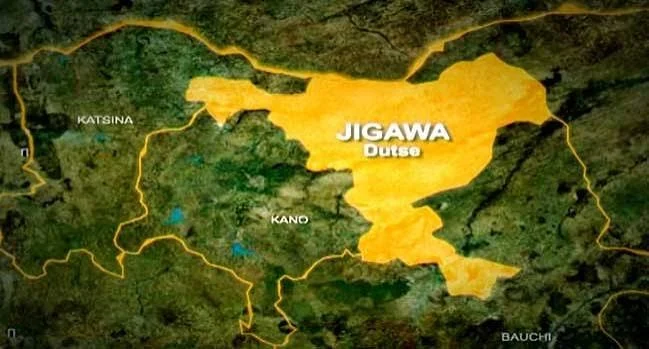
Jigawa State Police Command Arrests Nine Suspects Following Wave of Violent Unrest and Culpable Homicide Across Local Government Areas
The Jigawa State Police Command has launched a comprehensive security operation following a series of violent outbreaks that have claimed multiple lives and disrupted public order across several local government areas. In a series of intelligence-led raids and swift tactical responses, authorities confirmed on Monday the arrest of nine suspects implicated in diverse criminal activities, ranging from attacks on security facilities to premeditated culpable homicide. The incidents, which spanned from late July to early August 2026, have prompted an immediate high-level security review and a series of emergency stakeholder engagements aimed at curbing the rising tide of communal and individual violence in the state.
The state Police Public Relations Officer, SP Shiisu Adam, disclosed the details of the command’s operations in a press briefing held in Dutse, the state capital. The arrests represent a concerted effort by the Commissioner of Police to restore stability, particularly in volatile trade corridors and residential clusters where recent skirmishes have threatened the delicate peace of the region.
Chronology of the Gujungu Market Crisis
The epicenter of the unrest was the Gujungu Market in Taura Local Government Area, a vital commercial hub for the region. On July 26, 2026, a routine market day descended into chaos following a localized altercation between a soldier and a civilian, identified as 25-year-old Biniya Alhaji Ibrahim from Miga Local Government Area.
According to preliminary investigative reports, the disagreement escalated rapidly when the soldier allegedly deployed a knife against Ibrahim, resulting in a fatal stabbing. The death of the young man acted as a flashpoint for widespread civil disorder. As news of the fatality spread, opportunistic agitators utilized the tension to challenge law enforcement authority. The situation deteriorated into a violent rampage during which a police facility was targeted by a mob. Witnesses reported that assailants used bows and arrows against security personnel, while two thatched shops within the market were deliberately set ablaze.
In the immediate aftermath, police intelligence units tracked the movements of those who instigated the violence. By leveraging community intelligence, officers apprehended two primary suspects: Muhammed Muhammed, 22, of Gagarawa Local Government Area, and Faridu Mohammed. The command remains in active pursuit of several other individuals who fled the scene during the initial chaos.
Escalation and Secondary Violence Against Vigilantes
The instability at Gujungu Market triggered a series of secondary conflicts in the surrounding districts. On August 2, 2026, a retaliatory attack occurred, leading to the arrest of six additional suspects. The victims of this specific incident were members of the local vigilante group, an organization tasked with supporting conventional security agencies in maintaining neighborhood watch programs.
The six suspects—identified as Isiyaku Abdulkarim (55), Yahaya Habu (31), Ibrahim Abubakar (30), Audu Mamman Janare (30), Ya’u Duga (65), and Mamman Musa (20)—are alleged to have coordinated an assault on two vigilantes using sticks and cutlasses. The assault proved fatal for one victim, who succumbed to his injuries, while the second individual remains hospitalized and in critical condition. Beyond the human toll, the police recovered six cows abandoned in the vicinity, which are believed to have been left behind by those fleeing the scene during the unrest. The suspects, who hail from various local government areas including Taura, Gagarawa, Kaugama, and Jahun, are currently undergoing interrogation at the State Criminal Investigation Department (SCID) in Dutse.
Fatal Stabbing in Ringim LGA
In an unrelated but equally alarming development, the command reported a separate case of culpable homicide in Dabigel Village, Ringim Local Government Area, occurring on the morning of August 3, 2026. At approximately 10:30 a.m., authorities received reports of a fatal stabbing following a dispute between two 20-year-old youths.
The investigation into this incident revealed that a minor disagreement between the two men escalated into physical violence. During the altercation, one suspect, Saminu Ibrahim of Gidan Gona Village, allegedly attacked his peer with a sharp metal object known locally as a "Danbuda." The victim, who suffered a deep chest wound, was rushed to a nearby medical facility but was pronounced dead upon arrival. The swift arrest of Saminu Ibrahim by local police prevented further escalation in the village, and the case is now being prepared for transfer to the State Criminal Investigation Department for formal prosecution.
Official Response and Stakeholder Engagement
The Jigawa State Police Command has adopted a multifaceted approach to address these security challenges. Recognizing that the Gujungu Market incident is rooted in broader socio-economic and communal tensions, the Command has initiated an extensive stakeholder engagement process. This dialogue includes representatives from the Miyetti Allah Cattle Breeders Association, local traditional rulers, religious leaders, youth organizations, and regional security agencies.
The objective of these meetings is to dissect the root causes of the market violence, address the breakdown in trust between civilians and security personnel, and establish a framework for community-led conflict resolution. SP Shiisu Adam noted that the Commissioner of Police has commended the officers for their professionalism during the containment phase, emphasizing that the police force’s commitment to the rule of law remains absolute.
"The command remains steadfast in its mandate to protect the lives and property of all Jigawa residents," the PPRO stated. "We will continue to apply the full weight of the law to those who seek to destabilize our communities, while simultaneously fostering stronger ties with the populace to ensure that grievances are settled through dialogue rather than bloodshed."
Broader Implications for Regional Security
The recent wave of violence in Jigawa State raises significant concerns regarding the intersection of individual criminal behavior and collective civil unrest. Analysts note that when minor disputes—such as those in Gujungu and Dabigel—metastasize into mob violence or targeted attacks on state facilities, it suggests a fragile social infrastructure where the threshold for civil disobedience is dangerously low.
The use of traditional weaponry like bows and arrows in market settings, combined with the presence of organized vigilante groups often acting as a buffer between the state and the community, creates a complex security landscape. The death of a vigilante and the subsequent retaliation highlight the risks inherent in community-based policing when such groups are inadequately integrated or trained in de-escalation tactics.
Furthermore, the involvement of diverse age groups and individuals from various local government areas in these incidents indicates that the underlying tensions may have deep-seated origins. The economic impact of the Gujungu Market crisis is also significant; as a key trading center, the disruption of market activities affects the livelihoods of thousands of people across Northern Nigeria.
Looking Ahead
The Jigawa State Police Command has urged the public to refrain from mob justice and to continue providing timely intelligence to help prevent future outbursts. As investigations continue, the state government is expected to monitor the progress of the stakeholders’ engagement closely.
The successful prosecution of the nine suspects currently in custody will serve as a crucial test for the state’s judicial system. By ensuring that justice is administered transparently and efficiently, the authorities hope to restore public confidence and deter future acts of violence. The Command’s emphasis on "intelligence-led operations" suggests a shift toward proactive, rather than reactive, policing—a strategy that experts argue is essential for maintaining order in rapidly growing, multi-ethnic, and economically vibrant areas like Jigawa State.
As the state transitions into a period of heightened vigilance, the success of the ongoing peace initiatives will likely depend on the willingness of local leaders to hold their respective constituencies accountable and the ability of the police to maintain a neutral, protective presence throughout the region. For now, the residents of Jigawa remain in a state of cautious anticipation, hoping that the recent arrests mark the beginning of a return to lasting stability.