Greece Faces National Emergency as Deadly Wildfires Rage Across Attica and the Peloponnese
The Greek nation is currently grappling with one of its most perilous wildfire seasons in recent history, as a series of fast-moving infernos have claimed lives, destroyed infrastructure, and forced the mass evacuation of thousands of residents. As of Sunday, August 2, 2026, the country remains in a state of high alert, with emergency services pushed to their absolute limits by extreme weather conditions. The crisis has reached a tragic crescendo following the midair collision of two firefighting helicopters, an event that has underscored the profound danger faced by first responders operating in the shadow of a changing climate.
A Tragic Collision Amidst the Smoke
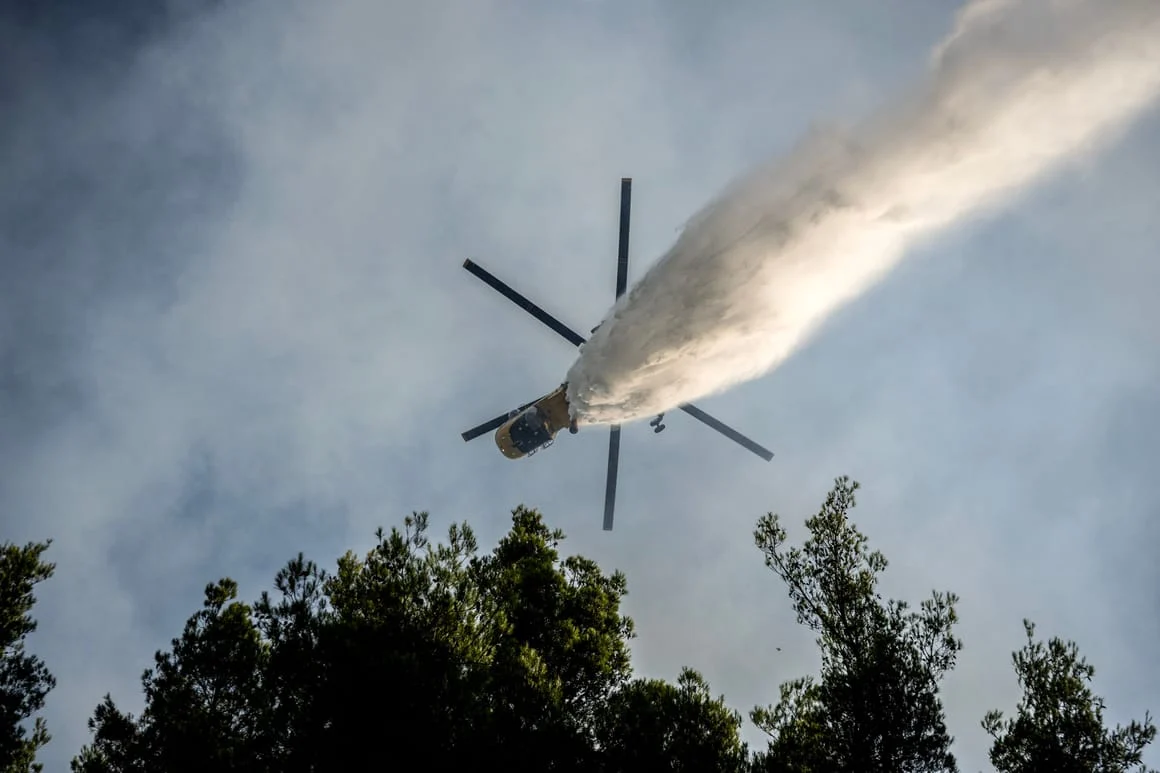
The human cost of the current wildfire outbreak intensified significantly this weekend when a catastrophic aerial accident occurred over the Viotia region, northwest of Athens. Two helicopters, deployed to suppress a major wildfire burning out of control, collided in midair while engaged in suppression maneuvers. The impact resulted in the deaths of two pilots—one Greek and one Danish national—while two other crew members, a Greek and a British national, were recovered alive and transported to local medical facilities for urgent care.
The incident, which was captured on television footage, saw one of the aircraft explode upon impact before plunging to the earth in a wall of flames. This tragedy highlights the reliance on international cooperation; foreign firefighting crews and specialized aviation units are frequently integrated into Greece’s aerial firefighting fleet to bolster local capacity. The loss of life has cast a pall over the ongoing disaster response, prompting national mourning even as the battle against the flames continues.
Chronology of a Mounting Crisis
The current wildfire wave is the culmination of a summer marked by environmental instability. While neighboring Mediterranean nations like Spain and France have begun to report a stabilization in their respective fire fronts after weeks of record-breaking evacuations, Greece has found itself in the eye of the storm.
- Mid-July: A persistent spring drought, coupled with heatwaves, creates high fuel loads in the Greek countryside, priming the terrain for combustion.
- Wednesday, July 29: A dark turning point in the week occurs when three Greek firefighters perish while attempting to contain multiple fronts in the Peloponnese and Crete.
- Friday, July 31: A fire breaks out near Porto Germeno, situated on the Gulf of Corinth. The fire remains largely contained until weather conditions shift.
- Saturday, August 1: Fierce winds, reaching speeds of 130 kilometers per hour, push the Porto Germeno fire over a mountain range, driving it toward the settlement of Veniza. Initial assessments suggest the destruction of approximately 200 homes in this sector alone.
- Sunday, August 2: The fire front expands rapidly into Western Attica, threatening the outskirts of Athens and industrial zones near Megara. Authorities order the evacuation of dozens of settlements, impacting over 2,500 people by the afternoon.
The Meteorological and Environmental Context
The intensity of the 2026 fires is not an isolated anomaly but the latest manifestation of a broader, systemic trend. Meteorological data from the National Meteorological Service of Greece indicates that the combination of prolonged heat and extreme wind velocity has created an "uncontrollable" fire behavior.
The phenomenon is characterized by "spotting," where embers are carried by high-velocity winds over long distances, igniting new fires far ahead of the main front. This creates a "whack-a-mole" scenario for the fire brigade, where resources are spread thin across an expanding perimeter. Scientists have long warned that the Mediterranean basin is a "climate change hotspot." Evidence from the World Weather Attribution group suggests that human-induced climate change has significantly increased the probability and severity of heatwaves in Europe. These heatwaves, in turn, desiccate vegetation, turning forests and scrubland into tinderboxes that require only a spark to ignite.

Operational Challenges and Official Responses
Prime Minister Kyriakos Mitsotakis addressed the nation on Sunday, acknowledging the overwhelming nature of the disaster. "There are moments when the force of nature and the intensity of weather conditions exceed all human planning and every operational capability," he stated via social media. His administration has promised immediate state support for those displaced and those who have lost their homes, though the primary focus remains the containment of the active fronts.
Nikos Lavranos, president of the firefighters’ federation, provided a grim assessment of the operational reality on the ground. Describing a "huge front" that has blanketed an expansive area in ash and smoke, he emphasized the difficulty of maintaining control when wind patterns are so erratic. With over 500 firefighters deployed across the country, the mission has shifted from containment to the protection of human life and critical infrastructure, specifically near the town of Megara, which hosts a population of approximately 30,000.
Local officials, such as Megara Mayor Panagiotis Margetis, have voiced the frustrations of a community under siege. The difficulty lies in the resilience of the fires; even when a sector appears to be under control, the intense wind frequently reignites the undergrowth, leading to a constant cycle of emergency deployment.
Broader Implications for Southern Europe
The economic and social implications of these fires are profound. Beyond the immediate loss of property and life, the environmental impact on Greece’s biodiversity and the long-term strain on the state’s emergency budget are substantial. The destruction of forests in Attica and the Peloponnese will likely lead to increased risks of flash flooding in the coming autumn and winter months, as the loss of vegetation removes the natural soil-stabilization mechanisms of the hillsides.
Furthermore, the situation serves as a stark reminder of the limitations of existing firefighting infrastructure. As Europe continues to experience longer, hotter, and drier summers, the reliance on aerial firefighting—which is inherently limited by high wind speeds—is being re-evaluated. Experts are increasingly calling for a shift toward more robust land-management strategies, including improved forest clearing, the creation of firebreaks, and the implementation of early-warning systems powered by artificial intelligence and satellite monitoring.
Future Outlook
As of late Sunday, there is a glimmer of hope on the horizon. The National Meteorological Service has forecasted a significant drop in wind speeds for Monday. This reduction in atmospheric pressure is expected to provide a crucial window of opportunity for aerial assets to safely return to the skies and for ground crews to establish more permanent containment lines.
However, the psychological toll on the population and the physical scar left on the landscape will persist. Greece enters the final month of the summer season with its emergency services exhausted and its citizens on high alert. The tragic loss of the helicopter crew and the five firefighters earlier in the week serves as a somber reminder of the risks undertaken by those on the front lines of the climate crisis. For the Greek government, the challenge will be to manage the immediate recovery while initiating a comprehensive review of the country’s wildfire strategy, ensuring that the lessons learned from this "extremely difficult" summer are translated into future resilience.