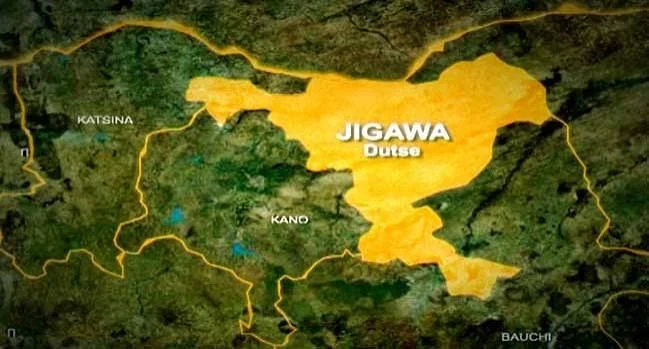
Suspected Vandal Electrocuted While Attempting to Tamper with High-Tension Cables in Jigawa State
A grim discovery along the Ringim-Sintilimawa Road in Jigawa State has once again brought the escalating crisis of public infrastructure vandalism to the forefront of regional security concerns. On the morning of July 31, 2026, local authorities responded to a distress call reporting a motionless body abandoned near a high-tension power installation. Upon arrival, police personnel identified the remains as those of an unidentified male, whose life was reportedly cut short by a catastrophic electrical discharge while he was allegedly attempting to sever high-voltage cables.
The incident is the latest in a troubling surge of criminal activity targeting the power sector in Jigawa, a trend that has left several communities in the state grappling with intermittent power supply and the financial burden of replacing stolen equipment. As investigation efforts continue, the event serves as a harrowing case study of the dangers inherent in the widespread sabotage of critical utility assets.
Chronology of the Incident and Police Response
The sequence of events leading to the discovery of the deceased began early on the morning of July 31, 2026. According to the official statement released by the Jigawa State Police Command, a distress call was received at approximately 9:00 am, alerting officers to a body lying motionless in the brush along the Ringim-Sintilimawa route.
A patrol team from the Ringim Division was immediately dispatched to secure the area and assess the situation. Upon inspection, the responding officers found evidence of a high-energy electrical accident. The victim sustained severe burn injuries concentrated on the chest, pelvic area, and both hands—characteristic of contact with high-voltage currents.
Scattered around the body, investigators recovered a cache of tools that strongly suggest a deliberate attempt at sabotage. Among the items seized were industrial-grade hand gloves, a heavy-duty hacksaw, and several empty sacks intended for the transport of stolen copper or aluminium cabling. Following a preliminary assessment, the body was transported to a nearby medical facility, where doctors confirmed that the individual had succumbed to the electrical shock. As of the time of reporting, the deceased remains unidentified, and the police are working to trace his origins to determine if he operated alone or was part of a larger syndicate.
The Growing Menace of Infrastructure Vandalism
This fatal incident does not exist in a vacuum; it follows a string of similar crimes that have plagued Jigawa State over the past several months. Just weeks prior to this event, a brazen group of vandals successfully breached the security perimeter of the Government Unity School in Ringim. In that instance, the perpetrators reportedly overpowered security guards on duty, allowing them to strip 12 metres of armoured cable from the school’s transformer. The aftermath left the educational institution and its surrounding neighborhood in total darkness, highlighting the disruptive nature of these crimes.
Data from the power distribution sector indicates that Nigeria loses billions of naira annually to the vandalism of transformers, cables, and feeder pillars. For states like Jigawa, the impact is particularly acute. When a transformer is vandalized, the cost of repair and replacement often falls on the community or the cash-strapped distribution companies (DisCos), leading to prolonged periods of outages that stifle local economic activity and compromise the security of public institutions.
Socio-Economic Implications for Jigawa Communities
The ripple effects of these criminal activities are being felt deeply by the residents of Ringim and the surrounding local government areas. For local traders, farmers, and small-scale entrepreneurs, the loss of reliable electricity is not merely an inconvenience but a significant threat to their livelihoods.
Mallam Lawal, a local trader who frequently utilizes the Ringim-Sintilimawa Road, expressed a sentiment shared by many in the community. "We heard a loud sound that morning, and the presence of the police confirmed our worst fears," he noted. "This is not just about a lost life; it is about the constant cycle of destruction that leaves us without power. Every time a cable is cut, it takes days or even weeks for the light to return. The community is tired of the darkness."
The perspective of the agricultural sector is equally bleak. Haruna Illa, a local farmer, recounted the shock of discovering the scene during his morning commute. "When I saw the tools and the body, it was a terrifying reminder of how far these people will go. They are risking their lives for a few kilograms of wire, but they are stealing the future of our villages by destroying our infrastructure."
From a macro-economic standpoint, the sabotage of power infrastructure serves as a major deterrent to investment. When public infrastructure is unreliable, the cost of doing business rises, as companies and individuals are forced to turn to expensive, polluting alternatives like diesel generators.
Official Stance and Legal Repercussions
The Jigawa State Police Command, led by Police Public Relations Officer SP Shi’isu Adam, has adopted a firm stance against the trend. In his official statement, Adam emphasized that the command is committed to the protection of public assets and will pursue the perpetrators of these crimes with the full weight of the law.
"The Command urges residents to desist from tampering with electrical installations and to report suspicious activities to the nearest police station," Adam stated. He further noted that the ongoing investigation into the July 31 incident is aimed at identifying the deceased and potentially uncovering any criminal network he may have been associated with.
Legal experts have noted that vandalism of public utility equipment is a serious criminal offence under Nigerian law. Beyond the immediate threat of electrocution—which this case demonstrates with brutal clarity—those caught tampering with electrical infrastructure face stiff prison sentences and heavy fines. The police have signaled that they will be increasing patrols around high-risk zones, such as isolated transformer locations and power corridors, to deter potential vandals.
Analyzing the Patterns of Sabotage
Security analysts observe that the modus operandi of vandals in the region has become increasingly organized. The use of specialized tools, such as hacksaws and protective gloves, suggests that these individuals possess at least a rudimentary knowledge of electrical systems. Furthermore, the ability to overpower security guards at institutions like the Government Unity School points to a level of coordination that transcends simple petty theft.
The "black market" for stolen electrical components, particularly copper, remains a primary driver of these crimes. As global commodity prices for metals fluctuate, the incentive for criminal syndicates to harvest these materials from public infrastructure increases. This necessitates a more robust supply-chain monitoring system for scrap metal dealers, who are often the final destination for stolen goods.
Moving Toward a Solution
Addressing the scourge of vandalism in Jigawa requires a multi-faceted approach that goes beyond policing. While the state police command is focusing on enforcement and surveillance, experts argue that community involvement is the most effective deterrent.
"Community vigilance groups and better lighting around key infrastructure could make it significantly harder for vandals to operate," says Dr. Aminu Ibrahim, an infrastructure management consultant. "Furthermore, the government needs to implement stricter regulations on the scrap metal industry. If there is no market for stolen cables, the incentive to commit these crimes drops precipitously."
As the investigation into the July 31 incident progresses, the people of Jigawa are left to reflect on the high price of these criminal acts. The tragic death of the unknown individual serves as a grim warning: the pursuit of illicit gains through the destruction of public property carries both a legal and a mortal cost.
For now, the Jigawa State Police Command maintains that it will continue its patrols and investigative efforts to secure the state’s assets. The hope among residents is that the recent tragedy might serve as a deterrent, prompting a shift away from the criminal path and towards a more sustainable approach to communal infrastructure protection. The incident remains under active investigation, with the police calling on the public to provide any information that could help in identifying the deceased or preventing future acts of sabotage.