
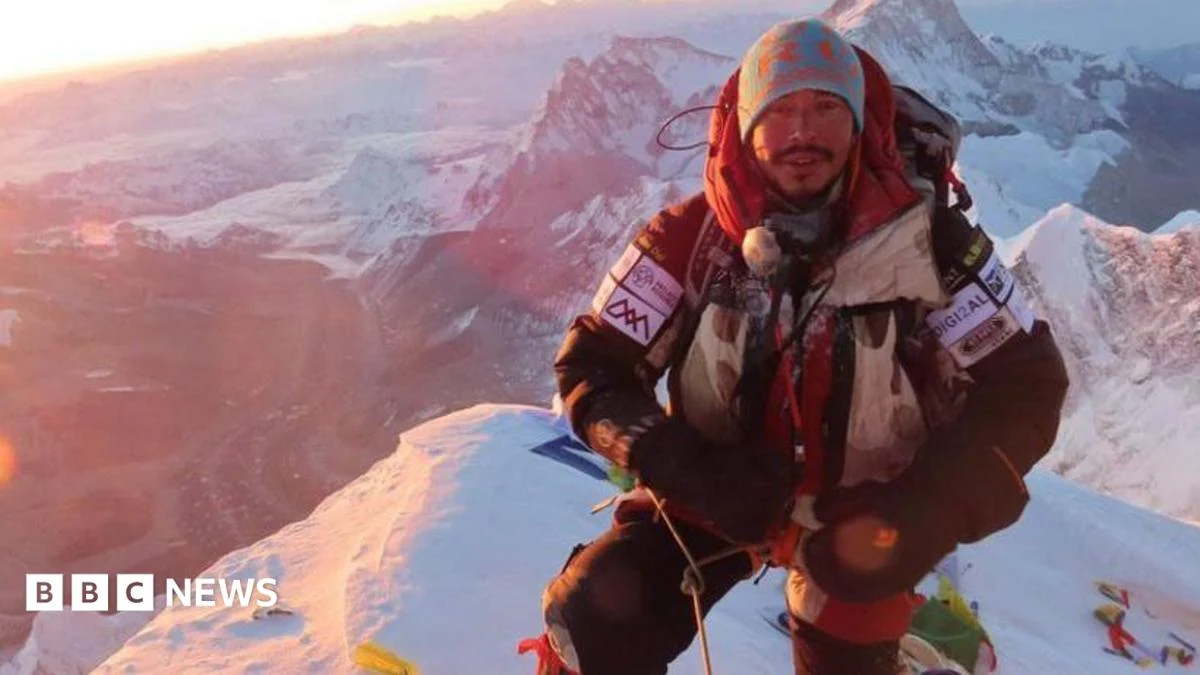
British-Nepali climber Nirmal Purja killed in Pakistan avalanche, his company says
The Unfolding Tragedy on Broad Peak
The incident, which occurred on Thursday, involved a multinational climbing group led by Purja. Initial reports from the Karakoram region were grim, detailing a massive avalanche that swept across a section of Broad Peak, one of the world’s 12th-highest mountains. The Alpine Club of Pakistan, deeply involved in the complex and perilous rescue efforts, indicated that bodies had been sighted, though reaching them proved to be an immense challenge due to the treacherous terrain and severe weather. Naila Kiani, a spokesperson for the Alpine Club, expressed profound concern, stating that while official confirmation awaited body recovery, "we are fearing them all dead." This somber assessment underscores the extreme dangers inherent in high-altitude mountaineering, particularly in the unforgiving Karakoram range. The confirmed fatalities include American Mallory Geis, Nadhira Ahmed Abdullah Al Harthy from Oman, and Pur Bahadur Gurung from Nepal, whose bodies were among the first to be recovered. The remaining seven victims include Purja and six other Nepalese climbers, whose identities have not yet been fully released. The scale of the loss marks one of the deadliest single incidents on Broad Peak in recent memory, echoing previous tragic years like 2013, when at least six fatalities were recorded.
A Visionary’s Final Ascent and Unfinished Ambition
Nirmal Purja’s presence on Broad Peak was driven by an extraordinary ambition: to become the first person in history to climb all 14 of the world’s 8,000-meter peaks twice, and crucially, without supplemental oxygen. This daunting challenge was a testament to his relentless pursuit of new frontiers in mountaineering. In his last post on X (formerly Twitter), published just days before the avalanche, Purja revealed that the Broad Peak attempt was an impromptu decision. "Initially, the plan was to climb just G2," he wrote, referring to Gasherbrum II, another formidable peak in the Karakoram. However, a last-minute realization spurred him to add Broad Peak to his itinerary. He understood that conquering Broad Peak would leave him with only one more mountain to achieve his unprecedented "double fourteeners without oxygen" goal. "This wasn’t planned," Purja confessed, encapsulating his spontaneous, opportunistic approach to monumental challenges. He articulated his philosophy: "opportunities don’t scream: they whisper to those already working in silence." His final words regarding the mountain, "Broad Peak, I ask for nothing but safe passage up and back down. I take zero mountains for granted," serve as a poignant reminder of his respect for the peaks and the inherent humility required in such endeavors, even for a climber of his unparalleled skill and experience.
Nirmal Purja: A Legacy Forged in the High Peaks
Born in Nepal, Nirmal Purja’s journey from a Gurkha soldier to a global mountaineering icon is a narrative of extraordinary courage, discipline, and an unwavering belief in the impossible. He served with distinction in the British military for 16 years, with a decade spent in the elite special forces, a background that undoubtedly honed his mental fortitude, physical resilience, and leadership skills crucial for extreme environments. He was the first Gurkha to climb Everest while serving in the British military, an achievement that underscored his pioneering spirit. In recognition of his exceptional accomplishments in high-altitude mountaineering, he was awarded an MBE (Member of the Order of the British Empire) by the late Queen Elizabeth II in 2018.
Purja, affectionately known as ‘Nimsdai’ to his legions of admirers, rose to international prominence in 2019 with his audacious "Project Possible." This groundbreaking expedition saw him scale all 14 of the world’s mountains with peaks above 8,000 meters in an astonishing 189 days – just over six months. This incredible feat shattered the previous record by more than seven years, redefining what was considered achievable in high-altitude climbing. His journey, marked by extreme challenges, near-death experiences, and incredible perseverance, was chronicled in the critically acclaimed Netflix documentary "14 Peaks: Nothing Is Impossible," released two years later. The film brought his inspiring story to a global audience, showcasing not only his physical prowess but also his indomitable spirit and a philosophy rooted in determination, self-belief, and positivity. "It has been a grueling but humbling six months, and I hope to have proven that anything is possible with some determination, self-belief and positivity," he stated at the time, words that resonated deeply with people from all walks of life. Purja lived with his wife and three-year-old daughter in Hampshire, southern England, balancing the demands of family life with his relentless pursuit of mountaineering excellence. His company, Elite Expeditions, became a leading name in guiding challenging climbs, attracting climbers seeking to push their own limits under the mentorship of one of the world’s most accomplished mountaineers.
Broad Peak: A Formidable Giant
Broad Peak, or Falchan Kangri in Balti, is an imposing massif situated in the Karakoram mountain range on the border of Pakistan and China, approximately 8 kilometers (5 miles) from K2, the world’s second-highest peak. Its name, "Broad Peak," is derived from its summit ridge, which is over 1.5 kilometers long, giving it a broad appearance. Ascending to 8,047 meters (26,400 feet), it is classified as one of the 14 "eight-thousanders," mountains that rise more than 8,000 meters above sea level. These peaks are notorious for their extreme conditions, where the "death zone" above 8,000 meters presents a critical challenge to human physiology. In this zone, the oxygen levels are insufficient to sustain human life for extended periods, leading to rapid deterioration, frostbite, and potentially fatal altitude sickness.
Broad Peak is widely regarded as one of the more technically challenging mountains, demanding not only immense physical endurance but also advanced climbing skills. The route often involves navigating steep ice and rock sections, exposed traverses, and unpredictable weather patterns that can shift dramatically within hours. Avalanches are a perennial threat in the Karakoram, triggered by factors such as fresh snowfall, temperature fluctuations, and seismic activity. The specific conditions that led to Thursday’s avalanche are still under investigation, but the inherent instability of snowpacks at such altitudes, combined with the dynamic environment of the Karakoram, makes such incidents an ever-present danger for climbers. The first successful ascent of Broad Peak was achieved by an Austrian expedition in 1957. Since then, many have reached its summit, but tragically, dozens have lost their lives on its slopes, underscoring its unforgiving nature and the profound risks associated with high-altitude climbing. The mountain’s allure, however, continues to draw elite climbers seeking to test the limits of human endurance.
The Search and Recovery Efforts
The aftermath of the avalanche has initiated a harrowing search and rescue operation in one of the most remote and challenging environments on Earth. Teams from Pakistan, supported by the Alpine Club of Pakistan and local authorities, have been tirelessly working to locate the missing climbers and recover the bodies. The extreme altitude, coupled with the rugged, glaciated terrain and severe weather conditions typical of the Karakoram, presents formidable obstacles to rescue efforts. Helicopters, vital for reconnaissance and transport, operate at the very edge of their performance limits at such elevations, and ground teams face risks of further avalanches, crevasses, and frostbite.
The process of body recovery at over 8,000 meters is exceptionally difficult and dangerous. The low oxygen, extreme cold, and instability of the mountain make it a perilous task, often requiring specialized equipment and highly experienced high-altitude rescue personnel. In many cases, bodies are left on the mountain due to the insurmountable challenges of retrieval. The confirmation of Purja’s death by Elite Expeditions and his family, even before his body’s recovery, highlights the grim reality of such incidents, where the chances of survival after an avalanche at this altitude are virtually non-existent. The international mountaineering community often relies on satellite communication and tracker data to pinpoint locations, but the sheer force of an avalanche can render such devices ineffective or move individuals far from their last known positions.
Global Tributes and Profound Loss
The news of Nirmal Purja’s death has elicited a wave of sorrow and tributes from around the world, underscoring his immense impact. His Royal Highness The Prince of Wales expressed his deep sadness, stating he was "truly saddened to hear of the tragic death" of Purja, whom he praised for having "served with distinction" as a soldier before "becoming one of the greatest mountaineers." This sentiment was echoed by UK Defence Secretary Wes Streeting, who posted on X: "Incredibly sad to learn of the passing of Nirmal (Nims) Purja and those he was climbing with. He was an inspirational man who served in our Armed Forces for many years – and whose incredible mountaineering adventures are known the world over."
In Nepal, Prime Minister Balendra Shah also confirmed Purja’s death, expressing national grief: "The tragic death of six Nepalese and four other foreign climbers, including world record holder Nirmal Purja, in the Karakoram mountain range of Pakistan, has shocked us." He added, "The history of their courage, dedication, and contributions will always remain inspiring," recognizing the profound cultural and national pride Purja brought to his homeland.
Purja’s older brother, Kamal, shared a deeply personal message, stating: "It is with the heaviest heart that I share the devastating news that my beloved younger brother, Nirmal ‘Nimsdai’ Purja, and the other climbers are no longer with us. Although our hearts are broken, we are incredibly proud of you. Your legacy will live forever." These words capture the raw emotion of a family grappling with the loss of an extraordinary individual. Naila Kiani, from the Alpine Club of Pakistan, who had participated in many expeditions led by Purja, spoke of his exceptional leadership skills, describing him as a "very experienced climber and fearless." Her testimony underscores the respect and admiration he commanded within the climbing community. The outpouring of grief and respect from political figures, military colleagues, fellow mountaineers, and his family paints a vivid picture of a man who touched many lives and left an indelible mark on the world.
Reflecting on the Risks and Legacy
Nirmal Purja’s tragic death serves as a stark reminder of the inherent and often unpredictable dangers of high-altitude mountaineering, even for the most experienced and skilled climbers. His pursuit of the "double fourteeners without oxygen" record represented the pinnacle of extreme human endeavor, pushing the boundaries of what is physically and mentally possible. While his achievements inspired millions, they also highlighted the fine line between triumph and tragedy in the world’s highest mountains.
His legacy, however, extends far beyond his record-breaking ascents. Purja fundamentally reshaped perceptions of what is achievable, inspiring a new generation of adventurers and demonstrating the power of self-belief and positive mental attitude. He brought the world of extreme mountaineering to a broader audience through his documentary, demystifying the challenges and showcasing the human spirit’s capacity for resilience. His military background provided a unique foundation for his climbing career, instilling discipline, strategic thinking, and unparalleled physical conditioning. The debate surrounding "no oxygen" ascents, while highlighting incredible human capability, also raises questions about risk management and the ethical considerations of such extreme pursuits.
The loss of Nirmal Purja, alongside nine other courageous climbers, leaves a significant void in the mountaineering community. His pioneering spirit, charismatic leadership, and unwavering determination will be deeply missed but his extraordinary achievements and the inspirational philosophy he championed will undoubtedly continue to motivate aspiring adventurers and remind the world that with "determination, self-belief and positivity," anything truly is possible. His story will endure as a testament to the human quest for exploration and the ultimate respect for the raw power of nature.

Related Posts

Zambia on Edge: Opposition Leader Arrested Amid Allegations of Insurrection Plot and Election Tensions
Rescuers search for survivors of powerful Indonesia earthquake

