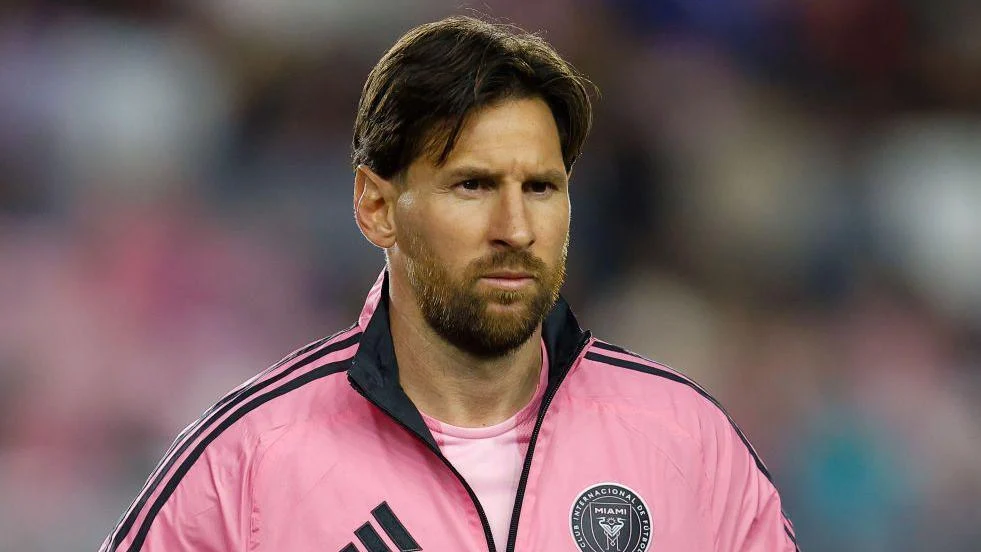
Lionel Messi makes highly anticipated return to Major League Soccer as Inter Miami held to frustrating draw by Columbus Crew
The return of eight-time Ballon d’Or winner Lionel Messi to Major League Soccer action on Saturday evening served as the focal point of a pulsating round of fixtures across North America. Following his participation in the FIFA World Cup—a tournament that saw Argentina fall to a narrow defeat against Spain in the final—Messi made his first domestic appearance in two weeks, stepping onto the pitch at Nu Stadium in the 53rd minute. Despite the electric atmosphere generated by the home crowd, the Argentine playmaker was unable to catalyze a victory, as Inter Miami settled for a 2-2 draw against a resilient Columbus Crew side.
A Tactical Breakdown of the Nu Stadium Encounter
The match began with Inter Miami appearing poised to extend their impressive six-match winning streak. Luis Suarez, who has been in scintillating form, continued his prolific run by netting his seventh goal in his last four appearances. His clinical finish in the 16th minute provided the hosts with an early advantage, signaling what many expected to be a dominant performance.
However, the fluidity of the match shifted in the 34th minute. In an unfortunate sequence of events for Miami, veteran midfielder Casemiro, formerly of Manchester United and Real Madrid, inadvertently directed the ball into his own net, leveling the score at 1-1. Despite the setback, Miami responded with character before the interval. Luis Suarez, once again proving his utility as both a finisher and a creator, provided the precise delivery that allowed Noah Allen to head the ball home, restoring Miami’s lead just before the halftime whistle.
The second half was defined by the entry of Messi, whose arrival was met with rapturous applause. The tactical shift aimed to secure the game, but Messi found the Columbus defense increasingly disciplined. He registered two attempts on goal, both of which drifted wide, highlighting the rust that can often accompany a return from the physical and mental toll of a World Cup campaign.
The match reached its climax in the 84th minute when Columbus debutant Brais Mendez, who recently completed a high-profile transfer from Real Sociedad, delivered a masterful free-kick. The ball curled expertly past the Miami wall and into the net, sealing a 2-2 result that silenced the home crowd and forced a share of the points.
Chronology of the 2024 MLS Post-World Cup Resumption
The return to league action has been marked by a flurry of high-stakes encounters as teams scramble for positioning in the Eastern and Western Conferences.
- Mid-Week: The MLS All-Star Game showcased the depth of talent currently residing in the league, with South Korean international Son Heung-min earning MVP honors following a standout performance.
- Saturday 16:00: Luis Suarez opens the scoring at Nu Stadium, maintaining his streak of goal contributions.
- Saturday 16:34: An own goal by Casemiro brings the Columbus Crew back into contention.
- Saturday 16:45: Noah Allen restores the lead for Inter Miami on an assist from Suarez.
- Saturday 17:53: Lionel Messi enters the pitch for his first post-World Cup appearance.
- Saturday 18:24: Brais Mendez scores a debut equalizer for Columbus, ending Miami’s winning streak.
Statistical Analysis and League Implications
The result carries significant weight for the Eastern Conference standings. Inter Miami, despite the draw, retains their position in second place. However, the gap between them and the conference leaders, Nashville, has widened slightly, as Nashville managed a 2-2 draw of their own against D.C. United.
The six-match winning streak that Miami had built prior to this weekend was a testament to the club’s tactical evolution under the current coaching staff. To have that momentum halted by an 84th-minute set-piece illustrates the competitive parity of the league. Statistics from the match reveal that while Miami maintained higher possession, Columbus was significantly more efficient in capitalizing on set-piece opportunities, with Mendez’s free-kick serving as the decisive moment of clinical quality.
In the Western Conference, the parity is even more pronounced. The 1-1 draw between Los Angeles FC and the Vancouver Whitecaps at BC Place keeps both sides level at the summit of the table. The match featured two of the league’s most prominent international stars. Son Heung-min, who has faced intense media scrutiny regarding South Korea’s early exit from the World Cup, demonstrated his resilience by scoring his fourth goal in four matches. His 37th-minute opener was a reminder of his world-class ability to find space in transition.
However, Vancouver’s German stalwart Thomas Mueller ensured the points were shared when he converted a penalty in the 76th minute. The ability of veteran stars like Mueller to perform under pressure—particularly in the closing stages of a match—continues to be a defining characteristic of the current MLS season.
Official Perspectives and Club Management
While neither club has released extensive formal statements regarding the specific outcome of the Saturday fixtures, the post-match atmosphere reflected the high stakes of the final stretch of the season. Coaches across the league have emphasized the difficulty of integrating players back into the squad following the emotional intensity of a World Cup.
For Inter Miami, the focus shifts to defensive stability. The conceding of an own goal and a late set-piece goal suggests that while the attacking trio of Messi, Suarez, and their support staff are capable of generating goals, the team remains vulnerable when defending dead-ball situations. Analysts have suggested that the coaching staff will likely prioritize defensive structure in the coming training sessions to ensure that the team’s aspirations for the MLS Cup remain viable.
The Broader Impact on the North American Soccer Landscape
The influx of global superstars like Messi, Suarez, Casemiro, and Mueller into MLS has fundamentally altered the commercial and competitive landscape of the league. The attendance figures at both Nu Stadium and BC Place underscore the "Messi Effect" and the general growth of the league’s profile.
Beyond the ticket sales, the quality of play has seen a marked increase. The debut goal by Brais Mendez is a case in point; the ability of mid-table teams to recruit talent directly from La Liga indicates that MLS is increasingly viewed as a top-tier destination rather than a retirement league. This shift has implications for the league’s television contracts, global viewership, and the overall valuation of franchise clubs.
However, the draw also serves as a warning. As the league grows, the gap between the "marquee" franchises and the rest of the league is narrowing. Every match is now a high-intensity battle, and the reliance on individual brilliance—whether from Messi’s passing or Son’s pace—is being challenged by teams with better-drilled tactical setups.
As the season progresses, the narrative will likely shift from the "return of the stars" to the "grind of the playoffs." Teams that can maintain consistency while managing the fatigue of their international players will be the ones that succeed. For Inter Miami, the immediate task is to recover from the dropped points against Columbus and regain the momentum that defined their mid-season form. For Vancouver and Los Angeles, the focus remains on the psychological battle of maintaining the top spot in the Western Conference.
The 2024 season continues to provide a compelling case study in how global football talent interacts with the unique challenges of the MLS schedule, travel demands, and varying environmental conditions. With every team now fully integrated following the World Cup, the final phase of the campaign promises to be one of the most competitive in the league’s history. Fans and analysts alike will be watching closely to see if the returning World Cup stars can adjust their rhythms to the domestic pace, or if the rising stars of the league will continue to dictate the terms of engagement.