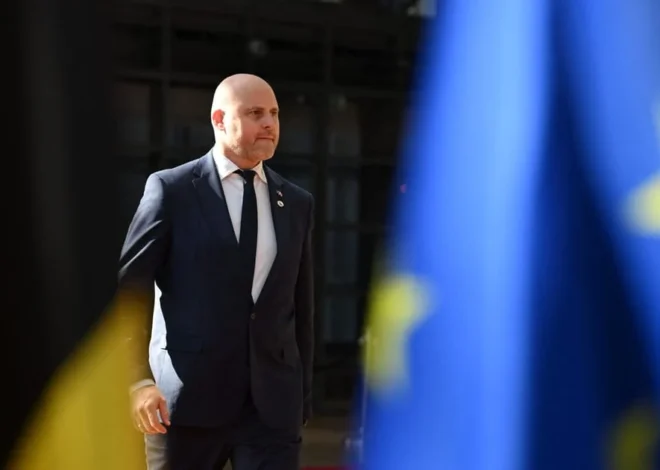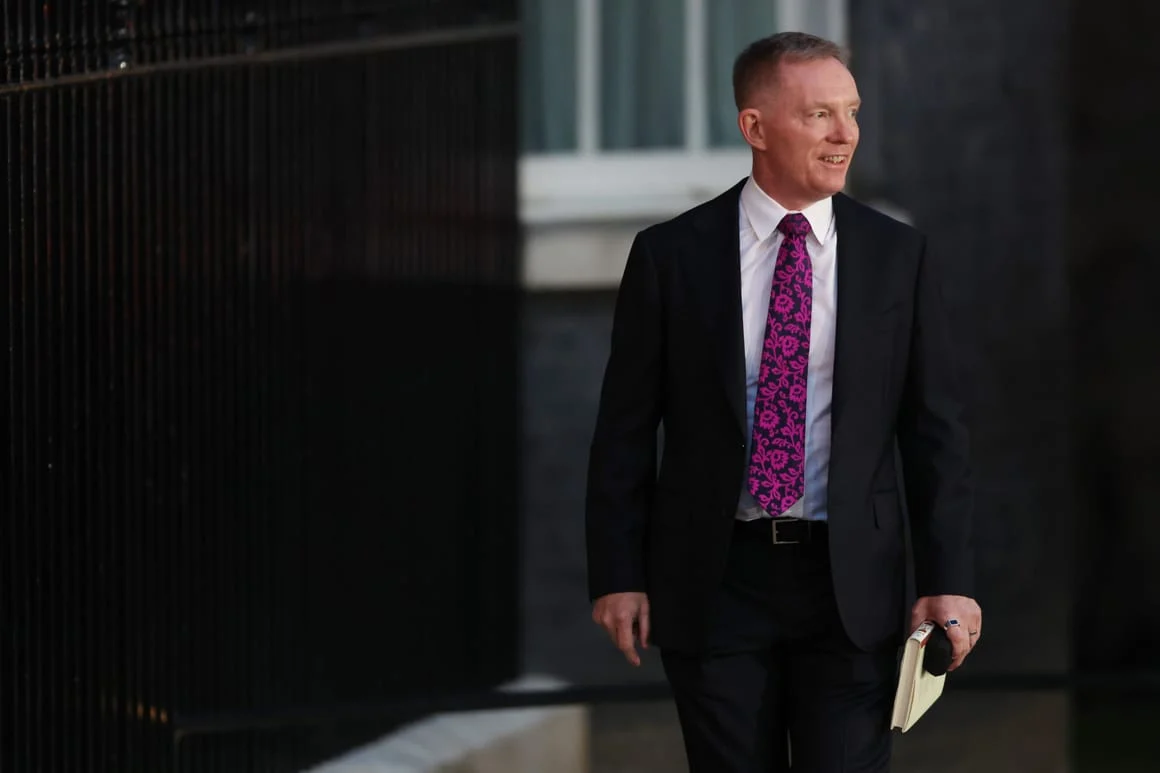
Stormont’s pleas for more Treasury billions overshadow Northern Ireland Secretary Chris Bryant’s first day on the ground
Hillsborough, Northern Ireland — The political and financial foundations of Northern Ireland reached a precarious inflection point this Friday as the region’s devolved government failed to secure a multi-year budgetary agreement, triggering an automatic spending cap that threatens to cripple essential public services. As the clock struck midnight on the legal deadline for fiscal planning, the Northern Ireland Executive found itself locked in a cycle of mutual recrimination, with local leaders and the newly appointed U.K. Secretary of State for Northern Ireland, Chris Bryant, presenting diametrically opposed visions for the region’s economic survival.
The expiration of the deadline mandates a severe austerity measure: an automatic 5 percent reduction in spending compared to the 2025-26 fiscal year. This contraction arrives at a time when the region’s healthcare sector is already grappling with the longest waiting lists in the United Kingdom, and the education system faces critical infrastructure deficits.
A Baptism of Fire for the New Secretary
Chris Bryant, a seasoned parliamentary figure and former Anglican priest who was tapped by Prime Minister Andy Burnham to replace Hilary Benn in a recent cabinet reshuffle, arrived in Hillsborough not with an open checkbook, but with an uncompromising reform agenda. His debut as the Secretary of State for Northern Ireland was defined by a stark rejection of the expectation that the Treasury would simply fill the widening hole in the Stormont budget.
“We need to get to a budget, and I understand the financial pressures,” Bryant stated during his inaugural press conference. “I know everybody expects me to come with a checkbook. I am actually coming with a checklist of things that I want to get sorted.”
Bryant’s “checklist” focuses heavily on structural reform, particularly within the Department of Health. The U.K. government’s stance is that Northern Ireland’s per-capita spending, while currently underperforming, cannot be addressed through simple block-grant increases without a fundamental overhaul of how services are delivered.
The Fiscal Disconnect: A Chronology of Failure
The current crisis is not a sudden development but the culmination of a decade of legislative and administrative inertia. A brief chronology of the decline highlights the systemic nature of the impasse:
- 2011: The last time the Northern Ireland Executive successfully agreed upon and implemented a comprehensive multi-year budget.
- 2017: The collapse of the Executive following a political walkout by Sinn Féin, leading to a period of direct rule and budget management by the U.K. government.
- 2022: A repeat of the 2017 crisis, as the Democratic Unionist Party (DUP) withdrew from power-sharing, further stalling fiscal reform.
- January 2026: The original deadline for the current multi-year budget, which was missed due to ongoing inter-party bickering.
- July 31, 2026: The final legal window for budget ratification closed, triggering the mandatory 5 percent spending cap for the 2026-27 fiscal year.
Economic Realities and the Fiscal Council’s Findings
The economic debate currently dominating the halls of Stormont is underpinned by a controversial report from the Northern Ireland Fiscal Council. The Council’s analysis suggests that Northern Ireland is not being subsidized at parity with Scotland or Wales, estimating that an adjustment to align funding with regional counterparts could yield between £1 billion and £3.5 billion annually.

However, the Burnham administration in London is wary of such comparisons, fearing that providing a massive cash injection without stringent reforms would merely sustain an inefficient status quo. The dilemma for Sinn Féin—which holds the key finance and economy portfolios—is that while they advocate for higher spending, they remain ideologically and politically constrained regarding the implementation of local revenue-raising measures, such as increased domestic rates or the introduction of water charges, which the DUP would almost certainly veto.
Official Responses and the Breakdown of Consensus
The atmosphere following Friday’s meetings was palpable with frustration. Sinn Féin representatives, including former finance minister Conor Murphy, expressed deep concern over the lack of political alignment.
“The institutions are in a precarious place,” Murphy said. “We have seen people walk out of them before. There is a danger that the wheels could come off the wagon.”
This sentiment was met with derision from the Democratic Unionist Party. Leader Gavin Robinson, signaling the continued hostility between the two governing parties, dismissed Murphy’s concerns. “If he’s worried about his wheels coming off, he should tighten his nuts,” Robinson told reporters, a retort that underscores the lack of a collaborative spirit necessary to navigate the current fiscal emergency.
Broader Implications for Power-Sharing
The stability of the 1998 Good Friday Agreement, which ended three decades of sectarian violence, relies on the functionality of the mandatory coalition government. With Sinn Féin and the DUP both experiencing dips in voter support—compounded by the recent scandal surrounding former DUP leader Jeffrey Donaldson—the temptation to abandon the assembly in favor of a populist campaign ahead of the May 2027 elections is increasing.
The risk is twofold:
- Service Collapse: The 5 percent spending cap will inevitably lead to staff shortages in hospitals, school closures, and a decline in public infrastructure maintenance.
- Institutional Atrophy: Should the government fail to govern effectively, the public perception of the Stormont assembly as a "failed project" will grow, potentially pushing voters toward more extreme or nationalist/unionist rhetoric that undermines the delicate peace process.
Analysis: The Path Forward
The situation represents a classic "hard-choice" scenario for the British government. If Bryant enforces the budget cap, the resulting decline in public services will likely lead to widespread civil unrest and a potential collapse of the Executive. Conversely, if the Treasury provides the requested billions to avoid a collapse, it sets a precedent that discourages the local government from ever undertaking the difficult, politically unpopular reforms required to modernize Northern Ireland’s economy.
For the people of Northern Ireland, the immediate future looks increasingly like a period of stagnation. Without a shift from the current blame-game politics toward a bipartisan strategy for fiscal recovery, the region is likely to remain in a state of managed decline. As Chris Bryant begins his tenure, he faces the daunting task of convincing a fractured local leadership that the era of relying on London for financial salvation without accountability is effectively over. The question remains whether the political parties in Belfast can overcome their deep-seated animosities before the next election cycle renders the current assembly irrelevant.