Human Rights Watch Demands Urgent International Action Following Deadly Settler Attacks and Military Escalation in West Bank Village of Tal
The occupied West Bank village of Tal, located near the city of Nablus, became the site of a deadly multi-stage assault on July 24, 2026, resulting in the deaths of four Palestinians and two Israelis. Human Rights Watch (HRW) issued a comprehensive report today detailing the incidents, which have sparked a volatile wave of reprisal attacks across the region and prompted the Israeli government to announce a "major counterterrorism operation." The human rights organization is calling on the international community to intervene immediately, warning that the failure of the Israeli government to restrain settler violence and the subsequent escalation of military rhetoric have turned the West Bank into a "powder keg" that threatens to ignite a broader humanitarian catastrophe.
The July 24 violence marks a significant escalation in a year already defined by record-breaking casualties and systemic instability. According to HRW, the events in Tal were not isolated incidents but rather the culmination of years of lawlessness and impunity afforded to settler groups. Sarah Sanbar, acting Israel and Palestine researcher at Human Rights Watch, emphasized the gravity of the situation: "The Israeli government didn’t prevent the settler attacks on Tal village, so now it needs to stop settler reprisals and escalating military action that will make a bad situation worse. Decisive action is urgently needed."
A Chronology of the July 24 Assault
The violence in Tal unfolded in two distinct phases on the morning of July 24, 2026. Based on interviews with witnesses, local activists, and the verification of six social media videos, Human Rights Watch has reconstructed a timeline of the morning’s events.
Between 6:10 a.m. and 6:45 a.m., a group of approximately 40 to 50 Israeli settlers, including several children, approached Tal from the eastern perimeter. Witnesses reported that the group targeted four or five Palestinian homes, pelting them with stones and attempting to force entry. As residents emerged to defend their property, a confrontation ensued. During this initial skirmish, an armed settler reportedly shot and wounded a Palestinian man. The settlers retreated temporarily as more Palestinian residents arrived to assist the besieged families.
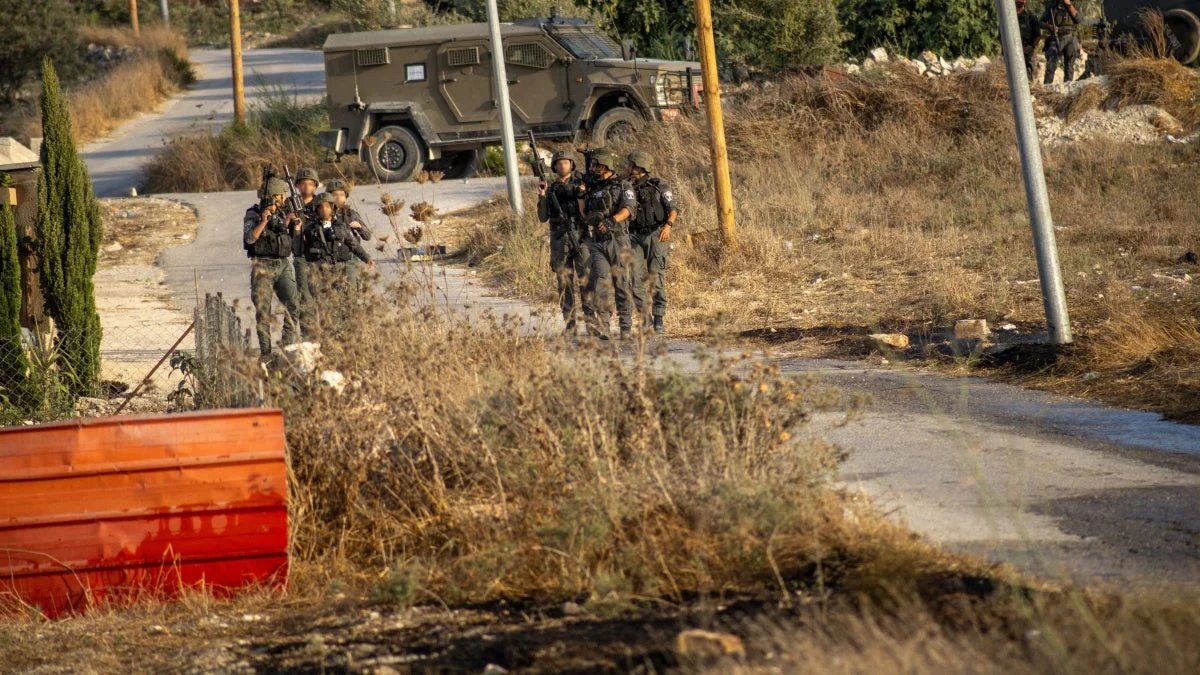
The situation escalated approximately 30 minutes later when the same group of settlers re-entered the village from the southwest. This time, they were accompanied by uniformed Israeli soldiers. Mujahid Waleed, a local resident who witnessed both incursions, told HRW that the military initially stood by as settlers resumed their physical attacks on the residents.
"The settlers were attacking the Palestinians, and the army stood by and didn’t intervene," Waleed stated. "The army only intervened once a Palestinian man disarmed a settler and started shooting at the soldier and settlers." In the ensuing exchange of gunfire, the Israeli military killed the Palestinian man who had seized the weapon at point-blank range. Settlers and soldiers then shot and killed three other unarmed Palestinians. The four deceased Palestinians were identified as two sets of brothers and cousins from the Ramadan family.
Disputed Accounts and Military Justification
The Israeli military provided a contrasting account of the events. In a statement released at 9:32 a.m. that morning, the Israel Defense Forces (IDF) claimed that soldiers were dispatched to the area following reports of an attack on Israeli civilians who were "hiking" in the vicinity. The military narrative asserted that "terrorists" stole a weapon from security personnel and opened fire.
Later that day, the IDF confirmed that the incident resulted in the deaths of 32-year-old Benyahu Mellet and 27-year-old Major Yuval Ezra, an active-duty soldier. The military stated that a platoon commander returned fire to neutralize the gunman. However, the IDF provided no specific details regarding the killing of the three other unarmed Palestinians reported by witnesses and seen in verified video footage.
Human Rights Watch researchers geolocated and verified two videos that appear to corroborate the witness accounts over the official military narrative. One video shows two armed settlers and a uniformed soldier initiating a physical altercation with Palestinian men. The footage captures a soldier firing into the air as a fight breaks out, followed by a sequence where a Palestinian man attempts to disarm a settler. A second video shows a Palestinian man successfully taking a firearm and pushing a settler to the ground, at which point the settler draws a secondary handgun and the Palestinian man appears to fire.
Statistical Context: A Year of Rising Bloodshed
The killings in Tal bring the Palestinian death toll in the occupied West Bank to 10 within the five-day period starting July 19, 2026. This surge follows a trajectory of violence that has intensified throughout the year. Data provided by the United Nations Office for the Coordination of Humanitarian Affairs (OCHA) reveals that as of mid-July 2026, at least 68 Palestinians have been killed in the West Bank, with 13 of those deaths attributed directly to settler violence.
Conversely, OCHA reported that 20 Israelis had been injured in the West Bank as of July 15, 2026. Human rights monitors note that settler violence has risen sharply since the current Israeli administration took office in December 2022. A particularly severe spike occurred in March and April 2026, coinciding with the heightened regional tensions of the United States and Israel’s war with Iran. This regional conflict has reportedly provided a "shadow of war" under which domestic settler activity has expanded with decreased oversight.
The Institutionalization of Settler Militias
A critical factor identified by HRW in the recent escalation is the "blurring of the line" between civilian settlers and state military forces. Following the events of October 7, 2023, the Israeli National Security Ministry established "civil defense squads" within West Bank settlements. These squads were provided with military-grade weapons, uniforms, and special policing powers.
Benyahu Mellet, one of the Israelis killed in the Tal incident, was identified as the head of the civil defense squad for the Havat Gilad settlement. HRW and other NGOs, such as Yesh Din, argue that these squads—along with settler-only "regional defense battalions"—operate with the financial, material, and legal backing of the state. This integration has led to frequent reports of armed settlers conducting raids alongside army units or operating independently while soldiers stand by.
Government Policy and Calls for Collective Punishment
In the immediate aftermath of the Tal killings, Prime Minister Benjamin Netanyahu convened an emergency security meeting. He announced the redeployment of five military battalions to the West Bank and directed the military to initiate an "intensive counterterrorism operation." Furthermore, Netanyahu pledged to accelerate the regularization of illegal settler outposts and the establishment of new ones.
The rhetoric from high-ranking cabinet members has been even more severe. Finance Minister Bezalel Smotrich called for the immediate establishment of a new settlement at the Sela outpost and demanded that the area be transferred from Area B (joint security control) to Area C (full Israeli control). Smotrich further suggested that Palestinian villages should be treated with the same severity as the refugee camps in Nablus and Tulkarem, which were largely destroyed during military operations in January 2025—an action HRW previously classified as involving war crimes and ethnic cleansing.
National Security Minister Itamar Ben-Gvir echoed these sentiments on social media, stating that Palestinian towns should be treated like the embattled Beit Hanoun in Gaza. "For every Jew murdered – the enemy must absorb the loss of lands and homes," Ben-Gvir posted, signaling a policy of territorial expansion as a form of collective punishment.
International Legal Implications and Global Responsibility
The ongoing violence in the West Bank occurs against a backdrop of significant international legal rulings. In July 2024, the International Court of Justice (ICJ) issued an advisory opinion finding that Israel’s 57-year occupation of Palestinian territory is unlawful. The court concluded that Israel is in breach of international prohibitions against racial segregation and apartheid, mandating the evacuation of all settlers and the provision of reparations to displaced Palestinians.
Human Rights Watch maintains that the international community has a legal and moral obligation to act where the Israeli government has failed. The organization is urging governments to:
- Impose targeted sanctions on individuals and entities implicated in grave abuses and settler violence.
- Suspend all arms transfers to Israel to prevent their use in further atrocities.
- Ban trade with illegal settlements, citing the Fourth Geneva Convention.
- Support the International Criminal Court (ICC) in its ongoing investigations and execute outstanding arrest warrants.
The report concludes with a warning that the Tal incident is a symptom of a systemic collapse of the rule of law. Without external pressure to hold perpetrators accountable and halt the expansion of settlements, HRW argues that the cycle of reprisal and military escalation will inevitably lead to greater loss of life. "Governments need to act urgently," Sanbar warned, "so that the Israeli government does not continue to act as if it has a green light to commit further atrocities."

Related Posts
Human Rights Watch Calls for Investigation into Death of Detainee Following Removal from Najaf Hospital by Iraqi Drug Police
Human Rights Watch Urges UN Security Council to Extend Lebanon Peacekeeping Mission Amid Escalating Conflict and Humanitarian Crisis