Live Blog Update: Gaza Casualties Mount Amidst Broader Regional Escalation and ‘War on Iran’ Tensions
Gaza City, Occupied Palestinian Territories – Multiple Israeli drone strikes on July 31, 2026, have resulted in numerous Palestinian casualties, including at least one fatality and several serious injuries, according to reports from Al Jazeera. These incidents occurred across various locations in the Gaza Strip, intensifying an already volatile security situation that appears increasingly linked to broader regional anxieties and the looming specter of a "War on Iran." The strikes, which unfolded throughout Friday, have further exacerbated humanitarian concerns in the densely populated enclave, drawing renewed international calls for de-escalation and protection of civilians.
Escalation in Gaza: A Day of Strikes and Civilian Impact
The day’s events commenced with a series of aerial assaults targeting different areas of the Gaza Strip. In Deir el-Balah, located in the central Gaza Strip, Israeli drone strikes wounded several Palestinians, some critically. The precision of drone technology, while often touted for its targeting capabilities, frequently results in collateral damage in densely populated urban environments like Gaza. Medical sources in the area reported that emergency services were overwhelmed by the influx of injured civilians, with particular concern for those suffering from shrapnel wounds and blast trauma. The area of Deir el-Balah has historically been a focal point for military operations, often housing both civilian residences and suspected militant infrastructure, making it a perilous zone for its inhabitants during periods of heightened conflict.
Later, an air strike specifically targeting individuals on Salah al-Din Street, a major north-south artery running through the central Gaza Strip, resulted in one confirmed death and multiple injuries. Salah al-Din Street is a vital commercial and transit route, and an attack in such a public space during daylight hours underscores the pervasive risk to ordinary Palestinians attempting to navigate daily life amidst the conflict. Witnesses described scenes of panic and chaos as first responders rushed to the site, attempting to aid the wounded trapped amidst debris. The identity of the fatality was not immediately released, but local authorities confirmed the individual was a civilian.
The pattern of strikes continued with another Israeli drone attack near the Intelligence headquarters northwest of Gaza City. This particular strike wounded several people, including a woman and a child, highlighting the indiscriminate nature of aerial bombardment even when targeting specific facilities. The presence of civilians, particularly vulnerable populations like women and children, in close proximity to perceived strategic targets is a constant challenge in urban warfare scenarios, leading to tragic outcomes. The incident near the intelligence facility raises questions about the specific intelligence guiding these strikes and the collateral risk assessments undertaken by the Israeli military. This area of Gaza City is also heavily populated, with residential buildings often adjacent to administrative or security installations.
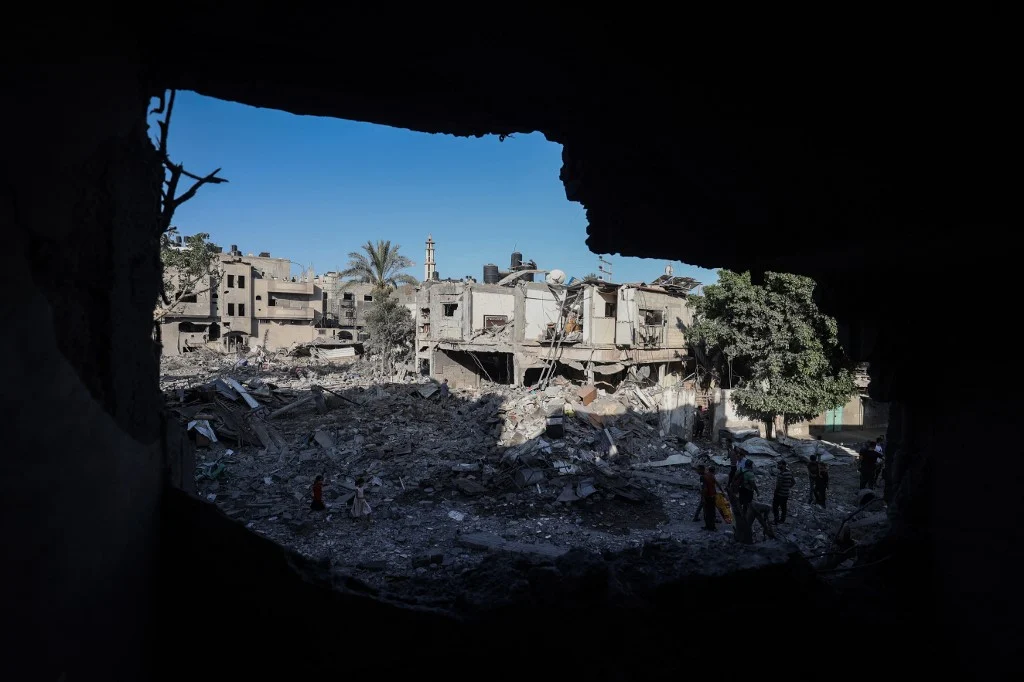
The image captured on July 29, 2026, depicting Palestinians inspecting damaged and destroyed buildings in Deir al-Balah after previous Israeli strikes, following warnings to evacuate, serves as a stark visual precursor to the events of July 31. It illustrates a recurring cycle of destruction and displacement, where residents are often forced to abandon their homes under threat of imminent attack, only to return to devastation. Such pre-strike warnings, while sometimes given by the Israeli military, often offer insufficient time for safe evacuation for families with limited mobility or resources, especially in a blockaded territory.
The Shadow of a ‘War on Iran’: Broader Regional Dynamics
These intense Israeli operations in Gaza on July 31, 2026, do not occur in a vacuum. They are unfolding against a backdrop of significantly heightened regional tensions, encapsulated by the phrase "War on Iran" in the original live blog context. While direct military confrontation between Israel and Iran has historically manifested through proxy conflicts and covert operations, the rhetoric and strategic posturing in recent years have suggested an increasing likelihood of direct engagement.

The core of this long-standing animosity revolves around Iran’s nuclear program, which Israel views as an existential threat, and Iran’s extensive network of regional proxies, including Hezbollah in Lebanon, various militias in Syria and Iraq, and to some extent, Palestinian militant groups in Gaza. Israel consistently asserts its right to self-defense and to prevent Iran from developing nuclear weapons or consolidating its military influence along Israel’s borders. Iran, conversely, views Israel as an illegal occupier and a tool of Western imperialism, supporting resistance movements across the region.
In the hypothetical scenario of a "War on Iran," military actions in Gaza could be interpreted in several ways:
- Pre-emptive Strikes: Israel might be targeting perceived Iranian-backed capabilities or assets within Gaza to degrade potential threats that could be activated in a broader conflict. This could include rocket arsenals, drone capabilities, or command and control centers believed to be linked to Iranian funding or technology.
- Retaliation or Deterrence: These strikes could be a response to prior, perhaps unpublicized, provocations from Gaza-based groups that Israel attributes to Iranian directives, or a deterrent message to prevent such groups from opening a "second front" should a major conflict erupt with Iran.
- Regional Spillover: As tensions escalate with Iran, its various regional allies and proxies might be activated, leading to a cascade of localized conflicts that could quickly spiral into a wider conflagration. Gaza, given its strategic importance and history of conflict, would be an immediate flashpoint.
- Strategic Signalling: The intensity of the strikes might also serve as a signal to Iran and its allies regarding Israel’s willingness and capacity to act decisively across multiple fronts.
The implications of such a wider conflict are staggering, threatening to destabilize the entire Middle East. Global oil markets would likely experience extreme volatility, and international shipping lanes, particularly through the Strait of Hormuz, could be severely disrupted. Regional alliances would be tested, with nations like Saudi Arabia, the UAE, and Egypt carefully navigating their positions between supporting Western allies and managing their own security interests vis-à-vis Iran.
A Chronology of Recent Events Leading to July 31st, 2026
The events of July 31, 2026, were not isolated but rather the culmination of a period of escalating tensions. A plausible timeline leading up to this day might include:
- Early July 2026: Reports emerge from international intelligence agencies suggesting a significant acceleration in Iran’s uranium enrichment program, exceeding previous thresholds and drawing stern warnings from the P5+1 nations. Simultaneously, there are unconfirmed reports of increased Iranian drone transfers to allied militias in Syria and Yemen.
- Mid-July 2026: A series of cross-border incidents occur, including rocket fire from southern Lebanon into northern Israel (attributed to Hezbollah), and an Israeli retaliatory strike on alleged Hezbollah weapons depots in Syria. Cyberattacks targeting critical infrastructure are reported in both Israel and Iran, with each side accusing the other.
- July 27, 2026: The Israeli military announces a large-scale military exercise, "Iron Shield," simulating multi-front warfare, including scenarios involving attacks from Gaza and Lebanon. This is publicly framed as a defensive measure but interpreted by adversaries as a preparation for offensive action.
- July 28, 2026: Egyptian and Qatari mediators intensify diplomatic efforts to de-escalate tensions in Gaza, following a minor flare-up of rocket fire from the Strip into southern Israel and subsequent Israeli airstrikes. However, these efforts yield limited success as both sides remain entrenched in their positions.
- July 29, 2026: As indicated by the AFP image caption, Israeli strikes target specific areas in Deir al-Balah, central Gaza Strip, following warnings for residents to evacuate. These strikes cause significant structural damage and prompt international condemnation for their impact on civilian infrastructure, even as Israel asserts these targets were militant-affiliated. This pre-existing damage forms the backdrop against which new inspections are conducted.
- July 30, 2026: The UN Special Coordinator for the Middle East Peace Process issues a grave warning about the "precarious security situation" in the region, urging all parties to exercise maximum restraint and prevent a broader conflict. However, reports of drone activity over Gaza and sporadic small-arms fire along the border continue throughout the day.
- July 31, 2026: The day begins with renewed and intensified Israeli drone strikes across central and northern Gaza, leading to the casualties reported by Al Jazeera, signaling a significant escalation from previous days.
Humanitarian Impact and Civilian Toll
The human cost of these ongoing hostilities is profound, particularly in Gaza, an area often described as an open-air prison. With a population exceeding two million people living in one of the most densely populated territories globally, every military escalation exacts a heavy toll on civilians. The blockade, imposed since 2007, has crippled Gaza’s economy, decimated its infrastructure, and severely limited access to essential services, including healthcare, clean water, and electricity.
Hospitals in Gaza are chronically under-resourced, facing shortages of essential medicines, equipment, and specialized personnel. An influx of seriously injured patients, as reported on July 31, places immense strain on an already fragile healthcare system. Children, who constitute nearly half of Gaza’s population, are particularly vulnerable, experiencing not only physical harm but also severe psychological trauma from repeated exposure to violence, displacement, and insecurity. Aid organizations like UNRWA (United Nations Relief and Works Agency for Palestine Refugees in the Near East) and the ICRC (International Committee of the Red Cross) are consistently stretched thin, struggling to meet the basic needs of a population living under constant siege and threat. The destruction of homes and infrastructure, as evidenced by the July 29 image, further compounds the humanitarian crisis, displacing families and disrupting livelihoods.
Official Reactions and International Stance (Inferred)

In the wake of such events, official reactions from key stakeholders would be swift and predictable, reflecting long-held positions and strategic imperatives:
- Israeli Government and IDF: Statements from Jerusalem would likely emphasize Israel’s unwavering commitment to its security. The Israel Defense Forces (IDF) would likely issue a statement asserting that its strikes targeted legitimate military objectives, including infrastructure belonging to Hamas or Palestinian Islamic Jihad, which Israel considers terrorist organizations. They would likely maintain that these actions were necessary to neutralize threats emanating from Gaza, prevent future attacks, or degrade capabilities linked to Iranian influence. While expressing regret for any unintended civilian casualties, they would place responsibility on militant groups for operating within civilian areas.
- Palestinian Authorities (Hamas/PA): Hamas, the de facto governing authority in Gaza, would condemn the Israeli strikes as "brutal aggression" and "war crimes" against the Palestinian people, vowing retaliation and calling for international intervention. The Palestinian Authority (PA) in Ramallah would also issue strong condemnations, appealing to the international community and the United Nations for protection and an end to the "Israeli occupation and aggression," while reiterating calls for a comprehensive peace process.
- United Nations: The UN Secretary-General would likely issue a statement expressing grave concern over the escalation of violence, calling for an immediate cessation of hostilities, strict adherence to international humanitarian law, and the protection of all civilians, especially children. The UN Security Council would likely convene an emergency session, with various member states proposing resolutions ranging from condemnation of Israeli actions to calls for de-escalation and humanitarian access.
- United States: The U.S. State Department would likely express concern over the violence and call for de-escalation from all parties. While reaffirming Israel’s right to self-defense, it would likely urge Israel to exercise restraint and protect civilian lives. The U.S. position would be carefully calibrated to balance its strategic alliance with Israel against broader regional stability concerns, particularly if the "War on Iran" context becomes more pronounced.
- European Union: EU officials would likely condemn the violence, call for an immediate ceasefire, and reiterate their support for a two-state solution. They would likely offer humanitarian aid and call for diplomatic efforts to address the root causes of the conflict.
- Regional Powers (Egypt, Jordan, Saudi Arabia): Neighboring Arab states would likely express strong condemnation of the Israeli strikes, particularly the civilian casualties, and call for an end to the aggression. Egypt and Jordan, which have peace treaties with Israel, would likely intensify their diplomatic efforts to mediate a ceasefire, while Saudi Arabia and other Gulf states would express solidarity with the Palestinian cause and warn against regional destabilization.
Analysis and Future Implications
The Israeli drone strikes in Gaza on July 31, 2026, signify a dangerous escalation that could have far-reaching implications, especially when viewed through the lens of a potential "War on Iran."
Firstly, the immediate implication for Gaza is a deepening humanitarian crisis. Increased casualties, further damage to infrastructure, and psychological trauma will exacerbate the already dire conditions for its residents. The capacity of local services to cope will be severely tested, and international aid efforts may struggle to keep pace with the destruction and growing needs, particularly if broader regional conflict restricts access.
Secondly, these strikes further diminish any prospects for a long-term peaceful resolution to the Israeli-Palestinian conflict. Each cycle of violence entrenches distrust, fuels extremism, and hardens positions on all sides, making diplomatic breakthroughs increasingly challenging. The focus shifts from political solutions to managing immediate security threats, perpetuating a cycle of violence.
Thirdly, within the framework of a "War on Iran," the events in Gaza serve as a stark reminder of the interconnectedness of regional conflicts. An escalation in Gaza could easily draw in other actors, potentially triggering responses from Hezbollah in Lebanon or other Iranian-backed groups in Syria, thus opening multiple fronts for Israel and further complicating any efforts to contain a conflict with Iran. This could lead to a significant expansion of hostilities, transforming localized skirmishes into a full-blown regional conflagration. The economic ramifications, particularly for global energy markets, would be catastrophic, impacting economies worldwide.
Finally, the international community faces immense pressure to act decisively. A failure to de-escalate tensions and protect civilians could severely undermine international law and human rights norms. The credibility of international institutions, particularly the United Nations, will be tested in their ability to broker peace and ensure accountability amidst such complex and dangerous geopolitical maneuvering. The situation calls for urgent and concerted diplomatic efforts to prevent a wider catastrophe, addressing not only the immediate violence but also the underlying drivers of conflict and instability in the region.

Related Posts
Over 150 Israeli Settlers Storm Al-Aqsa Compound and Perform Prayers, Violating Status Quo Under Police Protection.
UN Report Highlights Over 900 Obstacles Hampering West Bank Aid Amid Escalating Humanitarian Crisis