U.S. Navy Secures $76.6 Billion Submarine Contract to Bolster Undersea Dominance and Nuclear Triad Modernization
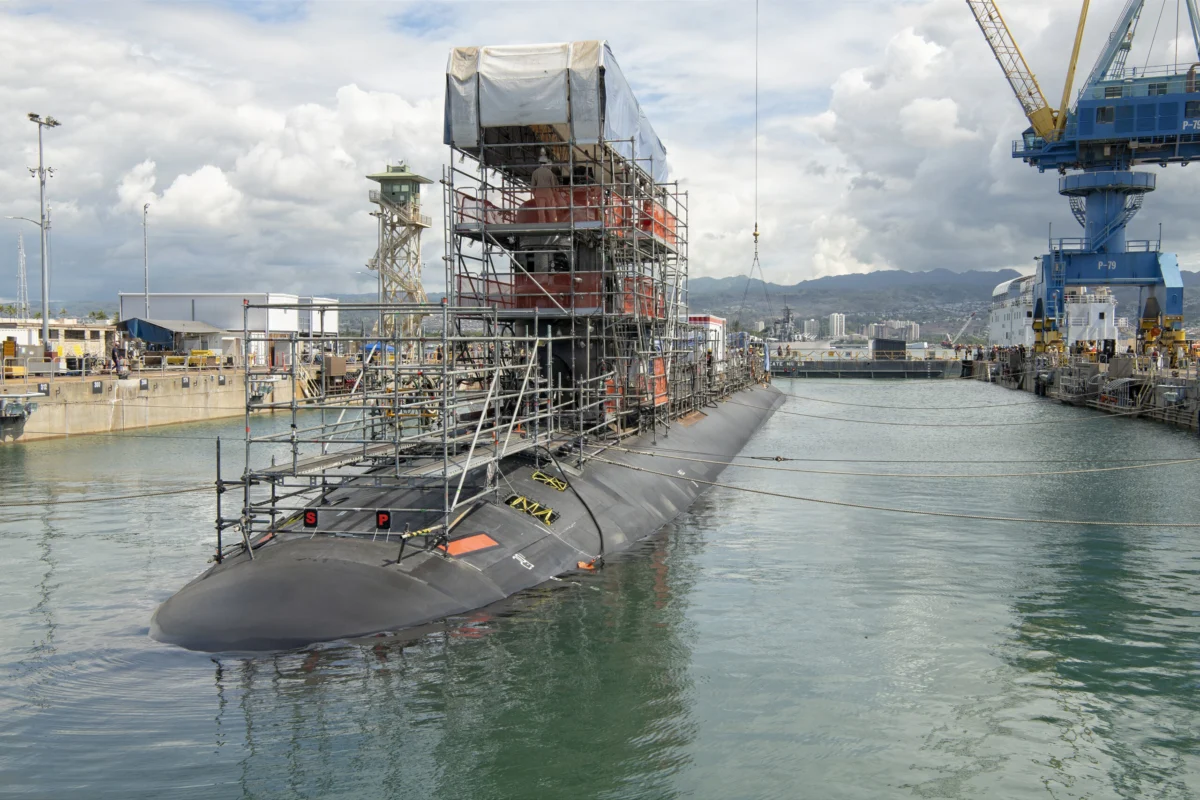
The United States Navy has finalized a monumental series of contracts totaling $76.6 billion aimed at the sustained production of its next-generation undersea fleet, marking one of the most significant financial commitments to naval power in recent decades. The Department of Defense announced the award to primary contractors General Dynamics Electric Boat and Huntington Ingalls Industries-Newport News Shipbuilding, ensuring the continued fabrication of both the Columbia-class ballistic missile submarines and the Virginia-class fast-attack submarines. This massive procurement effort is designed to solidify the United States’ maritime superiority at a time of heightened global geopolitical tension and to ensure the sea-based leg of the nation’s nuclear triad remains modern, stealthy, and operational.
The investment is structured to address both the immediate needs of the fleet and the long-term industrial health of the American shipbuilding sector. Of the total $76.6 billion, approximately $29.5 billion is dedicated to the Columbia-class Build II program, which covers the construction of five submarines. Another $42.1 billion is allocated for nine Virginia-class Block VI submarines, representing the latest iteration of the versatile attack platform. Crucially, the Navy has also set aside $5 billion specifically for investments in nuclear shipbuilding programs and infrastructure, recognizing that the physical capacity of the shipyards and the stability of the supply chain are as vital as the vessels themselves.
Strategic Imperatives and the Nuclear Triad
The announcement comes as the Navy accelerates its efforts to replace the aging Ohio-class submarines, which have served as the backbone of the U.S. strategic deterrent since the Cold War. Vice Adm. Robert Gaucher, director of submarine programs, emphasized that this historic investment underscores a "continued commitment to undersea superiority and the recapitalization of our nuclear triad." The nuclear triad—comprising land-based intercontinental ballistic missiles, strategic bombers, and submarine-launched ballistic missiles (SLBMs)—provides the United States with a layered defense and a guaranteed second-strike capability.
The Columbia-class is the Navy’s top acquisition priority. Unlike the Ohio-class, which requires a mid-life nuclear refueling, the Columbia-class is designed with a "life-of-the-ship" reactor core, allowing the vessels to remain in service for 42 years without a lengthy overhaul. This innovation allows the Navy to maintain its required strategic presence with only 12 Columbia-class hulls compared to the 14 Ohio-class hulls currently in service. These new submarines will be equipped with the Trident II D5 Strategic Weapons System and are being designed to eventually integrate hypersonic missiles, ensuring they remain relevant against evolving defensive technologies.
Expanding the Virginia-Class Fast-Attack Fleet
While the Columbia-class handles the strategic deterrent mission, the Virginia-class continues to evolve as the Navy’s premier multi-mission platform. The Block VI variants funded under this new contract are expected to incorporate advanced acoustic superiority features and enhanced payload capabilities. The Virginia-class was originally conceived to replace the Los Angeles-class submarines, providing a more flexible platform capable of operating in both deep-ocean "blue water" and shallow "littoral" environments.
One of the defining features of the Virginia-class is its ability to support special operations forces. The submarines feature a reconfigurable torpedo room that can accommodate a large number of Navy SEALs and their equipment for long-duration deployments. Additionally, the Block VI submarines are expected to continue the trend of increasing strike capacity, utilizing the Virginia Payload Module (VPM) to carry a significant number of Tomahawk cruise missiles or future strike weapons, effectively filling the gap left by the eventual retirement of the four Ohio-class guided-missile submarines (SSGNs).
The Navy currently has 26 active Virginia-class submarines, with another 23 in various stages of the pipeline. The addition of the nine Block VI hulls ensures a steady delivery cadence, which is essential for maintaining the 2.0-submarines-per-year production rate that naval leadership and Congressional advocates have long identified as necessary to meet global mission requirements.
Lessons from Operation Midnight Hammer
The urgency of this naval expansion is underscored by the recent operational demands placed on the existing fleet. On June 22, 2025, an Ohio-class submarine played a pivotal role in Operation Midnight Hammer, a series of military strikes directed at Iranian nuclear facilities. The success of these strikes highlighted the unique advantages of undersea platforms: the ability to remain undetected while positioning themselves within striking distance of high-value targets.
While reports following Operation Midnight Hammer suggested that the strikes only set back the Iranian nuclear program by several months, the mission demonstrated the indispensable nature of the submarine force in modern kinetic operations. The stealth and survivability of the submarine fleet allow the U.S. to project power in contested environments where surface ships or aircraft might be too vulnerable to sophisticated anti-access/area-denial (A2/AD) systems. As the Ohio-class nears the end of its service life, the transition to the Columbia-class and the continued expansion of the Virginia-class are viewed as essential to maintaining this tactical edge.
Industrial Base Challenges and Infrastructure Investment
The $5 billion allocated for shipbuilding infrastructure reflects a growing concern within the Pentagon regarding the fragility of the domestic industrial base. For years, the U.S. shipbuilding industry has struggled with labor shortages, supply chain disruptions, and the technical complexity of building two different classes of nuclear submarines simultaneously. General Dynamics Electric Boat and Huntington Ingalls Industries are the only two shipyards in the country capable of building nuclear-powered vessels, and they rely on a network of thousands of sub-tier suppliers across all 50 states.
This infrastructure funding is intended to modernize facilities, purchase long-lead-time materials, and expand the workforce. The Navy has been working closely with industry partners to improve "throughput"—the speed at which components move through the manufacturing process. Without these investments, the Navy risks falling behind on its delivery schedules, which would create a "deterrence gap" as older ships retire before new ones are ready to take their place.
Chronology of Development and GAO Oversight
The path to this $76.6 billion contract has not been without hurdles. Construction on the lead ship of the Columbia-class officially began in 2020, but the program has faced several high-profile delays. Originally slated for a 2027 delivery, the first-in-class USS Columbia is now tracking toward a 2028 delivery. These delays have been attributed to issues with steam turbines and the fabrication of complex bow and stern sections.
Government watchdogs have long warned of the risks inherent in such a massive undertaking. In January 2023, the U.S. Government Accountability Office (GAO) released a report expressing concern that the Columbia-class program might struggle to stay on schedule. A primary point of contention was the contractor’s initial failure to conduct a "schedule risk analysis," a standard practice recommended by the GAO and mandated by Defense Department guidelines for large acquisition programs. This analysis is designed to identify potential bottlenecks and provide a realistic assessment of completion dates.
In response to these concerns, the Navy and its industrial partners have intensified their oversight. The "Build II" and "Block VI" designations represent a more mature phase of production, where lessons learned from the initial hulls are applied to streamline construction and reduce costs. The goal is to move toward a "stable design" phase where the shipyards can achieve maximum efficiency.
Fiscal 2027 Budget and Future Outlook
The scale of the submarine program is reflected in the Department of the Navy’s fiscal 2027 budget request. Seeking a total of $378 billion, the Navy has requested funds for the purchase of one Columbia-class submarine and two Virginia-class submarines in the upcoming fiscal year. This "1+2" procurement strategy is considered the minimum viable rate to sustain the fleet’s requirements and provide the industrial base with the predictability it needs to hire and train workers.
The long-term implications of these contracts extend far beyond the immediate defense of the United States. Undersea dominance is a cornerstone of the AUKUS security pact between Australia, the United Kingdom, and the United States, which involves the sale of Virginia-class submarines to Australia and the joint development of a future submarine class. The health of the U.S. submarine production line is therefore a matter of international significance, affecting the security architecture of the Indo-Pacific region.
As the Navy moves forward with the $76.6 billion investment, the focus will remain on execution. The transition from the Ohio-class to the Columbia-class is a "no-fail" mission for the Department of Defense. By securing the production of 14 new submarines across two classes, the Navy is betting that its undersea force will remain the world’s most lethal, survivable, and resilient combat platform for the remainder of the 21st century. The success of this endeavor will depend on the ability of the shipbuilders to overcome technical hurdles and the Navy’s ability to maintain consistent funding in an increasingly constrained fiscal environment.

Related Posts
Pentagon Forges Landmark Seven-Year Agreements with Boeing and RTX to Accelerate Standard Missile-3 Production and Stabilize Defense Supply Chains
Boeing Unveils Ultra Low-Cost Seeker to Enhance Missile Inventory and Combat Cost Challenges in Modern Warfare