
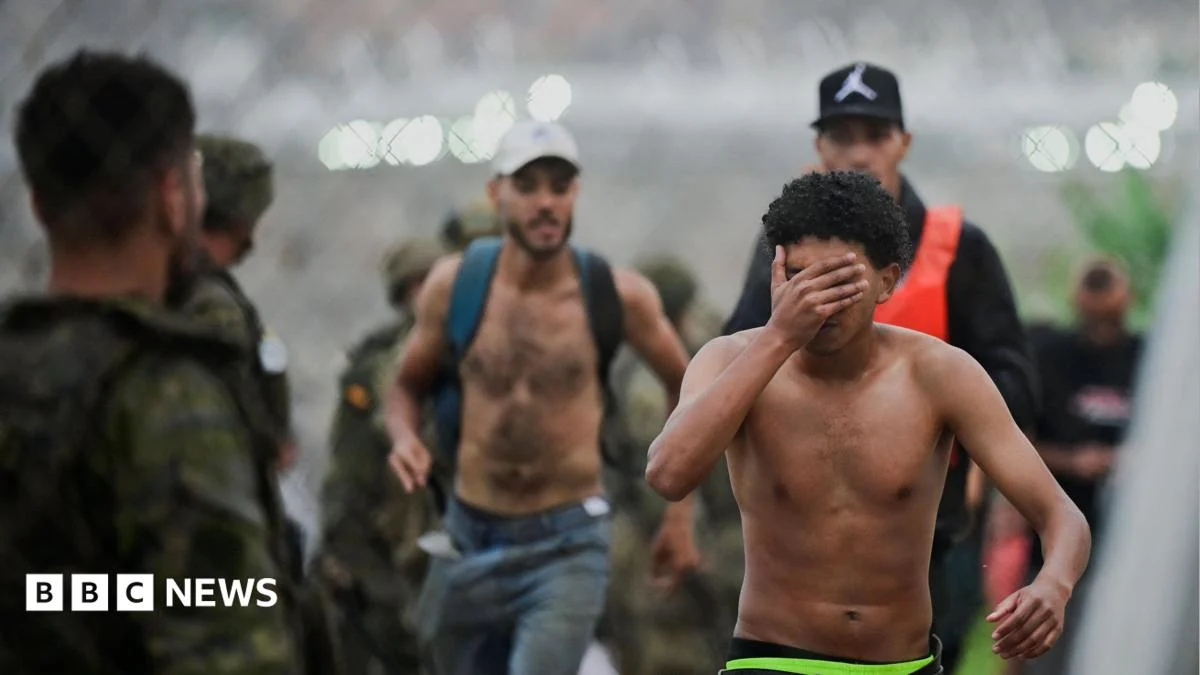
A crisis of unprecedented scale: Thousands of migrants overwhelm Ceuta and Melilla, prompting Spanish military deployment and international concern.
The Spanish enclaves of Ceuta and Melilla, nestled on Morocco’s northern coast, became the focal point of an extraordinary humanitarian and border security crisis in mid-May, as an estimated 10,000 to 12,000 individuals, predominantly from Morocco and other African nations, surged across the land and sea borders into Spanish territory within a 48-hour period. The unprecedented influx prompted an emergency response from Madrid, including the deployment of armed forces, and drew immediate offers of international assistance from the UK government and the French president. The Spanish Prime Minister, Pedro Sánchez, swiftly condemned the mass crossings as an "attack on Spain’s territorial integrity," vowing to reinforce border controls and cooperate with Moroccan authorities on returns, while also pointing fingers at criminal networks for manipulating a recent judicial ruling.
Unfolding Chaos: A Timeline of the Crisis
The situation escalated rapidly, transforming the ordinarily tense but controlled border into a scene of widespread chaos and desperation.
Pre-Crisis Context: Ceuta and Melilla have long been critical flashpoints for migration into Europe, serving as the European Union’s only land borders with Africa. While regular attempts to cross these heavily fortified borders are common, local officials in Ceuta had already reported a "recent rise" in attempted crossings in the weeks leading up to the main event, signaling an increase in pressure on existing border infrastructure. These appeals to Madrid for additional resources and support had been ongoing, underscoring a brewing sense of vulnerability. Additionally, Prime Minister Sánchez alluded to a "Supreme Court’s recent ruling" which, he claimed, had been deliberately "manipulated" by criminal networks. While the specifics of this ruling were not widely detailed, it was understood to pertain to legal interpretations concerning the rights or processing of migrants, particularly unaccompanied minors, creating a perceived window of opportunity that was widely disseminated through "incorrect information" spreading "like wildfire" across social media channels and local communities in Morocco.
Thursday, May 13th: The crisis exploded on Thursday as border controls, particularly around Ceuta, appeared to break down entirely. Thousands of individuals, including families, women, and a significant number of minors, began attempting to cross the border. Videos and images, widely circulated globally, depicted harrowing scenes of people swimming around breakwaters, clambering over fences, and simply walking through gaps in the border fortifications. The sheer volume overwhelmed Spanish border guards and local police, leading to "chaotic scenes" as authorities struggled to contain the flow. Many migrants used inflatable dinghies or even swam across the short stretch of water separating Morocco from Ceuta’s beaches, driven by the misinformation and the perceived laxity of Moroccan border enforcement.
Friday, May 14th: Crossings continued into Friday, though at a slightly reduced pace as Spanish forces began to gain a semblance of control. The Spanish government reacted decisively, deploying units of its armed forces to bolster security in Ceuta. Concurrently, attention also turned to Melilla, Ceuta’s sister city further east, where between 300 to 400 crossings were also reported overnight, indicating a broader, coordinated pressure along the enclaves’ borders. Spanish Prime Minister Pedro Sánchez made an urgent visit to Ceuta, using the platform to deliver a strong condemnation of the events, emphasizing that the mass entry constituted an "attack on Spain’s territorial integrity." He pledged immediate measures to reinforce the border with Morocco and confirmed that authorities in Morocco were cooperating with plans to return those who had entered illegally, particularly adult economic migrants.
Immediate Aftermath: In the days following the initial surge, Spanish authorities worked to process the thousands of arrivals. Emergency reception centers were quickly established, and the military assisted in providing basic necessities. Repatriations began almost immediately for adult migrants who did not qualify for asylum. However, the fate of unaccompanied minors, estimated to be in the hundreds, presented a significant challenge, requiring specialized care and legal procedures. The scale of the humanitarian challenge was immense, stretching the resources of the small city.
Historical Context and Geopolitical Significance
The enclaves of Ceuta and Melilla are unique territories with a rich and complex history that underpins the current migration crisis and diplomatic tensions.
Centuries of Spanish Presence: Ceuta and Melilla trace their Spanish past to the 15th Century, with Ceuta falling under Portuguese control in 1415 before becoming Spanish in 1668, and Melilla being conquered by Spain in 1497. These cities have been under continuous Spanish sovereignty for centuries, predating Morocco’s modern statehood. They have enjoyed a limited degree of self-government since 1995, operating under special statutes within the Spanish constitutional framework.
EU’s African Borders: Strategically, Ceuta and Melilla represent the European Union’s only land borders with the African continent. This geographical peculiarity makes them crucial entry points for migrants seeking to reach Europe, often after arduous journeys across the Sahara Desert. The borders are heavily fortified with high fences, razor wire, and advanced surveillance technology, making them formidable barriers, yet their allure as a gateway to Europe remains potent.
Moroccan Claims and Diplomatic Flashpoint: Morocco has long coveted both Ceuta and Melilla, considering them integral parts of its national territory. This territorial claim has historically made the enclaves a recurring "flashpoint" in diplomatic relations between Madrid and Rabat. While Spain consistently asserts its sovereignty, Morocco periodically raises the issue, often linking it to broader diplomatic disputes or using it as leverage in bilateral negotiations.
The Western Sahara Dispute: A Lingering Shadow: The 2021 surge in arrivals, which saw some 8,000 people cross into Ceuta, was directly attributed to a diplomatic dispute between Madrid and Rabat over the sovereignty of Western Sahara. Morocco, which claims the vast desert territory, was angered by Spain’s decision to host Brahim Ghali, the leader of the Polisario Front (which advocates for Western Sahara’s independence), for medical treatment. In what was widely seen as a punitive measure, Moroccan border guards significantly relaxed their controls, allowing the mass crossings. This incident served as a stark reminder of Morocco’s capacity to influence migration flows as a tool of foreign policy. The recent crisis occurred against a backdrop of renewed diplomatic friction, following Spanish Prime Minister Sánchez’s controversial visit to Algeria, a staunch supporter of Western Sahara’s independence, further exacerbating underlying tensions with Rabat. This complex geopolitical dance suggests that migration flows are not merely humanitarian events but can also be instruments of statecraft.
Supporting Data and Human Impact
The scale of the recent influx presented an extraordinary challenge, placing immense strain on Ceuta’s infrastructure and population.
Demographic Overwhelm: Ceuta, a city of approximately 83,600 inhabitants according to the latest local figures, was effectively inundated. Jesús Vivas, a local official, starkly described the situation as "unsustainable," estimating that the recent arrivals amounted to around 70% of the city’s population in just two days. This figure, even if representing a transient population, highlights the immediate, overwhelming impact on public services, housing, and social cohesion.
Humanitarian Crisis on the Ground: The sudden arrival of thousands of people, many exhausted, cold, and hungry after their perilous journeys, immediately triggered a humanitarian crisis. Emergency services, local charities, and the Red Cross struggled to provide basic necessities such as food, water, medical attention, and shelter. The images of children being rescued from the sea by Spanish soldiers underscored the extreme vulnerability of many of the new arrivals.
Personal Accounts of Fear and Desperation: The human stories emerging from Ceuta painted a vivid picture of both migrant desperation and local residents’ fear. One migrant, speaking to Reuters news agency while returning to Morocco, offered a poignant warning: "It’s not good at all, and it’s not fun either. I mean, people are dying here. I beg you, please, if you haven’t come yet, don’t come. Don’t do it." This testimony speaks to the harsh realities faced by those attempting the dangerous crossing, often driven by false hopes or severe economic hardship.
Meanwhile, local media reported widespread fear among Ceuta’s residents. "Nobody is going out on the street. They’re afraid," one resident told Spain’s ABC. A hospital security guard described the atmosphere as "stronger and more aggressive than what we’ve experienced before," indicating a profound sense of insecurity and disruption to daily life. The strain on public services, particularly healthcare, was immediate, with hospitals reporting an increase in admissions for hypothermia, injuries, and dehydration.
Official Responses and International Reactions
The crisis elicited a range of responses from Spanish, Moroccan, and international actors, reflecting the complex political and humanitarian dimensions of the situation.
Spain’s Decisive Stance: Prime Minister Pedro Sánchez adopted a firm and uncompromising stance, asserting Spain’s sovereignty and condemning the "attack on territorial integrity." His government swiftly deployed the armed forces to reinforce the borders of both Ceuta and Melilla, signaling a clear intent to restore order. Sánchez also announced plans to strengthen border infrastructure with Morocco, indicating a long-term commitment to preventing similar events. While acknowledging Morocco’s "cooperation" in facilitating returns, the underlying tone from Madrid suggested frustration with Rabat’s perceived inaction during the initial surge. The Spanish government stressed its commitment to upholding European Union external border controls, emphasizing Spain’s role as a frontline state.
Morocco’s Ambiguous Role: Morocco’s role in the crisis was complex and, at times, ambiguous. While Spanish officials later stated that Rabat was cooperating on returns, particularly of adult migrants, the initial relaxation of border controls on the Moroccan side raised serious questions. Critics suggested that Morocco may have deliberately eased controls as a means of exerting diplomatic pressure on Spain, particularly in light of the renewed tensions over Western Sahara. Moroccan authorities, however, maintained that the situation was a result of increased migration pressure and their own efforts to manage the border, downplaying any intentional political leverage.
European Union Solidarity and Concern: The European Union quickly rallied in support of its member state. The European Commission expressed "full solidarity with Spain" and called for robust external border management. EU officials underscored the need for a coordinated European response to migration challenges, reiterating that Spain’s borders are also Europe’s borders. The EU’s border agency, Frontex, offered to deploy additional resources and personnel to assist Spain, while the Commission also pledged emergency financial assistance to help manage the humanitarian fallout and strengthen border security. The crisis reignited debates within the EU about burden-sharing and the implementation of its proposed New Pact on Migration and Asylum.
International Humanitarian Appeals: International organizations and humanitarian NGOs expressed deep concern over the situation. The United Nations High Commissioner for Refugees (UNHCR) and the International Organization for Migration (IOM) appealed for a humanitarian approach, stressing the need to protect vulnerable individuals, especially unaccompanied minors, and to ensure orderly and dignified processing of all arrivals. Human rights groups raised concerns about potential pushbacks and the rights of migrants, urging Spanish authorities to uphold international law in all repatriation efforts. Offers of support for humanitarian aid and child protection services also came from various international bodies.
Broader Impact and Implications
The Ceuta and Melilla crisis is more than just a border incident; it carries significant geopolitical, humanitarian, security, and political implications for Spain, Morocco, and the wider European Union.
Geopolitical Repercussions: The crisis has undeniably strained Spain-Morocco relations, bringing the simmering Western Sahara dispute back to the forefront. Morocco’s perceived use of migration as a diplomatic lever has angered Madrid and raised questions about the reliability of Rabat as a partner in migration control. This could lead to a reassessment of EU-Morocco relations, particularly concerning aid and cooperation agreements. The incident also highlights the delicate balance of power in the Western Mediterranean and the vulnerability of European borders to geopolitical pressures from neighboring states.
Enduring Humanitarian Challenges: Beyond the immediate emergency, the crisis leaves a substantial humanitarian legacy. The processing, care, and potential repatriation of thousands of individuals, especially unaccompanied minors, will require significant resources and careful management. The long-term implications for those returned to Morocco, often without resources or prospects, remain a concern. Moreover, the dangerous nature of the crossings underscores the ongoing human cost of irregular migration and the need for safe and legal pathways.
Security and Border Management: The apparent breakdown of border controls raises serious questions about the effectiveness of current border security measures, even in heavily fortified areas. It will undoubtedly lead to calls for increased investment in technology, personnel, and intelligence gathering to counter "criminal networks" and misinformation campaigns. The involvement of the military, typically reserved for national defense, signals the severity of the security breach and sets a precedent for future responses to similar mass incursions.
Domestic and European Political Fallout: Domestically, the crisis places significant political pressure on Prime Minister Sánchez’s government, particularly from conservative opposition parties demanding tougher measures. It could fuel anti-immigrant sentiment and exacerbate social tensions within Spain. At the European level, the events in Ceuta and Melilla underscore the urgency of reforming the EU’s common asylum and migration policy. It reinforces the arguments of frontline states like Spain, Italy, and Greece for greater solidarity from other EU members in managing external borders and sharing the burden of processing asylum claims and integrating migrants. The crisis serves as a stark reminder that Europe’s migration challenges are far from resolved and remain deeply intertwined with its relationships with its North African neighbors.

Related Posts
Zambia on Edge: Opposition Leader Arrested Amid Allegations of Insurrection Plot and Election Tensions
Rescuers search for survivors of powerful Indonesia earthquake

