Turkey’s Foreign Minister Hakan Fidan Meets Newly Elected Hamas Leader Khalil al-Hayya Amid Escalating Regional Tensions
Turkish Foreign Minister Hakan Fidan recently held a significant meeting with Khalil al-Hayya, the newly elected head of Hamas’s political bureau, alongside a delegation from the Palestinian group. The meeting, which took place in Ankara, underscores Turkey’s continued engagement with Hamas and its prominent role in Palestinian affairs, set against a backdrop of intensifying conflict in Gaza and the occupied West Bank. Fidan extended his congratulations to al-Hayya on his recent appointment, a gesture that highlights the enduring diplomatic channel maintained by Ankara with the Islamist organization, which is designated as a terrorist group by the United States, the European Union, and Israel.
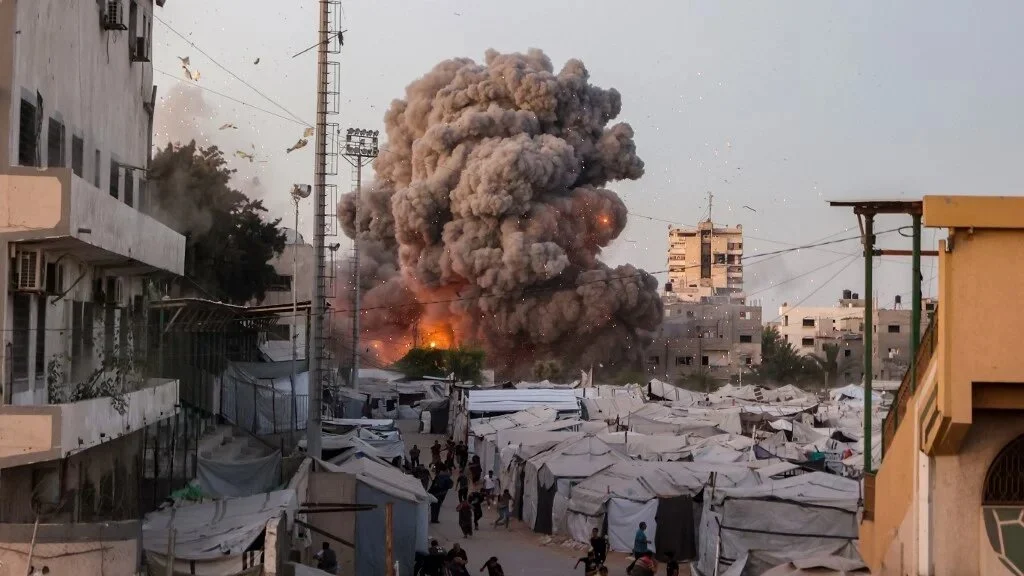
During the discussions, al-Hayya provided Minister Fidan with a comprehensive briefing on the escalating situation in the Palestinian territories. His report detailed ongoing Israeli military operations across the Gaza Strip and the occupied West Bank, emphasizing the humanitarian toll and the strategic implications of these actions. Of particular concern to al-Hayya was the overnight period leading up to the meeting, which saw at least six Palestinians killed and 25 others wounded in Israeli air attacks targeting various locations within Gaza. Beyond the immediate military engagements, al-Hayya also highlighted the accelerated pace of illegal settlement expansion in the West Bank and the intensification of attacks on holy sites, particularly in occupied East Jerusalem, under the government of Prime Minister Benjamin Netanyahu. This multifaceted briefing aimed to galvanize Turkish support and draw international attention to the Palestinian perspective on the conflict.
The Broader Context: Turkey’s Stance and Hamas’s Evolution
The meeting between Fidan and al-Hayya is not an isolated event but rather a continuation of Turkey’s long-standing policy regarding the Israeli-Palestinian conflict and its relationship with Hamas. Under President Recep Tayyip Erdoğan, Turkey has consistently positioned itself as a staunch advocate for the Palestinian cause, often portraying itself as a protector of Palestinian rights and Jerusalem’s holy sites. This stance resonates deeply with a significant segment of the Turkish electorate and aligns with Ankara’s broader foreign policy objectives of asserting influence in the Middle East and the Islamic world.
Turkey does not recognize Hamas as a terrorist organization, instead viewing it as a legitimate political movement representing the aspirations of many Palestinians. This divergence from Western and Israeli policy has often been a point of contention in Turkey’s relations with its traditional allies and with Israel. Ankara has historically provided a haven for Hamas leaders and facilitated diplomatic engagements, viewing such interactions as crucial for potential mediation efforts and for maintaining channels of communication with all Palestinian factions. This position allows Turkey a unique leverage, albeit one that comes with significant geopolitical complexities and diplomatic risks.
Khalil al-Hayya’s election to head Hamas’s political bureau is a significant development within the organization. Al-Hayya is a veteran leader within Hamas, known for his strong ideological convictions and his role as a prominent negotiator. His ascent reflects internal dynamics within Hamas, which regularly undergoes leadership changes through internal elections. These elections, though not transparent to outsiders, are crucial for maintaining the group’s organizational structure and adapting to evolving political landscapes. Al-Hayya’s predecessor, or rather, the overarching leader of Hamas’s political bureau, Ismail Haniyeh, remains a central figure, with al-Hayya’s role often focusing on internal political management and strategic coordination within the Gaza Strip and abroad. His meeting with Fidan signals Hamas’s intent to reinforce its diplomatic outreach and secure international backing, especially from sympathetic regional powers like Turkey, in the wake of internal leadership shifts.
Escalating Tensions on the Ground: A Snapshot of Gaza and the West Bank
The current environment in the Palestinian territories is marked by profound instability and escalating violence, which formed the core of al-Hayya’s briefing to Minister Fidan. In the Gaza Strip, a densely populated enclave under an Israeli-Egyptian blockade since 2007, the humanitarian situation remains dire. Recent Israeli air attacks, often described by Israel as responses to rocket fire from Gaza or pre-emptive strikes against militant infrastructure, frequently result in civilian casualties and further devastate an already fragile infrastructure. The incident reported by al-Hayya, involving six fatalities and 25 injuries overnight, is tragically commonplace in a region where cycles of violence are frequent. According to reports from the United Nations Office for the Coordination of Humanitarian Affairs (OCHA), 2023 saw one of the highest numbers of Palestinian casualties in the West Bank and Gaza in years, underscoring a sharp deterioration in security. The persistent blockade has crippled Gaza’s economy, leading to high unemployment rates, widespread poverty, and a critical shortage of essential services, including healthcare and clean water.
In the occupied West Bank, the situation is equally volatile. Al-Hayya’s emphasis on accelerated illegal settlement expansion points to a long-standing grievance that fuels Palestinian resentment and international condemnation. Israeli settlements, built on land captured in the 1967 war, are considered illegal under international law and a major obstacle to a two-state solution. The Netanyahu government has indeed pursued policies that facilitate and encourage the growth of these settlements, including approving new housing units and legalizing previously unauthorized outposts. Data from organizations like Peace Now and B’Tselem consistently show a significant increase in settlement construction and settler violence against Palestinians, further fragmenting Palestinian territory and undermining the viability of a future independent state.

Furthermore, the "intensified attacks on holy sites in occupied East Jerusalem," particularly the Al-Aqsa Mosque compound, are a flashpoint that often ignites wider regional tensions. The Al-Aqsa Mosque, revered by Muslims as the third holiest site in Islam, is located on a site also sacred to Jews, who refer to it as the Temple Mount. Frequent incursions by Israeli security forces and right-wing Jewish activists into the compound, often accompanied by restrictions on Palestinian worshippers, are perceived as direct provocations by Palestinians and the broader Muslim world. These incidents often lead to violent confrontations, as witnessed during periods of heightened tension in recent years, drawing strong condemnations from Muslim-majority nations, including Turkey.
Turkey’s Diplomatic Calculus: Balancing Regional Ambitions and International Relations
Turkey’s decision to host and engage with Khalil al-Hayya is a calculated diplomatic move that reflects its complex foreign policy objectives. On one hand, it reinforces Turkey’s self-proclaimed leadership role in defending Islamic causes and championing the rights of Palestinians. This resonates domestically and with allied nations in the Muslim world, bolstering Ankara’s soft power and regional influence. President Erdoğan has often used strong rhetoric against Israel’s policies, positioning Turkey as a counterbalance to what he perceives as Western inaction or complicity in the conflict.
On the other hand, this engagement with Hamas presents significant challenges for Turkey’s relations with key international actors. The United States and the European Union view Hamas as a terrorist organization and discourage diplomatic interactions. Such meetings can strain Turkey’s ties with these entities, particularly at a time when Ankara is seeking to mend fences with some Western allies and improve its economic standing. Similarly, Israel consistently condemns Turkey’s support for Hamas, viewing it as hostile and detrimental to regional security. Despite periodic attempts at normalization, Turkish-Israeli relations remain fraught with tension, largely due to Ankara’s unwavering support for Hamas and its criticism of Israeli actions. Paradoxically, Turkey maintains significant trade relations with Israel, demonstrating a pragmatic approach that separates economic interests from political rhetoric and diplomatic alignments. This complex balancing act is central to Turkey’s foreign policy, navigating between ideological solidarity and geopolitical realities.
Statements and Repercussions: A Spectrum of Reactions
While specific official statements immediately following the meeting were not extensively publicized beyond the initial reports, the typical responses from the involved parties can be inferred based on their established positions:
- Turkish Foreign Ministry/Government: Turkish officials would likely reiterate their commitment to a just and lasting resolution to the Israeli-Palestinian conflict, advocating for a two-state solution with East Jerusalem as the capital of an independent Palestinian state. They would emphasize the need for de-escalation, the protection of civilians, and the cessation of illegal settlement activities. Furthermore, Turkey would underscore its humanitarian concerns for the people of Gaza and its readiness to facilitate aid and diplomatic efforts to alleviate suffering.
- Hamas: Through al-Hayya’s briefing and subsequent communications, Hamas would emphasize the legitimacy of Palestinian resistance against Israeli occupation and aggression. They would seek to garner international pressure on Israel to halt its military operations, end the blockade of Gaza, and cease settlement expansion. The meeting with Fidan would be framed as a diplomatic victory, demonstrating Hamas’s continued relevance and ability to engage with regional powers despite international isolation attempts.
- Israel: The Israeli government would almost certainly condemn the meeting, viewing it as an act of legitimizing a terrorist organization. Israeli officials would likely reiterate their security concerns regarding Hamas, emphasize the group’s responsibility for acts of violence, and express disappointment over Turkey’s continued engagement with Hamas. Such interactions are seen by Israel as undermining efforts to combat terrorism and complicating regional security dynamics.
- International Community: Reactions from the international community would likely be varied. Western powers, particularly the United States and European Union members, would likely express concern over Turkey’s engagement with a designated terrorist organization, potentially reiterating their calls for Hamas to disarm and recognize Israel. Other nations, particularly those in the Arab and Muslim world, might view Turkey’s actions with varying degrees of approval, ranging from silent support for the Palestinian cause to explicit endorsement of diplomatic channels with Hamas. The United Nations would likely maintain its focus on humanitarian aid and a political resolution, while avoiding direct commentary on bilateral meetings of this nature.
The Road Ahead: Implications for Regional Stability and the Peace Process
The meeting between Hakan Fidan and Khalil al-Hayya, while not a direct peace negotiation, carries significant implications for regional stability and the stalled Israeli-Palestinian peace process. For Turkey, it solidifies its image as a key player in the Middle East, capable of engaging with diverse actors, including those deemed controversial by Western powers. This approach, however, also positions Turkey as an outlier in certain international diplomatic frameworks, potentially limiting its effectiveness as a universally accepted mediator.
For Hamas, such high-level diplomatic engagement provides a vital lifeline, helping to counter its international isolation and validate its political wing. It allows the group to present its narrative directly to influential regional states, seeking to mobilize support and pressure against Israeli policies. This strategy aims to reinforce Hamas’s position as a central actor in Palestinian politics, despite its military wing.
For the Israeli-Palestinian conflict, the meeting underscores the persistent challenge of finding a path to peace when key regional actors maintain different definitions of legitimate political representation. While Turkey’s engagement with Hamas might be seen by some as opening a channel for communication, others view it as an impediment to peace by bolstering a group that rejects direct negotiations with Israel. The escalating violence in Gaza and the West Bank, coupled with the relentless expansion of settlements and tensions over holy sites, creates an increasingly grim outlook for a two-state solution. In this complex environment, Turkey’s continued diplomatic overtures to Hamas ensure that Ankara remains a significant, albeit often contentious, voice in the ongoing struggle for Palestinian statehood and regional stability. The long-term impact of such interactions will depend on whether they can ultimately contribute to de-escalation and a political resolution, or merely serve to entrench existing divisions.

Related Posts
Over 150 Israeli Settlers Storm Al-Aqsa Compound and Perform Prayers, Violating Status Quo Under Police Protection.
UN Report Highlights Over 900 Obstacles Hampering West Bank Aid Amid Escalating Humanitarian Crisis