Slow-Rolling Regime Change: KT McFarland Proposes Gradual Power Shift Amidst Iran’s Economic Struggles
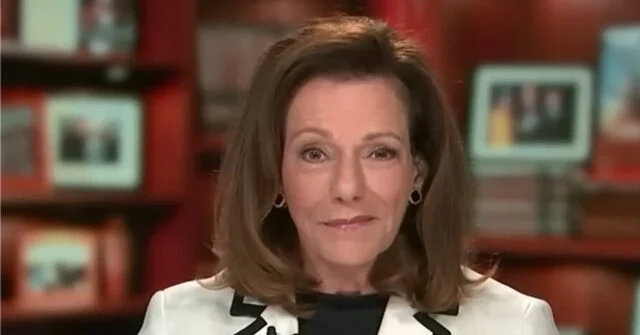
Former Trump Deputy National Security Adviser KT McFarland, speaking on the Fox Business Network’s "Varney & Co." broadcast on Monday, articulated a strategic vision for Iran that involves a "slow-rolling regime change" or "slow-rolling coup." McFarland posited that the optimal outcome for the region and international stability would be a gradual erosion of the Islamic Revolutionary Guard Corps’ (IRGC) power, leading to an increased influence for more civilian-led bodies, such as the Iranian parliament. This prospective shift, she argued, is being fueled by the severe economic pressures currently gripping the Islamic Republic. Her remarks also shed light on a perceived divergence in strategic objectives between the United States and Israel regarding Iran, particularly beyond the immediate goal of neutralizing Tehran’s nuclear ambitions.
The Genesis of a "Slow-Rolling Regime Change"
McFarland’s assessment hinges on the premise that Iran’s faltering economy is creating conditions ripe for internal political realignments. She specifically suggested that the "best solution" is one where the IRGC, a powerful and ideologically driven branch of Iran’s military with significant economic and political sway, progressively loses its grip. Concurrently, she envisions a scenario where civilian entities, including the Majlis (parliament) – with whom international negotiations often take place – would gradually assume greater control. This theoretical power transition, she explained, is not predicated on external military intervention but rather on the internal destabilization caused by economic devastation.
The former adviser’s analysis commenced with a provocative assertion that "it’s not a bad thing the longer this war goes on, at least economically, for the United States." While the precise "war" she referenced could encompass various regional tensions, including the ongoing Israel-Hamas conflict and its broader spillover effects, her subsequent comments linked it to oil prices and regional military build-ups. She observed a recurring pattern where, as oil prices approach $100 a barrel, a ceasefire often materializes, causing prices to recede. During these periods, the U.S. reportedly uses the opportunity to augment its military resources in the Middle East. This strategic maneuvering, coupled with sustained economic pressure on Iran, forms the bedrock of her "slow-rolling" thesis.
Iran’s Economic Crucible: Sanctions and Blockades
A central pillar of McFarland’s argument is the immense economic pressure being exerted on Iran. She highlighted the effectiveness of ongoing blockades, stating, "Iran is getting squeezed, no ships are going in and out of Iranian ports, regardless of ceasefire, no ceasefire, that blockade is still holding, and that’s got to be squeezing Iran economically." This economic strangulation is seen as the primary catalyst for the internal shifts she anticipates.
To understand the depth of this economic squeeze, it is essential to trace the history and impact of international sanctions on Iran. Following the 1979 Islamic Revolution, Iran has faced various forms of international sanctions, primarily from the United States. These intensified significantly after revelations about its nuclear program. The Joint Comprehensive Plan of Action (JCPOA), signed in 2015, offered a brief respite from some sanctions in exchange for limitations on Iran’s nuclear activities. However, the Trump administration’s unilateral withdrawal from the JCPOA in May 2018 and the subsequent re-imposition of "maximum pressure" sanctions dealt a severe blow to Iran’s economy.
These sanctions target critical sectors, including oil exports, banking, shipping, and petrochemicals, which are lifelines for the Iranian economy. Iran’s oil exports, once exceeding 2.5 million barrels per day, plummeted dramatically after 2018, though precise figures are often contested and subject to clandestine trade. The inability to freely export oil, coupled with restrictions on accessing international financial systems, has crippled the country’s revenue streams.
Key Economic Indicators and Public Discontent:
- Inflation: Iran has grappled with persistently high inflation, often exceeding 40-50% annually, eroding the purchasing power of its citizens and leading to widespread economic hardship.
- Currency Depreciation: The Iranian Rial has suffered significant depreciation against major international currencies, making imported goods more expensive and fueling inflation.
- Unemployment: While official figures can be opaque, unemployment, particularly among youth, remains a significant challenge, contributing to social unrest.
- GDP Contraction: The economy has experienced periods of severe contraction, though recent years have shown modest growth, often attributed to adaptation to sanctions and increased trade with non-Western partners.
The cumulative effect of these economic challenges has been a rise in public discontent and sporadic protests across Iran, often driven by grievances over living conditions, corruption, and the perceived mismanagement of the economy by the ruling establishment. McFarland’s "slow-rolling regime change" theory implicitly links this economic distress and public frustration to a potential weakening of the IRGC’s absolute authority, creating an opening for alternative power centers to emerge.
U.S. and Israeli Interests: A Divergent Path?
The conversation then pivoted to a crucial question posed by host Stuart Varney: "Is there any rift between the United States and Israel at this point?" McFarland acknowledged a shared primary objective but highlighted a subsequent divergence. "We have one objective, which is getting rid of Iran’s nuclear program. That’s number one for both of us," she stated. However, she continued, "At that point, our interests kind of diverge. Because [Prime Minister] Netanyahu has said, well, they want regime change. President Trump has said, no, not necessarily."
This distinction underscores a long-standing tension in the strategic approaches of the two close allies towards Iran.
- Israel’s Position: For Israel, Iran’s nuclear program is an existential threat, particularly given Tehran’s explicit calls for Israel’s destruction. Beyond the nuclear threat, Israel views the current Iranian regime, and especially the IRGC, as the primary destabilizing force in the Middle East, funding and arming proxy groups like Hezbollah in Lebanon, Hamas in Gaza, and various militias in Syria and Iraq. Therefore, a complete regime change in Tehran is often seen by Israeli leadership as the ultimate solution to ensure its long-term security. Prime Minister Benjamin Netanyahu has frequently expressed this sentiment, advocating for a fundamental shift in Iran’s governance.
- U.S. Position (Trump Administration): While the Trump administration adopted a hardline stance against Iran, withdrawing from the JCPOA and implementing "maximum pressure," its official policy did not explicitly call for regime change. Instead, it aimed to compel Iran to negotiate a more comprehensive deal that would address its nuclear program, ballistic missile development, and regional malign activities. The "not necessarily" attributed to President Trump by McFarland reflects a preference for behavioral change rather than an outright overthrow of the existing political structure, likely fearing the instability and unpredictable consequences of such an endeavor.
This divergence is not merely semantic. A U.S.-led push for regime change could entail military intervention or covert operations, potentially destabilizing the entire region and drawing the U.S. into another protracted conflict. Conversely, Israel’s more assertive posture reflects its immediate geographic proximity and heightened sense of vulnerability to Iranian threats. The implicit threat from Netanyahu, referenced by McFarland – "okay, Iran, you come after us, we’re coming after you, and, by the way, we know where the top third, fourth, fifth tier of the IRGC is, and we can take them out as effectively as we’ve taken out the first and second tier" – illustrates Israel’s readiness for direct action against the IRGC’s command structure, even in the absence of a full-scale regime change objective from its primary ally.
The IRGC’s Enduring Influence and Potential Vulnerabilities
The IRGC, founded after the 1979 revolution, is far more than a conventional military force. It is an ideological army, deeply interwoven with Iran’s political, economic, and social fabric. It controls vast business empires, known as bonyads, and exerts significant influence over key industries, generating substantial revenue that bypasses the formal government budget. This economic muscle, coupled with its robust intelligence apparatus and control over internal security, makes it a formidable power broker, often overshadowing the elected government. The Supreme Leader, Ali Khamenei, directly commands the IRGC, further cementing its position as a pillar of the Islamic Republic.
However, McFarland’s hypothesis suggests vulnerabilities. The very economic devastation she cites could, over time, strain the IRGC’s ability to maintain its extensive patronage networks and fund its operations. While the IRGC has proven resilient to sanctions by developing illicit trade routes and self-sufficiency initiatives, sustained pressure could lead to internal dissent, corruption, or a weakening of its popular legitimacy, particularly if it is perceived as the primary architect of public hardship. A "slow-rolling coup" implies a gradual erosion of loyalty or capability, rather than an abrupt, violent overthrow.
The Iranian Parliament’s Role and Capacity for Control
In contrast to the IRGC, the Iranian Parliament (Majlis-e Shura-ye Eslami) represents a more civilian and somewhat democratic facet of Iran’s complex political system. While candidates for the Majlis are vetted by the Guardian Council (a powerful unelected body), it does provide a platform for debate and legislative activity. McFarland’s suggestion that the parliament could "gain control" implies a significant shift in the balance of power within Iran.
Currently, the Majlis’s powers are circumscribed by the Supreme Leader and the Guardian Council. However, a severely weakened IRGC, stemming from economic collapse and potential internal fragmentation, could theoretically create a vacuum that the Majlis, or other elected bodies, might attempt to fill. This would necessitate a fundamental redefinition of power dynamics within the Islamic Republic, potentially leading to a more technocratic or reformist government, more responsive to economic realities and perhaps more open to international engagement. Such a shift would represent a dramatic departure from the current IRGC-dominated political landscape.
Regional Geopolitical Context and Escalation Risks
McFarland’s comments are set against a backdrop of heightened regional tensions. The "war" she references could broadly encompass the ongoing conflict in Gaza, the Houthi attacks on Red Sea shipping, and the myriad proxy conflicts involving Iran across the Middle East. The U.S. has indeed been building up its military resources in the region, including naval assets and air defense systems, to deter escalation and protect its interests and allies.
The delicate balance of power in the region means that any significant internal shift in Iran, whether a "slow-rolling regime change" or an abrupt crisis, carries profound geopolitical implications. A weakening of the IRGC could lead to a less aggressive regional posture by Iran, potentially reducing support for its proxies and de-escalating conflicts. Conversely, internal instability could also provoke a more unpredictable or desperate response from the regime, increasing the risk of miscalculation and direct confrontation.
Expert Analysis and Alternative Perspectives
While McFarland’s proposal offers a specific strategic pathway, it is important to note that the notion of a "slow-rolling regime change" is a complex and highly debated topic among experts on Iran. Many analysts contend that the IRGC’s deep entrenchment in all aspects of Iranian society makes it exceedingly difficult to dislodge without significant internal or external catalysts. The resilience of the regime in the face of decades of sanctions and protests also suggests a robust, albeit repressive, capacity for survival.
Furthermore, the idea of a gradual transfer of power to the parliament, while appealing in theory, faces the reality of the Supreme Leader’s ultimate authority and the Guardian Council’s oversight. Any move towards increased parliamentary power would likely be resisted by the conservative establishment unless it served their broader strategic interests or was an unavoidable consequence of profound national crisis.
Conclusion and Outlook
KT McFarland’s articulation of a "slow-rolling regime change" in Iran, driven by economic devastation and a gradual weakening of the IRGC, presents a provocative and potentially optimistic long-term strategy for managing the Iranian challenge. Her insights underscore the critical role of economic pressure as a tool for political influence, distinct from overt military intervention. The acknowledged divergence between U.S. and Israeli objectives – a desire for a changed nuclear program versus a changed regime – highlights the complex diplomatic tightrope that both nations walk in confronting Tehran.
As Iran continues to grapple with severe economic headwinds and the IRGC maintains its dominant, albeit potentially strained, position, the trajectory of its internal power dynamics remains a subject of intense international scrutiny. Whether economic pressure will indeed culminate in a gradual, controlled shift towards a more civilian-led governance, as McFarland suggests, or lead to other, less predictable outcomes, will largely determine the future stability of the Middle East. The coming years will reveal if the "best solution" proposed can navigate the intricate realities of Iranian politics and regional geopolitics to fruition.

Related Posts
Democratic Candidates Must Moderate to Win General Elections, Says Rep. Greg Stanton
Lisa Demuth Secures Republican Gubernatorial Nomination in Minnesota, Defeating Trump-Endorsed Mike Lindell