India Bolsters Strategic Autonomy with Successful Maiden Test of Long-Range Surface-to-Air Interceptor Missile for Kusha Air Defense System
In a move that significantly advances New Delhi’s quest for a sophisticated, indigenous multi-layered air defense umbrella, India successfully conducted the maiden flight test of its long-range surface-to-air interceptor missile on July 23, 2026. The test, carried out from the Integrated Test Range at A.P.J. Abdul Kalam Island off the coast of Odisha, marks a pivotal milestone in "Project Kusha," an ambitious domestic program designed to rival the capabilities of the Russian-made S-400 Triumf system. According to the Indian Ministry of Defense, the interceptor successfully neutralized a simulated high-speed, high-altitude aerial electronic target, validating the fundamental design and propulsion parameters of the weapon system.
The successful interception comes at a critical juncture as India seeks to modernize its aging military hardware and reduce its decades-long reliance on foreign defense contractors. While India has achieved notable success with short-range systems like the Akash and medium-range platforms like the MRSAM (Medium Range Surface-to-Air Missile), the long-range tier has remained a gap filled almost exclusively by imported technology. Project Kusha is specifically engineered to bridge this strategic void, providing the Indian Air Force (IAF) with a homegrown solution capable of detecting and destroying incoming threats at distances exceeding 350 kilometers.
Technical Specifications and Developmental Variants
Project Kusha is not a single missile but a comprehensive air defense ecosystem comprising three distinct interceptor variants. These missiles are engineered to engage targets at ranges of approximately 150 kilometers, 250 kilometers, and a final tier of 350 to 400 kilometers. This tiered approach allows for a "layered" engagement strategy, ensuring that if a high-speed threat evades the outer perimeter, it remains vulnerable to successive layers of defense.
The Defense Research and Development Organization (DRDO), the primary architect of the system, noted that the interceptor is designed to neutralize a diverse spectrum of aerial threats. This includes fifth-generation fighter jets, cruise missiles, precision-guided munitions, large transport aircraft (often used for airborne early warning), and swarms of unmanned aerial vehicles (UAVs). While the official statement did not specify which of the three range variants was tested on Thursday, the successful engagement of a high-altitude electronic target suggests that the propulsion systems and the active seeker technology are performing within expected parameters.
A critical component of the Kusha system is its indigenous radar and command-and-control (C2) architecture. The system utilizes advanced Active Electronically Scanned Array (AESA) radars, which are capable of tracking hundreds of targets simultaneously while maintaining a low probability of intercept. These radars provide the high-fidelity data required to guide the interceptors through the mid-course phase before the missile’s onboard seeker takes over for the terminal engagement.
Bridging the Gap: The S-400 and Barak-8 Comparison
To understand the significance of Project Kusha, it is necessary to examine India’s current air defense hierarchy. At the lower end of the spectrum, India relies on the indigenous Akash system for short-range protection (up to 25 km). For medium-range threats, the IAF utilizes the Barak-8 (MRSAM), a system co-developed with Israel Aerospace Industries, which offers a range of approximately 70 to 100 kilometers.
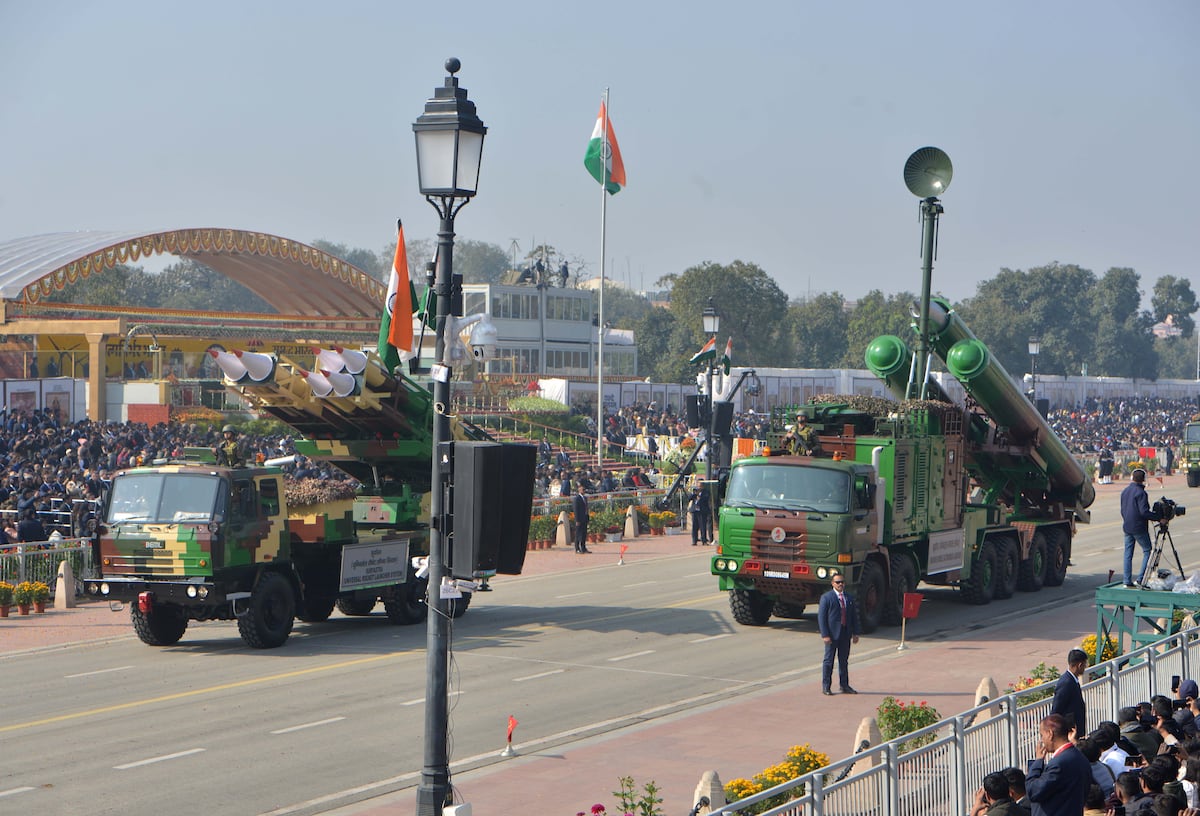
However, until now, any threat beyond the 100-kilometer mark required the activation of the S-400 Triumf, five units of which were ordered from Russia in a $5.43 billion deal in 2018. "At present, the S-400 provides long-range coverage of about 400 kilometers, while the Barak-8 systems provide shorter ranges… so there is a huge gap in between," explained Dinakar Peri, a Fellow in the Security Studies Program at Carnegie India. "Kusha will bridge this."
By developing a system that matches the 400-kilometer reach of the S-400, India is ensuring that it can maintain a robust defense posture even if geopolitical shifts or supply chain disruptions affect the maintenance and replenishment of its Russian-made assets. Furthermore, the Kusha system is being designed to be fully interoperable with India’s existing Integrated Air Command and Control System (IACCS), allowing for a seamless transition of target data between different missile batteries and radar stations.
Chronology of India’s Air Defense Evolution
The journey toward Project Kusha has been decades in the making, reflecting India’s gradual transition from a defense importer to a developer of high-end technology.
- 1980s-1990s: India launches the Integrated Guided Missile Development Program (IGMDP), leading to the creation of the Akash surface-to-air missile.
- 2000s: Collaboration with Israel begins on the Barak-8 project to address the need for naval and land-based medium-range defense.
- 2018: India signs the landmark agreement with Russia for five S-400 squadrons, despite the threat of U.S. sanctions under the Countering America’s Adversaries Through Sanctions Act (CAATSA).
- 2022-2023: Lessons from the conflict in Eastern Europe and localized border tensions highlight the vulnerability of ground assets to long-range cruise missiles and drones. The Indian government fast-tracks "Project Kusha."
- Early 2026: The Defence Acquisition Council (DAC), chaired by Defense Minister Rajnath Singh, grants Acceptance of Necessity (AoN) for a $5.4 billion package focused on layered air defense and counter-drone systems.
- July 2026: The first successful flight test of the Kusha interceptor is conducted.
Strategic Imperatives: The Two-Front Threat
The development of Kusha is heavily influenced by India’s unique security environment, characterized by long, contested borders with Pakistan and China. The rugged terrain of the Himalayas presents unique challenges for radar detection and missile kinematics. A long-range system allows the IAF to engage enemy aircraft or missiles well before they cross the Line of Actual Control (LAC) or the International Border (IB).
"The S-400 played a key role during the conflict with Pakistan last year," noted Peri, referring to recent regional tensions. "But it may not be enough for the next potential conflict. The need is to scale up its existing long-range air defenses significantly, and this is where Kusha will play a key role."
In the context of the border with Pakistan, the "reaction time" is incredibly short. Interceptors with high dash speeds and long-range seekers are essential to neutralizing threats far away from major population centers and strategic installations. On the northern front with China, the Kusha system provides a counter-measure to the People’s Liberation Army’s (PLA) increasingly sophisticated fleet of stealth fighters and long-range bombers.
Official Responses and the Push for "Atmanirbhar Bharat"
Following the successful test, high-ranking government officials emphasized that the achievement was a victory for the "Atmanirbhar Bharat" (Self-Reliant India) initiative. Defense Minister Rajnath Singh hailed the test as a "giant leap" for the nation’s defense capabilities.
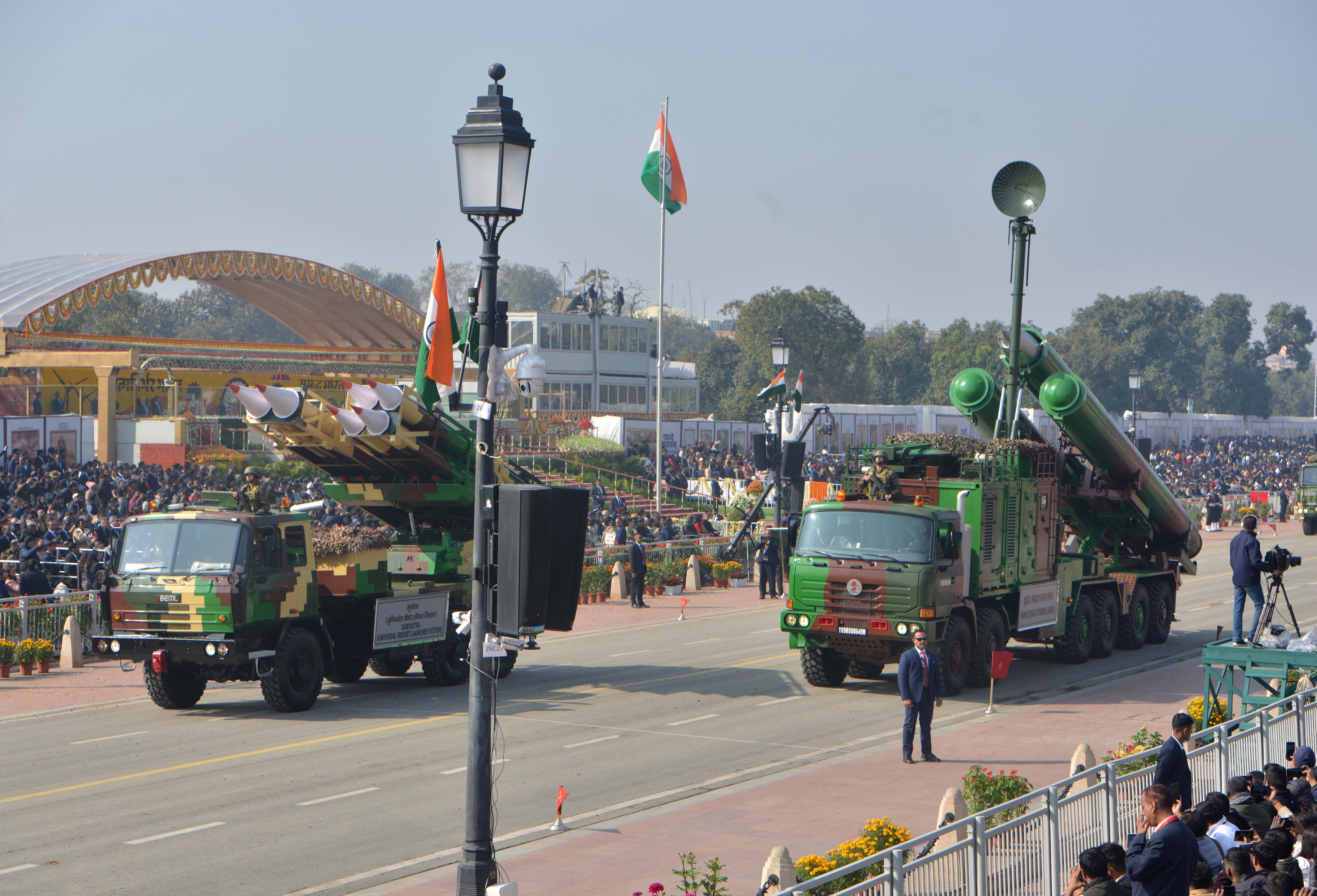
"The capability in developing long-range surface-to-air missile systems is possessed only by a handful of nations," Singh stated. "This will also eliminate the import dependency for such systems and signifies a giant leap in air defense capability of the nation."
The Ministry of Defense confirmed that the entire ecosystem—including the mobile launcher, the radar, the command-and-control post, and the missile itself—was developed domestically. This involved a collaborative effort between DRDO laboratories and private sector industry partners, including major firms like Larsen & Toubro (L&T), Tata Defence, and Bharat Dynamics Limited (BDL). By involving the private sector, the government aims to create a robust domestic supply chain that can support the mass production of these systems once they pass the final validation trials.
Future Outlook and Operational Deployment
Despite the success of the maiden test, the road to full operational deployment remains lengthy. Military analysts suggest that the system must undergo a series of "user trials" in varying climatic conditions—from the extreme heat of the Rajasthan desert to the sub-zero temperatures of the Ladakh high-altitude plateau.
Current projections suggest that the Kusha system will be ready for induction into the Indian Air Force within three to four years, likely around 2029 or 2030. In the interim, India will continue to rely on its S-400 batteries. In fact, earlier this year, New Delhi approved the acquisition of five additional S-400 systems to ensure there is no "security gap" while Kusha undergoes its rigorous testing phase.
The broader implication of Project Kusha extends beyond national security. If successful, India could eventually position itself as an exporter of long-range air defense technology to friendly nations, competing in a market currently dominated by the United States, Russia, and Israel. For now, however, the focus remains on perfecting the "Shield of India," ensuring that the nation’s skies remain protected by technology conceived, designed, and built on its own soil.

Related Posts
Pentagon Forges Landmark Seven-Year Agreements with Boeing and RTX to Accelerate Standard Missile-3 Production and Stabilize Defense Supply Chains
Boeing Unveils Ultra Low-Cost Seeker to Enhance Missile Inventory and Combat Cost Challenges in Modern Warfare