Tragedy Strikes Bite of Seattle Festival as Shootout Claims Three Lives, Injures Four, Including a Toddler
A horrific shootout erupted Sunday evening at the annual Bite of Seattle food festival, resulting in the deaths of three individuals and injuries to four others, including a two-year-old boy who remains in stable condition. The incident, which unfolded around 6 p.m. amidst the bustling crowds of one of Seattle’s most beloved summer events, sent shockwaves through the community and initiated a massive law enforcement response.
Chronology of a Catastrophic Evening
The festive atmosphere of the Bite of Seattle, typically a beacon of culinary delight and community celebration, was shattered abruptly at approximately 6:00 p.m. local time. Preliminary reports indicate that the altercation began between at least two individuals, escalating rapidly into a deadly exchange of gunfire. Eyewitness accounts, still raw with emotion and confusion, describe a sudden barrage of gunshots near a popular food vendor area, followed by immediate panic and a desperate scramble for safety among the tens of thousands of attendees. Families, couples, and individuals who had gathered to enjoy the diverse offerings of the festival found themselves caught in a terrifying scene of chaos.
Within minutes of the initial reports, emergency services were deluged with calls. Seattle Police Department (SPD) officers, some already on duty at the festival for crowd control and security, were among the first responders to arrive at the immediate scene of the shooting. Their swift action was crucial in containing the situation and initiating immediate life-saving measures. Paramedics from the Seattle Fire Department (SFD) also arrived rapidly, navigating through the dispersing crowds to reach the wounded. Two victims were pronounced dead at the scene, their lives tragically cut short amidst the public celebration. A third individual, critically injured, was transported to a nearby hospital but succumbed to their wounds shortly after arrival, bringing the death toll to three. Four other individuals sustained injuries of varying degrees, with one of the most heartbreaking cases being that of a two-year-old boy, who, despite his injuries, is reported to be in stable condition. The exact circumstances leading to the toddler’s injury are still under investigation, though it is believed to be a stray bullet from the exchange.
The immediate aftermath saw sections of the festival grounds locked down, with police establishing a perimeter to secure the area and begin their preliminary investigation. Attendees were directed to evacuate systematically, a process that, while orderly given the circumstances, was underscored by a palpable sense of fear and disbelief. Investigators immediately began collecting evidence, interviewing witnesses, and reviewing available surveillance footage from the festival grounds and surrounding businesses. The sheer scale of the event, with an estimated 350,000 attendees over its three-day run, presented significant challenges for both emergency response and the subsequent investigative efforts.
Law Enforcement Response and Ongoing Investigation
The Seattle Police Department swiftly launched a comprehensive investigation into the incident. KING5, a local news affiliate, was among the first to report on the unfolding tragedy. Assistant Chief Tyrone Davis of the Seattle Police Department confirmed that one of the suspected shooters was apprehended relatively quickly after the incident. Davis described the suspect in custody as a "young person," though further details regarding their identity, motive, or specific role in the shootout have not yet been publicly released. The capture of one suspect provided a small measure of relief, but the hunt for at least one additional shooter remains a high priority for law enforcement.
Deputy Chief Andre Sayles indicated that there is a strong possibility that more than two individuals were involved in the exchange of gunfire, suggesting a more complex and potentially gang-related scenario. Police theorize that the suspects were actively shooting at each other, turning a public festival into a deadly battleground. This hypothesis, if confirmed, underscores the severe risk posed to innocent bystanders when armed individuals engage in conflict in densely populated areas. The New York Times reported on the details of the ongoing search, highlighting the urgency with which SPD is pursuing the remaining suspect(s) to ensure public safety and bring all perpetrators to justice. A large contingent of detectives, forensic specialists, and patrol officers are dedicating resources to track down the outstanding individual(s), utilizing every available investigative tool. This includes extensive canvassing of the area, analysis of ballistic evidence, and coordination with other law enforcement agencies.
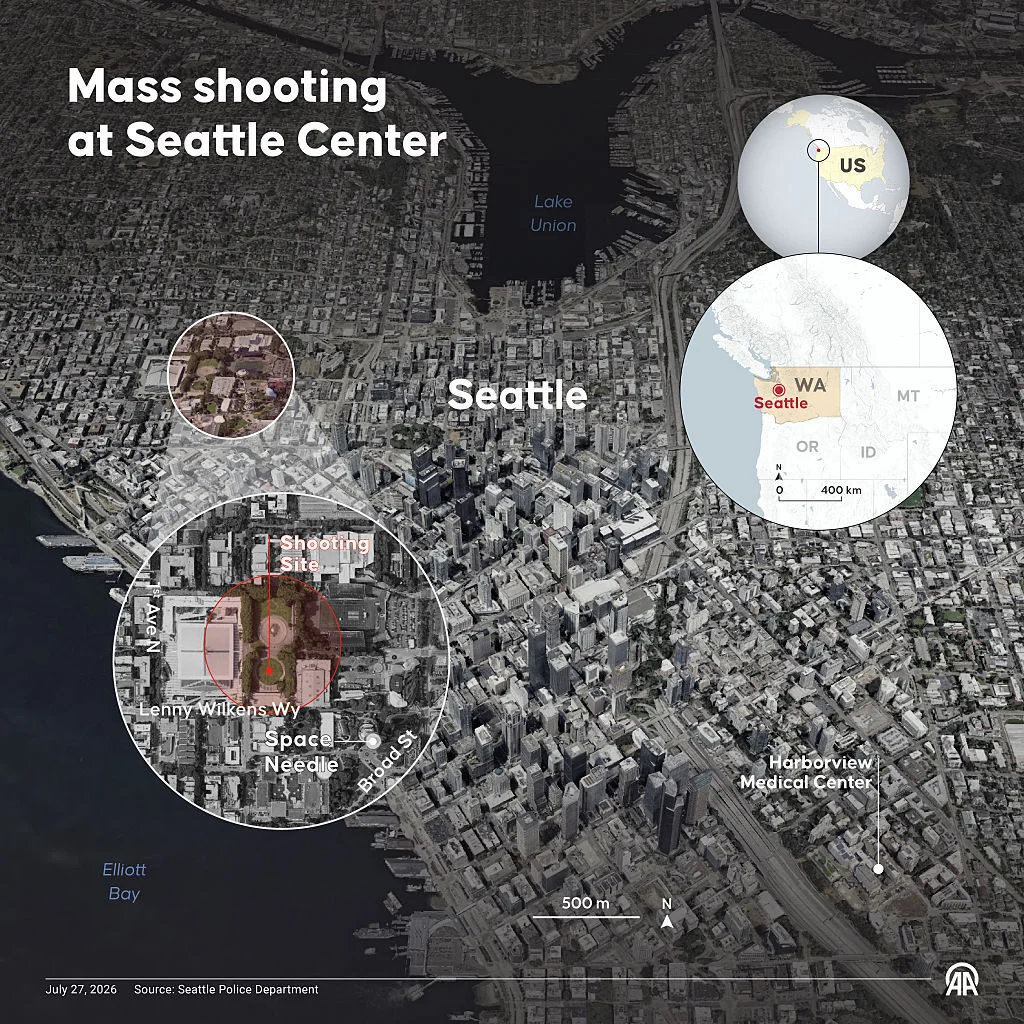
The image provided by Elif Acar/Anadolu via Getty Images, depicting a detailed view covering the shooting, became a stark visual representation of the gravity of the incident, circulating widely as the news broke. It serves as a grim reminder of the impact such events have on urban landscapes and the sense of security within communities.
The Bite of Seattle: A Community Institution Under Siege
The Bite of Seattle, inaugurated in 1982, has grown over the decades into a cornerstone event of the city’s summer calendar. It is renowned for its expansive culinary offerings, showcasing hundreds of local restaurants, food trucks, and artisan vendors, drawing an impressive average of 350,000 attendees over its typical three-day duration. The festival’s website proudly describes it as "three days of food, drink, and community celebration," a description that now stands in stark contrast to the violence that marred its most recent iteration. For over forty years, the festival has been a symbol of Seattle’s vibrant culture, bringing together diverse communities to celebrate shared passions for food and entertainment. Its location, often in prime public spaces like Seattle Center, makes it easily accessible and a major draw for both residents and tourists.
The economic impact of the Bite of Seattle on the local economy is substantial. It provides a significant boost to small businesses, creates temporary employment opportunities, and contributes to the city’s tourism revenue. The festival’s success is a testament to effective urban event planning, logistical coordination, and a general expectation of public safety. This year’s tragic events, however, cast a long shadow over its future and raise critical questions about security protocols for large-scale public gatherings. The profound emotional and psychological toll on attendees, vendors, and organizers cannot be overstated, transforming a cherished tradition into a site of trauma.
Community and Official Reactions
The immediate aftermath of the shooting saw a wave of reactions from city officials, community leaders, and the public. Mayor Sarah Chen of Seattle issued a statement expressing profound sorrow and condemnation of the senseless violence. "Our hearts go out to the victims and their families affected by this unspeakable tragedy," Mayor Chen stated. "The Bite of Seattle is a cherished event that brings our community together, and to see it marred by such brutality is deeply disturbing. We will dedicate every available resource to supporting the Seattle Police Department in their investigation and ensuring that those responsible are brought to justice." The Mayor also emphasized the city’s commitment to reviewing and enhancing security measures for all future public events.
Police Chief Eleanor Vance echoed these sentiments, reassuring the public of the department’s unwavering commitment to public safety. "This was a cowardly act of violence that has no place in our city," Chief Vance stated during a press conference. "Our officers responded with courage and professionalism, and they will not rest until every individual involved in this shooting is held accountable. We urge anyone with information, no matter how small, to come forward and assist us in our investigation."
The organizers of the Bite of Seattle released a statement expressing their deep shock and sorrow, extending their condolences to the victims and their families. They pledged full cooperation with law enforcement and indicated that a thorough review of all security protocols would be undertaken in collaboration with city authorities and public safety experts. Many festival vendors, whose livelihoods depend on such events, expressed both fear and resolve, hoping that the incident would not deter future attendance or overshadow the spirit of the festival.
Community advocacy groups, particularly those focused on gun violence prevention, immediately renewed calls for stronger gun control measures and comprehensive strategies to address urban violence. Reverend Michael Jensen, a prominent local faith leader, remarked, "This tragedy is a stark reminder of the urgent need to address the pervasive issue of gun violence in our society. Our public spaces, especially those meant for celebration, must be safe havens, not battlegrounds." Psychologists and trauma specialists also offered resources to those affected, acknowledging the potential for long-term psychological impacts on witnesses and the broader community.
Broader Context: Public Safety and Event Security in Urban Environments
The shooting at the Bite of Seattle tragically highlights the persistent challenges associated with ensuring public safety at large-scale urban events. Festivals, concerts, and public gatherings, by their very nature, present complex security environments due to the high volume of attendees, open access points, and the desire to maintain a welcoming, non-restrictive atmosphere. This incident will undoubtedly reignite debates about the balance between security and accessibility at public events.
Security experts frequently discuss a multi-layered approach to event safety, encompassing visible police presence, plainclothes officers, surveillance technologies, controlled access points, and emergency response planning. However, even the most robust security measures can be challenged by determined individuals or spontaneous acts of violence. The notion that the suspects were "shooting at each other" suggests an internal conflict brought into a public space, a scenario that is particularly difficult to prevent without highly intrusive screening measures.
Seattle, like many major U.S. cities, has grappled with fluctuations in crime rates and public safety concerns. While the city has made efforts to invest in community policing initiatives and crime reduction strategies, incidents of gun violence, particularly those involving multiple shooters or impacting innocent bystanders, remain a significant concern. According to data from the Centers for Disease Control and Prevention (CDC) and various urban crime statistics, incidents of gun violence in public spaces, while statistically rare compared to overall attendance numbers, carry disproportionately high societal impact due, to their potential for mass casualties and their erosion of public trust in safety. This event will likely prompt a re-evaluation of existing security protocols for all major public events in the Pacific Northwest, pushing organizers and city officials to consider new technologies, increased personnel, and enhanced threat assessment strategies.
Implications for the Future
The shooting at the Bite of Seattle will have far-reaching implications for the city and for the future of large-scale public events. First and foremost, there will be a sustained focus on the ongoing criminal investigation to apprehend all responsible parties and understand the full scope of the incident. This is crucial not only for justice but also for providing answers to a grieving community.
Secondly, the incident will undoubtedly trigger a comprehensive review of event security protocols. This could lead to more visible security personnel, stricter bag checks, potentially even metal detectors at entry points, and enhanced surveillance capabilities. While such measures might alter the traditional open and free-flowing nature of the festival, they may be deemed necessary to restore public confidence. The cost of such increased security will also be a factor, potentially impacting ticket prices or requiring additional public funding.
Economically, the immediate impact on local businesses and tourism could be significant. While Seattle is a resilient city, negative publicity surrounding such a tragic event can deter visitors and reduce participation in future events, at least in the short term. The long-term reputation of the Bite of Seattle itself will depend heavily on the actions taken by organizers and the city to ensure future safety.
Psychologically, the community will need time to heal. Events like the Bite of Seattle are not just about food; they are about community bonding, shared experiences, and a sense of collective joy. When that joy is violently disrupted, it leaves a collective trauma that can manifest as anxiety, fear, and a reluctance to participate in large gatherings. Support services for victims, witnesses, and the broader community will be essential in the coming months.
Ultimately, the tragedy at the Bite of Seattle serves as a somber reminder of the vulnerabilities inherent in modern urban life and the ongoing imperative to balance freedom of assembly with robust public safety measures. As Seattle mourns its dead and tends to its wounded, the city faces the daunting task of piecing together what happened, healing its community, and ensuring that such a senseless act of violence never again mars its beloved celebrations. The spirit of the city, however, remains resilient, committed to overcoming this challenge and reaffirming its dedication to fostering a safe and vibrant environment for all its citizens and visitors.

Related Posts

Democratic Candidates Must Moderate to Win General Elections, Says Rep. Greg Stanton
Lisa Demuth Secures Republican Gubernatorial Nomination in Minnesota, Defeating Trump-Endorsed Mike Lindell