France and Germany Solidify Strategic Nuclear Partnership Through Joint Maneuvers and Forward Deterrence Initiative
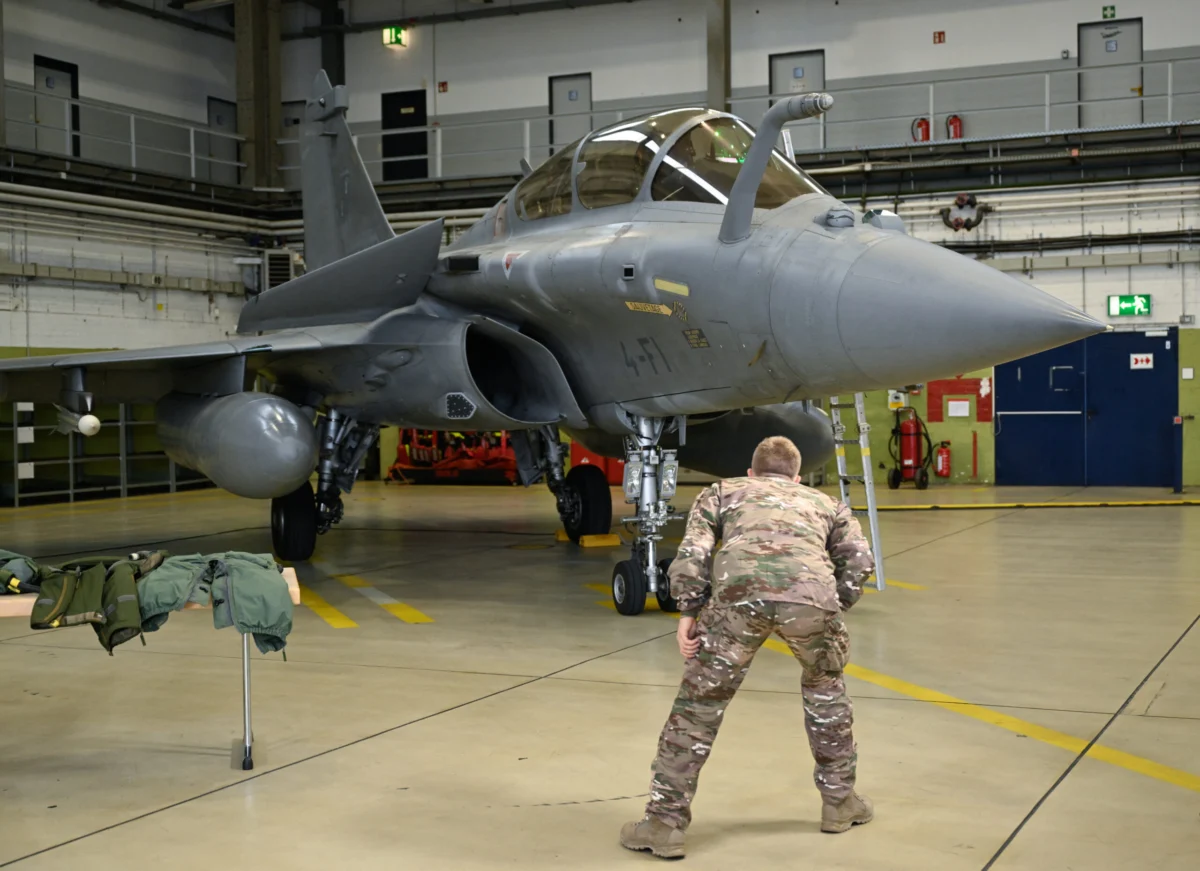
The landscape of European security underwent a fundamental transformation this month as France and Germany transitioned from theoretical policy discussions to active military cooperation in the nuclear domain. On July 17, 2026, the Nörvenich air base near Cologne served as the backdrop for a historic demonstration of bilateral integration, featuring the presence of French nuclear-capable Rafale fighter jets on German soil. This deployment, occurring alongside a high-level meeting of the Franco-German Defense and Security Council, signals a concrete implementation of Paris’s "forward deterrence" doctrine—a strategic shift intended to extend the French nuclear umbrella across the European continent.
The meeting between French President Emmanuel Macron and German Chancellor Friedrich Merz marked a pivotal moment in a relationship that has recently been strained by industrial disagreements. By confirming Germany’s participation in upcoming French nuclear exercises, the two leaders have signaled a new era of "atomic interoperability." This cooperation is structured around a "nuclear steering group" established in March 2026, tasked with coordinating the integration of conventional German forces into French strategic frameworks. While the sovereignty over nuclear launch codes remains strictly with Paris, the operational burden and tactical support are increasingly being shared with Berlin and other European allies.
Chronology of the Strategic Pivot
The path toward this month’s maneuvers at Nörvenich began in early 2026, driven by a deteriorating global security environment and the perceived need for greater European strategic autonomy.
In March 2026, President Macron formally unveiled the "forward deterrence" strategy. This doctrine represented a departure from traditional French nuclear policy, which historically focused on the "national sanctuary." Under the new framework, France pledged to consider its "vital interests" as being intrinsically linked to the security of its European neighbors. Simultaneously, the Franco-German nuclear steering group was formed to provide a bureaucratic and military channel for this transition.
By April and May 2026, the initiative gained rapid momentum. A total of nine nations—stretching from Norway in the north to Greece in the south—signed letters of intent to join the forward deterrence scheme. These nations sought to diversify their security guarantees beyond the traditional U.S.-led NATO framework, particularly as internal American political shifts raised questions about the long-term reliability of the transatlantic nuclear shield.
On July 16, 2026, the day prior to the Nörvenich summit, the two air forces conducted a symbolic aerial refueling exercise. French Rafale jets were refueled by German tankers while flying alongside German Eurofighters. This maneuver was not merely a technical success but a calculated message to external observers regarding the seamless integration of the two nations’ air wings.
Looking ahead, the next major milestone is scheduled for September 2026. Chancellor Merz confirmed that German conventional forces will, for the first time, participate in Exercise Poker. This quarterly exercise is the centerpiece of the French Strategic Air Forces’ (FAS) training cycle, simulating a long-range nuclear strike mission involving dozens of aircraft, including tankers, AWACS, and escort fighters.
The Mechanics of Forward Deterrence and the Steering Group
The "forward deterrence" model operates on a tiered system of participation. While France maintains the only domestic nuclear arsenal in the European Union—following the United Kingdom’s exit in 2020—it is now inviting allies to participate in the "conventional envelope" of nuclear missions.
The nuclear steering group acts as the deliberative body for this arrangement. Its primary functions include:
- Joint Planning: Determining how conventional assets, such as Germany’s Eurofighters or electronic warfare platforms, can support French Rafales carrying the ASMPA (Air-Sol Moyenne Portée Amélioré) supersonic nuclear missile.
- Basing and Logistics: Establishing the protocols for French nuclear-capable aircraft to operate out of German, Polish, or Nordic airbases during periods of heightened tension.
- Practice Sharing: Macron noted that France would begin "explaining aspects of operation" and sharing "closely held practices" with German counterparts to foster deep-seated institutional trust.
This cooperation does not replace the existing NATO nuclear sharing arrangement, under which Germany hosts U.S. B61 gravity bombs at Büchel Air Base. Instead, the Franco-German initiative acts as a "European pillar" of deterrence. Chancellor Merz emphasized that this new course is a supplement to NATO, intended to strengthen the overall Western deterrent rather than compete with Washington.
Supporting Data: The Shifting Nuclear Balance in Europe
The intensification of Franco-German cooperation occurs against a backdrop of increasing nuclear stockpiles and the erosion of Cold War-era arms control treaties. According to recent data from the Stockholm International Peace Research Institute (SIPRI) and defense ministry reports, the nuclear landscape in 2026 is characterized by expansion rather than reduction.
France currently maintains an arsenal of approximately 290 to 300 nuclear warheads. Under the budget increases announced alongside the forward deterrence strategy in March, Paris has committed to modernizing its delivery systems, including the development of the ASN4G (a hypersonic successor to the ASMPA) and the construction of third-generation ballistic missile submarines (SNLE 3G).
In contrast, the U.S. nuclear sharing arrangement in Europe involves an estimated 100 B61 tactical bombs distributed across bases in Germany, Belgium, the Netherlands, Italy, and Turkey. Germany’s role in this framework requires the maintenance of "dual-capable aircraft." Berlin’s recent acquisition of F-35A Lightning II jets was specifically intended to fulfill this NATO requirement, ensuring that German pilots can deliver U.S. ordnance if authorized by the White House.
The integration with France provides Germany with a second layer of deterrence. While the U.S. arrangement is "gravity-bomb" centric, the French partnership focuses on "stand-off" capabilities provided by the Rafale’s cruise missiles. This dual-track approach significantly complicates the defensive calculations of any potential adversary.
Geopolitical Context: Repairing the Post-FCAS Rift
The display of unity at Nörvenich was also a strategic necessity to repair the bilateral relationship following the collapse of the Future Combat Air System (FCAS). The FCAS project, intended to develop a sixth-generation fighter jet to replace both the Rafale and the Eurofighter, stalled indefinitely due to irreconcilable differences between French and German industrial giants, specifically Dassault Aviation and Airbus.
The failure of FCAS had created a vacuum in Franco-German defense industrial cooperation and led to "bad blood" among defense contractors and military planners. By shifting the focus to nuclear strategic cooperation, Macron and Merz have found a domain where the interests of the two states are aligned despite industrial friction. Nuclear deterrence is a matter of state-level "grand strategy" that bypasses the commercial disputes of aerospace firms.
Furthermore, the departure of the United Kingdom from the European Union left France as the sole nuclear power within the bloc. This has placed a unique responsibility on Paris to lead European defense efforts. The "forward deterrence" initiative is, in many ways, the French answer to the "European Sky Shield Initiative" (ESSI) led by Germany, which focused on missile defense but was criticized by Paris for relying too heavily on non-European (American and Israeli) technology.
Official Perspectives: Macron and Merz on European Sovereignty
During the press conference at Nörvenich, President Macron described Germany as playing a "vanguard role" in the future of European security. He argued that the era of relying solely on external security guarantees is coming to a close, stating that "European sovereignty requires a European deterrent."
Chancellor Merz, representing a shift in German political thought toward a more assertive security posture, framed the cooperation as a necessary evolution. "We are charting a new, shared course in deterrence," Merz said. He was careful to address potential concerns from Washington, reiterating that "this complements our commitment to NATO’s nuclear sharing and deterrence arrangements, which we continue to uphold."
The German domestic political landscape has also shifted. While the presence of nuclear weapons was once a point of significant contention in German politics, the geopolitical realities of 2026 have marginalized anti-nuclear movements in favor of a "Realpolitik" approach to national survival. The hosting of a French Rafale at Nörvenich, which would have been unthinkable a decade ago, was met with relatively little domestic backlash, signaling a broader public acceptance of Germany’s role in the nuclear hierarchy.
Future Implications for European Security and Arms Control
The long-term implications of this Franco-German nuclear alignment are profound. First, it marks the end of the "nuclear taboo" within the European Union’s internal security architecture. By integrating conventional German forces into nuclear maneuvers, the distinction between "nuclear" and "non-nuclear" powers in Europe is becoming increasingly blurred at the operational level.
Second, the initiative may serve as a blueprint for other European nations. If the September Exercise Poker proves successful, other signatories of the forward deterrence initiative—such as Poland or the Baltic states—may seek to host French Rafales or participate in joint strategic planning. This would effectively create a distributed European nuclear deterrent that is less dependent on a single geographic point of failure.
However, critics warn that this trend contributes to the global unravelling of nuclear restraint. The expansion of stockpiles and the increased frequency of nuclear-focused exercises could lead to a "security dilemma," where defensive moves by the West are interpreted as offensive threats by adversaries, prompting further escalation.
As the nuclear steering group continues its work, the details of "forward deterrence" will become clearer. The focus will likely shift toward technical integration: ensuring that German command-and-control systems can communicate securely with French strategic assets and developing the logistical infrastructure required to sustain nuclear-capable wings across multiple European borders.
The events at Nörvenich represent more than a simple military exercise; they are a declaration of intent. France and Germany have decided that the future of European security will be built on a foundation of shared strategic risk. Whether this new course leads to a more stable Europe or a more dangerous one remains to be seen, but the era of French nuclear isolation is officially over.

Related Posts
Pentagon Forges Landmark Seven-Year Agreements with Boeing and RTX to Accelerate Standard Missile-3 Production and Stabilize Defense Supply Chains
Boeing Unveils Ultra Low-Cost Seeker to Enhance Missile Inventory and Combat Cost Challenges in Modern Warfare